

C1 Korean Mastery: The Nuances of the Korean Tea Sommelier Certification (티 소믈리에 자격증 과정)
Phase 1: Empathy (스토리 몰입형 오프닝)
안녕하세요! Daily Hangul Editor here, your trusty cultural companion.
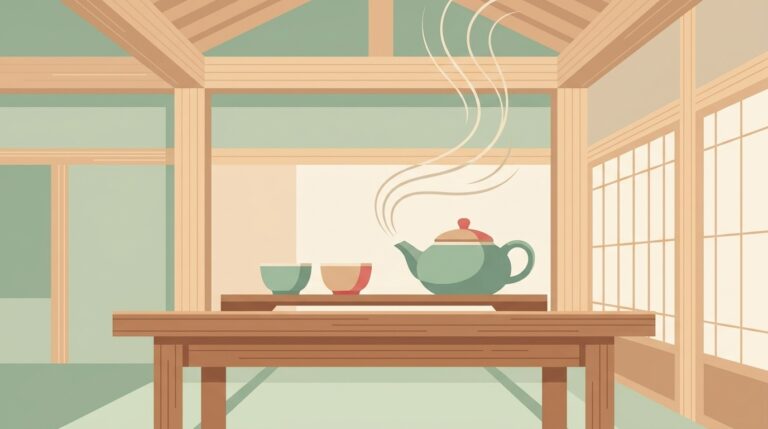
Imagine walking into a serene Hanok (traditional Korean house) in Bukchon Hanok Village. The scent of roasted barley, pine needles, and fermented tea leaves fills the air. You are preparing for the prestigious Korean Tea Sommelier Certification (티 소믈리에 자격증 과정). You know your Camellia sinensis, but when the examiner asks you to describe the sensory profile of Ujeon (우전, first-pick green tea) or handle a formal tea ceremony (Darye, 다례), your tongue ties.
Learning professional tea terminologies in Korean isn’t just about translating “earthy” or “astringent.” It’s about embodying the cultural philosophy of respect, mindfulness, and sensory precision. Many of our C1 learners have expressed frustration: “I know the dictionary definition, but I sound like a textbook from the 1990s!” Today, we are diving deep into the sophisticated linguistic palate of a Korean Tea Sommelier, ensuring you speak with the grace and authority of a true Master.
Phase 2: Deep Dive into 3 Essential Expressions (핵심 표현 3선 심층 분석)
1. 떫은맛을 잡다 (Tteolbeun-maseul japda)
- Pronunciation: Tteol-beun-ma-seul jap-da (Sounds like “Tteol-boon-mah-sool jahp-da” with a soft ‘p’ sound)
- Meaning: Lit. “To catch/tame the astringency” -> Fig. To masterfully brew tea to eliminate or balance bitter, mouth-drying tannic qualities.
- K-Culture Moment: In high-end culinary dramas, a master brewer will look at their apprentice and say, “이번 우전차는 떫은맛을 잘 잡았구나” (You managed the astringency of this Ujeon green tea beautifully).
- Editor’s Insight: In Korean food science and tea culture, “떫은맛” (astringency) is not always an enemy, but an unruly element that needs to be “caught” (잡다) through precise water temperature and steeping time.
- Situation Spectrum: Casual (⚠️ – too technical for casual drinks) | Semi-formal (✅) | Formal (✅)
- 🤔 Think About It: Why does Korean use the active verb 잡다 (to catch/grab) for abstract taste sensations? How does this reflect the proactive role of the brewer?
2. 차의 뉘앙스가 화사하다 (Cha-ui nyu-ang-seu-ga hwa-sa-hada)
- Pronunciation: Cha-ui nwee-ang-seu-ga hwa-sa-ha-da
- Meaning: Lit. “The tea’s nuance is bright/radiant” -> Fig. The tea exhibits a vibrant, floral, or lively aromatic profile.
- K-Culture Moment: Often heard during professional tasting panels when evaluating wild flower teas (꽃차) or lightly oxidized oolongs.
- Editor’s Insight: While “화사하다” is usually used for bright spring weather or a radiant outfit, in professional tea sommelier circles, it elevates the simple descriptor “향이 좋다” (smells good) to a sensory art form.
- Situation Spectrum: Casual (⚠️) | Semi-formal (✅) | Formal (✅)
- 🤔 Think About It: How does mapping visual and atmospheric vocabulary (like 화사하다) onto taste alter your perception of sensory experiences?
3. 목넘김이 부드럽다 (Mok-neom-gimi bu-deu-reop-da)
- Pronunciation: Mok-neom-ghee-mee boo-doo-reop-dah (Rhythm tip: think of “mock-num-gim”)
- Meaning: Lit. “The throat-passage is smooth” -> Fig. A clean, smooth finish; easy to swallow without harshness.
- K-Culture Moment: Used in commercials for premium beverages, fine spirits, and especially during high-grade tea evaluations to describe a velvety mouthfeel.
- Editor’s Insight: Korean gastronomy obsesses over the physical sensation of food/drink passing down the throat. “목넘김” is a crucial metric for evaluating tea quality.
- Situation Spectrum: Casual (✅) | Semi-formal (✅) | Formal (✅)
- 🤔 Think About It: Does your native language have a specific noun equivalent to “throat-passage sensation”? What does this say about Korean sensory appreciation?
Phase 3: Textbook Korean vs. Real-World Korean (교과서 한국어 vs 진짜 한국어)
Situation 1: Describing a tea’s strong, deep flavor.
- 📖 Textbook Korean: “이 차는 맛이 매우 강하고 깊습니다.” (This tea’s taste is very strong and deep.)
- 🗣️ 진짜 한국어: “이 차는 바디감이 묵직하고 잔향이 오래 가네요.” (This tea has a heavy body, and the lingering aroma really persists.)
- 💡 Why it matters: C1 tea professionals use wine-tasting loanwords like 바디감 (body/mouthfeel) and sophisticated nouns like 잔향 (lingering scent) to show sensory precision.
Situation 2: Expressing that a tea feels refreshing.
- 📖 Textbook Korean: “이 차를 마시니 기분이 시원합니다.” (Drinking this tea makes me feel cool/refreshed.)
- 🗣️ 진짜 한국어: “수분감이 입안 가득 돌며 개운하게 마무리되네요.” (It fills the mouth with moisture and finishes with a clean, crisp sensation.)
- 💡 Why it matters: 개운하다 denotes a cleansing, refreshing feeling that purifies the palate, highly valued in tea ceremonies.
Phase 4: K-Culture Deep Dive & Non-Verbal Manners (K-Culture 딥다이브 & 비언어적 매너)
4-1. The Art of the Pour (Darye Gestures)
When serving the tea evaluator during your certification exam:
* Two-Hand Rule: Never pour or serve with one hand. Always support the bottom of the teapot (다관) or tea cup (찻잔) with your right hand, while gently placing your left hand under your right wrist or on your chest to show respect.
* Eye Contact: Avoid staring intently at the examiner. Maintain soft eye contact, bow slightly when offering the cup, and direct their attention to the cup with a open-palm gesture.
4-2. Traditional vs. Modern Sommelier Culture
In modern Korea, traditional tea culture (다도) is experiencing a massive renaissance among Millennials and Gen Z through “Tea-kase” (티카세)—a portmanteau of Tea and Omakase. Young Koreans book multi-course tea pairings where sommeliers explain the historical lineage of Korean green teas (Sejak, Ujeon) alongside modern dessert pairings. Knowing the correct terminology bridges the gap between ancient heritage and hip lifestyle trends.
Phase 5: Real-World Roleplay Scenario (실전 롤플레이 시나리오)
Setting: The final sensory evaluation exam of the Korean Tea Sommelier Association.
NPC: Master Kim (김 선생님), a sharp-eyed, traditional tea master with a gentle but demanding demeanor.
- Master Kim: “자, 앞에 놓인 황차(yellow tea)를 시음해 보시고, 테이스팅 노트를 말씀해 보세요.”
- You (C1 Candidate): “네, 선생님. 우선 첫 모금에서
🎭 (두 손으로 잔을 조심스럽게 들며)목넘김이 아주 부드럽다는 인상을 받았습니다.” - Master Kim: “흠, 목넘김이 부드럽다라… 향은 어떻습니까?”
- You (C1 Candidate): “우려낸 수색(liquor color)이 맑은 갈색을 띠는데, 그에 걸맞게 구수한 뉘앙스가 화사하게 피어오릅니다.”
- Master Kim: “발효차 특유의 떫은맛은 어떻게 평가하겠습니까?”
- You (C1 Candidate): “적절한 온도로 우려내어 떫은맛을 아주 잘 잡았습니다. 단맛과의 밸런스가 아주 훌륭합니다.”
- Master Kim: “좋은 평가군요. 만약 온도가 더 높았다면 어떻게 되었을까요?”
- You (C1 Candidate): “온도가 너무 높았다면 타닌 성분이 과다 추출되어 떫은맛이 전면에 도드라졌을 것입니다.”
🔀 Choose Your Next Move! (인터랙티브 분기점)
- Option A: “그냥 대충 우려도 맛있을 것 같습니다.” (I think it would taste fine even if steeped roughly.)
- Option B: “찻잎의 섬세한 아로마가 고온에서 깨지기 때문에, 한 김 식힌 물로 제어해야 합니다.” (Because the delicate aroma of tea leaves breaks down at high temperatures, we must control it with water that has cooled down slightly.)
- Option C: “선생님 공식 레시피만 외우면 될 것 같습니다.” (I think I just need to memorize your official recipe, Master.)
🧐 Option Feedback:
- Option A (Bad): 🚫 Master Kim frowns. Dismissing precision shows a lack of dedication to the craft.
- Option B (Best): ✅ Perfect! You demonstrated an understanding of the chemistry of tea brewing using terms like 섬세한 아로마 (delicate aroma) and 한 김 식히다 (letting the steam off/cooling slightly).
- Option C (Risk): ⚠️ Safe, but lacks critical thinking. A true sommelier adapts to the tea leaf’s condition, not just dry recipes.
Phase 6: 10-Second Emotion Shadowing Drill (10초 감정 섀도잉 드릴)
Speak these lines aloud, mimicking the emotional cues and pausing at the slashes (/).
[😊 차분하고 전문적인 목소리로 - Calm and professional]- “이 차는 / 떫은맛을 완벽하게 잡아서 / 뒷맛이 아주 개운합니다.”
- (I cha-neun / tteolbeun-maseul wan-byeok-ha-ge ja-ba-seo / dwit-mas-i a-ju gae-un-ham-ni-da.)
[🤩 감탄하며 - Full of admiration]- “우려내자마자 / 화사한 꽃향이 / 입안 가득 퍼지네요!”
- (U-ryeo-nae-ja-ma-ja / hwa-sa-han kkot-hyang-i / ib-an ga-deuk peo-ji-ne-yo!)
[🤔 진지하고 신중하게 - Analytical and thoughtful]- “바디감은 묵직하지만 / 목넘김은 한없이 부드럽습니다.“
- (Ba-di-gam-eun muk-jik-ha-ji-man / mok-neom-gim-eun han-eob-si bu-deu-reob-seum-ni-da.)
Phase 7: K-Culture Mini Dictionary (K-Culture 미니 사전)
- 수색 (Susaek | Water Color): The visual color of the brewed tea liquor. Evaluators assess clarity and depth.
- 다관 (Dagwan | Teapot): Traditional Korean clay or ceramic teapot used specifically for brewing loose leaf tea.
- 한 김 식히다 (Han Gim Siki-da | To cool down a notch): Pouring boiling water into a cooling vessel (숙우) first to lower the temperature before pouring it over delicate green tea leaves.
- 풀향 (Pul-hyang | Grassy Note): The vegetal, fresh-cut grass aroma common in minimally processed green teas like Sejak.
Phase 8: Traveler’s Survival Kit (여행자를 위한 생존 키트)
Survival Phrases for Tea Houses
- “이 차의 베이스는 무엇인가요?” (I cha-ui be-i-seu-neun mu-eot-in-ga-yo?)
- Pro Tip: Use this to ask for the base ingredient (e.g., green tea, herbal, or fermented).
- “전통적인 다례 방식으로 체험해 보고 싶어요.” (Jeon-tong-jeok-in da-rye bang-sik-eu-ro che-heom-hae bo-go sip-eo-yo.)
- Pro Tip: Ask this at traditional tea houses to try brewing the tea yourself using authentic utensils.
- “카페인이 적은 차로 추천해 주시겠어요?” (Ka-pe-in-i jeok-eun cha-ro chu-cheon-hae ju-si-ges-seo-yo?)
- Pro Tip: Great for evening tea sessions to avoid caffeine-sensitive sleeplessness.
Editor’s Travel Note
When hunting for high-quality Korean tea gear or booking a tea class, avoid generic search engines. Open the Naver Map App and search for “티하우스” (Tea House) or “다도 체험” (Tea Ceremony Experience) in areas like Insadong or Samcheong-dong. Note: Reservation platforms and operating hours in local apps may vary seasonally, so always double-check the listings before visiting.
Phase 9: “A Step Deeper” – Cultural Reflection (한 발 더 깊이)
Korean tea culture values the concept of “Jung-jeong” (중정, 中正)—achieving the perfect middle ground. The water must not be too hot, nor too cold; the leaves must not be steeped too long, nor too briefly. This search for balance mirrors the Korean social value of harmony and consideration for others. When you brew tea for someone, you are not just serving a beverage; you are matching their pace, temperature, and emotional state.
💬 Your Turn
How does tea culture in your country compare? Do you focus more on the chemical precision of brewing, or the social aspects of gathering? Let us know in the comments below!
Phase 10: FAQ & Common Mistakes (FAQ & 오해 방지)
Q: Is there a difference between 녹차 (Nokcha) and 말차 (Malcha)?
A: Yes! Nokcha refers to standard green tea leaves steeped in hot water, while Malcha (Matcha) refers to stone-ground green tea powder whisked directly into water or milk.
Q: Can I use “맛이 강하다” to describe a rich tea?
A: While grammatically correct, in a professional or C1-level context, “맛이 강하다” can sound simplistic or even negative (like it’s overpowering). Instead, use “바디감이 묵직하다” (heavy-bodied) or “풍미가 깊다” (deep-flavored).
Q: Does “떫다” mean the same thing as “쓰다”?
A: No. 쓰다 is bitterness (like black coffee). 떫다 is astringency—the dry, puckering feeling on your tongue caused by tannins (like strong black tea or unripe persimmons).
🚨 Common Mistakes Alert!
- Calling all Korean tea “Nokcha”: Korea has amazing herbal teas like Ssanghwa-cha and grain teas. Don’t limit your vocabulary!
- Pouring with one hand: Pouring tea with one hand is seen as dismissive in formal settings. Always support the teapot.
- Ignoring the cup’s warmth: Gulping down hot tea immediately without holding the cup to appreciate its temperature violates the slow-living ethos of Darye.
Phase 11: Action Mission (액션 미션)
- 🥉 Bronze Mission: Brew a cup of tea at home and write down 2 sensory adjectives in Korean (e.g., 개운하다, 부드럽다).
- 🥈 Silver Mission: Take a photo of your tea time, upload it to Instagram, tag
@DailyHanguland use the hashtag#떫은맛을잡다. - 🥇 Gold Mission: Visit a local Korean tea house (or online shop) and order using the phrase: “목넘김이 부드럽고 화사한 차를 추천해 주세요.”
Phase 12: Interactive Quiz Challenge (인터랙티브 퀴즈 챌린지)
1. Which term describes the dry, puckering physical sensation in the mouth?
- A) 쓰다
- B) 달다
- C) 떫다
2. Fill in the blank: “이 꽃차는 향이 아주 ________.” (This flower tea has a very bright/radiant aroma.)
- A) 묵직합니다
- B) 화사합니다
- C) 차갑습니다
🔍 Click to reveal Answers & Explanations!
- Correct Answer: C) 떫다.
- Explanation: “떫다” represents astringency. “쓰다” is bitter, and “달다” is sweet.
- Correct Answer: B) 화사합니다.
- Explanation: “화사하다” is the perfect professional descriptor for a vibrant, bright floral or aromatic profile.
- Explanation: “화사하다” is the perfect professional descriptor for a vibrant, bright floral or aromatic profile.






