

안녕하세요! 매일한글 에디터입니다.
Have you ever watched K-Dramas like Juvenile Justice (소년심판) or Children of Nobody (붉은 달 푸른 해)? If so, you might have felt a deep ache in your heart seeing the complex, heavy reality of child protection in South Korea.
Many of our advanced C2 learners tell us: “I want to discuss serious social issues in Korean, but I lack the legal vocabulary, and I don’t want to sound like a textbook from the 1990s.” Today, we are diving deep into a highly discussed social issue in Korea: the legal authority and severe understaffing of specialized child abuse prevention civil servants (아동학대 전담공무원).
By mastering this lesson, you will be able to express highly sophisticated opinions on administrative limitations, legal mandates, and social justice in Korean with native-level nuance.
Phase 2: Core Expressions Deep Dive
1. 전담공무원 (Jeondam-gongmuwon)
- Pronunciation: Jeon-dam-gong-mu-won (Sounds like “John-dahm-gong-moo-one”)
- Meaning: Solely responsible civil servant / Specialized public official
- K-Culture Moment: Often heard in news investigative pieces like SBS 그것이 알고 싶다 (Unanswered Questions) when addressing structural deficits in municipal welfare departments.
- Editor’s Insight: Combining 전담 (exclusive responsibility) and 공무원 (civil servant), this term describes officials who only handle one highly sensitive area. In the context of child abuse, they are the ones holding the legal authority to investigate, yet they are notoriously overworked.
- Situation Spectrum: Casual (⚠️ – too formal for light gossip), Semi-formal (✅), Formal (✅)
- 🤔 Think About It: How does your home country structure the division of labor for child protection? Is it managed by civil servants or private social workers?
2. 권한의 한계 (Gwonhan-ui han-gye)
- Pronunciation: Gwon-han-ui han-gye (Sounds like “Kwon-hahn-we han-gyae”)
- Meaning: Limits of authority / Jurisdictional boundaries
- K-Culture Moment: Used by frustrated social workers in realistic legal dramas when police officers refuse to cooperate because “there is no warrant yet.”
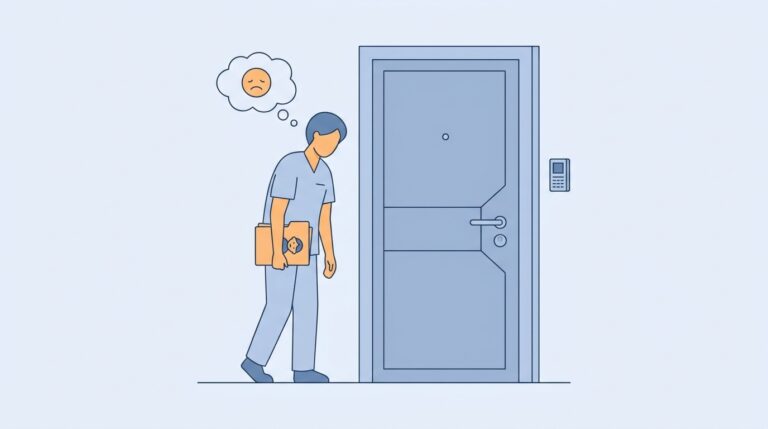
- Editor’s Insight: 권한 means authorized power, and 한계 means limit. In Korea, child abuse public officials can conduct on-site investigations but cannot forcefully enter a locked home without police assistance, showcasing a painful legal blind spot.
- Situation Spectrum: Casual (🚫), Semi-formal (✅), Formal (✅)
- 🤔 Think About It: Where should society draw the line between a family’s private domain and state intervention?
3. 인력 난에 시달리다 (Inlyeok-nan-e sidallida)
- Pronunciation: In-ryeok-nan-ae shi-dal-li-da (Sounds like “In-yuck-nan-eh she-dahl-lee-dah”)
- Meaning: To suffer from a severe shortage of manpower / labor shortage
- K-Culture Moment: Frequently headlines economic and social policy news in Korea.
- Editor’s Insight: 인력난 (manpower shortage) combined with 시달리다 (to be plagued/tortured by) highlights a systemic agony. It implies that the shortage is actively draining the energy of the remaining workers.
- Situation Spectrum: Casual (⚠️), Semi-formal (✅), Formal (✅)
- 🤔 Think About It: In Korean, we use the word “to be tortured/plagued” (시달리다) to describe bureaucratic shortages. What does this emotional verb reveal about Korean work culture?
Phase 3: Textbook Korean vs. Real Conversational Korean
Situation 1: Discussing overwork due to staff shortages
- 📖 Textbook: 인력이 부족하여 업무가 매우 과중합니다. (The workload is very heavy due to a lack of manpower.)
- 🗣️ Real Conversational: 완전히 인력난에 시달리고 있어서 손이 모자라요. (We’re completely plagued by a shortage of manpower, we are so short-handed.)
- 💡 Why is it different? While the textbook expression is grammatically perfect for a written report, real-life experts and native speakers use the vivid idiom 손이 모자라다 (to lack hands/be short-handed) along with 시달리다 to emphasize the human toll.
Situation 2: Explaining a lack of legal power
- 📖 Textbook: 공무원은 강제 진입할 법적 힘이 없습니다. (The civil servant has no legal power to forcefully enter.)
- 🗣️ Real Conversational: 현장 조사를 하려고 해도 권한의 한계 때문에 발만 동동 구르는 상황이에요. (Even when trying to investigate on-site, they are just stamping their feet in frustration due to the limits of their authority.)
- 💡 Why is it different? Natives use the emotional idiom 발을 동동 구르다 (to stamp one’s feet in anxiety/frustration) to colorfully illustrate the tragic situation of a powerless official standing outside a closed door.
Phase 4: K-Culture Deep Dive & Non-Verbal Manners
4-1. Nunchi & Gestures for Difficult Conversations
When discussing heavy topics like child abuse and administrative failure in Korean, maintain a low, calm tone (차분한 목소리). Avoid sweeping hand gestures. Instead, keep your hands lightly clasped in front of you. Nodding slowly while narrowing your eyes slightly expresses deep empathy (공감) and gravity, which is highly valued in Korean professional settings when discussing societal tragedies.
4-2. Cultural Context: The Korean Bureaucracy Reality
In Korea, civil servants are historically perceived as stable “iron rice bowls” (철밥통). However, the 아동학대 전담공무원 position is a notorious “avoided department” (기피 부서) due to high trauma, physical threats from abusive parents, and 24/7 on-call shifts. Understanding this social dichotomy is essential for C2 learners engaging in policy debates.
Phase 5: Real-Life Roleplay Scenario
The Setup
- Setting: A quiet meeting room in the Ministry of Health and Welfare (보건복지부).
- Characters:
- 민우 (Min-woo): An exhausted senior child protection officer (아동학대 전담공무원).
- 지영 (Ji-young): A policy researcher analyzing systemic reform.
Dialogue
- 지영: 🎭 (걱정스러운 눈빛으로 자료를 보며) 민우 씨, 요즘 아동학대 전담공무원 분들의 퇴사율이 급증했다는데 정말인가요?
- 민우: 🎭 (한숨을 깊게 쉬며) 네, 맞아요. 현장에서 교대 근무를 서며 인력난에 시달리다 보니 몸도 마음도 완전히 지쳤어요.
- 지영: 🎭 (안타까워하며) 신고가 접수되어도 즉각 대응하기가 불가능한 구조겠어요.
- 민우: 🎭 (고개를 가로저으며) 맞습니다. 게다가 학대 의심 가정이 문을 열어주지 않으면, 저희에겐 권한의 한계가 있어서 강제로 들어갈 수도 없어요.
- 지영: 🎭 (눈살을 찌푸리며) 공무원인데도 현장 진입이나 격리 조치를 강제할 권한이 없다는 말씀이시죠?
- 민우: 🎭 (답답한 듯 가슴을 치며) 네, 경찰관이 동행하지 않으면 영장 없는 가택 진입이 불법이라 발만 동동 구르다 돌아오는 경우가 허다해요.
- 지영: 🎭 (단호한 어조로) 사법경찰권 부여나 상설 전담팀 구성 같은 제도 개선이 시급해 보이네요.
- 민우: 🎭 (씁쓸한 미소를 지으며) 법 개정만 기다리기엔 현장의 아이들이 처한 상황이 너무 위태롭습니다.
🔀 Interactive Choice Points
How should Ji-young respond to Min-woo’s last desperate statement?
* Choice A: “맞아요. 국가 예산 편성을 당장 다시 해야 합니다!” (Let’s demand immediate national budget reallocation!)
* Choice B: “현장의 실태를 알릴 수 있는 심층 보고서를 작성해서 국회에 제출해 볼게요.” (I will write an in-depth report exposing the reality on the ground and submit it to the National Assembly.)
* Choice C: “어쩔 수 없죠. 공무원 조직의 고질적인 문제니까요.”(Nothing we can do. It’s a chronic problem of the civil servant system.)
Feedback:
- Choice A (Risk): While passionate, demanding instant budget reallocation sounds slightly unrealistic and simplistic for a C2 professional discussion.
- Choice B (Best): Highly constructive! It shows deep policy-level commitment, using formal terminology suitable for a C2 level researcher.
- Choice C (Bad): Extremely cynical and dismissive. It shuts down the dialogue on a tragic topic.
Phase 6: 10-Second Emotion Shadowing Drill
Practice saying this sentence with the exact pause and emotional beats of an exhausted yet desperate officer:
“현장에 나가도 / 권한의 한계 때문에 / 아무것도 할 수 없어서 / 가슴이 찢어집니다.”
- Pronunciation: Hyeon-jang-ae na-ga-do / gwon-han-ui han-gye ttae-mun-ae / a-mu-geot-do hal su eop-seo-seo / ga-seum-i jji-jeo-jim-ni-da.
- Emotional Guide:
[🥺 절망스럽고 애타는 목소리로 - With a desperate, heartbroken tone] - Rhythm Note: Pause briefly at
/to let the heavy weight of each phrase sink in.
Phase 7: K-Culture Mini-Dictionary
- 기피 부서 (Gipi-buseo) | Avoided Department | Municipal departments that employees avoid due to high stress, physical danger, or lack of promotion potential.
- 격리 조치 (Gyeok-ri jochi) | Isolation/Separation Measure | The legal act of temporarily separating a victim child from the abusive parents.
- 사법경찰권 (Sabeop-gyeongchal-gwon) | Judicial Police Power | The legal authority granted to certain civil servants to investigate crimes directly without waiting for standard police.
- 탁상행정 (Taksang-haengjeong) | Desk/Armchair Administration | A highly critical term for bureaucratic decisions made in cozy offices without understanding the reality of the field.
Phase 8: Survivor’s Kit for Travelers & Residents
If you ever witness a situation of child abuse in Korea, here are the essential survival steps:
Survival Phrases TOP 3
- “아동학대가 의심되는 상황을 목격했습니다.” (A-dong-hak-dae-ga ui-shim-dae-neun sang-hwang-eul mok-gyeok-haet-seum-ni-da.)
- Pro Tip: Use this formal phrasing when calling the emergency services.
- “즉각적인 현장 출동이 필요해 보입니다.” (Jeuk-gak-jeok-in hyeon-jang chul-dong-i pil-yo-hae bo-im-ni-da.)
- Pro Tip: Prompts the recipient to dispatch officers immediately.
- “피해 아동의 안전이 최우선입니다.” (Pi-hae a-dong-ui an-jeon-i choe-u-seon-im-ni-da.)
- Pro Tip: Excellent for framing debates on policy.
Editor’s Travel Note
In South Korea, child abuse reporting can be done directly by calling 112 (Police). If you need counseling or want to find nearby child protection agencies, you can search for “아동보호전문기관” using the Naver Map App. Note: Emergency service protocols may change according to municipal policies.
Phase 9: “Going One Step Deeper” (Reflective Question)
In South Korea, family privacy has historically been guarded strictly, often leading neighbors to dismiss domestic screams as “household affairs” (집안일). However, tragic high-profile cases have shifted public consciousness toward proactive state intervention. Yet, the legal framework for 아동학대 전담공무원 has not caught up with this societal demand, leaving them with massive responsibility but zero physical enforcement power.
💬 Your Turn: In your home country, is child safety prioritized over parental and property rights by law, or is it the other way around? Leave your thoughts in the comments below!
Phase 10: FAQ & Common Mistakes
Q: 아동학대 전담공무원은 경찰과 같은 일을 하나요?
A: 아닙니다. 아동학대 전담공무원은 지자체 소속 복지 전문가로서 학대 여부 판정 및 보호 조치를 주도하지만, 체포나 강제 압수수색 등의 물리적 사법권은 기본적으로 경찰에게 있습니다.
Q: ‘인력난’ 대신 ‘사람 부족’을 써도 되나요?
A: 일상 회화에서는 “사람이 부족하다”도 자연스럽지만, 공공 행정이나 사회적 문제를 깊이 있게 논하는 C2 레벨의 고급 시사 토론에서는 인력난 또는 인력 공백이라는 한자어 표현을 쓰는 것이 품격 있어 보입니다.
Q: ‘권한’과 ‘권리’의 차이는 무엇인가요?
A: 권리 (Right)는 개인에게 주어지는 당연한 이익이나 자격이고, 권한 (Authority)은 공적인 직무를 수행하기 위해 법적으로 부여된 직무상의 힘을 뜻합니다. 따라서 공무원의 직무 한계를 논할 때는 반드시 권한을 사용해야 합니다.
🚨 Common Mistakes Alert!
- Wrong: 공무원들이 인력난을 시달려요. (X)
- Correct: 공무원들이 인력난에 시달려요. (O)
- Why? The verb 시달리다 (to suffer/be plagued) must be preceded by the particle -에 (by/from), as it indicates the cause of the torment.
Phase 11: Action Mission
- 🥉 Bronze: Read the Shadowing Drill in Phase 6 out loud 3 times with your eyes closed.
- 🥈 Silver: Post a short comment on your social media using the phrase “권한의 한계” to describe a social issue in your country.
- 🥇 Gold: Search for a Korean news article about “아동학대 전담공무원” and write a 3-sentence summary in Korean using the words 인력난 and 현장 조사.
Phase 12: Interactive Quiz Challenge
Test your advanced Korean knowledge!
Q1. Which word best fits the blank?
“아무리 현장 조사를 하고 싶어도, 법적으로 집안에 들어갈 수가 없으니 [ ]의 한계를 느낍니다.”
1. 권리
2. 권력
3. 권한
Reveal Answer & Explanation
Answer: 3. 권한 (Authority)
Explanation: As a public official executing a duty, they lack the legally defined “authority” (권한) to cross the threshold, not personal “rights” (권리) or raw socio-political “power” (권력).
Q2. True or False?
“전담공무원” indicates a public official who handles multiple unrelated municipal tasks to save budget.
Reveal Answer & Explanation
Answer: False (X)
Explanation: 전담 (Exclusive/Specialized) means they are dedicated strictly to one crucial domain (in this case, child protection), rather than multitasking.







