

Imagine the ‘What Ifs’: Master Hypothetical Debates in Korean Like a Local
Phase 1: Empathy (Welcome, My Friend!)
안녕하세요! (Annyeonghaseyo!) Daily Hangul editor here!
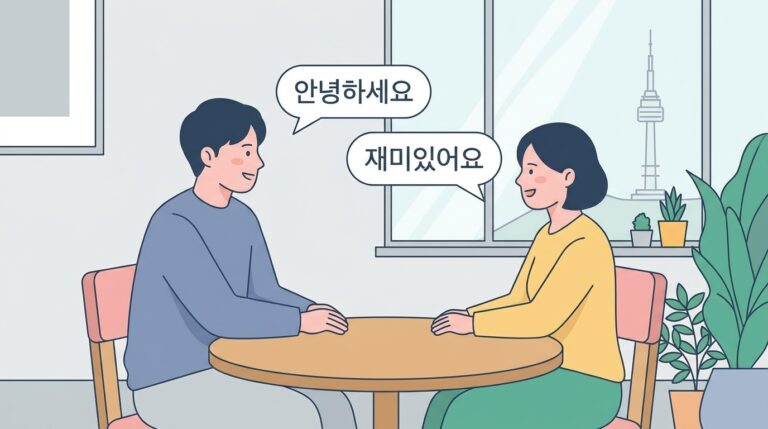
Picture this: You are watching a classic K-Drama like Crash Landing on You, and the characters are debating what they would do if they met in a parallel universe. Or maybe you are sitting in a cozy café in Hongdae with your Korean friends, and someone asks the ultimate icebreaker: “What would you do if you won the lottery tomorrow?”
You want to jump into the debate with a brilliant hypothetical argument, but your brain freezes. You know the basic “~면” (~myeon) for “if,” but using just that makes your debate style feel flat and a bit childlike. Expressing complex, logical hypotheses—especially when debating a tricky topic—requires a bit more stylistic flair in Korean.
Don’t worry! Today, we are going to upgrade your debating toolkit from basic “if” statements to nuanced, B2-level hypothetical arguments. Based on real feedback from intermediate learners who felt stuck in formal debates, this guide will help you navigate imaginary scenarios with confidence and style.
Phase 2: Deep Dive into 3 Essential Hypothetical Expressions
1. 만약 ~ㄴ/는다면 (Manyak ~n/neundamyeon)
- Pronunciation: Ma-nyak … neunda-myeon (Sounds like “Mahn-yahk … nuhn-dah-myuhn”)
- Meaning: “If, hypothetically speaking, [such a scenario were to happen]…”
- K-Culture Moment: This is the ultimate “What if?” starter pack. You hear this constantly in romance dramas when characters talk about fate, or in talk shows like Running Man during funny hypothetical balance games.
- Editor’s Insight: While a simple “~면” is used for highly likely conditions (e.g., “If it rains, I’ll wear a coat”), “만약 ~ㄴ/는다면” pushes the situation into a purely hypothetical or highly unlikely realm. It frames your point as a thought experiment.
- Situation Spectrum: Casual ✅ | Semi-formal ✅ | Formal ✅
- 🤔 Think About It: In English, we shift tenses (“If I were you…”). In Korean, we use specific endings like “~ㄴ/는다면” to signal a hypothetical realm. How does separating “likely condition” from “pure hypothesis” change the way you argue?
2. 설령 ~더라도 (Seollyeong ~deorado)
- Pronunciation: Seol-ryeong … deo-ra-do (Sounds like “Suhl-ryuhng … duh-rah-doh”)
- Meaning: “Even if/Even granting that [such a case is true]…”
- K-Culture Moment: Often used in heavy dramatic scenes where a character vows loyalty: “설령 온 세상이 반대하더라도 (Even if the whole world opposes us…)”. In debates, it’s used to make a concession before dropping a counter-argument.
- Editor’s Insight: This is a powerful logical tool. By using “설령” (even if) with “~더라도” (even though), you are temporarily conceding your opponent’s hypothetical point, only to crush it with your next sentence.
- Situation Spectrum: Casual ⚠️ | Semi-formal ✅ | Formal ✅
- 🤔 Think About It: Using concession shows respect to the opponent’s argument while maintaining your logical stance. How does this reflect the polite yet firm debating culture in Korea?
3. 혹시라도 ~ㄹ/을 경우를 대비해서 (Hoksi-rado ~l/eul gyeong-u-reul daebi-haeseo)
- Pronunciation: Hok-si-ra-do … gyeong-u-reul dae-bi-hae-seo (Sounds like “Hohk-shee-rah-doh … gyuhng-oo-reul dae-bee-hae-suh”)
- Meaning: “Just in case / To prepare for the hypothetical situation where…”
- K-Culture Moment: You’ll hear this in K-Travel vlogs or survival shows where people prepare extra supplies “혹시라도 비가 올 경우를 대비해서” (just in case it rains).
- Editor’s Insight: This is perfect for logical debates where you need to propose a backup plan or point out a potential risk in your opponent’s plan.
- Situation Spectrum: Casual ✅ | Semi-formal ✅ | Formal ✅
- 🤔 Think About It: Koreans value preparedness and collective security. This grammatical structure shows you are thinking three steps ahead.
Phase 3: Textbook Korean vs. Real-Life Korean
Let’s look at how textbooks teach hypothetical situations versus how native speakers actually debate in real life.
Scenario A: Arguing about a potential business project
- 📖 Textbook Korean: 만약 계획이 실패하면 어떻게 합니까? (Manyak gyehoegi silpaehamyeon eotteoke hamnikka? – “If the plan fails, what will you do?”)
- 🗣️ Real-Life Korean: 만약에 계획이 어그러질 경우를 대비해서 플랜 B를 세워야 하지 않을까요? (Manyage gyehoegi eogeureojil gyeong-ureul daebihaeseo peullaen B-reul sewoya haji aneulkkayo? – “Shouldn’t we set up a Plan B to prepare in case the plan falls through?”)
- 💡 Why the difference? Textbook Korean is grammatically correct but feels stiff. Real-life Korean uses “어그러지다” (to go awry/fall through) instead of the dry “실패하다” (to fail), and frames the question as a polite suggestion (“하지 않을까요?”) to maintain harmony.
Scenario B: Challenging a friend’s hypothetical choice
- 📖 Textbook Korean: 만약 돈이 많으면 일을 안 할 것입니까? (Manyak doni maneumyeon ireul an hal geosimnikka? – “If you have a lot of money, will you not work?”)
- 🗣️ Real-Life Korean: 설령 로또에 당첨되더라도 일을 때려치우는 건 에바 아닌가요? (Seollyeong lotto-e dangcheomdoe-deorado ireul ttaeryeochi-uneun geon eba aningayo? – “Even if you win the lottery, quitting your job is a bit of an overstep/unrealistic, don’t you think?”)
- 💡 Why the difference? “때려치우다” is a colorful, colloquial way to say “to quit/dump a job.” “에바” (Eba) is common slang meaning “over the top” or “too much” (derived from ‘over’).
Phase 4: K-Culture Deep Dive & Non-Verbal Manners
4-1. The Art of
Frequently Asked Questions (FAQ)
Q: What does "만약 ~ㄴ/는다면 (Manyak ~n/neundamyeon)" mean in Korean and how do you pronounce it?
A: In Korean, "만약 ~ㄴ/는다면 (Manyak ~n/neundamyeon)" is pronounced [Ma-nyak ... neunda-myeon (Sounds like "Mahn-yahk ... nuhn-dah-myuhn"] and means: "If, hypothetically speaking, [such a scenario were to happen]..."
Q: What does "설령 ~더라도 (Seollyeong ~deorado)" mean in Korean and how do you pronounce it?
A: In Korean, "설령 ~더라도 (Seollyeong ~deorado)" is pronounced [Seol-ryeong ... deo-ra-do (Sounds like "Suhl-ryuhng ... duh-rah-doh"] and means: "Even if/Even granting that [such a case is true]..."
Q: What does "혹시라도 ~ㄹ/을 경우를 대비해서 (Hoksi-rado ~l/eul gyeong-u-reul daebi-haeseo)" mean in Korean and how do you pronounce it?
A: In Korean, "혹시라도 ~ㄹ/을 경우를 대비해서 (Hoksi-rado ~l/eul gyeong-u-reul daebi-haeseo)" is pronounced [Hok-si-ra-do ... gyeong-u-reul dae-bi-hae-seo (Sounds like "Hohk-shee-rah-doh ... gyuhng-oo-reul dae-bee-hae-suh"] and means: "Just in case / To prepare for the hypothetical situation where..."







