

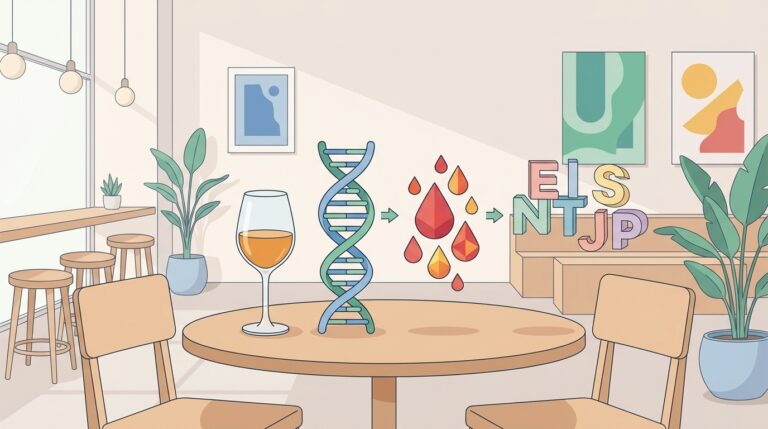
Decoding South Korea’s Obsession with Blood Types: A Masterclass in Scientific Skepticism and Sophisticated Korean
Phase 1: Empathy (An Immersive Opening)
안녕하세요! It’s your Korean culture navigator and editor from Daily Hangul (매일한글).
Imagine this: You’re enjoying a pleasant dinner in Seoul with your new Korean friends or colleagues. The conversation is flowing beautifully, and the vibe is perfect. Suddenly, out of nowhere, someone turns to you with a piercing look and asks:
“혹시 혈액형이 어떻게 되세요?” (What is your blood type, by the way?)
You blink, momentarily confused. You wonder, “Are we about to have a medical emergency, or am I being drafted for an impromptu blood donation?” But before you can answer, they guess: “Ah, you’re definitely an ‘A’ type. You’re so considerate and a bit of a perfectionist!”
Welcome to South Korea’s favorite pseudoscientific social shorthand: 혈액형 성격설 (Blood Type Personality Theory).
As an advanced (C2) learner, navigating these conversations isn’t just about memorizing vocabulary; it’s about mastering scientific skepticism (과학적 회의주의) and expressing doubt gracefully without being a party pooper. How do you articulate that a belief is unscientific, biased, or merely a psychological illusion (바넘 효과 – Barnum Effect), while still maintaining that warm Korean social harmony (정 – Jeong)?
Based on years of coaching global professionals, I’ve put together this definitive guide to help you navigate Korea’s cultural quirks with razor-sharp linguistic precision and cultural nuance. Let’s dive in!
Phase 2: Deep Dive into 3 Essential Expressions
To engage in high-level intellectual discourse or playful banter about scientific skepticism in Korea, you need to master these three powerhouse expressions.
1. 일반화의 오류 (il-ban-hwa-ui o-ryu)
- Pronunciation: Il-ban-hwa-ui oh-ryu (Sounds like “eel-bahn-hwah-ee oh-ryoo”)
- Meaning: The fallacy of hasty generalization.
- K-Culture Moment: You will hear this in Korean talk shows, debating programs, or deep-dive podcasts when someone criticizes sweeping statements like “All men born under certain signs are lazy” or “All Type B people are selfish.”
- Editor’s Insight: This is a highly sophisticated, academic term that elevates your speech instantly. Use it when you want to gently but firmly dismantle an overgeneralized stereotype without attacking the person directly.
- Situation Spectrum: Casual: ⚠️ | Semi-formal: ✅ | Formal: ✅
- 🤔 Think About It: Does your culture have a similar intellectual term to call out overgeneralizations, or do people usually resort to softer phrases?
2. 맹신하다 (maeng-sin-ha-da)
- Pronunciation: Maeng-sin-hah-dah (Think of “mäng” like the start of ‘manger’ + “shin-ha-da”)
- Meaning: To blindly believe; to have blind faith in something.
- K-Culture Moment: Used in K-Dramas when a rational character (often a doctor or detective) warns a superstitious relative about trusting cults, fortunes (사주), or fake science.
- Editor’s Insight: The prefix 맹 (maeng) means “blind,” and 신 (sin) means “trust/faith.” It carries a strong nuance of warning against a lack of critical thinking (비판적 사고).
- Situation Spectrum: Casual: ✅ | Semi-formal: ✅ | Formal: ✅
- 🤔 Think About It: Is blind belief viewed as a social lubricant or a critical flaw in your home country’s social circles?
3. 끼워 맞추기 (kki-wo mat-chu-gi)
- Pronunciation: Kkee-wo maht-choo-gee (Sounds like “kkee-wah” with a crisp “mat-choo-ghee”)
- Meaning: Force-fitting; retroactively twisting facts to fit a pre-conceived narrative (confirmation bias).
- K-Culture Moment: Commonly used in variety shows when a host tries to claim two unrelated events are a “destined coincidence.”
- Editor’s Insight: This is a brilliant, highly idiomatic expression. When someone says, “See? You got angry, you’re such a Type B!” you can counter-attack by calling it “끼워 맞추기” (force-fitting the narrative).
- Situation Spectrum: Casual: ✅ | Semi-formal: ✅ | Formal: ⚠️
- 🤔 Think About It: Why is human psychology so susceptible to retroactively fitting facts to myths?
Phase 3: Textbook Korean vs. Real-Life Korean
Let’s look at how textbooks teach skepticism versus how native Korean intellectuals actually express it.
Scenario 1: Pointing out that blood type theory is unscientific
- 📖 Textbook Korean: “혈액형 성격설은 과학적 근거가 없어서 가짜입니다.” (Blood type theory has no scientific basis, so it is fake.)
- 🗣️ 진짜 Korean: “그거 그냥 바넘 효과(Barnum Effect)에 의한 아전인수 격 해석 아닌가요?” (Isn’t that just a self-serving interpretation driven by the Barnum Effect?)
- 💡 Why it’s different: The textbook version is grammatically correct but sounds like a middle school science report. The real-life version uses advanced psychological terminology and the beautiful idiomatic idiom 아전인수 (Drawing water to one’s own paddy field / self-serving bias) to sound highly articulate and persuasive.
Scenario 2: Expressing playful disbelief during a casual blind date (소개팅)
- 📖 Textbook Korean: “저는 그런 미신을 믿지 않습니다.” (I do not believe in such superstitions.)
- 🗣️ 진짜 Korean: “아휴, 재미로만 봐야지 그걸 다 믿으면 확증 편향에 갇히기 십상이에요.” (Oh, we should just take it with a grain of salt; if you believe all of it, it’s so easy to fall into confirmation bias.)
- 💡 Why it’s different: Saying “I don’t believe in superstitions” can instantly freeze the atmosphere. The native version uses a friendly interjection (아휴) and transitions into a sophisticated psychological concept (확증 편향 – Confirmation Bias) to keep the tone light yet intellectually grounded.
Phase 4: K-Culture Deep Dive & Non-Verbal Etiquette
4-1. Nunchi (눈치) & Body Language for Skeptics
In Korea, being a skeptic is fine, but being a ‘분위기 메이커’ (mood maker) is better than being a ‘분위기 깨는 사람’ (mood killer/buzzkill).
* The Soft Smile & Nod: When someone insists you are a perfect ‘Type A’ person, do not roll your eyes. Instead, offer a gentle tilt of the head, a light smile, and a soft wave of your hand while saying, “아~ 그렇게 보일 수도 있겠네요.” (Ah~ I see how it could look that way.)
* The ‘Finger-Quotes’ Gesture: Koreans don’t use physical finger-quotes as much as Westerners do. Instead, use a gentle laugh or a warm, open hand gesture to signal that you are playing along rather than judging.
4-2. The Cultural Underpinnings: Why Blood Types?
Why does a highly technological society like South Korea still obsess over blood types (and now, MBTI)?
Historically, Korea is a highly collectivist society (공동체 사회). Finding shared traits and categorizing people is a way to fast-track intimacy and establish social harmony (화합). It is less about rigid scientific belief and more about a social icebreaker to build 정 (Jeong). Recognizing this allows you to challenge the science while respecting the social function of the conversation.
Phase 5: Real-Life Roleplay Scenario
Setting: A trendy natural wine bar in Hapjeong, Seoul. You (민우/Minwoo, C2 speaker) are having a deep conversation with your colleague, 지수 (Jisu), who is highly enthusiastic about personality categorizations.
Characters:
- 지수 (Jisu): A warm, highly social trend-follower who loves MBTI and Blood Types.
- 민우 (Minwoo): An analytical, warm-hearted intellectual who practices gentle scientific skepticism.
- 지수: 민우 씨는 혹시 무슨 형이에요? 저는 한눈에 딱 알아볼 수 있을 것 같은데!
(Minwoo, what blood type are you? I think I can tell at a single glance!) - 민우: 🎭 (빙그레 웃으며) 아, 정말요? 제가 어떤 유형처럼 보이시는데요, 지수 씨?
(Smiling gently) Oh, really? What type do I look like to you, Jisu? - 지수: 무조건 A형이죠! 배려심도 깊고 매사에 계획적이시잖아요. O형이나 B형의 거친(?) 느낌이 전혀 없어요!
(Definitely Type A! You are so considerate and planned in everything you do. You don’t have that wild(?) vibe of Type O or B at all!) - 민우: 🎭 (고개를 끄덕이며) 과찬이십니다. 하지만 그건 혈액형보다는 저희 부모님의 가정교육 덕분이 아닐까 싶어요.
(Nodding) You flatter me. But I suspect that has more to do with my parents’ upbringing than my blood type. - 지수: 에이, 그래도 피는 못 속인다는 말이 있잖아요! 과학적으로도 호르몬이나 면역 체계랑 연관이 있지 않을까요?
(Oh come on, but they say “blood doesn’t lie”! Scientifically, shouldn’t there be a link with hormones or immune systems?) - 민우: 🎭 (진지하지만 부드러운 어조로) 실은 대다수 과학자들은 그걸 ‘바넘 효과’나 ‘확증 편향’으로 설명해요. 유리한 정보만 기억하는 일종의 끼워 맞추기라는 거죠.
(In a serious but gentle tone) Actually, most scientists explain that through the ‘Barnum Effect’ or ‘Confirmation Bias’. It’s a kind of force-fitting where we only remember information favorable to our bias. - 지수: 아… 그렇게 말씀하시니까 제가 너무 비과학적인 미신을 맹신하는 사람처럼 느껴지네요. 섭섭해요!
(Ah… hearing you say that makes me feel like someone who blindly believes in unscientific superstitions. I’m a bit hurt!) - 민우: 🎭 (지수의 잔에 와인을 채워주며 따뜻하게) 전혀 아니에요! 재미로 나누는 대화의 즐거움까지 부정하려는 건 아니었어요. 지수 씨의 그 풍부한 공감 능력이 저는 항상 부러운걸요.
(Pouring wine into Jisu’s glass, warmly) Not at all! I didn’t mean to dismiss the joy of a fun conversation. I’ve always been envious of your rich empathy, Jisu.
🔀 Interactive Choice Points
How should Minwoo handle Jisu’s slight disappointment? Choose your path:
- Choice A: “과학적 사실을 말한 것뿐인데 너무 감정적으로 받아들이시네요.” (I only stated scientific facts, you are reacting too emotionally.)
- Feedback (Bad): 🚫 Destroys the mood instantly. It makes you sound arrogant and socially tone-deaf, completely ignoring 눈치 (Nunchi).
- Choice B: “그렇죠, 그냥 재미 삼아 얘기하는 건데 제가 너무 진지했네요. 짠할까요?” (True, it’s just a fun conversation but I got too serious. Shall we clink glasses?)
- Feedback (Best): ✅ Perfect recovery. It validates her feelings, de-escalates the tension, and keeps the conversation flowing smoothly without compromising your skeptical stance.
- Choice C: “사실 MBTI도 마찬가지로 비과학적입니다.” (Actually, MBTI is equally unscientific.)
- Feedback (Risk): ⚠️ Academically correct, but socially risky. Piling on more skepticism might make you look like a cold wet blanket.
Phase 6: 10-Second Emotion Shadowing Drill
To master the natural rhythm of advanced Korean skepticism, practice this sentence. Pay attention to the pauses (/) and the emotional cues.
[😌 차분하고 다정하게 – Calmly and affectionately]
“그냥 / 재미로만 / 보면 / 참 좋은데, / 자칫 / 선입견으로 / 이어질까 봐 / 조금 / 우려스럽긴 해요.”(geu-nyang / jae-mi-ro-man / bo-myeon / cham joh-eun-de, / ja-chit / seon-ip-gyeon-eu-ro / i-eo-jil-kka bwa / jo-geum / u-ryeo-seu-rop-gin hae-yo.)
“It’s great if we just look at it for fun, but I’m slightly worried it might lead to prejudices if we aren’t careful.”
Phase 7: K-Culture Mini-Dictionary
- 사주 (Saju) | Four Pillars of Destiny
- Traditional Korean astrology based on birth date and time. Used seriously for major life decisions.
- 확증 편향 (Hwak-jeung Pyeon-hyang) | Confirmation Bias
- The tendency to search for, interpret, and recall information in a way that confirms one’s beliefs.
- 아전인수 (A-jeon-in-su) | Self-serving bias / Drawing water to one’s own mill
- An ancient idiom used when someone interprets facts solely to benefit their own argument.
- 유사 과학 (Yu-sa Gwa-hak) | Pseudoscience
- Theories or beliefs falsely regarded as scientific (e.g., fan death, blood type personality theory).
Phase 8: Traveler’s Survival Kit
Survival Expressions for Skeptics
- “MBTI가 어떻게 되세요?” (What is your MBTI?)
- Pro Tip: Since 2020, MBTI has completely replaced blood types as the primary social categorizer in Korea.
- “과몰입은 금물이죠!” (Over-indulgence is a no-no!)
- Pro Tip: Use this to politely tell someone they are taking these tests way too seriously.
- “사바사, 케바케잖아요.” (It’s person by person, case by case.)
- Pro Tip: A popular slang combination of 사람 바이 사람 (person-by-person) and 케이스 바이 케이스 (case-by-case).
🗺️ Editor’s Travel Note
When discussing deep cultural topics or seeking cozy spots for intellectual conversations in Seoul, map out your journey using Naver Map App. It is the most accurate navigation tool for finding quiet Hanok cafes in Insadong or modern wine bars in Hapjeong. (Note: Naver Map data is updated in real-time, but specific cafe operating hours may vary, so always double-check before heading out!)
Phase 9: A Step Deeper (Cultural Essay)
In Western societies, scientific skepticism is often associated with fierce debates and objective truth-seeking. In South Korea, however, conversation is less about “who is empirically correct” and more about “how this topic connects us.”
When Koreans ask about your blood type or MBTI, they are rarely looking for a scientific dissertation. They are offering an olive branch of relational connection. Recognizing this allows C2 learners to balance academic rigor with emotional intelligence. You don’t have to believe the myth, but learning to ride its social waves with grace is the ultimate sign of Korean cultural mastery.
💬 Your Turn: Have you ever been asked about your blood type or MBTI in Korea? How did you respond? Let’s talk in the comments below!
Phase 10: FAQ & Common Mistakes
Q: Is it rude to say I don’t believe in blood type personality theory?
A: Not at all, provided your delivery is soft. If you say, “That is unscientific and ridiculous,” it sounds aggressive. If you say, “I think it’s a fun theory, but I prefer getting to know people directly,” it is perfectly polite.
Q: Why do Koreans still talk about blood types when MBTI is so popular?
A: MBTI is currently much more dominant among Gen Z and Millennials, but blood types remain a nostalgic, deeply embedded cultural trope that older generations still reference frequently.
Q: What is the most common pitfall when debating pseudoscience in Korean?
A: Using overly academic translation-style words that sound like you are lecturing. Stick to colloquial terms like “재미로 보는 것” (looking at it for fun) or “끼워 맞추기” (force-fitting).
🚨 Common Mistakes Alert
- Mistake 1: Saying “그것은 거짓말입니다” (That is a lie).
- Correct Action: Say “그건 비과학적이에요” (That is unscientific) or “과학적 근거는 없어요” (There is no scientific basis).
- Mistake 2: Ignoring the mood (눈치) and aggressively lecturing about genetics.
- Correct Action: Nod along, smile, and gently introduce the 바넘 효과 (Barnum Effect) as an interesting psychological fact.
- Mistake 3: Saying “혈액형은 가짜 과학입니다” (Blood type is fake science).
- Correct Action: Use the correct term “유사 과학” (pseudoscience) to sound natural and highly educated.
Phase 11: Action Mission & Engagement
- 🥉 Bronze Mission: Pronounce the word “일반화의 오류” three times out loud until your tongue flows smoothly.
- 🥈 Silver Mission: Write a comment below explaining your own MBTI or Blood Type and whether you think it fits you, using the word “끼워 맞추기”.
- 🥇 Gold Mission: Next time you chat with a Korean friend, gently challenge a sweeping generalization using: “그건 조금 일반화의 오류 아닐까요? ㅎㅎ”
Phase 12: Interactive Quiz Challenge
Test your mastery of Korean scientific skepticism and cultural nuances!
Q1. Which term describes the psychological phenomenon where individuals give high accuracy ratings to descriptions of their personality that supposedly are tailored specifically for them, but are in fact vague and general enough to apply to a wide range of people?
- A) 확증 편향 (Confirmation Bias)
- B) 바넘 효과 (Barnum Effect)
- C) 아전인수 (Self-serving bias)
👉 Click to reveal Answer & Explanation
Correct Answer: B) 바넘 효과 (Barnum Effect)
* Explanation: The Barnum Effect is the scientific term used to explain why people believe vague personality profiles (like horoscopes or blood type descriptions) fit them perfectly.
Q2. Fill in the blank with the most natural C2-level idiom:
“이건 과학적 사실에 기반한 게 아니라, 네 주장에 맞춰서 유리한 일화들만 덧붙인 ( )에 불과해.”
👉 Click to reveal Answer & Explanation
Correct Answer: 끼워 맞추기 (or 아전인수)
* Explanation: Both work beautifully, but 끼워 맞추기 specifically emphasizes the act of force-fitting facts retroactively to match an opinion.







