

Master Korea’s Speedy Deliveries: Dawn Delivery and Rocket Delivery Like a Native
Phase 1: Empathy (스토리 몰입형 오프닝)
안녕하세요! It’s your Korean bestie and Daily Hangul Editor, here to guide you through one of Korea’s most mind-blowing modern marvels: our ultimate delivery culture.
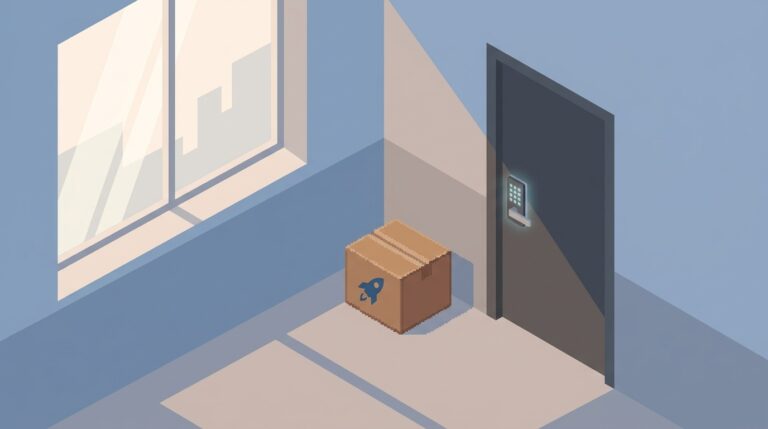
Imagine this: It’s 11:30 PM. You’re in your Seoul officetel, realizing you have absolutely nothing to eat for breakfast, your favorite shampoo is empty, and you need a fresh white shirt for an interview tomorrow at 9 AM. In most parts of the world, you’d be out of luck. But in Korea? You open an app, tap a few buttons, fall asleep, and wake up at 7 AM to find a beautifully packed box right outside your door. Welcome to the world of 새벽 배송 (sae-byeok bae-song / Dawn Delivery) and 로켓 배송 (ro-ket bae-song / Rocket Delivery).
Many of our advanced C1 learners tell us that while they understand the concept of these fast shipping methods, they feel intimidated trying to navigate the complex apps (like Coupang or Market Kurly), dealing with the hyper-specific delivery terminology, or understanding the unspoken apartment manners. This guide is built from real-world student cases to help you navigate this system effortlessly, sounding like a true local who takes super-speedy shipping for granted.
Phase 2: Key Expressions Analysis (핵심 표현 3선 심층 분석)
To master this system, you need to understand the nuances of how Koreans talk about these lightning-fast services.
1. 문 앞 (mun-ap)
- Pronunciation: Moon-ap (sounds like “moon” followed by the “up” in “upstairs”)
- Meaning: In front of the door / Doorstep
- K-Culture Moment: In K-Dramas, you’ll constantly see characters rushing to their mun-ap in their pajamas to drag in massive boxes of fresh groceries or meal kits.
- Editor’s Insight: While “문 앞” literally means “front of the door,” in delivery lingo, it functions as a single noun designating the default, secure drop-off zone. Due to Korea’s high safety levels and apartment structures, leaving packages at the mun-ap is the standard, trusted practice.
- Situation Spectrum: Casual (✅) / Semi-formal (✅) / Formal (✅)
- 🤔 Think About It: In many countries, leaving expensive packages right on the doorstep without a signature is unthinkable. What does the widespread acceptance of “문 앞 배송” tell us about the social trust and community dynamics in Korean residential areas?
2. 공동현관 비밀번호 (gong-dong-hyeon-gwan bi-mil-beon-ho)
- Pronunciation: Gong-dong-hyeon-gwan bee-meel-buhn-ho (Think of “gong” as in a metal gong, “dong” like “dong-a-long”, “hyeon” like “hyun” in Hyundai, and “gwan” as “gwan-do”)
- Meaning: Shared main entrance password / Building lobby access code
- K-Culture Moment: A classic trope in modern thriller or romance dramas is a character sharing or nervously changing their building’s gong-dong-hyeon-gwan code.
- Editor’s Insight: Most Korean apartments and officetels have a secured main lobby door. If you do not provide this code in the app delivery instructions, the poor delivery driver (배송기사님) cannot reach your mun-ap and might have to leave your precious items outside the main building in the cold.
- Situation Spectrum: Casual (✅) / Semi-formal (✅) / Formal (✅)
3. 송장 번호 (song-jang beon-ho)
- Pronunciation: Song-jang buhn-ho (“Song” like a musical song, “jang” like “jang-gu” drum)
- Meaning: Tracking number (literally, invoice/bill number)
- K-Culture Moment: When a highly anticipated limited-edition item drops, characters are seen refreshing their phones constantly, waiting for the song-jang beon-ho to register.
- Editor’s Insight: Unlike basic tracking numbers in the West that update slowly, Korean song-jang 번호 updates in real-time. Once it is generated, your delivery is practically on its way within hours.
- Situation Spectrum: Casual (✅) / Semi-formal (✅) / Formal (✅)
Phase 3: Textbook vs. Real Korean (교과서 한국어 vs 진짜 한국어)
Let’s bridge the gap between classroom Korean and the actual slang used on the streets of Seoul.
Situation 1: Expressing that a delivery arrived super fast
- 📖 Textbook: 배송이 매우 빠르게 도착했습니다. (bae-song-i mae-u bba-reu-ge do-chak-haet-seup-ni-da.)
- “The delivery has arrived very quickly.”
- 🗣️ 진짜 한국어: 와, 배송 진짜 칼같네요! (wa, bae-song jin-jja kal-gat-nae-yo!)
- “Wow, the delivery is sharp as a knife!” (Meaning: insanely punctual and fast)
- 💡 왜 다를까?: “칼같다” (literally “to be like a knife”) is an idiomatic C1-level expression used to describe someone or something that is exceptionally punctual, precise, and sharp with timing.
Situation 2: Asking if someone has ordered groceries overnight
- 📖 Textbook: 어젯밤에 새벽 배송을 이용해 보셨습니까? (eo-jet-bam-e sae-byeok bae-song-eul i-yong-hae bo-shyeot-seup-ni-kka?)
- “Did you try using dawn delivery last night?”
- 🗣️ 진짜 한국어: 컬리나 쿠팡으로 장 보셨어요? (keol-ri-na ku-pang-eu-ro jang bo-shyeot-eo-yo?)
- “Did you do grocery shopping through Kurly or Coupang?”
- 💡 왜 다를까?: Real Koreans rarely use formal, generic structures. They bypass the generic noun “새벽 배송” and directly mention the platform names “컬리” (Market Kurly) or “쿠팡” (Coupang) as verbs/action markers, paired with the natural phrase “장 보다” (to grocery shop).
Phase 4: K-Culture Deep Dive & Non-Verbal Manners (비언어적 매너)
4-1. The Unwritten Laws of the Corridor
When dealing with 새벽 배송 (Dawn Delivery), remember that delivery drivers are working silently while the whole building sleeps.
* The Soft Door Close: If you hear the faint sound of a cardboard box sliding outside your door at 3:00 AM, do not fling your door open instantly. It can startle the driver and wake up neighbors.
* The Quick Box Breakdown: Koreans take recycling extremely seriously. Leaving huge delivery boxes un-collapsed in the hallway for days is considered highly rude (민폐). Break them down immediately and group them neatly.
4-2. The
Frequently Asked Questions (FAQ)
Q: What does "문 앞 (mun-ap)" mean in Korean and how do you pronounce it?
A: In Korean, "문 앞 (mun-ap)" is pronounced [Moon-ap (sounds like "moon" followed by the "up" in "upstairs"] and means: In front of the door / Doorstep
Q: What does "공동현관 비밀번호 (gong-dong-hyeon-gwan bi-mil-beon-ho)" mean in Korean and how do you pronounce it?
A: In Korean, "공동현관 비밀번호 (gong-dong-hyeon-gwan bi-mil-beon-ho)" is pronounced [Gong-dong-hyeon-gwan bee-meel-buhn-ho (Think of "gong" as in a metal gong, "dong" like "dong-a-long", "hyeon" like "hyun" in Hyundai, and "gwan" as "gwan-do"] and means: Shared main entrance password / Building lobby access code
Q: What does "송장 번호 (song-jang beon-ho)" mean in Korean and how do you pronounce it?
A: In Korean, "송장 번호 (song-jang beon-ho)" is pronounced [Song-jang buhn-ho ("Song" like a musical song, "jang" like "jang-gu" drum] and means: Tracking number (literally, invoice/bill number)







