

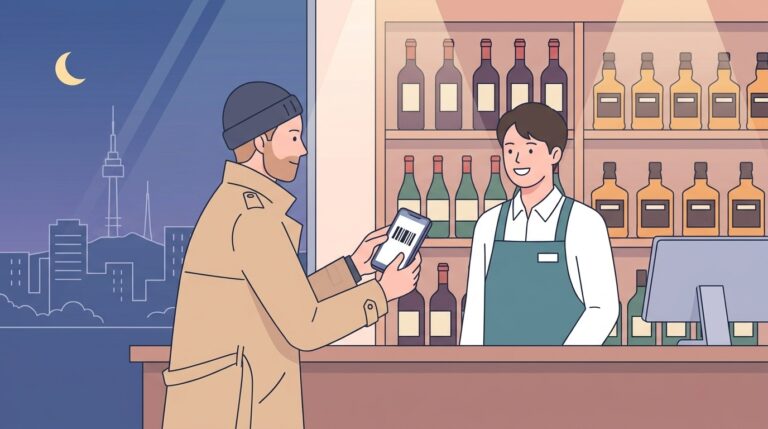
C2 Korean Masterclass: Navigating Korea’s Smart Convenience Store Wine & Whisky Pick-up Revolution
Phase 1: Empathy (스토리 몰입형 오프닝)
안녕하세요! It’s your trusty Korean culture navigator and editor from Daily Hangul (매일한글).
Imagine this: You’re winding down after a busy day in Seoul. You want to celebrate a minor personal milestone or simply pair a nice steak with a premium Cabernet Sauvignon or a rare single malt whisky. A decade ago, this meant hunting down a high-end department store or a specialized bottle shop before they closed. Today? You simply open an app on your phone, browse thousands of curated bottles, purchase one, and stroll down to the 24-hour convenience store (편의점) right under your officetel to pick it up.
As a C2-level learner, you aren’t just looking to survive in Korea; you want to master its highly integrated, tech-savvy lifestyle. Korea’s smart convenience store liquor pick-up services (편의점 주류 스마트오더) have transformed how locals drink. However, navigating the app-to-counter handoff requires specific high-level socio-linguistic nuances. If you’ve ever felt a bit hesitant standing in front of a busy convenience store clerk trying to explain that your premium bourbon is sitting in their back room, this guide is for you. Based on real feedback from expats and global professionals, we’ve mapped out the exact linguistic codes you need to sound like a native epicurean.
Phase 2: Deep-Dive into 3 Essential Expressions (핵심 표현 3선 심층 분석)
1. 앱으로 미리 결제하고 픽업하러 왔는데요. (App-euro mi-ri gyeol-je-ha-go pik-eop-ha-reo wat-neun-de-yo.)
- Pronunciation: “Aep-eu-ro mee-ree gyul-jae-ha-go peek-up-ha-ruh wan-neun-dae-yo” (Flow the ‘wat-neun’ into ‘wan-neun’ naturally via nasalization.)
- Meaning: “I already paid via the app and came to pick it up.”
- K-Culture Moment: You walk into a brightly lit CU or GS25. The clerk is busy stocking shelves. Instead of awkwardly showing your phone screen silently, you use this polite, indirect opener (
-는데요) to softly state your purpose and allow them to switch gears. - Editor’s Insight: C2 speakers know that direct demands sound harsh in Korean. Ending your sentence with
-는데요(which literally means “and so…”) leaves an polite open space for the clerk to respond and guide the interaction. - Situation Spectrum: Casual: ⚠️ | Semi-formal: ✅ | Formal: ✅
- 🤔 Think About It: Why does Korean service culture place such a high value on this linguistic ‘softening’ rather than direct, efficient English-style statements like “I’m here for my pickup”?
2. 주류 스마트오더 수령하려는데, 바코드 보여드리면 될까요? (Ju-ryu seu-ma-teu-o-deo su-ryeong-ha-ryeo-neun-de, ba-ko-deu bo-yeo-deu-ri-myeon doel-kka-yo?)
- Pronunciation: “Joo-ryu seu-ma-teu-oh-duh soo-ryung-ha-ryuh-neun-dae, bah-ko-deu bo-yuh-deu-ree-myun dwel-kkah-yo?”
- Meaning: “I am here to receive a smart liquor order; should I show you the barcode?”
- K-Culture Moment: Seen in contemporary K-Dramas showing the modern single-living (일인 가구) lifestyle, characters pick up premium wine for a home-party using these exact high-register words like
수령(reception/pickup) and스마트오더(smart order). - Editor’s Insight: Using the term
수령하다(to officially receive/retrieve) instead of the basic받다(to get) instantly elevates your Korean registry to a professional level, signaling to the clerk that you understand the formal system of the transaction. - Situation Spectrum: Casual: 🚫 | Semi-formal: ✅ | Formal: ✅
- 🤔 Think About It: How does utilizing Sino-Korean terms like 수령 (收領) change the power dynamic and respect level between the customer and the clerk?
3. 혹시 미성년자 본인인증 때문에 신분증 확인이 필요하신가요? (Hok-si mi-seong-nyeon-ja bo-in-in-jeung ttae-mun-e sin-bun-jeung hwa-gin-i pil-yo-ha-sin-ga-yo?)
- Pronunciation: “Hok-shee mee-sung-nyun-jah bo-een-een-jeung ttae-moon-ae sheen-boon-jeung hwah-gheen-ee peel-yo-hah-sheen-gah-yo?”
- Meaning: “By any chance, do you need to verify my ID for the underage identity verification process?”
- K-Culture Moment: In Korea, buying alcohol online via apps requires strict adult verification, and the physical pickup counter is the final legal checkpoint. Proactively offering your ID shows immense respect for the clerk’s legal responsibilities.
- Editor’s Insight: The use of
혹시(by any chance) combined with the honorific-시-in필요하신가요shows supreme social awareness and linguistic sophistication. - Situation Spectrum: Casual: 🚫 | Semi-formal: ✅ | Formal: ✅
- 🤔 Think About It: How does preemptively offering ID in a highly bureaucratic society like Korea build immediate rapport and trust?
Phase 3: Textbook Korean vs. Real-Life Korean (교과서 한국어 vs. 진짜 한국어)
Situation A: Telling the clerk you ordered wine through the app
- 📖 Textbook Korean: “와인을 인터넷으로 샀어요. 주세요.” (Wa-in-eul in-teo-net-eu-ro sat-eo-yo. Ju-se-yo.)
- “I bought wine on the internet. Give it to me.”
- 🗣️ 진짜 한국어: “사장님, 어플로 와인 픽업 예약하고 왔는데 바코드 조회 부탁드립니다!” (Sa-jang-nim, eo-peul-lo wa-in pik-eop ye-yak-ha-go wat-neun-de ba-ko-deu jo-hoe bu-tak-deu-rim-ni-da!)
- “Boss, I came after making a wine pickup reservation through the app, so could you scan/check the barcode, please?”
- 💡 Why the Difference? Real Koreans use
어플(app) rather than인터넷, call store owners politely as사장님(boss/proprietor) even if they are young, and use technical terms like바코드 조회(barcode lookup).
Situation B: When the clerk is struggling to find your premium box in the back room
- 📖 Textbook Korean: “내 술이 어디에 있습니까? 찾아보세요.” (Nae sur-i eo-di-e is-seum-ni-da-ka? Cha-ja-bo-se-yo.)
- “Where is my alcohol? Look for it.”
- 🗣️ 진짜 한국어: “박스가 크지 않아서 보관함이나 창고 안쪽에 있을 수도 있어요. 천천히 찾으셔도 괜찮습니다.” (Bak-seu-ga keu-ji an-ah-seo bo-gwan-ham-i-na chang-go an-jjok-e is-seul su-do is-seo-yo. Cheon-cheon-hi chat-eu-syeo-do gwen-chan-seum-ni-da.)
- “The box isn’t that big, so it might be inside the storage cabinet or the back room. It’s perfectly fine to take your time finding it.”
- 💡 Why the Difference? C2 fluency shines in showing empathy and patience. Giving the clerk specific clues where convenience stores store smart-orders (like the
창고, back room warehouse) while using polite easing phrases establishes you as a highly cultured resident.
Phase 4: K-Culture Deep-Dive & Non-Verbal Etiquette
4-1. Nunchi (눈치) & Hand Gestures at the Counter
When picking up expensive items like whisky or wine, the non-verbal transaction is highly choreographed:
1. The Double-Hand Phone Present: When presenting your barcode, hold your smartphone with both hands (양손), screen facing the clerk, with a slight nod of the head. This shows respect and prevents accidental drops.
2. ID Presentation: If asked for your ID (외국인등록증 – Alien Registration Card or passport), hand it over using both hands, holding it by the edges so the photo is easily visible to the clerk without them having to turn it around.
4-2. The Convenience Store “Liquor Smart Order” Culture
In Korea, convenience stores like GS25 (via the ‘Our Dongnae GS’ app) and CU (via the ‘Pocket CU’ app) have evolved into neighborhood premium cellars. Because space in urban Korean apartments is premium, and liquor taxes on imported high-end spirits are complex, these apps allow Koreans to buy limited-edition single malts (like Balvenie or Macallan) or rare natural wines during flash sales called 오픈런 (Open-Run). Understanding this cultural context means you view the convenience store clerk not just as a cashier, but as the final gatekeeper of your curated hobby.
Phase 5: Real-Life Roleplay Scenario (실전 롤플레이 시나리오)
The Characters
- 민우 (Min-woo): An experienced, slightly tired convenience store owner who takes great pride in his organized store.
- You (C2 Speaker): A sophisticated resident picking up a rare bottle of single malt whisky for a dinner party.
Dialogue (8 Turns)
- You: (Entering the store with a friendly smile) “안녕하세요, 사장님! 다름이 아니라 주류 스마트오더 픽업하러 왔는데요.”
(An-nyeong-ha-se-yo, sa-jang-nim! Da-reum-i a-ni-ra ju-ryu seu-ma-teu-o-deo pik-eop-ha-reo wat-neun-de-yo.)
“Hello, boss! I’m actually here to pick up a smart liquor order.” -
민우: “아, 스마트오더요? 성함이랑 어플에서 발급된 바코드 좀 보여주시겠어요?”
(Ah, seu-ma-teu-o-deo-yo? Seong-ham-i-rang eo-peul-e-seo bal-geup-doen ba-ko-deu jom bo-yeo-ju-si-get-eo-yo?)
“Ah, the smart order? Could you show me your name and the barcode issued by the app?” -
You: (Presenting phone with both hands) “네, 여기 있습니다. 발급번호도 밑에 적혀 있어요.”
(Ne, yeo-gi is-seum-ni-da. Bal-geup-beon-ho-do mit-e jeok-hyeo is-seo-yo.)
“Yes, here it is. The issuance number is also written right below it.” -
민우: (Scanning the barcode, squinting at the screen) “음… 어제 들어온 위스키 상자 같은데, 잠깐 창고 좀 확인해 보고 올게요. 대기해 주세요.”
(Eum… eo-je deul-eo-on wi-seu-ki sang-ja gat-eun-de, jam-kan chang-go jom hwa-gin-hae bo-go ol-ge-yo. Dae-gi-hae ju-se-yo.)
“Hmm… I think it’s the whisky box that came in yesterday. Let me go check the warehouse back room for a second. Please hold on.” -
You: “아, 네! 급하지 않으니까 천천히 다녀오셔도 됩니다. 박스 겉면에 제 이름 쓰여 있을 거예요.”
(Ah, ne! Geup-ha-ji an-eu-ni-kka cheon-cheon-hi da-nyeo-o-syeo-do doen-ni-da. Bak-seu geot-myeon-e je i-reum sseu-yeo is-seul geo-ya-yo.)
“Ah, yes! There’s no rush, so please take your time. My name should be written on the outside of the box.” -
민우: (Emerging from the back room carrying a neatly bubble-wrapped box) “여기 있네요! 고가 품목이라 본인 확인 때문에 신분증 혹시 지참하셨나요?”
(Yeo-gi in-ne-yo! Go-ga pum-mok-i-ra bo-in hwa-gin ttae-mun-e sin-bun-jeung hok-si ji-cham-ha-syeot-na-yo?)
“Here it is! Since it’s a high-value item, did you happen to bring your ID for identity verification?” -
You: “네, 당연하죠. 여기 외국인등록증입니다. 확인해 보세요.”
(Ne, dang-yeon-ha-jo. Yeo-gi oe-guk-in-deung-rok-jeung-im-ni-da. Hwa-gin-hae bo-se-yo.)
“Yes, of course. Here is my Alien Registration Card. Please go ahead and check.” -
민우: (Verifying and handing over the box with a warm smile) “네, 확인되셨습니다! 봉투 필요하신가요, 아니면 그냥 가져가시겠어요?”
(Ne, hwa-gin-doe-syeot-seum-ni-da! Bong-tu pil-yo-ha-shin-ga-yo, a-ni-myeon geu-nyang ga-jyeo-ga-shi-get-eoy-yo?)
“Yes, all verified! Do you need a bag, or would you like to take it as is?”
🔀 Interactive Decision Points (인터랙티브 선택지)
At Turn 8, Min-woo asks if you need a bag. How do you respond?
- Option A: “아뇨, 그냥 안고 가도 상관없어요. 수고하세요!”
- Option B: “술이 깨지지 않게 완충재나 비닐봉투 하나만 유료로 구매할 수 있을까요?”
- Option C: “그냥 주세요. 봉투값 아까워요.”
Feedback on Your Choice:
- Best Choice – Option B: Highly sophisticated! Acknowledging that bags cost money under Korean environmental laws (
유료로 구매) and mentioning the protection of the bottle (완충재, bubble wrap) shows peak local adjustment. - Bad Choice – Option C: Too blunt and linguistically dry. While grammatically correct, mentioning that the bag fee is “a waste of money” (
아까워요) breaks the polite atmosphere. - Risk Choice – Option A: Acceptable but casual. If you are carrying a very expensive bottle, saying you will “hug and carry it” (
안고 가도) is friendly but slightly informal for a C2 level interaction with a stranger.
Phase 6: 10-Second Emotional Shadowing Drill (10초 감정 섀도잉)
To master C2 level naturalness, practice speaking with emotional color and precise pauses (/).
- Scenario: Apologizing politely for making the cashier look for your order during busy hours.
- Sentence:
> “바쁘신 시간에 / 제가 번거롭게 해 드려서 / 죄송해요. / 천천히 찾아주셔도 / 정말 괜찮습니다!” - Pronunciation Guide: “Ba-ppeu-sin si-gan-e / je-ga beon-geo-rop-ge hae deu-ryeo-seo / joe-song-hae-yo. / Cheon-cheon-hi cha-ja-ju-syeo-do / jeong-mal gwen-chan-seum-ni-da!”
- Emotion Target:
[🥺 Warm, apologetic, and showing extreme consideration for their labor]
Phase 7: K-Culture Mini-Dictionary (편의점 스마트오더 필수 어휘)
- 주류 스마트오더 (Ju-ryu Seu-ma-teu-o-deo) | Smart Liquor Order
- The legally regulated system in Korea where users can purchase alcohol online via apps but must verify age and pick up the physical product in-store.
- 점포 지정 (Jeom-po Ji-jeong) | Store Designation
- Selecting the specific branch of a convenience store franchise where your imported wine or whisky will be delivered.
- 수령 대기 (Su-ryeong Dae-gi) | Awaiting Pickup / Retrieval
- The app status screen showing that your product has arrived at the store and is waiting for you to scan your barcode.
- 미성년자 구매 불가 (Mi-seong-nyeon-ja Gu-mae Bul-ga) | No Sale to Minors
- The strict legal classification that requires face-to-face identification check upon pick up.
Phase 8: Survival Kit for Travelers & Expats
Survival Expressions TOP 3
- “이거 스마트오더로 신청한 건데 바코드 찍어주세요.” (I-geo seu-ma-teu-o-deo-ro sin-cheong-han geon-de ba-ko-deu jjik-eo-ju-se-yo.)
- Pro Tip: Use this while pointing to your screen if the clerk looks confused by the word “pickup.”
- “창고 뒤쪽에 제 이름 박스가 따로 보관되어 있을 거예요.” (Chang-go dwi-jjok-e je i-reum bak-seu-ga tta-ro bo-gwan-doe-eo is-seul geo-ya-yo.)
- Pro Tip: Helpful when new part-timers cannot locate your box in the general shelf area.
- “신분증 여기 있습니다. 외국인등록증도 괜찮죠?” (Sin-bun-jeung yeo-gi is-seum-ni-da. Oe-guk-in-deung-rok-jeung-do gwen-chan-cho?)
- Pro Tip: Confirms that your ARC is perfectly valid for age verification instead of showing your passport.
Editor’s Travel Note:
To use these services, download the official franchise apps. We highly recommend using the 우리동네GS (Our Dongnae GS App) or the 포켓CU (Pocket CU App) to browse local inventory. Note: You will need an active Korean phone number with identity verification (본인인증) to purchase alcohol through these apps due to national safety regulations.
Phase 9:
Frequently Asked Questions (FAQ)
Q: What does "앱으로 미리 결제하고 픽업하러 왔는데요. (App-euro mi-ri gyeol-je-ha-go pik-eop-ha-reo wat-neun-de-yo.)" mean in Korean and how do you pronounce it?
A: In Korean, "앱으로 미리 결제하고 픽업하러 왔는데요. (App-euro mi-ri gyeol-je-ha-go pik-eop-ha-reo wat-neun-de-yo.)" is pronounced ["Aep-eu-ro mee-ree gyul-jae-ha-go peek-up-ha-ruh wan-neun-dae-yo" (Flow the 'wat-neun' into 'wan-neun' naturally via nasalization.] and means: "I already paid via the app and came to pick it up."







