C1 Korean Mastery: Cracking the Code of Korean Real Estate Auctions (부동산 경매)
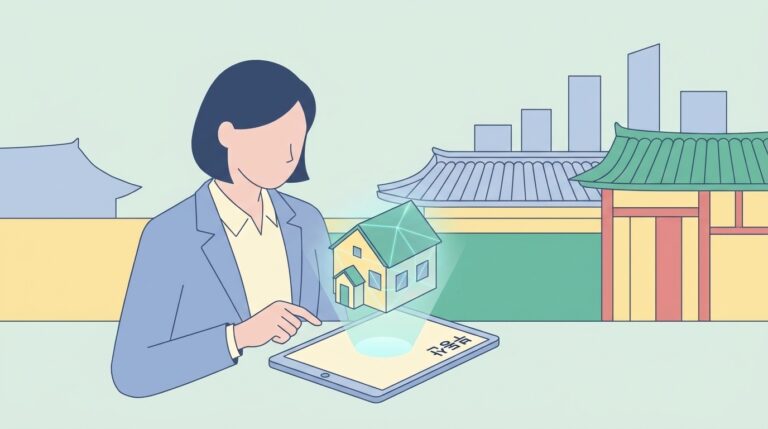
안녕하세요! Welcome back, my dear friends! It’s your favorite K-culture navigator and Daily Hangul’s chief editor. Have you ever watched a gripping K-drama like Penthouse or Reborn Rich and wondered how those conglomerates and savvy investors make fortunes overnight? Often, the secret lies in the high-stakes, adrenaline-pumping world of 부동산 경매 (Budongsan Gyeongmae – Real Estate Auctions).
Investing in Korean real estate isn’t just about buying an apartment in Gangnam; it’s a cultural chess game. If you are aiming for a C1 level of fluency and want to understand how wealth is built and managed for retirement in Korea, mastering the highly specialized vocabulary of court auctions is your golden ticket. Let’s dive deep into the legal nuances, the unwritten social rules, and the actual phrases that will make you sound like a seasoned Korean investor.
Phase 1: Empathy (Our Shared Journey)
We’ve all been there: you are watching a K-drama, and suddenly a red sticker (빨간 딱지) is slapped onto a luxurious piano, or a character is desperately looking at court documents with terms like “Gwonri Bunseok” (권리분석). You think, “I know ‘집’ (house) and ‘돈’ (money), but what on earth is going on here?”
Many of our advanced learners at Daily Hangul have shared their frustration. They want to discuss serious wealth-building and retirement planning (재테크와 은퇴 설계) with Korean colleagues, but find themselves limited to basic conversations. Today, we are breaking through that ceiling. Understanding real estate auctions in Korea is not just a language lesson; it’s an initiation into the true mindset of Korean financial independence.
Phase 2: Core Expressions Deep Dive (핵심 표현 3선)
1. 권리분석을 하다 (gwon-ri-bun-seok-eul ha-da)
- Pronunciation: Kwon-ree-boon-suk-eul ha-da (Sounds like “Kwon-re” + “boon-suk”)
- Meaning: To analyze rights/titles (Legal rights analysis of a property)
- K-Culture Moment: This is the scene where the smart female lead stays up all night drinking instant coffee, analyzing piles of registry documents to find a hidden loophole in an auction property.
- Editor’s Insight: In Korean auction culture, Gwonri Bunseok is the holy grail. It means checking if there are unpaid leases or hidden claims that the buyer must inherit. If you skip this, you might buy a cheap house but end up paying more to evict the previous tenants!
- Situation Spectrum: Casual (🚫) | Semi-formal (⚠️) | Formal (✅)
- 🤔 Think About It: In many Western countries, title insurance covers hidden legal defects. In Korea, the responsibility falls heavily on the bidder’s own Gwonri Bunseok. How does this reflect the Korean cultural value of personal diligence and “self-responsibility” (자기책임)?
2. 명도소송을 제기하다 (myeong-do-so-song-eul je-gi-ha-da)
- Pronunciation: Myung-do-so-song-eul jay-gee-ha-da (Sounds like “Myeong-do” + “so-song”)
- Meaning: To file an eviction lawsuit (Property delivery lawsuit)
- K-Culture Moment: Used when an illegal occupant refuses to leave a foreclosed apartment, leading to a tense, dramatic confrontation at the front door.
- Editor’s Insight: Myeongdo (명도) is the physical transfer of the property. Filing a lawsuit (소송을 제기하다) is the absolute last resort in Korea, where social harmony is valued, and negotiating a peace fee (이사비 – moving cost) is often preferred.
- Situation Spectrum: Casual (🚫) | Semi-formal (⚠️) | Formal (✅)
- 🤔 Think About It: Why do you think Korean investors prefer paying voluntary “moving fees” to illegal occupants over starting legal eviction lawsuits?
3. 유찰되다 (yu-chal-doe-da)
- Pronunciation: Yoo-chal-dway-da (Sounds like “You-chal” + “dway-da”)
- Meaning: To be rejected/fail to find a bidder (Auction depreciation)
- K-Culture Moment: Investors whispering in the back of the courtroom: “This Gangnam villa got yuchal twice! Now it’s 36% off!”
- Editor’s Insight: When a property is yuchal-dwaetda, its minimum bidding price drops by 20% to 30% in the next round. Savvy buyers wait for multiple yuchal rounds to snatch properties at dirt-cheap prices.
- Situation Spectrum: Casual (⚠️) | Semi-formal (✅) | Formal (✅)
- 🤔 Think About It: Is there a similar system in your country where the price drops automatically if no one bids?
Phase 3: Textbook vs. Real-Life Korean
Let’s compare the rigid sentences found in textbooks with what real-life investors say over a cup of tea at a local real estate office (부동산).
Scenario 1: Discussing an attractive auction property
- 📖 Textbook Korean: “이 부동산은 경매 가격이 많이 하락하여 매수하기에 매우 적합합니다.” (This property’s auction price has decreased a lot, so it is very suitable to purchase.)
- 🗣️ 진짜 한국어: “이 물건, 몇 번 유찰돼서 완전 줍줍 타이밍이에요!” (This property has been dropped/unbid a few times, so it’s the perfect timing to just scoop it up!)
- 💡 Why is it different? 줍줍 (Jub-jub) is a highly popular slang word derived from “줍고 줍는다” (picking up over and over), used to describe buying high-value assets at extremely low prices.
Scenario 2: Evicting a tenant smoothly
- 📖 Textbook Korean: “법적 절차에 따라 임차인을 퇴거시켜야 합니다.” (We must evict the tenant according to legal procedures.)
- 🗣️ 진짜 한국어: “명도 골치 아프게 갈 것 없이, 이사비 선에서 좋게 마무리하죠.” (Instead of going through a headache with the eviction, let’s wrap it up nicely within the range of a moving fee.)
- 💡 Why is it different? Real investors avoid court battles at all costs because they take time. Saying “좋게 마무리하다” (wrap up amicably) shows emotional intelligence (눈치) in Korean business settings.
Phase 4: K-Culture Deep Dive & Non-Verbal Etiquette
4-1. Courtroom Etiquette & Body Language
When visiting a Korean district court (지방법원) for a real estate auction, your non-verbal cues speak louder than words:
* The Poker Face (포커페이스): Never show excitement when writing your bid amount (입찰표). Other bidders are watching your eyes and hands. Keep your bidding slip covered at all times.
* The Polite Bow (폴더 인사): When interacting with court officials or the executing officer (집행관), a slight, respectful 15-degree bow establishes you as a serious, respectful professional.
4-2. The Cultural Phenomenon of “Tech” (테크)
In Korea, wealth-building strategies are called “-tech” (테크). You have 재테크 (financial tech), 앱테크 (making money via smartphone apps), and 경테크 (경매 + 재테크 – auction-based investing). For the retirement-oriented generation, Gyeong-tech is seen as the ultimate active income stream to secure high-yielding monthly rents.
Phase 5: Interactive Roleplay Scenario
Meet Mr. Park, an experienced local real estate consultant (공인중개사). He is guiding you through your very first auction bid at the Seoul Southern District Court.
- Background: You have found a small studio apartment in Mapo that has been yuchal twice.
Dialogue
- Mr. Park (🎭 holding a registry printout): “이번 마포 물건, 권리분석은 제대로 해 보셨어요? 임차인 대항력이 애매한데.”
(Did you do the title analysis properly on this Mapo property? The tenant’s opposing power is a bit ambiguous.) - You (🎭 nodding confidently): “네, 전입신고일이랑 근저당권 설정일을 비교해 보니 대항력이 없더라고요.”
(Yes, comparing the resident registration date and the collateral mortgage setup date, they don’t have opposing power.) - Mr. Park (🎭 impressed): “오, 공부 많이 하셨네요! 하지만 문제는 명도입니다. 현 점유자가 쉽게 나갈 기세가 아니에요.”
(Oh, you’ve studied hard! But the problem is eviction. The current occupant doesn’t seem like they’ll leave easily.) - You (🎭 smiling calmly): “명도소송까지 안 가도록, 우선 대화로 이사비 협상을 제안해보려고요.”
(To avoid going as far as an eviction lawsuit, I plan to first suggest negotiating a moving fee through dialogue.) - Mr. Park (🎭 giving a thumbs up): “아주 현명한 접근입니다! 이번에 한 번 더 유찰되면 들어가실 건가요?”
(Very wise approach! Are you going to bid if it gets dropped one more time?) - You (🎭 holding the bidding envelope): “아니요, 이번 회차에 최저매각가격 수준으로 입찰할 생각입니다.”
(No, I plan to bid at the minimum sale price level in this current round.) - Mr. Park (🎭 whispering quietly): “좋습니다. 입찰표 보증금 액수 잘 확인하시고 봉투에 도장 찍는 것 잊지 마세요!”
(Great. Check the bid deposit amount carefully and don’t forget to stamp the envelope!) - You (🎭 taking a deep breath): “네, 실수 없이 작성해서 제출하고 오겠습니다. 지켜봐 주세요!”
(Yes, I will write it down without mistakes and submit it. Wish me luck!)
🔀 Interactive Choice
What will you do next in the bidding process?
* [A] Bid significantly higher than the minimum price to guarantee you win the property.
* [B] Submit the exact minimum bid price and risk losing to other competitive bidders.
* [C] Wait for one more depreciation round (유찰) to get it even cheaper.
Feedback
- Choice [A] (Bad): You won! But you paid almost market price. This defeats the purpose of an auction (경테크). Your profit margin is gone!
- Choice [B] (Best): Even if you lose, this is a highly disciplined C1 investor move. Minimizing risk is key in Korean real estate.
- Choice [C] (Risk): You waited, but someone else snatched it up at the current round! Sometimes greed leads to empty hands.
Phase 6: 10-Second Emotional Shadowing Drill
Practice speaking like an actual real estate tycoon. Pay attention to the pauses (/) and emotional tone!
- [😏 Confident & Smart]
“이 물건은 / 권리분석상 / 아무런 문제가 없는 / 깨끗한 물건입니다.”
(I-mul-geon-eun / gwon-ri-bun-seok-sang / a-mu-reon mun-jae-ga eop-neun / kkae-kku-than mul-geon-im-ni-da.) -
[😅 Nervous but Resolute]
“명도소송까지 / 가기 전에 / 이사비 선에서 / 좋게 합의봅시다.”
(Myeong-do-so-song-kka-ji / ga-gi jeon-e / i-sa-bi seon-e-seo / jo-ge hap-ui-bop-si-da.)
Phase 7: K-Culture Mini Dictionary
- 대항력 (Dae-hang-ryeok) | Opposing Power / Tenant’s Right:
The legal power of a tenant to refuse to vacate a home even if the owner changes through auction. - 임장 (Im-jang) | Field Trip / Property Inspection:
Going to the actual neighborhood to inspect the property, neighborhood atmosphere, and local real estate mood. Essential before bidding! - 낙찰 (Nak-chal) | Successful Bid:
Winning the auction. The opposite of Yuchal. - 빨간 딱지 (Ppal-gan Ttak-ji) | Red Seizure Tag:
The red warning stickers placed by court officials on debtor’s property. The ultimate symbol of financial drama in Korea.
Phase 8: Survivor Kit for Expats
Survival Expressions TOP 3
- “이 근처 경매 물건 혹시 나온 거 있나요?”
(I-geun-cheo gyeong-mae mul-geon hok-si na-on geo in-na-yo?)- Pro Tip: Ask this to local realtors (공인중개사) to get off-market gossip.
- “낙찰가율이 보통 어떻게 돼요?”
(Nak-chal-ga-yul-i bo-tong eo-tteo-ke dway-yo?)- Pro Tip: “What is the average winning bid rate?” Use this to sound like an expert.
- “이사비 조율 가능할까요?”
(I-sa-bi jo-yul ga-neung-hal-kka-yo?)- Pro Tip: “Is it possible to adjust the moving fee?” Use this when initiating Myeongdo negotiations.
Editor’s Travel Note
Before doing any real estate research, download the official 대법원 법원경매정보 (Supreme Court Auction Information App) to check real-time official listings. Always cross-reference addresses on the 네이버 지도 (Naver Maps App) to check the actual neighborhood topography, since hilliness drastically changes property values in Seoul!
Note: Auction laws and tax regulations are subject to frequent updates. Please check the latest official guidelines.
Phase 9:
Frequently Asked Questions (FAQ)
Q: What does "권리분석을 하다 (gwon-ri-bun-seok-eul ha-da)" mean in Korean and how do you pronounce it?
A: In Korean, "권리분석을 하다 (gwon-ri-bun-seok-eul ha-da)" is pronounced [Kwon-ree-boon-suk-eul ha-da (Sounds like "Kwon-re" + "boon-suk"] and means: To analyze rights/titles (Legal rights analysis of a property)
Q: What does "명도소송을 제기하다 (myeong-do-so-song-eul je-gi-ha-da)" mean in Korean and how do you pronounce it?
A: In Korean, "명도소송을 제기하다 (myeong-do-so-song-eul je-gi-ha-da)" is pronounced [Myung-do-so-song-eul jay-gee-ha-da (Sounds like "Myeong-do" + "so-song"] and means: To file an eviction lawsuit (Property delivery lawsuit)
Q: What does "유찰되다 (yu-chal-doe-da)" mean in Korean and how do you pronounce it?
A: In Korean, "유찰되다 (yu-chal-doe-da)" is pronounced [Yoo-chal-dway-da (Sounds like "You-chal" + "dway-da"] and means: To be rejected/fail to find a bidder (Auction depreciation)