

Chivalry vs. Jeong: Is ‘Lady First’ Really a Thing in Korea?
Phase 1: Empathy (An Open Letter to My Global Besties)
안녕하세요! It’s your favorite Daily Hangul editor and cultural navigator.
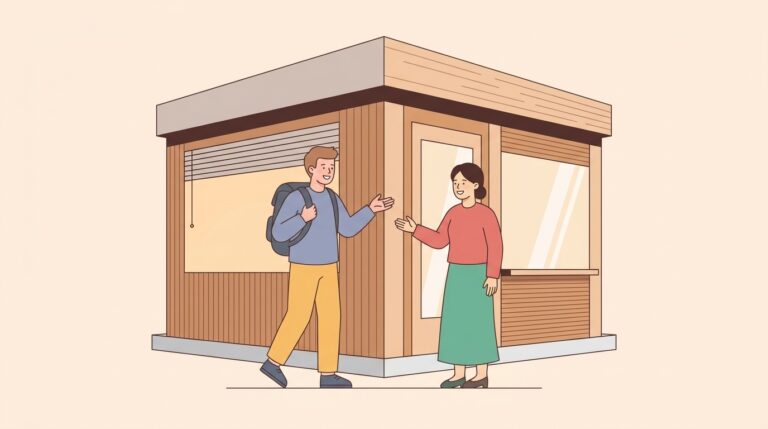
Let’s set the scene: You are walking up to a trendy cafe in Seongsu-dong with your Korean friend. Being the polite, well-mannered global citizen you are, you quickly step ahead, open the heavy glass door, and hold it open with a warm smile, gesturing “After you.”
Instead of a smooth glide-in, your Korean friend pauses, looks momentarily flustered, and insists, “No, no, you first!” After a brief, slightly awkward dance of “No, you,” “No, you,” you both squeeze in, feeling a tiny bit out of sync.
Have you ever wondered why the classic Western “Lady First” etiquette sometimes gets lost in translation in Korea? It’s not that Koreans aren’t polite—in fact, Korean culture is deeply rooted in respect and consideration. But the system of manners here operates on a completely different set of cultural gears called Jeong (정), Nunchi (눈치), and age-based hierarchy.
If you’ve ever felt confused about when to hold the door, who sits down first at a dinner table, or how to show consideration to a woman or an elder without making things awkward, this guide is for you. Let’s decode the beautiful, sometimes complex world of modern Korean social manners so you can navigate your next hangout like a true local!
Phase 2: Deep Dive into 3 Essential Expressions
To master Korean etiquette, you need to understand the phrases that locals actually use to negotiate politeness. Here are three crucial expressions for your B2 vocabulary toolkit.
1. 먼저 가세요 (Meon-jeo ga-se-yo)
- Pronunciation: Mohn-juh gah-seh-yo (Sounds like “Mon” as in Monday + “juh” as in jug + “gah-say-yo”)
- Meaning: Please go first / After you.
- K-Culture Moment: You will hear this constantly in K-Dramas when two characters are stepping into an elevator or boarding a subway car. Instead of “Lady First,” the person younger or trying to show respect will step back and say this while slightly gesturing with their hand.
- Editor’s Insight: This is the ultimate neutral, polite go-to phrase. Unlike the gender-specific “Lady First,” Korean politeness is primarily relationship-and-status-centric. Saying “먼저 가세요” shows you are putting the other person’s comfort above your own.
- Situation Spectrum: Casual (⚠️ 먼저 가 – Meon-jeo ga), Semi-formal (✅ 먼저 가세요), Formal (✅ 먼저 가십시오 – Meon-jeo ga-sip-si-o)
- 🤔 Think About It: In your home country, is it more polite to prioritize gender (holding doors for women) or age/status? How does changing the focus to “whoever is guest/elder first” change the dynamic?
2. 편하게 계세요 (Pyeon-ha-ge gye-se-yo)
- Pronunciation: Pyuhn-hah-geh gyeh-seh-yo (Sounds like “Pyuhn” + “hah-geh” + “gyeh-seh-yo”)
- Meaning: Please make yourself comfortable / Please don’t stand on ceremony.
- K-Culture Moment: Picture a dinner party scene. A younger coworker or a female colleague sits stiffly at the edge of their seat. The senior colleague or host will smile warmly and say, “아유, 편하게 계세요!” to break the ice.
- Editor’s Insight: Western chivalry often highlights treating women with delicate care. In Korea, true consideration often means removing the burden of formality from the other person. By telling someone to be “comfortable,” you are letting them drop their guard.
- Situation Spectrum: Casual (⚠️ 편하게 있어 – Pyeon-ha-ge isseo), Semi-formal (✅ 편하게 계세요), Formal (✅ 편하게 있으시면 됩니다)
- 🤔 Think About It: Why do you think modern Koreans value reducing tension and making others feel comfortable over rigid, traditional rules of etiquette?
3. 제가 할게요 (Je-ga hal-ke-yo)
- Pronunciation: Jeh-gah hahl-keh-yo (Sounds like “Jay-gah” + “hahl-kay-yo”)
- Meaning: I’ll do it / Let me get that.
- K-Culture Moment: In romance dramas, when a heavy box needs to be carried or a table needs setting, the male lead will gently take the items from the female lead’s hands, saying “제가 할게요” with a reassuring look.
- Editor’s Insight: While traditional “Lady First” is rare, showing care through physical action—especially taking over laborious tasks—is highly valued in Korea. It’s a silent, active way of showing affection and respect.
- Situation Spectrum: Casual (⚠️ 내가 할게 – Nae-ga hal-ke), Semi-formal (✅ 제가 할게요), Formal (✅ 제가 하겠습니다)
- 🤔 Think About It: Do you prefer verbal politeness (“After you”) or active physical helpfulness (“Let me carry that”)? How does this reflect in your own culture?
Phase 3: Textbook Korean vs. Real-Life Korean
Let’s compare what the classroom taught you versus how real Koreans navigate these moments.
Situation 1: Offering someone to take a seat first
- 📖 Textbook Korean: “먼저 앉으십시오.” (Meon-jeo an-jeu-sip-si-o – Please sit down first.)
- 🗣️ Real-Life Korean: “여기 앉으세요!” (Yeo-gi an-jeu-se-yo! – Sit here!) or simply gesturing and saying “먼저 앉으세요.” (Meon-jeo an-jeu-se-yo)
- 💡 Why the difference? The textbook version is grammatically flawless but highly formal, making you sound like a royal court guard. Real-life Koreans prefer warm, active suggestions that sound less like a command and more like a friendly invitation.
Situation 2: INSISTING on paying for dinner/coffee
- 📖 Textbook Korean: “제가 지불하겠습니다.” (Je-ga ji-bul-ha-get-seup-ni-da – I will pay/make the payment.)
- 🗣️ Real-Life Korean: “제가 살게요!” (Je-ga sal-ke-yo! – I’ll buy!) or “제가 쏠게요!” (Je-ga ssol-ke-yo! – My treat! / I’ll shoot!)
- 💡 Why the difference? Paying for someone is a huge part of Korean bonding (Jeong). Saying “지불하다” (to pay) sounds like a cold business transaction. Saying “제가 살게요” (I’ll buy/live) represents sharing life and warmth.
Phase 4: K-Culture Deep Dive & Non-Verbal Manners
4-1. The Art of “Nunchi” (눈치) in Physical Spaces
In Western etiquette, holding a door for a stranger is standard. In Korea, you might notice people rarely hold doors for long stretches of time behind them. This isn’t rudeness; it’s a difference in personal boundaries and Nunchi (situational quick-wittedness).
* The Door Protocol: Instead of holding the door wide open and waiting (which forces the person behind to run so they don’t make you wait), Koreans typically catch the door with their hand as they walk through, leaving it open just enough for the next person to grab. It’s efficient and avoids forcing a “thank you” interaction.
* The Umbrella Shield: On rainy days on narrow Seoul streets, watch how Koreans tilt their umbrellas away from oncoming pedestrians. This silent dance of consideration is a beautiful, non-verbal “Lady/Gentleman First” equivalent.
4-2. The “Manner Hands” (매너손 – Mae-neo-son) Culture
If you watch K-Dramas or K-Pop behind-the-scenes, you’ve likely seen “Manner Hands.” This is where male celebrities avoid physical contact with female co-stars by hovering their hands instead of placing them directly on the woman’s shoulders or waist.
* The Cultural Code: Unlike Western chivalry, which might involve physical guidance (e.g., a hand on the lower back), Korean politeness prioritizes respecting personal space and avoiding unwanted physical contact. Showing restraint is considered highly gentlemanly!
Phase 5: Real-Life Roleplay Scenario
Setting: You are at a trendy Italian restaurant in Gangnam with Min-ji (민지), your Korean colleague. The table is set, but the side dishes and water haven’t been prepared yet.
The Dialogue (8 Turns)
- Min-ji: “와, 여기 분위기 진짜 좋네요! 예약해 주셔서 감사해요.”
(Wow, the atmosphere here is so nice! Thank you for making the reservation.) - You: “아니에요, 마음에 드신다니 다행이에요. 먼저 앉으세요.”
(No problem, I’m glad you like it. Please sit down first.) - Min-ji: (Sits down) “에이, 같이 앉아야죠! 어서 앉으세요.”
(Oh, we should sit together! Please sit down.) - You: (Sits down and notices the water bottle) “제가 할게요. 물 좀 따를까요?”
([🎭 Grabbing the water bottle gently] Let me do it. Shall I pour some water?) - Min-ji: “어머, 감사해요. 제가 수저 놓을게요.”
(Oh, thank you. I’ll set up the spoon and chopsticks then.) - You: “아니에요, 편하게 계세요. 제가 다 세팅할게요!”
([😊 Smiling warmly] No, please make yourself comfortable. I’ll set everything up!) - Min-ji: “우와, 정말 매너가 좋으시네요. 감동했어요!”
(Wow, you really have great manners. I’m touched!) - You: “하하, 별말씀을요. 맛있게 먹어요!”
(Haha, don’t mention it. Let’s have a delicious meal!)
🔀 Interactive Choice Point
The bill arrives at the end of the meal. What do you do?
- Option A: Speed-walk to the counter, grab the bill, and say “제가 쏠게요!” (I’ll treat!)
- Option B: Wait for Min-ji to open her wallet, then suggest splitting it “더치페이 해요.” (Let’s split the bill.)
- Option C: Grab the bill and say “제가 지불하겠습니다.” (I will pay.)
💡 Feedback
- Best Choice (Option A): Gold Star! This is incredibly natural, generous, and builds strong “Jeong” (social connection). It’s the ultimate polite gesture in Korean dining.
- Risk Choice (Option B): Not bad, and very common among younger friends! However, if you initiated the dinner, it might feel a bit cold.
- Bad Choice (Option C): A bit too robotic and business-like. It might make the atmosphere feel stiff and formal instead of friendly.
Phase 6: 10-Second Emotion Shadowing Drill
Train your muscle memory with these rhythmic, expressive sentences! Notice the pauses (/) and emotional cues.
- [😊 Polites & Welcoming]
- “먼저 / 가세요! / 길을 / 잘 몰라서요.”
- Meon-jeo / ga-se-yo! / Gi-reul / jal mol-la-seo-yo.
- (Go ahead first! / I don’t know the way very well.)
- [🥺 Soft & Warmly Reassuring]
- “제가 / 할게요. / 무거우니까 / 들지 마세요.”
- Je-ga / hal-ke-yo. / Mu-geo-u-ni-ka / deul-ji ma-se-yo.
- (Let me do it. / Since it’s heavy, / please don’t lift it.)
- [🥳 Bright & Cheerful]
- “오늘은 / 제가 / 쏠게요! / 편하게 / 드세요.”
- O-neul-eun / je-ga / ssol-ke-yo! / Pyeon-ha-ge / deu-se-yo.
- (Today is my treat! / Please eat comfortably.)
Phase 7: K-Culture Mini-Dictionary
- 매너손 (Mae-neo-son) | Manner Hands
The polite practice of avoiding physical contact with another person out of respect for their personal space. - 더치페이 (Deo-chi-pe-i) | Going Dutch / Splitting the bill
Widely used among the younger generation, though traditionally, one person pays and the other buys round two (coffee). - 정 (Jeong) | Warm feelings of attachment and connection
The invisible social glue in Korea that prioritizes mutual care, sharing, and helping others over strict individual rules. - 눈치 (Nunchi) | Situational awareness / Reading the room
The ability to gauge other people’s feelings and needs without them having to speak aloud.
Phase 8: Survivor Kit for Travelers
Survival Expressions TOP 3
- 화장실 어디예요? (Hwa-jang-sil eo-di-yeo-yo?) – Where is the restroom?
- Pro Tip: Look for the door key or password at the cafe counter—many Seoul cafes keep their restrooms locked for safety!
- 영수증 버려주세요. (Yeong-su-jeung beo-ryeo-ju-se-yo.) – Please throw away the receipt.
- Pro Tip: Extremely handy when buying quick drinks at convenience stores.
- 카드 되나요? (Ka-deu doe-na-yo?) – Do you take cards?
- Pro Tip: South Korea is almost entirely cashless. Even tiny street food stalls often accept bank transfers!
Editor’s Travel Note
When navigating Seoul, download Naver Map (네이버 지도) instead of Google Maps, as Google Maps does not update real-time walking and transit paths accurately in Korea due to local security laws.
Note: Local transit fares and card acceptance policies are subject to change over time; always carry a small amount of cash just in case!
Phase 9: One Step Deeper (Korean Humanism)
In the West, “Lady First” has historical ties to chivalry and protecting the “fairer sex.” In Korea, manners evolved from Neo-Confucianism, which focuses on order, age, and social harmony.
When a young Korean man lets an older woman board the bus first, it’s not because she is a woman, but because she is an elder deserving of respect. When a senior colleague lets a junior female colleague sit first, it’s an act of care (Sarang/Jeong) from a senior to a junior. Understanding this shift from gender-based chivalry to community-based respect will make your interactions in Korea infinitely deeper.
💬 Your Turn: Have you ever experienced a “culture clash” with door-holding or paying for meals? Share your story in the comments below!
Phase 10: FAQ & Common Mistakes
Q: Is it rude for a man to walk through a door ahead of a woman in Korea?
A: No, it’s not considered rude. Often, the person leading the way or guiding the group will walk through first to make sure the path is clear. However, letting elders or guests go first is highly appreciated.
Q: Should I always try to pay for the first date in Korea?
A: Traditionally, the person who asked the other out pays for the meal, and the other person pays for coffee/dessert. Modern young Koreans increasingly prefer splitting the bill or taking turns.
Q: I held the door for someone and they walked right past without saying “Thank you.” Did I do something wrong?
A: Don’t take it personally! In Korea, verbalizing







