

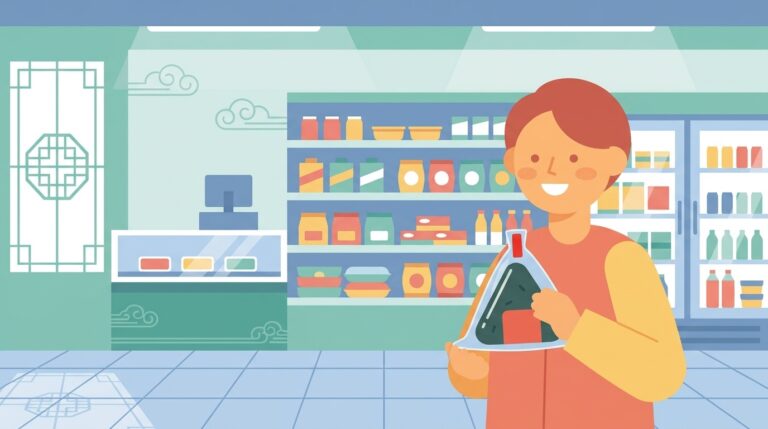
How to Open a Triangle Gimbap Without Ruining It: Your Ultimate Korean Convenience Store Survival Guide
Phase 1: Empathy (Welcome to the K-Convenience Store Adventure!)
안녕하세요! (Annyeonghaseyo!) Hello, dear K-culture lover! I’m your Lead Editor and Local Culture Navigator at Daily Hangul (매일한글).
Picture this: You just arrived in Seoul. It’s midnight, you’re hungry, and you walk into a brightly lit CU or GS25. You see a row of delicious, affordable Triangle Gimbap (삼각김밥 – Samgak Gimbap). You buy one, excited for that crunchy seaweed and savory filling. But as you pull the red tab… rip! The plastic tears, the seaweed crumbles, and you are left holding a sad, bare rice ball with the seaweed trapped inside the plastic wrapping.
Don’t worry, we have all been there! Even Koreans sometimes mess this up when they are in a rush. Today, we are going to master not only the “art” of opening a triangle gimbap but also the essential, natural Korean phrases you need when you are struggling at a convenience store. By the end of this guide, you will sound like a local and open your gimbap like a pro! Let’s dive in!
Phase 2: Deep-Dive into 3 Essential Expressions
1. 이거 어떻게 뜯는 거예요? (Igeo eotteoke tteun-neun geo-yeo-yo?)
- Pronunciation: Ee-goh uh-ttuh-keh tteun-neun guh-yeh-yo? (Think of “tteun” like the “t” in “star” followed by “un” in “under”).
- Meaning: “How do I open/rip this?”
- K-Culture Moment: You often see this in K-Dramas when a character buys a stubborn package, or during a cute convenience store date where one person struggles to open a snack and the other gently takes it to open it for them.
- Editor’s Insight: The verb 뜯다 (tteut-da) means to tear, rip, or unpack. Using “~는 거예요?” makes your question sound soft, natural, and polite. It gently invites the other person to help you.
- Situation Spectrum: Casual (⚠️ 이거 어떻게 뜯어?) | Semi-formal (✅ 이거 어떻게 뜯는 거예요?) | Formal (🚫 이것을 어떻게 개봉합니까? – Too robotic for daily life!)
- 🤔 Think About It: In your native language, do you ask for “opening” instructions or “ripping” instructions? How does using “tear/rip (뜯다)” change how you visualize the action?
2. 김이 다 찢어졌어요. (Gim-i da jjijeo-jyeot-seo-yo.)
- Pronunciation: Geem-ee dah jjee-juh-jyut-suh-yo. (Pronounce “jji” with a sharp, tense ‘j’ sound like “jeep”).
- Meaning: “The seaweed tore completely.” / “The seaweed is ruined.”
- K-Culture Moment: A classic scene of a clumsy, relatable protagonist sitting at a plastic convenience store table, looking sadly at a naked rice ball and shredded seaweed.
- Editor’s Insight: 김 (Gim) is seaweed, and 찢어지다 (jjijeo-jida) means to be torn or ripped. 다 (da) means “completely” or “all”. Saying this with a slight pout conveys a playful, lighthearted despair that instantly wins sympathy from locals.
- Situation Spectrum: Casual (✅ 김이 다 찢어졌어.) | Semi-formal (✅ 김이 다 찢어졌어요.) | Formal (🚫 김이 모두 파손되었습니다. – Sounds like a shipping company report!)
- 🤔 Think About It: How does showing vulnerability (“I messed up!”) help build instant, warm connections with people in your culture?
3. 혹시 도와주실 수 있나요? (Hoksi dowajusil su innayo?)
- Pronunciation: Hok-shee doh-wah-joo-sheel soo een-nah-yo?
- Meaning: “Could you perhaps help me?”
- K-Culture Moment: When a foreigner politely asks a convenience store clerk or a friendly bystander for assistance, instantly breaking the ice with warmth.
- Editor’s Insight: 혹시 (Hoksi) means “by any chance” or “perhaps.” Starting your request with “혹시” is the ultimate polite Korean magic word. It softens the request tremendously.
- Situation Spectrum: Casual (⚠️ 좀 도와줘.) | Semi-formal (✅ 혹시 도와주실 수 있나요?) | Formal (✅ 혹시 도와주실 수 있으십니까?)
- 🤔 Think About It: Why is being indirect (using “perhaps”) considered more polite in Asian cultures compared to direct requests?
Phase 3: Textbook Korean vs. Real-Life Korean
Scenario 1: Asking how to open something
- 📖 Textbook Korean: “이것의 포장을 어떻게 제거합니까?” (How do I remove the packaging of this?)
- 💡 Why it’s unnatural: This sounds like a written manual or a technical product description. No real human says “포장을 제거하다” (remove packaging) at a convenience store!
- 🗣️ Real-Life Korean: “이거 어떻게 까는 거예요?” or “이거 어떻게 뜯어요?” (How do I open/peel this?)
- 💡 Why it’s better: 까다 (kkada – to peel/unwrap) and 뜯다 (tteut-da – to tear) are the exact verbs locals use for snacks and gimbap.
Scenario 2: Expressing failure
- 📖 Textbook Korean: “삼각김밥을 여는 데 실패했습니다.” (I failed in opening the triangle gimbap.)
- 💡 Why it’s unnatural: Sounds like an official military mission failure. Too formal and dramatic!
- 🗣️ Real-Life Korean: “아, 삼각김밥 망했어요!” (Ah, my triangle gimbap is ruined/a fail!)
- 💡 Why it’s better: 망했다 (mang-haet-da) is a highly popular, expressive colloquial word meaning “ruined” or “failed in a funny way.”
Phase 4: K-Culture Deep-Dive & Non-Verbal Manners
4-1. The Art of Asking (Nunchi & Gestures)
When asking a busy convenience store clerk for help with your gimbap, keep these non-verbal cues in mind:
* The Two-Handed Hold: Hold the triangle gimbap gently with both hands, slightly tilting your head. This immediately signals politeness and a genuine request for help.
* The Eye Contact & “A-ha!” Nod: As they show you the 1-2-3 step method, nod enthusiastically. In Korea, showing active listening through nodding (리액션 – reaction) is considered incredibly polite.
4-2. The Triangle Gimbap Culture Code
Invented to keep the seaweed crispy (separated from the moist rice by thin plastic until the moment you open it), the Samgak Gimbap is a symbol of modern Korean life. It’s fast, cheap (usually around 1,200 to 1,700 KRW), and delicious. In K-Dramas like Twenty-Five Twenty-One or Extraordinary Attorney Woo, eating gimbap represents a quick, comforting meal shared during busy, youthful days.
Phase 5: Real-Life Roleplay Scenario
Setting: A vibrant GS25 convenience store near Hongdae, Seoul.
Characters:
* You (B1 Korean Learner): Hungry, holding a partially torn gimbap.
* Min-jun (민준 – Friendly Part-timer): A warm college student wearing a store vest.
- You: 저기요, 죄송한데… 이거 어떻게 뜯는 거예요?
(Jeogiyo, joesonghande… igeo eotteoke tteun-neun geo-yeo-yo?)
(🎭 holding the gimbap with both hands, looking embarrassed)
Translation: Excuse me, I’m sorry… but how do you open this? -
Min-jun: 아, 삼각김밥이요? 처음엔 조금 어렵죠. 제가 도와드릴까요?
(Ah, samgak-gimbap-iyo? Cheo-eum-en jogeum eoreopjyo. Jega dowadeurilkkayo?)
(🎭 smiling warmly and extending his hand)
Translation: Oh, the triangle gimbap? It is a bit tricky at first. Shall I help you? -
You: 네, 감사합니다! 제가 하니까 김이 다 찢어졌어요.
(Ne, gamsahamnida! Jega hanikka gim-i da jjijeo-jyeot-seo-yo.)
(🎭 showing him the slightly torn corner of the seaweed)
Translation: Yes, thank you! When I tried, the seaweed tore completely. -
Min-jun: 아하하, 괜찮아요! 자, 여기 1번 빨간 선을 똑바로 아래까지 쭉 당기세요.
(Ahahaha, gwaenchanayo! Ja, yeogi il-beon ppalgan seon-eul ttokbaro arae-kkaji jjuk dang-giseyo.)
(🎭 pointing to the red strip down the center of the gimbap)
Translation: Ahaha, that’s okay! Now, pull this red line number 1 straight down to the bottom. -
You: 아, 이 선을 그냥 쭉 당기면 돼요?
(Ah, ee seon-eul geunyang jjuk dang-gimyeon dwaeyo?)
(🎭 mimicking the pulling motion with your finger)
Translation: Ah, I just pull this line straight down? -
Min-jun: 맞아요! 그 다음에 2번이랑 3번 모퉁이를 바깥쪽으로 부드럽게 당겨서 빼면 끝이에요.
(Majayo! Geu daeum-e ee-beon-ee-rang sam-beon motung-ee-reul bakkat-jjok-euro budeureopge dang-gyeoseo ppaemyeon kkeut-ieyo.)
(🎭 demonstrating the pulling of the left and right corners)
Translation: Exactly! After that, gently pull the corners 2 and 3 outward, slide them off, and you’re done. -
You: 와, 대박! 진짜 신기하네요. 이제 안 찢어지겠어요.
(Wa, daebak! Jinjja sin-gi-hane-yo. Ije an jjijeo-ji-get-seo-yo.)
(🎭 eyes sparkling with fascination)
Translation: Wow, amazing! That’s really cool. It won’t tear anymore now. -
Min-jun: 네, 맛있게 드세요! 전자레인지에 15초 데우면 더 맛있어요!
(Ne, masitge deuseyo! Jeonjareinji-e sip-o-cho de-umyeon deo masit-eoyo!)
(🎭 pointing to the microwave corner of the store)
Translation: Yes, enjoy your meal! It’s even better if you microwave it for 15 seconds!
🔀 Interactive Choice Point
Now, how would you respond to Min-jun’s tip about the microwave?
* A: “아, 진짜요? 당장 데워야겠어요! 감사합니다!” (Oh, really? I should warm it up right away! Thank you!)
* B: “데우는 것은 어디에 있습니까?” (Where is the warming thing?)
* C: “귀찮은데 그냥 차갑게 먹을래요.” (It’s a hassle, so I’ll just eat it cold.)
Choice Feedback:
- Best Choice (A): Super natural! You sound highly engaged, grateful, and excited to try his local tip.
- Bad Choice (B): A bit too robotic and stiff. Instead of “데우는 것” (warming thing), locals say 전자레인지 (jeon-ja-re-in-ji – microwave).
- Risk Choice (C): A bit too blunt! While honest, it might sound slightly cold to someone who just kindly helped you.
Phase 6: 10-Second Emotion Shadowing Drill
Let’s practice speaking like a native speaker! Pay attention to the pauses (/) and the emotional cues.
- [🥺 Softly and slightly embarrassed]
저기요… / 이거 어떻게 / 뜯는 거예요?
(Jeo-gi-yo… / i-geo eo-tteo-ke / tteun-neun geo-yeo-yo?) -
[😱 Playfully dramatic, looking at ruined food]
아, 진짜! / 김이 / 다 찢어졌어요!
(Ah, jin-jja! / gim-i / da jji-jeo-jyeot-seo-yo!) -
[🤩 Amazed and delighted]
와, 대박! / 진짜 / 신기하네요!
(Wa, dae-bak! / jin-jja / sin-gi-ha-ne-yo!)
Phase 7: K-Culture Mini-Dictionary
- 삼각김밥 (Samgak Gimbap) | Triangle Gimbap | A triangle-shaped rice ball wrapped in roasted seaweed, usually filled with tuna-mayo, pork, or spicy chicken.
- 전자레인지 (Jeonjareinji) | Microwave | Available for free customer use in almost every Korean convenience store.
- 망했다 (Mang-haet-da) | Ruined / Failed | A highly popular, dramatic slang word used when you make a mistake or a situation goes wrong.
- 대박 (Daebak) | Awesome / Mind-blowing | An essential exclamation of awe, shock, or excitement used constantly in modern Korea.
Phase 8: Traveler’s Survival Kit
Survival Phrases TOP 3
- “이거 전자레인지에 데워야 해요?” (Igeo jeonjareinjie dewoya haeyo?)
- Pro Tip: “Do I need to microwave this?” (Perfect for checking if a sandwich, gimbap, or bento box tastes better warm).
- “봉투 필요하세요?” / “아니요, 괜찮아요.” (Bongtu piryohaseyo? / Aniyo, gwaenchanayo.)
- Pro Tip: Clerks will ask “Do you need a bag?”. Reply politely with “No, it’s okay” to save plastic.
- “젓가락 챙겨주세요.” (Jeotgarak chaeng-gyeojuseyo.)
- Pro Tip: “Please give me chopsticks.” (Useful if you bought cup noodles or a bento box).
Editor’s Travel Note
When traveling in Korea, convenience stores accept transport cards (T-Money), credit cards, and mobile payments. To find the nearest convenience stores, download the Naver Map App rather than Google Maps, as Google Maps is not fully optimized for pedestrian routes in South Korea.
Phase 9: “Going One Step Deeper” (Cultural Reflection)
In Korea, convenience stores (편의점 – Pyeonuijeom) are not just places to grab a quick snack; they are social hubs. You will see students studying, office workers taking a break, and friends having a late-night chat over a cheap beer. This open culture makes them the perfect, low-pressure environments to practice your Korean. Don’t be afraid to make mistakes with your gimbap wrapper—asking a local for help is a small, warm human interaction that shows you respect and want to learn their lifestyle.
💬 Your Turn: Have you ever tried to open a Korean triangle gimbap? Did you succeed on your first try, or did you end up with
Frequently Asked Questions (FAQ)
Q: What does "이거 어떻게 뜯는 거예요? (Igeo eotteoke tteun-neun geo-yeo-yo?)" mean in Korean and how do you pronounce it?
A: In Korean, "이거 어떻게 뜯는 거예요? (Igeo eotteoke tteun-neun geo-yeo-yo?)" is pronounced [Ee-goh uh-ttuh-keh tteun-neun guh-yeh-yo? (Think of "tteun" like the "t" in "star" followed by "un" in "under"] and means: "How do I open/rip this?"
Q: What does "김이 다 찢어졌어요. (Gim-i da jjijeo-jyeot-seo-yo.)" mean in Korean and how do you pronounce it?
A: In Korean, "김이 다 찢어졌어요. (Gim-i da jjijeo-jyeot-seo-yo.)" is pronounced [Geem-ee dah jjee-juh-jyut-suh-yo. (Pronounce "jji" with a sharp, tense 'j' sound like "jeep"] and means: "The seaweed tore completely." / "The seaweed is ruined."
Q: What does "혹시 도와주실 수 있나요? (Hoksi dowajusil su innayo?)" mean in Korean and how do you pronounce it?
A: In Korean, "혹시 도와주실 수 있나요? (Hoksi dowajusil su innayo?)" is pronounced [Hok-shee doh-wah-joo-sheel soo een-nah-yo?] and means: "Could you perhaps help me?"







