

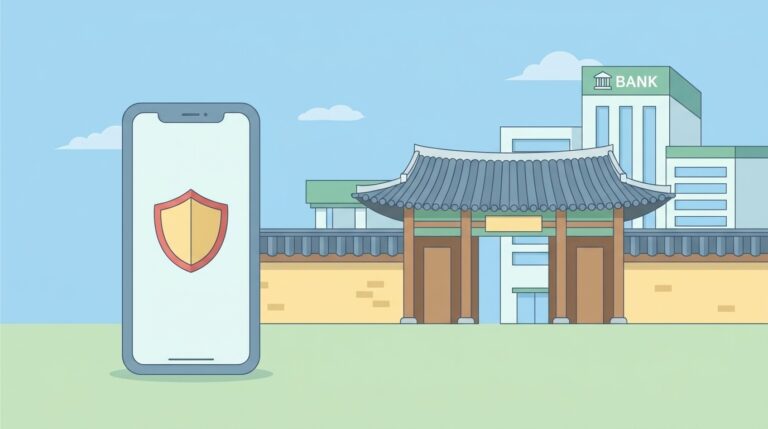
Stay Safe from Voice Phishing: Essential Korean Financial Safety Guide
Phase 1: Empathy (스토리 몰입형 오프닝)
안녕하세요! Your reliable K-culture navigator and Korean bestie is here!
Imagine this: You are sipping a sweet Dalgona Latte at a trendy cafe in Hongdae, enjoying the perfect afternoon. Suddenly, your phone buzzes. An official-sounding voice claims to be from the Supreme Prosecutors’ Office (검찰청 – geomchalcheong) or your Korean bank, warning that your account has been compromised in a massive fraud case. They demand you transfer your funds immediately to a ‘secure safety account.’ Your heart races, panic sets in, and for a moment, you forget every Korean word you’ve ever learned.
This is not a K-Drama scene; it is a highly sophisticated voice phishing (보이스피싱) scam. In Korea, financial safety is heavily protected, but voice phishers target foreigners who might be unfamiliar with the local banking system. Don’t worry! Today, we are going to master the vital Korean phrases you need to identify, prevent, and report these scams. By the end of this guide, you will feel completely confident in protecting your hard-earned money in Korea.
Phase 2: Core Expressions (핵심 표현 3선 심층 분석)
1. 출처가 불분명한 링크는 절대 누르지 마세요. (Chul-cheo-ga bul-bun-myeong-han ring-keu-neun jeol-dae nu-reu-ji ma-se-yo.)
- Pronunciation: Chool-chuh-gah bool-boon-myung-hahn ring-keu-noon juhl-dae noo-reu-jee mah-seh-yo. (Sounds like: “Chool-chuh” as in ‘choose’ without the ‘s’, and “juhl-dae” as in ‘journal’ combined with ‘day’)
- Meaning: Never click on links from unverified sources.
- K-Culture Moment: In K-Dramas like Voice or Taxi Driver, you often see villains sending malicious package delivery tracking links (택배 링크) to hack into victims’ phones. This phrase is the ultimate golden rule of digital safety in Korea.
- Editor’s Insight: “출처” (chul-cheo) means ‘origin’ or ‘source’, and “불분명한” (bul-bun-myeong-han) means ‘unclear’. Korean banks will never send you SMS messages containing direct links to input your personal financial passwords.
- Situation Spectrum: Casual: ⚠️ | Semi-formal: ✅ | Formal: ✅
- 🤔 Think About It: How does your home country’s banking system warn you about phishing links compared to Korea’s active public campaigns?
2. 지급정지를 신청해 주세요. (Ji-geup-jeong-ji-reul sin-cheong-hae ju-se-yo.)
- Pronunciation: Jee-geup-jung-jee-reul sheen-chung-hae joo-seh-yo.
- Meaning: Please apply for a suspension of payment.
- K-Culture Moment: If you suspect you’ve been scammed, this is the emergency button. In Korean thriller films, this is the crucial phrase screamed over the phone to freeze bank transfers before the criminals can withdraw the cash from an ATM.
- Editor’s Insight: “지급” (ji-geup) means payment, and “정지” (jeong-ji) means stop/suspension. When you call your bank or the police (112), saying this immediately freezes the recipient’s account to secure your funds.
- Situation Spectrum: Casual: 🚫 | Semi-formal: ✅ | Formal: ✅
- 🤔 Think About It: Koreans value fast-paced systems (빨리빨리 문화). Why is speed especially critical when asking for a “지급정지”?
3. 개인정보를 요구하는 전화를 받으면 바로 끊으세요. (Gae-in-jeong-bo-reul yo-gu-ha-neun jeon-hwa-reul bad-eu-myeon ba-ro kkeun-eu-se-yo.)
- Pronunciation: Gae-een-jung-bo-reul yo-goo-hah-noon juhn-hwah-reul bahd-eu-myun bah-ro kkeun-eu-seh-yo.
- Meaning: If you receive a call requesting personal information, hang up immediately.
- K-Culture Moment: You might hear this automated warning voice when waiting on hold with any major bank’s customer service in Korea (like KB Kookmin, Shinhan, or Hana Bank).
- Editor’s Insight: “바로 끊으세요” (hang up right away) is the safest response. Official Korean institutions like the Financial Supervisory Service (금융감독원) will never ask for your resident registration number (주민등록번호) or bank PIN over the phone.
- Situation Spectrum: Casual: ⚠️ | Semi-formal: ✅ | Formal: ✅
- 🤔 Think About It: In Korea, the collective responsibility to protect citizens from scams means you see these warnings everywhere—from subway screens to ATM booths.
Phase 3: Textbook Korean vs. Real Korean (교과서 한국어 vs. 진짜 한국어)
Situation 1: Suspecting a scam call
- 📖 Textbook Korean: 이 전화는 보이스피싱인 것 같습니다. (I jeon-hwa-neun bo-i-seu-pi-sing-in geot gat-seup-ni-da. – I suspect this call is voice phishing.)
- 🗣️ Real Korean: 이거 보이스피싱 같은데, 끊을게요. (I-geo bo-i-seu-pi-sing gat-eun-de, kkeun-eul-ge-yo. – This sounds like voice phishing, I’m hanging up.)
- 💡 Why the difference? Textbook Korean is too stiff for an emergency. Real-life situations require a swift, direct, and slightly assertive casual-polite phrase to end the conversation instantly.
Situation 2: Asking someone not to click a suspicious link
- 📖 Textbook Korean: 그것을 클릭하지 마십시오. (Geu-geot-eul keul-lik-ha-ji ma-sip-si-o. – Do not click that.)
- 🗣️ Real Korean: 그거 누르면 큰일 나요! 절대 누르지 마세요. (Geu-geo nu-reul-myeon keun-il na-yo! Jeol-dae nu-reu-ji ma-se-yo. – If you click that, you’ll be in big trouble! Absolutely do not click it.)
- 💡 Why the difference? “큰일 나요” (literally “a big event will happen”, meaning “you’ll be in huge trouble”) adds emotional weight, emphasizing the urgency and danger of the situation to a friend.
Phase 4: K-Culture Deep Dive & Non-verbal Manners (비언어적 매너)
4-1. Nunchi & Assertiveness over the Phone
In Korea, politeness is key, but when dealing with potential voice phishing, you must show Nunchi (눈치 – situational quick-wittedness) and drop excessive politeness. If a caller sounds aggressive, uses a stiff North/South Korean regional dialect (frequently depicted in Korean movies as a trope for scam rings), or presses you to make a decision immediately, look them straight in the eye (metaphorically) and hang up without saying goodbye. No bowing or apologetic tones are needed for scammers!
4-2. The Korean ATM Culture Guard
Have you ever noticed that Korean ATMs have a maximum limit for transfers made by elderly or foreign accounts if they are on the phone? Korea has a strong societal system of preventing scams. Often, security guards or bank clerks will look at you closely if you are talking on the phone while standing in front of an ATM. Do not take this as an invasion of privacy; it is a warm, protective community culture trying to prevent financial crimes.
Phase 5: Real-Life Roleplay Scenario (실전 롤플레이)
Context:
Ji-young receives a suspicious call pretending to be from Hana Bank. She notices the red flags and decides to handle it confidently.
Characters:
- 스패머 (Spammer): An aggressive, fast-talking voice over the phone.
- 지영 (Ji-young): A smart foreign student living in Seoul.
- 스패머: (Urgent tone) 안녕하세요, 하나은행 보안팀입니다. 고객님의 계좌가 도용되었습니다.
(An-nyeong-ha-se-yo, Ha-na-eun-haeng bo-an-tim-ip-ni-da. Go-gaek-nim-ui gye-jwa-ga do-yong-doe-eot-seup-ni-da.)
“Hello, this is the Hana Bank Security Team. Your account has been compromised.” -
지영: (Surprised but calm) 네? 도용되었다고요? 어떻게 확인하나요?
(Ne? Do-yong-doe-eot-da-go-yo? Eo-tteok-hae hwa-gin-ha-na-yo?)
“What? Compromised? How do I verify this?” -
스패머: (Pressuring) 지금 보내드리는 문자의 링크를 누르고 보안 카드를 입력하세요. 바로 하셔야 합니다.
(Ji-geum bo-nae-deu-ri-neun mun-ja-ui ring-keu-reul nu-reu-go bo-an ka-deu-reul im-ryeok-ha-se-yo. Ba-ro ha-syeo-ya hap-ni-da.)
“Click the link in the text message I’m sending you now and input your security card code. You must do it immediately.” -
지영: (Suspicious) 은행에서는 문자로 링크를 안 보내는 걸로 알고 있는데요?
(Eun-haeng-e-seo-neun mun-ja-ro ring-keu-reul an bo-nae-neun geol-lo al-go in-neun-de-yo?)
“I understand that banks do not send links via text messages?” -
스패머: (Raising voice) 지금 안 하시면 계좌가 정지되어 돈을 다 잃게 됩니다!
(Ji-geum an ha-si-myeon gye-jwa-ga jeong-ji-doe-eor don-eul da il-ge dep-ni-da!)
“If you don’t do it now, your account will be frozen and you’ll lose all your money!” -
지영: (Firmly) 거짓말하지 마세요. 이거 보이스피싱이죠?
(Geo-jit-mal-ha-ji ma-se-yo. I-geo bo-i-seu-pi-sing-i-jyo?)
“Don’t lie to me. This is voice phishing, isn’t it?” -
스패머: (Flustered) 무슨 말씀이신지… 끊겠습니다.
(Mu-seun mal-sseum-i-sin-ji… kkeun-get-seup-ni-da.)
“What are you talking about… I’m hanging up.” -
지영: (To herself, hanging up) 후… 바로 112에 신고해야겠어.
(Hoo… ba-ro baek-sip-i-beon-e sin-go-hae-ya-get-eo.)
“Whew… I should report this to 112 immediately.”
🔀 Interactive Decision Point
If you were Ji-young and received the initial suspicious text message, what would you do?
- A) “일단 링크를 눌러서 어떤 내용인지 확인한다.” (Click the link first to see what it is.)
- 🚫 Risk: Dangerous! Simply clicking the link can install malicious spyware (악성 앱) on your phone. Never click it.
- B) “전화를 끊고 해당 은행의 공식 고객센터로 직접 전화해서 확인한다.” (Hang up and call the official bank customer center directly to verify.)
- 🏆 Best: Perfect! This is the safest way to verify if there is an actual issue with your bank account.
- C) “경찰(112)에 전화해서 상담을 요청한다.” (Call the police at 112 to ask for a consultation.)
- ✅ Good: Excellent choice. The police can guide you on what to do next if you feel unsafe.
Phase 6: 10-Second Emotion Shadowing Drill (10초 감정 섀도잉 드릴)
Practice these sentences with the exact emotional tone to sound like a local in an emergency:
[😨 Panicked and Urgent]
“이거 / 보이스피싱 / 같은데 / 어떡하죠?!”
(I-geo / bo-i-seu-pi-sing / gat-eun-de / eo-tteok-ha-jyo?! – This seems like voice phishing, what should I do?!)-
[😤 Firm and Confident]
“더 이상 / 연락하지 마세요! / 바로 신고할게요.”
(Deo i-sang / yeon-rak-ha-ji ma-se-yo! / Ba-ro sin-go-hal-ge-yo. – Do not contact me anymore! I am going to report you immediately.)
Phase 7: K-Culture Mini Dictionary (금융 안전 미니 사전)
- 보이스피싱 (Bo-i-seu-pi-sing) | Voice Phishing
- Telephone fraud targeting personal information and bank transfers.
- 지급정지 (Ji-geup-jeong-ji) | Suspension of Payment
- Emergency hold placed on a bank account to freeze fraudulent transfers.
- 스팸 문자 (Seu-paem Mun-ja) | Spam SMS
- Unsolicited texts often containing malicious links or fake package tracking info.
- 금융감독원 (Geum-yung-gam-dok-won) | Financial Supervisory Service (FSS)
- The official government agency monitoring financial systems in Korea.
Phase 8: Survivor Kit for Travelers (여행자를 위한 생존 키트)
Survival Phrases TOP 3
- “이거 스팸 전화예요?” (I-geo seu-paem jeon-hwa-yeo-yo?) – Is this a spam call?
- Pro Tip: Use this when a solicitor calls you repeatedly.
- “카드 분실 신고해 주세요.” (Ka-deu bun-sil sin-go-hae ju-se-yo.) – Please report my card as lost.
- Pro Tip: Essential if you lose your check card in a public space.
- “도와주세요! 보이스피싱인 것 같아요.” (Do-wa-ju-se-yo! Bo-i-seu-pi-sing-in geot gat-a-yo.) – Help me! I think this is voice phishing.
- Pro Tip: Say this to a bank clerk if you are confused by an active call.
Editor’s Travel Note:
If you ever suspect fraud or need to report voice phishing, call the Korean Police (112) or the Financial Supervisory Service (1332) immediately. They have English interpretation services available! Also, download the “T-Spam” or search for spam prevention on the Google Play Store to filter out fraudulent calls on your Korean SIM card.
Phase 9:
Frequently Asked Questions (FAQ)
Q: What does "지급정지를 신청해 주세요. (Ji-geup-jeong-ji-reul sin-cheong-hae ju-se-yo.)" mean in Korean and how do you pronounce it?
A: In Korean, "지급정지를 신청해 주세요. (Ji-geup-jeong-ji-reul sin-cheong-hae ju-se-yo.)" is pronounced [Jee-geup-jung-jee-reul sheen-chung-hae joo-seh-yo.] and means: Please apply for a suspension of payment.







