

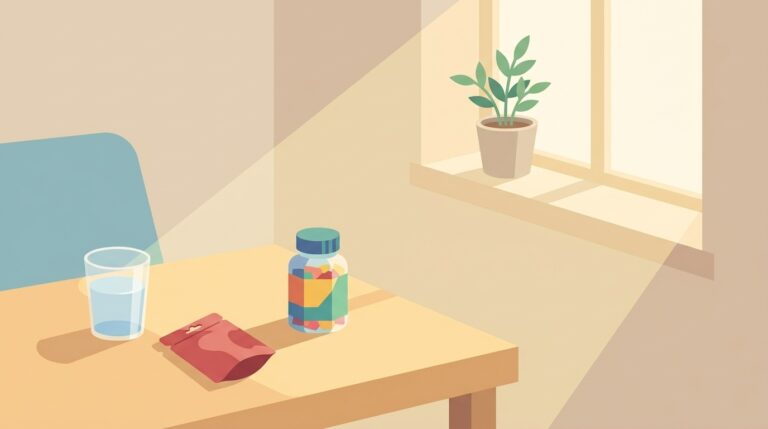
Stay Healthy and Energized: Navigating Korea’s Wellness and Supplement Culture Like a Local
Phase 1: Empathy (스토리 몰입형 오프닝)
안녕하세요! (Annyeonghaseyo! – Hello!) Your favorite Daily Hangul editor is back!
Imagine this: You’re binge-watching your favorite K-Drama, and suddenly, the lead actor whips out a small red pouch, tears it open with their teeth, and drinks a dark liquid with a satisfied sigh. Or perhaps you see a character lovingly gifting a box of premium pills to their friend’s parents before a big family gathering.
If you’ve spent any time in Korea or watched Korean media, you’ve probably noticed that wellness, vitamins, and supplements (영양제 – Yeongyangje) aren’t just a personal health choice—they are a massive social phenomenon!
Many of our intermediate learners have shared their frustration: “I walked into an Olive Young to get some supplements, but I had no idea how to ask what’s good for fatigue, or what is trending right now without sounding like a textbook robot!”
Don’t worry. Today, we’re diving deep into the real-world, conversational Korean you need to talk about health, navigate a Korean pharmacy or drugstore, and understand the cultural heart of Korean wellness. Let’s get you sounding like a true local!
Phase 2: Core Expressions (핵심 표현 3선 심층 분석)
Let’s look at three essential expressions that will immediately elevate your Korean from “student” to “native friend.”
1. 몸을 챙기다 (Mom-eul chaeng-gi-da)
- Pronunciation: Mome-eul chaeng-gee-da (Sounds like “Mom” + “ul” + “chang” + “gi” + “da”)
- Meaning: Lit. “To pack/take care of one’s body” -> To look after one’s health / To eat well and stay healthy.
- K-Culture Moment: You will hear this constantly in dramas. A mother calling her busy, stressed-out adult child will almost always say, “바빠도 몸 좀 챙겨” (Bappado mom jom chaenggyeo) – “Even if you’re busy, take care of your health.”
- Editor’s Insight: In Korean culture, actively “packing” (챙기다) your health implies a proactive approach—eating supplements, sleeping well, and not overworking. It’s a deeply warm, affectionate phrase.
- Situation Spectrum: Casual (✅) / Semi-formal (✅) / Formal (⚠️ – 몸을 챙기시다)
- 🤔 Think About It: In your culture, is looking after your health described as a proactive physical act of “packing” or “gathering” items, or is it more passive? How does this reflect the Korean lifestyle?
2. 피로가 쌓이다 (Piro-ga ssai-da)
- Pronunciation: Pee-ro-ga sigh-da (Sounds like “Pee-row” + “gah” + “sigh” + “dah”)
- Meaning: Lit. “Fatigue piles up” -> To be chronically tired / Exhaustion building up.
- K-Culture Moment: Office workers in Korea (often called K-jikjang-in) constantly complain about this over iced americanos. “요즘 피로가 쌓여서 죽겠어” (Yojeum piroga ssayeoseo jukgesseo) – “Fatigue is piling up lately, it’s killing me.”
- Editor’s Insight: This expression is perfect when you want to explain why you are looking for supplements. Instead of just saying “I am tired” (피곤해요), saying your fatigue is “piling up” (피로가 쌓여요) explains that you need a long-term solution, like vitamins!
- Situation Spectrum: Casual (✅) / Semi-formal (✅) / Formal (✅)
- 🤔 Think About It: Why do you think Korean has such vivid passive expressions for physical states (like fatigue “piling up” on its own)?
3. 효과를 보다 (Hyogwa-reul bo-da)
- Pronunciation: Hyo-gwa-reul bo-da (Sounds like “Hyo-gwa” + “rul” + “bo” + “da”)
- Meaning: Lit. “To see the effect” -> To experience benefits / To work well (for a supplement or medicine).
- K-Culture Moment: Friends recommending wellness trends to each other on YouTube or Instagram vlogs will say, “나 이거 먹고 진짜 효과 봤어!” (Na igeo meokgo jinjja hyogwa bwasseo!) – “I really saw results after taking this!”
- Editor’s Insight: In Korean, you don’t just “have” a result; you physically “see” (보다) the effect. It emphasizes noticeable, real-life improvement.
- Situation Spectrum: Casual (✅) / Semi-formal (✅) / Formal (✅)
- 🤔 Think About It: How does “seeing” an effect differ from just “experiencing” it in your native language?
Phase 3: Textbook vs. Real Korean (교과서 한국어 vs 진짜 한국어)
Let’s compare the stiff expressions you find in traditional learning apps with how Koreans actually talk about health.
Situation 1: Asking for vitamin recommendations at a store
- 📖 Textbook: “비타민을 추천해 주십시오.” (Bitamineul chucheonhae jusipsio. – “Please recommend vitamins.”)
- 🗣️ Real Korean: “요즘 너무 피곤한데, 요즘 잘 나가는 비타민 있을까요?” (Yojeum neomu pigonhande, yojeum jal naganeun bitamin isseulkkayo? – “I’m so tired lately, are there any vitamins that are really popular these days?”)
- 💡 Why it’s different: Koreans highly value trends and peer reviews. Asking for what is “well-going/popular” (잘 나가는) gets you the hot, highly rated products instantly.
Situation 2: Explaining that you take supplements daily
- 📖 Textbook: “저는 매일 영양제를 복용합니다.” (Jeoneun maeil yeongyangjereul bogyonghamnida. – “I take/administer supplements daily.”)
- 🗣️ Real Korean: “저 매일 영양제 챙겨 먹고 있어요.” (Jeo maeil yeongyangje chaenggyeo meokgo isseoyo. – “I make sure to take my supplements every day.”)
- 💡 Why it’s different: 복용하다 (to administer/take medicine) sounds overly clinical. Real Koreans use 챙겨 먹다 (to pack and eat / make sure to consume) for daily habits like food, meals, and vitamins.
Phase 4: K-Culture Deep Dive & Non-verbal Manners (비언어적 매너)
4-1. The Art of “Jeong” (정) through Healthy Gifts
When buying health supplements in Korea, you aren’t just shopping for yourself. Giving a box of Red Ginseng (홍삼 – Hongsam) or high-end multivitamins is one of the ultimate expressions of care (정 – Jeong).
* Non-verbal Manner: When handing a gift of health supplements to an elder or a colleague, always use two hands to present the box. Slightly bow your head and say, “건강 챙기세요” (Geongang chaenggiseyo – Take care of your health). This turns a simple product into a deep gesture of respect.
4-2. The “Ppal-gang” (Red) Pouch Craze
Have you noticed how Koreans drink everything from liquid sticks? These are called 스틱포 (Stick-po). From red ginseng to collagen and lactic acid bacteria (유산균 – Yusangyun), everything is packaged in easy-tear stick pouches. It fits perfectly into the fast-paced, Ppalli-Ppalli (hurry-hurry) lifestyle of modern Koreans who take their vitamins on the subway or at their office desk.
Phase 5: Real-Life Roleplay Scenario (실전 롤플레이)
Setting: A trendy Olive Young (Korean health & beauty store) in Myeongdong.
Characters:
* Min-ji (민지): A helpful, knowledgeable store curator (NPC).
* You (유): An active traveler trying to fight off travel fatigue.
- 민지: (Smiling warmly) 어서 오세요! 찾으시는 제품 있으세요?
(Welcome! Is there a specific product you’re looking for?) - 유: (Rubbing your eyes slightly) 네, 요즘 여행하느라 피로가 너무 쌓여서요.
(Yes, my fatigue is piling up because of traveling lately.) - 민지: 아, 여행 중이시군요! 그럼 비타민 B군이나 마시는 영양제 코너로 가실래요?
(Ah, you’re traveling! Then shall we go to the Vitamin B or liquid supplement corner?) - 유: 네, 혹시 요즘 제일 잘 나가는 걸로 추천해 주실 수 있나요?
(Yes, could you recommend the most popular one these days?) - 민지: 요즘은 이 비타민이랑 액상이 같이 들어있는 ‘이중 제형’ 제품이 정말 인기에요. 물 없이 바로 먹을 수 있어요!
(Lately, these ‘dual formulation’ products with both tablets and liquid are really popular. You can take them without water!) - 유: 오, 신기하네요! 이거 먹으면 진짜 효과가 바로 나타날까요?
(Oh, interesting! If I take this, will I see the effects right away?) - 민지: 피로 해소에 즉각적으로 효과 보셨다는 후기가 정말 많아요!
(There are so many reviews saying they saw immediate results for fatigue recovery!) - 유: 좋네요! 그럼 이걸로 세 상자만 주세요. 친구들 선물로도 주려고요.
(Great! Then please give me three boxes of this. I want to give them to my friends as gifts too.)
🔀 Interactive Choice Point!
How would you respond to Min-ji if you wanted to ask if this product is safe to take on an empty stomach?
- A. “이거 공복에 먹어도 괜찮아요?” (Igeo gongboge meokgodo gwaenchanhayo?)
- B. “이거 밥 안 먹고 먹으면 죽어요?” (Igeo bap an meokgo meokgeomyon jugeoyo?)
- C. “이거 식사 전에 복용해야만 합니까?” (Igeo siksa jeone bogyonghaeyaman hamnikka?)
💡 Feedback on Your Choice:
- Selection A (Best): Perfect! 공복 (Gongbok – empty stomach) is the exact natural term used when talking about taking vitamins or medicine. You sound natural and polite.
- Selection B (Bad): Oops! Saying “Will I die if I eat this without food?” (죽어요?) is way too dramatic and will startle the poor clerk!
- Selection C (Risk): While grammatically correct, this sounds like a medical textbook. It creates an unnecessarily stiff and distant atmosphere.
Phase 6: 10-Second Emotion Shadowing Drill (10초 감정 섀도잉)
Speak like a native by practicing where to pause and how to inject feeling into your voice.
- [🥺 Exhausted and whining to a friend]
- 요즘 / 피로가 / 진짜 / 장난 아니게 쌓였어…
- Yo-jeum / pi-ro-ga / jin-jja / jang-nan a-ni-ge ssai-yeos-seo…
- (Lately / fatigue / really / is piling up no joke…)
- [😊 Amazed and excited to share a secret]
- 와, / 이거 먹고 / 다음 날 아침에 / 바로 효과 봤잖아!
- Wa, / i-geo meok-go / da-eum nal a-chim-e / ba-ro hyo-gwa bwat-ja-na!
- (Wow, / after taking this / the next morning / I saw the effect immediately!)
Phase 7: K-Culture Mini-Dictionary (K-Culture 미니 사전)
- 홍삼 (Hongsam | Red Ginseng)
- Steamed and dried ginseng. The ultimate Korean energy booster. You will see it in sticks, pills, and teas.
- 유산균 (Yusangyun | Probiotics)
- Extremely popular in Korea. Usually taken as a sweet, powdery stick first thing in the morning.
- 인싸템 (Inssa-tem | Insider/Trending Item)
- Slang for “must-have trendy item.” Many dual-type vitamins (like Orthomol-style vitamins) are considered wellness inssatems.
- 피로 해소 (Piro Haeso | Fatigue Relief)
- The magic phrase written on almost all energy drinks and vitamins in Korean pharmacies.
Phase 8: Traveler’s Survival Kit (여행자를 위한 생존 키트)
Survival Phrases TOP 3
- “비타민 추천해 주세요.” (Bitamin chucheonhae juseyo.)
- “Please recommend some vitamins.” -> Pro Tip: Use this at any pharmacy or Olive Young.
- “선물용으로 포장해 주세요.” (Seonmulyongeuro pojanghae juseyo.)
- “Please wrap it as a gift.” -> Pro Tip: Excellent when buying high-end wellness items for family back home.
- “속 쓰림 없는 걸로 주세요.” (Sok sseurim eomneun geollo juseyo.)
- “Please give me something that doesn’t cause stomach irritation.” -> Pro Tip: Perfect for sensitive stomachs.
✈️ Editor’s Travel Note:
To find the nearest local pharmacy (약국 – Yakguk) or wellness store, download the Naver Map App. Simply search for “약국” (Pharmacy) or “올리브영” (Olive Young) to find hours of operation near you! (Note: Store hours may change depending on location holidays).
Phase 9: “One Step Deeper” (한 발 더 깊이)
In Korean society, asking about someone’s health is not just small talk; it’s a foundational way of showing respect and love. Korea’s modern work and study culture (야근 – Yageun / Overtime work) is highly demanding. Offering a vitamin or a wellness drink to a tired colleague is a silent way of saying, “I see how hard you are working, and I support you.” It reflects a communal culture where people constantly monitor and care for each other’s physical well-being.
💬 Your Turn: Have you ever tried Korean Red Ginseng or wellness sticks? How do you show care for your friends’ health in your country? Let us know in the comments below!
Phase 10: FAQ & Common Mistakes (FAQ & 오해 방지)
Q: What is the difference between 약국 (Yakguk) and Olive Young when buying supplements?
A: 약국 (Pharmacy) is where you find medical-grade supplements, high-dose vitamins, and prescription drugs. The pharmacist (약사) can give professional medical advice. Olive Young is a lifestyle drugstore focusing on daily wellness, beauty supplements, collagen, and popular trending vitamins.
Q: Can I take any supplement on an empty stomach?
A: Some vitamins (like Vitamin C or Zinc) can cause stomach irritation (속 쓰림). Always ask the pharmacist: “이거 식전에 먹어도 돼요?” (Can I take this before meals/empty stomach?)
Q: Can I bring these supplements back on the plane?
A: Yes! Most commercial vitamins and red ginseng packets are perfectly fine for personal consumption in checked or carry-on luggage, but always check your country’s customs regulations for liquid limits.
🚨 Common Mistakes Alert!
- Mistake 1: Calling all vitamins “약” (Yak – Medicine).
- Correction: While colloquial, calling daily vitamins “medicine” can confuse locals. Use 영양제 (Yeongyangje – Supplement) for daily health boosters.
- Mistake 2: Saying “식사 후” (Siksa hu) when you mean “with food”.
- Correction: In Korea, directions are very specific. 식후 30분 (30 mins after meals) is the golden rule for taking supplements to avoid stomach upset.
Phase 11: Action Mission (액션 미션)
- 🥉 Bronze: Open your notes app and write: “오늘부터 내 몸을 챙길 거예요!” (Starting today, I’m going to take care of my body!)
- 🥈 Silver: Take a picture of your daily vitamins, post it on your Instagram Story, and tag #DailyHangul with the caption: “오늘의 영양제 챙겨 먹기 완료!” (Done taking today’s supplements!)
- 🥇 Gold: Walk into a Korean supermarket, pharmacy, or online shop, and ask/search using the phrase: “요즘 잘 나가는 영양제 있나요?”
Phase 12: Interactive Quiz Challenge (인터랙티브 퀴즈)
1. What does “몸을 챙기다” mean?
a) To pack your suitcase
b) To proactively look after your health
c) To work out at the gym
2. Fill in the blank: “요즘 너무 피곤해서 피로가 _________.”
a) 먹었어요 (ate)
b) 쌓였어요 (piled up)
c) 보았어요 (saw)
👀 Click here to reveal the Answers & Explanations!
- Answer: b) To proactively look after your health.
- Explanation: “챙기다” means to take care of or pack. Combined with “몸” (body), it means to look after your health.
- Answer: b) 쌓였어요 (piled up).
- Explanation: The natural collocation for fatigue (피로) in Korean is 쌓이다 (to pile up).







