

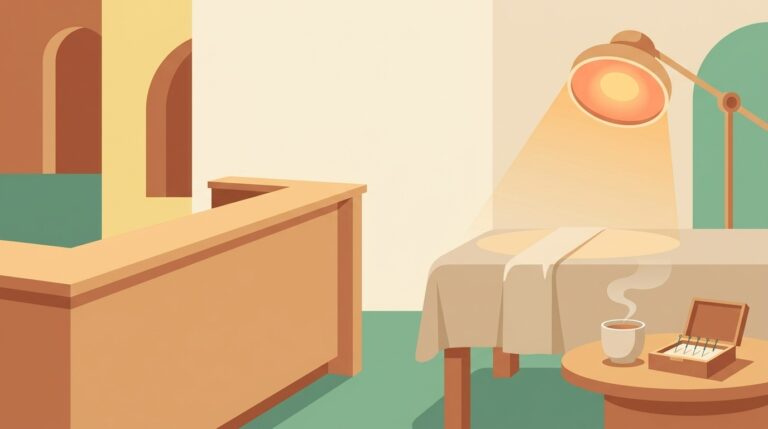
Phase 1: Empathy (Your Friendly Guide to Haniwon)
안녕하세요! Welcome back to Daily Hangul, your trusted companion for navigating both the beautiful Korean language and the fascinating cultural nuances that make life here so vibrant. I’m your head editor, and today, we’re stepping into a space that might seem slightly mysterious, incredibly warm, and deeply comforting: the 한의원 (Haniwon / Traditional Korean Medicine Clinic).
Have you ever woken up with a neck so stiff you couldn’t turn your head? Or perhaps weeks of intensive Korean study have left you feeling utterly drained, but conventional medicine doesn’t quite point to a specific illness? In Korea, when we experience these ambiguous, painful, or exhausting physical states, we don’t just visit a regular clinic—we say, “침 맞으러 가야겠다” (I should go get some acupuncture).
If you’ve felt intimidated by the herbal scents, the unfamiliar needles, or the unique terminology of Traditional Korean Medicine, don’t worry! This guide is based on real experiences from our intermediate learners who successfully navigated their first Haniwon visit. By the end of this article, you’ll feel confident enough to book an appointment, describe your symptoms using natural B2-level Korean, and understand the beautiful philosophy of holistic healing that defines Korean society.
Phase 2: Core Expressions Deep Dive
1. 침 맞으러 왔어요 (chim majeureo wasseoyo)
- Pronunciation: Cheem mah-jeu-reo wah-sseo-yo (Rhymes with “team” + “measure” + “was-seo-yo”)
- Meaning: I’m here to get acupuncture. (Directly: “I came to be hit by needles.”)
- K-Culture Moment: You will see this constantly in slice-of-life K-Dramas. When a character helps a friend move boxes all day, the next morning they will walk into the kitchen groaning, clutching their lower back, and saying, “아고고, 침 맞으러 가야겠다” (Oh my, I need to go get acupuncture).
- Editor’s Insight: The verb 맞다 (to receive/get hit by) is paired with 침 (acupuncture needle). Don’t use standard action verbs like “하다” (to do) or “받다” (to receive) here; “침을 맞다” is the natural collocation every native speaker uses.
- Situation Spectrum:
- Casual: 침 맞으러 왔어 ⚠️
- Semi-formal: 침 맞으러 왔어요 ✅
- Formal: 침을 맞으러 왔습니다 ✅
- 🤔 Think About It: In many Western cultures, needles are associated with pain or vaccinations. How does it shift your perspective to view needles as tools for releasing blocked energy (“기” – Qi) and tension?
2. 기가 허한 것 같아요 (gi-ga heo-han geot gat-ayo)
- Pronunciation: Gee-gah huh-hahn gut gaht-ah-yo (“Gee” as in “geese”, “huh” as in a soft sigh, “hahn” like the Han River)
- Meaning: I feel like my energy/vitality is depleted.
- K-Culture Moment: When a character looks pale, fatigued, or catches colds easily, older family members will look at them with concern and say, “너 요즘 기가 많이 허해 보인다. 한약 한 재 지어 먹어야겠어” (You look very depleted lately. We should get you some herbal medicine).
- Editor’s Insight: 기 (Qi) refers to the vital energy flowing through your body, and 허하다 means empty or deficient. This expression is perfect when you don’t have a specific “disease” but feel deep, constitutional fatigue.
- Situation Spectrum:
- Casual: 기가 허한 것 같아 ✅
- Semi-formal: 기가 허한 것 같아요 ✅
- Formal: 기가 허한 것 같습니다 ✅
- 🤔 Think About It: How does your native language describe the feeling of being run-down without being clinically ill? Does it have a concept equivalent to vital energy?
3. 몸조리 잘하세요 (mom-jori jal-haseyo)
- Pronunciation: Mom-joh-ree jahl-hah-seh-yo (“Mom” as in “mother”, “joh-ree” like a soft “journey” but ending in “ree”)
- Meaning: Take good care of your body / Recuperate well.
- K-Culture Moment: This is the ultimate expression of warmth. When you tell a Korean colleague you’ve been sick, they won’t just say “Get well soon” (빨리 나으세요); they will warmly say, “무리하지 말고 몸조리 잘하세요” (Don’t overdo it, and take good care of your body).
- Editor’s Insight: 몸조리 (body care/recuperation) implies active rest, eating warming foods, and allowing your body to recover its natural balance. It is highly empathetic and shows genuine concern.
- Situation Spectrum:
- Casual: 몸조리 잘해 ✅
- Semi-formal: 몸조리 잘하세요 ✅
- Formal: 몸조리 잘하시길 바랍니다 ✅
- 🤔 Think About It: Why do you think Korean culture places such a strong emphasis on post-illness or post-partum “몸조리” compared to the fast-paced “get-back-to-work” culture in some other countries?
Phase 3: Textbook Korean vs. Real Korean
Let’s compare the rigid sentences you find in standardized test prep with the warm, descriptive expressions actually spoken in a Haniwon.
Situation 1: Explaining a stiff neck/back
- 📖 Textbook: “목 근육이 아픕니다.” (My neck muscles hurt.)
- 🗣️ Real Korean: “목에 담이 결렸어요.” (I caught a spasm/tension in my neck.)
- 💡 Why the difference? 담 (Dam) is a traditional concept referring to fluid or energy stagnation causing acute muscular pain. Saying “담이 결렸다” immediately tells the practitioner that you have a sudden, painful muscle spasm that limits your movement.
Situation 2: Reacting to the bitter taste of herbal medicine
- 📖 Textbook: “한약이 너무 맛이 없어요.” (The herbal medicine tastes bad.)
- 🗣️ Real Korean: “입에 써야 몸에 좋다더니 진짜 쓰네요!” (They say if it’s bitter to the mouth, it’s good for the body, and wow, it really is bitter!)
- 💡 Why the difference? This plays on the famous Korean proverb “좋은 약은 입에 쓰다” (Good medicine tastes bitter). Using this phrase shows you appreciate the healing properties of the bitter herbs rather than just complaining about the taste!
Phase 4: K-Culture Deep Dive & Non-verbal Manners
4-1. Nunchi (눈치) & Table Manners at the Haniwon
When you enter the treatment room, there are several non-verbal behaviors that show respect and ensure your safety:
* The Art of Staying Still (득기 – Deukgi): When the doctor inserts the acupuncture needles, you might feel a heavy, dull, or tingling sensation. This is a good sign called deukgi (obtaining Qi). It is crucial to stay completely still. If you need to sneeze, cough, or itch, tell the doctor immediately rather than moving, as shifting can bend the needles!
* Receiving the Heat Lamp: Acupuncturists often place a warm red infrared lamp over the needles. If it becomes too hot, do not try to move the lamp yourself. Politely say, “조금 뜨거워요” (It’s a bit hot) or “조금만 줄여주세요” (Please lower it a bit), and the staff will adjust it for you.
4-2. Cultural Code: The Gift of ‘Boyak’ (보약)
In Korean culture, food and medicine share the same root (식의동원 – Food and medicine come from the same source). 보약 (Boyak) is a restorative herbal medicine custom-brewed to strengthen your constitution. Giving someone a box of Hanyak (한약) or a pouch of red ginseng is one of the highest expressions of love and respect. In dramas, you’ll see daughters-in-law preparing highly prized 녹용 (deer antler) formulations for their elders, or parents sending boxes of black herbal pouches to students studying for the college entrance exam (수능).
Phase 5: Real-Life Roleplay Scenario
Setting: A warm, woody Haniwon in Seoul with the soothing aroma of boiling herbs.
Characters:
* 지민 (Jimin): The welcoming receptionist.
* 민우 (Minwoo): The experienced, gentle Hanui-sa (Traditional Doctor).
* You (The Patient): Seeking relief from chronic back pain and fatigue.
지민: 안녕하세요! 어디가 불편해서 오셨어요?
(An-nyeong-ha-se-yo! Eo-di-ga bul-pyeon-hae-seo o-syeot-eo-yo?)
[😊 Smiling warmly behind the desk]
Hello! What brings you in today?
You: 요즘 컴퓨터를 많이 해서 그런지, 어깨랑 등에 담이 결린 것 같아요.
(Yo-jeum keom-pyu-teo-reul ma-ni hae-seo geu-reon-ji, eo-kkae-rang deung-e dam-i gyeol-rin geot gat-a-yo.)
[🥺 Sighing slightly while touching your shoulder]
Maybe because I've been using the computer a lot lately, I think I caught a spasm in my shoulder and back.
지민: 아, 많이 불편하시겠어요. 원장님께 진료 안내해 드릴게요. 잠시만 대기해 주세요.
(Ah, ma-ni bul-pyeon-ha-si-gess-eo-yo. Won-jang-nim-kke jin-ryo an-nae-hae deu-ril-ge-yo. Jam-si-man dae-gi-hae ju-se-yo.)
[📋 Writing on a clipboard]
Oh, that must be very uncomfortable. I'll guide you to the head doctor. Please wait a moment.
(Inside the treatment room)
민우: 안녕하세요. 등을 좀 볼까요? 아, 이쪽을 누르면 아프신가요?
(An-nyeong-ha-se-yo. Deung-eul jom bol-kka-yo? Ah, i-jjok-eul nu-reu-myeon a-peu-sin-ga-yo?)
[🩺 Gently pressing your upper back]
Hello. Let's take a look at your back. Ah, does it hurt when I press here?
You: 네, 거기가 엄청 뻐근하고 찌릿해요.
(Ne, geo-gi-ga eom-cheong ppeo-geun-ha-go jji-rit-hae-yo.)
[😣 Wincing slightly from the pressure]
Yes, that spot is extremely stiff and tingly.
민우: 근육이 많이 뭉쳤네요. 침을 맞고 부항 치료도 같이 하시면 훨씬 가벼워지실 겁니다.
(Geun-yuk-i ma-ni mung-chyeot-nae-yo. Chim-eul mat-go bu-hang chi-ryo-do gat-i ha-si-myeon hwol-ssin ga-byeo-wo-ji-sil geom-ni-da.)
[💡 Nodding reassuringly]
Your muscles are very tense. If you get acupuncture and cupping therapy together, you'll feel much lighter.
You: 침 맞을 때 많이 아픈가요? 제가 사실 침은 처음이라서요.
(Chim maj-eul ttae ma-ni a-peun-ga-yo? Je-ga sa-sil chim-eun cheo-eum-i-ra-seo-yo.)
[😰 Looking a bit nervous]
Does it hurt a lot when getting acupuncture? To be honest, this is my first time.
민우: 걱정 마세요. 주사 바늘보다 훨씬 얇아서 따끔한 정도만 느끼실 겁니다. 편하게 누워 계세요.
(Geok-jeong ma-se-yo. Ju-sa ba-neul-bo-da hwol-ssin yal-a-seo tta-kkeum-han jeong-do-man neu-ki-sil geom-ni-da. Pyeon-ha-ge nu-wo gye-se-yo.)
[🧑⚕️ Preparing sterile acupuncture needles]
Don't worry. They are much thinner than injection needles, so you'll only feel a tiny prick. Just lie down comfortably.
🔀 Choose Your Next Move!
After the treatment, Dr. Minwoo tells you that your body is generally very cold and fatigued, and suggests brewing customized 한약 (herbal medicine).
- Choice A: Accept gracefully and ask about how to take it.
- “네, 몸을 따뜻하게 해주는 한약으로 지어주세요. 하루에 몇 번 먹어야 하나요?”
- Feedback (BEST): Highly natural! It shows you trust the doctor’s diagnosis and proactively ask for administration details.
- Choice B: Decline politely due to cost.
- “한약은 가격이 조금 부담스러운데, 침만 계속 맞아도 괜찮을까요?”
- Feedback (RISK-FREE/SMART): Completely acceptable. Hanyak can be expensive, and telling them honestly that you prefer to stick to acupuncture is very common and respected.
- Choice C: Express extreme skepticism about traditional medicine.
- “한약은 과학적이지 않은데 정말 효과가 있나요?”
- Feedback (BAD): While questioning is fine, framing it as “unscientific” directly to a licensed Hanui-sa (who studies for 6 years in university to get licensed) can come across as culturally insensitive and rude.
Phase 6: 10-Second Emotion Shadowing Drill
Practice these sentences with the correct emotional delivery and natural pausing (/):
- [😣 Painful & Stiff]
아침에 / 일어났는데 / 목에 담이 결려서 / 고개를 못 돌리겠어요.
(Ah-chim-e / il-eo-nat-neun-de / mok-e dam-i gyeol-ryeo-seo / go-gae-reul mot dol-ri-gess-eo-yo.)
“I woke up this morning, and my neck is so stiff I can’t turn my head.” -
[🥺 Exhausted & Needing Care]
요즘 / 너무 피곤한 걸 보니 / 정말 기가 허해진 것 같아요.
(Yo-jeum / neo-mu pi-gon-han geol bo-ni / jeong-mal gi-ga heo-hae-jin geot gat-a-yo.)
“Seeing how tired I am lately, I really feel like my vital energy is depleted.” -
[😊 Warm & Caring]
날씨가 추우니까 / 따뜻한 물 많이 드시고 / 몸조리 잘하세요.
(Nal-ssi-ga chu-u-ni-kka / tta-tteut-han mul ma-ni deu-si-go / mom-jo-ri jal-ha-se-yo.)
“Since the weather is cold, drink lots of warm water and take good care of your body.”
Phase 7: K-Culture Mini-Dictionary
- 한의원 (Haniwon | Traditional Korean Medicine Clinic): A licensed medical clinic utilizing acupuncture, herbal medicine, moxibustion, and cupping to treat imbalances.
- 침 (Chim | Acupuncture): Ultra-fine needles inserted into specific meridian points (혈자리) to stimulate energy flow and promote physical healing.
- 한약 (Hanyak | Herbal Medicine): Individually tailored liquid medicine brewed from natural herbs, roots, and minerals. Usually packaged in convenient pouches.
- 부항 (Buhang | Cupping Therapy): A technique using suction cups on the skin to increase blood circulation, relieve muscle tension, and remove metabolic waste.
Phase 8: Traveler’s Survival Kit
Survival Phrases TOP 3
- 침 안 아프게 놔주세요. (Chim an a-peu-ge nwa-ju-se-yo.)
- Pro Tip: “Please administer the acupuncture painlessly.” Use this with a cute smile if you are terrified of needles!
- 실비 보험 청구 서류 좀 떼주세요. (Sil-bi bo-heom cheong-gu seo-ryu jom tte-ju-se-yo.)
- Pro Tip: “Please issue the documents for private health insurance claims.” Haniwon treatments are often eligible for Korean national health insurance and private insurance.
- 뜨거우면 말씀해 주세요. (Tteu-geo-u-myeon mal-sseum-hae ju-se-yo.)
- Pro Tip: This is what the nurse will say to you after putting on the heat lamp. Answer: “네, 알겠습니다” (Yes, okay).
Editor’s Travel Note 🗺️
If you want to experience a Haniwon in Korea, use the Naver Map App to search for “한의원”. Many clinics in major areas like Gangnam, Hongdae, or Myeongdong have doctors who speak English. Look for listings that mention “영어 진료 가능” (English treatment available).
Note: Standard acupuncture treatments are highly affordable in Korea, usually costing between 10,000 to 20,000 KRW per session under the National Health Insurance System! (Price current as of late 2023, subject to change).
Phase 9:
Frequently Asked Questions (FAQ)
Q: What does "침 맞으러 왔어요 (chim majeureo wasseoyo)" mean in Korean and how do you pronounce it?
A: In Korean, "침 맞으러 왔어요 (chim majeureo wasseoyo)" is pronounced [Cheem mah-jeu-reo wah-sseo-yo (Rhymes with "team" + "measure" + "was-seo-yo"] and means: I'm here to get acupuncture. (Directly: "I came to be hit by needles.")
Q: What does "기가 허한 것 같아요 (gi-ga heo-han geot gat-ayo)" mean in Korean and how do you pronounce it?
A: In Korean, "기가 허한 것 같아요 (gi-ga heo-han geot gat-ayo)" is pronounced [Gee-gah huh-hahn gut gaht-ah-yo ("Gee" as in "geese", "huh" as in a soft sigh, "hahn" like the Han River] and means: I feel like my energy/vitality is depleted.
Q: What does "몸조리 잘하세요 (mom-jori jal-haseyo)" mean in Korean and how do you pronounce it?
A: In Korean, "몸조리 잘하세요 (mom-jori jal-haseyo)" is pronounced [Mom-joh-ree jahl-hah-seh-yo ("Mom" as in "mother", "joh-ree" like a soft "journey" but ending in "ree"] and means: Take good care of your body / Recuperate well.







