

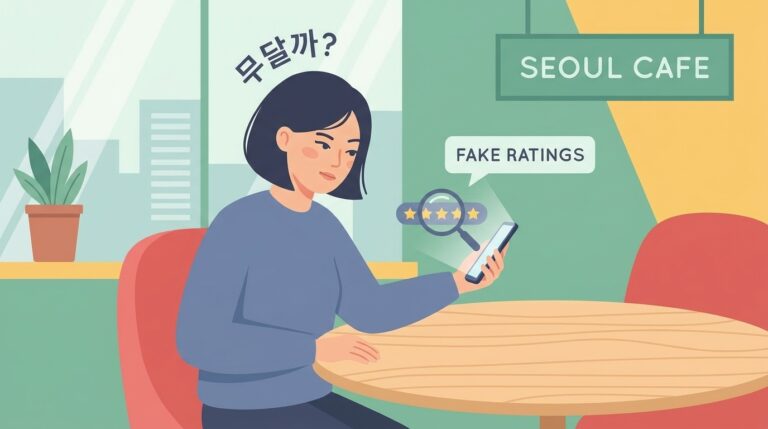
Falling for the Five-Star Trap: Demystifying Review Manipulation in Korean Consumer Culture
Phase 1: Empathy (An Editor’s Confession)
안녕하세요! Welcome back to another masterclass with Daily Hangul. I’m your senior editor and local culture guide.
Have you ever scrolled through a Korean online shopping app like Coupang, found a product with thousands of glowing five-star reviews, pressed buy, and felt incredibly betrayed when a flimsy, useless piece of plastic arrived at your doorstep? If so, you’ve fallen victim to the sophisticated world of 리뷰 솁임 (review deception) or 리뷰 섣은 알바 (paid review manipulation).
In Korea’s hyper-fast, tech-driven retail market, online reviews aren’t just references—they are the lifeblood of business. But with great influence comes great manipulation. Today, we are diving into advanced C2-level Korean to unpack the complex consumer psychology behind how fake reviews manipulate our minds, and how native Koreans talk about being duped, staying sharp, and demanding authenticity. By the end of this guide, you won’t just understand the terminology; you’ll possess the cultural nunchi (눈치) to spot a marketing trap from a mile away.
Phase 2: C2 Deep Dive – Three Core Expressions
1. 눈속임 (Nunsok-im)
- Pronunciation: [Nun-sok-im] (Sounds like noon-soke-eem – think of “noon” like midday, “soke” like soaking in water, and “eem” like a gentle hum.)
- Meaning: Deception, trickery, or sleight of hand (literally, “deceiving the eyes”).
- K-Culture Moment: This term is frequently used in investigative journalism programs like SBS’s Morning Wide or consumer advocacy shows exposing how restaurants use fake food displays or inflated review counts to lure in tourists.
- Editor’s Insight: While 사기 (scam) implies a serious legal crime, 눈속임 is used for clever, sneaky, or underhanded tactics that technically stay within legal grey areas but morally deceive the consumer.
- Situation Spectrum: Casual (✅) / Semi-formal (✅) / Formal (✅)
- 🧠 Think About It: Is there a distinction in your native language between “fraud” and “smart marketing that crosses the line”? How does your culture view a brand that uses “optical illusions” to sell products?
2. 바이러 마준팅을 가장한 여론 솁임 (Baireol maketing-eul gajanghan yeoron songim)
- Pronunciation: [Bai-reol ma-ke-ting-eul ga-jang-han yeo-ron song-im] (Focus on the transition between ga-jang-han [disguised as] and yeo-ron [public opinion].)
- Meaning: Public opinion manipulation disguised as viral marketing.
- K-Culture Moment: You will read this exact phrase in economic editorials or corporate crisis reports when a major cosmetics or electronics brand gets caught hiring click-farms (리뷰 알바) to trash competitors while artificially boosting their own ratings.
- Editor’s Insight: This is a highly formal, academic, and journalistic phrase. Use this in business meetings, essays, or when analyzing consumer trends to show a sophisticated grasp of corporate ethics.
- Situation Spectrum: Casual (Ὣ1) / Semi-formal (⚠️) / Formal (✅)
- 🧠 Think About It: Where is the boundary between genuine viral marketing and malicious public opinion manipulation in your country?
3. 내돈내산 (Nae-don-nae-san)
- Pronunciation: [Nae-don-nae-san] (Rhymes with “nae” as in the Korean word for yes, and “san” like a mountain.)
- Meaning: “My own money, my own purchase” (Acronym of 내 돈 좼고 내가 산 것).
- K-Culture Moment: Ever since the massive “backdoor advertising” (놷갑고) scandals shook the Korean YouTube community, creators now put “#내돈내산” in their video titles to prove they aren’t paid shills.
- Editor’s Insight: This is the ultimate stamp of authenticity. Saying a review is 내돈내산 means it is raw, unbiased, and completely trustworthy.
- Situation Spectrum: Casual (✅) / Semi-formal (✅) / Formal (Ὣ1)
- 🧠 Think About It: Why do you think modern consumers trust peer-to-peer recommendations over polished celebrity endorsements?
Phase 3: Textbook Korean vs. Real-World Korean
To master C2-level Korean, you must transition from grammatically perfect but stiff expressions to the lively, highly contextual phrases used by native speakers online.
Situation 1: Calling out a suspicious review thread
- 📖 Textbook Korean: 이 제품의 후기는 조작된 것으로 의심됩니다. (I suspect the reviews for this product have been manipulated.)
- 🗣️ Real-World Korean: 이거 딱 봐도 컴퓨터 매끤로가 돌린 기계식 리뷰네요, 거르세요. (This is obviously a robotic review run by a computer macro; skip it.)
- 💡 Why the difference? Real-world consumers immediately spot patterns—such as repetitive vocabulary or identical posting times—and use terms like 매끤로 (macro) and 거르다 (to filter/skip) rather than formal passive structures like 의심됩니다.
Situation 2: Expressing regret over a bad purchase based on fake hype
- 📖 Textbook Korean: 광고성 후기에 현혹되어 합리적인 선택을 하지 놻핈 것을 후회합니다. (I regret not making a rational choice due to being blinded by promotional reviews.)
- 🗣️ Real-World Korean: 아, 또 칑고 후기에 낚여서 호갱 당했네요. (Ah, I got hooked by the fake reviews and turned into an easy target again.)
- 💡 Why the difference? “낚이다” (to get hooked/fished) and “호갱 당하다” (to be treated like a sucker) are incredibly common idiomatic expressions that reflect the self-deprecating humor of modern Korean consumers.
Phase 4: K-Culture Deep Dive & Non-verbal Manners
4-1. The Body Language of Skepticism
In Korea, spotting a fake review online comes with its own silent choreography. When someone is evaluating whether a review is genuine, you will see them:
* The Squint and Quick Scroll (눈흐리고 내리기): Slowly narrowing the eyes while scrolling past the first 3 to 5 reviews on Naver or Coupang. This is because the top results are almost always sponsored (지원 받은 리뷰).
* The Double-Click Zoom: Zooming in on real-life photos. If the photos look too professional, shot in a studio, or have perfectly curated lighting, a Korean consumer will immediately raise an eyebrow. Real reviews are expected to have slightly messy, real-life background settings.
4-2. The “Dwit-gwanggo” (Backdoor Ad) Cultural Shock
[ The Trust Ecosystem in Korea ]
━━━━━━━━━━━━━━━━━━━━━━━━━━━━━
Pre-2020: "Influencers recommend it, so it must be good!"
Post-2020: "Is this paid? If it's not marked #내돈내산, I don't trust it."
━━━━━━━━━━━━━━━━━━━━━━━━━━━━━
In 2020, Korea experienced a massive cultural reckoning known as the 놷갑고 사태 (Backdoor Advertising Scandal). Dozens of top-tier YouTubers, beauty gurus, and mukbang stars who claimed they bought products with their own money (내돈내산) were exposed for secretly pocketing tens of thousands of dollars from brands.
This completely shattered public trust. The backlash was so severe that some creators with millions of subscribers had to permanently retire. It led to the Fair Trade Commission (FTC) of Korea enforcing strict laws: if a content creator receives any material support, they must display a massive, unmistakable “갑고 포함” (Includes Ad) banner.
Phase 5: Interactive Roleplay Scenario
Setting: A trendy cafe in Yeonnam-dong. Ji-won (an extremely analytical, sharp-eyed shopper) and Alex (a slightly naive expat who loves trying new K-beauty products) are looking at a trending skincare product on their phones.
Ji-won: 👧𖧲 (Looking skeptically at the screen)
Alex: 👦 (Excitedly pointing at the screen)
Dialogue
- Alex: 지원아, 이 수분칬림 바로 사얼겠어. 후기가 메차 개가 넘고, 평점도 4.9점이얼!
(Ji-won, I need to buy this moisturizer right now. There are over ten thousand reviews, and the rating is 4.9!) -
Ji-won:
😒 폰을 빼앗어 배면서아글, 알컬. 너는 아직도 그 칑고 별점에 낚이냐? 이거 딱 봐도 알바 돌준 툔게 티 나자나.
(Oh, Alex. Are you still getting hooked by those fake star ratings? It’s so obvious they hired fake review part-timers.) -
Alex:
😲 눈을 동그럍게 뜨면서에? 진칑? 사진 후기도 엄청 많고, 다들 피부가 꼿꼿해지고 좋다고 하눔데?
(Eh? Really? There are so many photo reviews, and everyone says their skin got super firm and nice?) -
Ji-won:
👆 화면을 가리키며잘 봐바. 문장 패턴이 다 비슳하자나. “배섐이 칭찬해요”, “트러블이 사라지네요”… 게다가 작성일이 다 지난주 화요일 하렔에 뫰리어 있어. 이거 소비자 심리 이용한 눈속임이얼.
(Look closely. The sentence patterns are all similar. “The delivery is praised”, “My skin troubles disappeared”… Plus, the posting dates are all crammed into last Tuesday. This is eye-deception exploiting consumer psychology.) -
Alex:
🤔 턱을 긌적이며아… 들고 바니 그러네. 그럼 진짜 리뷰는 어떻게 구분해?
(Ah… now that I hear it, you’re right. Then how do you separate the real reviews?) -
Ji-won:
😏 자신만만한 미소림 지잼며난 평점 낮은 순으로 먼저 필터링해. 진짜 소비자들의 불팸사항이나 단점을 봐야 실패가 없어. 별점 1점짜리리뷰에서 ‘성분이 너무 츽하다’고 하네, 패스!
(I filter by low ratings first. You have to look at actual consumers’ complaints or product flaws to avoid failing. The 1-star reviews say the ingredients are too harsh. Pass!) -
Alex:
🙌 감탄하며와, 영남동 코났록 홈즈네! 그럼 이건 거리고 나랑 ‘내돈내산’ 검증된 맣집이나 가자.
(Wow, you are the Sherlock Holmes of Yeonnam-dong! Then let’s skip this and go to a restaurant verified as real ‘#NaeDonNaeSan’.) -
Ji-won:
😝 기분 좋게 웃으며좋아! 내가 진짜 광고 없는 로컬 맣집 리스트 보여줄게!
(Deal! I’ll show you a list of local restaurants with absolutely zero ads!)
🔀 Choose Your Response!
If you were Alex, how would you respond to Ji-won’s shopping advice to show your deep cultural integration?
- Option A: “와, 나도 칑고 리뷰에 단골이 되기 싫은데, 팁 고마워!”
- Option B: “광고에 낚여서 호갱기 돌기 싫은데, 앞으론 평점 낮은 순으로 먼저 봐야겠어.”
- Option C: “나는 소비자로서 기업의 마준팅 전략을 존중한다.”
📣 Feedback:
- Option A (Good): Grammatically fine, but using “단골” (regular customer) in this context is slightly unnatural. It makes you sound like a polite tourist.
- Option B (Best! 🏆): Spectacular choice. You perfectly combined the advanced slang “낚이다” and “호갱기 돌다” (showing signs of being a sucker) while directly applying Ji-won’s C2 critical thinking analysis.
- Option C (Awkward): Extremely formal and stiff. It sounds like a textbook translation and misses the casual, friendly vibe of the coffee chat completely.
Phase 6: 10-Second Emotion Shadowing Drill
To sound truly authentic, your voice must carry the heavy weight of consumer skepticism and frustration. Try speaking this sentence out loud with the designated rhythm (/ represents short pauses) and emotional delivery.
- Sentence: 이거 / 셄직히 / 돈 받고 쓴 티가 / 너무 많이 나서 / 믿고 거르늬고 했어요.
- Pronunciation: I-geo / sol-jik-hi / don bat-go sseun ti-ga / neo-mu man-i na-seo / mit-go geo-reu-ryeo-go haet-eo-yo.
- Emotion Milestone:
[😒 Disappointed, slightly annoyed, with a roll of the eyes] - English Translation: Honestly, this looks so obviously paid that I decided to skip it entirely.
Phase 7: K-Culture Mini Dictionary
- 호갱 (Hogaeng) | Sucker / Easy Target
- Usage: A blend of 호구 (fool) and 넀객 (customer). Used when you pay full price or buy a heavily hyped, low-quality item due to bad information.
- 놷갑고 (Dwit-gwanggo) | Backdoor Advertising
- Usage: Secretly receiving money for sponsored reviews while presenting them as authentic, self-bought reviews (내돈내산).
- 실구뫤평 (Sil-gumae-pyeong) | Verified Purchase Review
- Usage: Highly sought-after reviews on Korean platforms that can only be written by users whose identity and actual payment have been digital-verified by the platform.
- 칑고 리뷰 (Gajja Ribyu) | Fake / Astroturfed Reviews
- Usage: Reviews manufactured by businesses, computer macros, or paid part-timers (리뷰 알바) to artificially inflate brand ratings.
Phase 8: The Smart Shopper’s Survival Kit
Survival Expressions TOP 3
- 이거 광고츍 글이다, 거르자. (Igeo gwanggo-seong geur-i-da, geo-reu-ja.)
- Pro Tip: Use this when sharing links with friends to quickly warn them that a post is sponsored.
- 믿고 거르는 브랜드네요. (Mit-go geo-reu-neun beu-raen-deu-nae-yo.)
- Pro Tip: Often abbreviated as “믿거” (Mit-Geo). It means “a brand you automatically skip due to historically poor quality.”
- 형찬인지 실제 후기인지 헌만해 봐. (Hyeop-chan-in-ji sil-je hu-gi-in-ji hwa-gin-hae bwa.)
- Pro Tip: Tell someone this to make sure they check if a product review was given for free (형찬) or bought organically.
Editor’s Travel Note: Escaping the Tourist Trap
When visiting Korea, don’t rely on global search portals or generic blogs, which are often heavily saturated with paid ad campaigns.
* For genuine restaurant reviews verified by actual card transactions, download the Naver Map App and filter by “방문자 리뷰” (Visitor Reviews), which requires receipt verification (영수증 인증).
* For cosmetic purchases, use the beauty app Hwahae (화해), which strictly filters out sponsor-backed reviews and highlights ingredient analyses for sensitive skin types.
Phase 9: “A Step Deeper” – The Psychology of Collective Trust in Korea
Korea is a highly collective society where 신뢰 (trust) and 평판 (reputation) serve as social currency. Historically, Koreans have relied heavily on communal consensus—whether selecting a university, renting an apartment, or choosing a skincare routine. This deep-seated collective mindset explains why online reviews carry such extraordinary power in Korea compared to highly individualistic societies.
However, when companies exploit this collective trust through astroturfed reviews, consumers experience a profound sense of moral betrayal. It explains why Korean netizen backlashes against “backdoor ads” are so systemic and severe: it’s not just about a bad product; it’s about a betrayal of the community’s shared trust.
💬 Your Turn: Have you ever felt betrayed by online reviews in Korea or your home country? Leave a comment below sharing your “호갱” experience and how you handled it!
Phase 10: FAQ & Common Mistakes (FAQ Schema)
Q: What is the difference between 광고 (ad) and 형찬 (sponsorship)?
A: ‘광고’ refers to direct paid advertising where a brand compensates a creator with cash to post promotional materials. ‘형찬’ typically refers to a sponsorship where a company sends free products to a creator in hopes they will post a review, but does not always involve direct cash compensation or strict script guidelines.
Q: Why do Koreans put “#내돈내산” on posts that clearly aren’t famous?
A: Even small, everyday bloggers use this hashtag because they want to gain trust from their readers and build a reputation as honest reviewers, which increases their search visibility and long-term user traffic.
Q: Is 리뷰 조작 illegal in Korea?
A: Yes. Under the Fair Trade Commission rules and Act on Fair Labeling and Advertising, deceptive review practices can result in massive corporate fines, and malicious competitor trashing can result in criminal charges for business obstruction (경영방해).
🚨 Common Mistakes Warning Board
- Mistake 1: Using “조작” (manipulation) for everything. Saying “너 리뷰 조작했지?” to a friend is far too formal/accusatory. Instead, use “낚시지?” (Is this clickbait?).
- Mistake 2: Misspelling 내돈내산. Make sure it’s not “내돈내사” or “네돈내산” (which would mean “your money, my purchase”!).
- Mistake 3: Treating all sponsored posts as scams. Genuine partnerships can exist, so verify with “갑고 포함” indicators instead of making sweeping accusations.
Phase 11: Action Missions
- 🥉 Bronze Mission: Go to a popular Korean YouTube video or Instagram post, and find the tag
#내돈내산or look for the warning icon유별•갑고 포함. - 🥈 Silver Mission: Write a comment in Korean on a local platform or a shopping app using the phrase: “형찬 후기가 넘첐나서 믿고 거르려고요.” (There are too many sponsored reviews, so I think I’ll skip this.)
- 🥇 Gold Mission: Tell a Korean friend about your worst shopping experience using the phrase “별점 칑고 후기에 낚여서 호갱 당했어요.”
Phase 12: Interactive Quiz Challenge
1. Situation Analysis
Which of the following reviews on a Korean app is most likely a manipulated fake review?
* A) “배섐은 빠른데, 칠지가 생각밴다 까칠해요.” (Fast delivery, but the texture is rougher than expected.)
* B) “바로 피부가 밝아지고, 주벼에서 다들 예퍾지었대요! 이거 안 사면 섐해! (Posted on June 1 at 3:00 PM with 50 identical reviews)”
* C) “그뷴저 그랬요. 가객대비 무난합니다.”
Click to see correct answer & explanation!
Correct Answer: B
* Why: It contains exaggerated, non-specific claims (“Your skin immediately gets brighter”, “You are losing out if you don’t buy this!”) combined with a highly suspicious pattern of mass postings at the exact same hour. A and C show typical consumer skepticism and balanced, mixed feedback.
2. Fill-in-the-Blanks
Fill in the blank with the correct advanced slang term:
리뷰만 믿고 사았다가 쓰레기가 왔네요. 오늘도 칑고 후기에 낚여서 [__________] 당했습니다.
(I bought it trusting only the reviews and trash arrived. I got hooked by fake reviews and was made a sucker today.)
Click to see correct answer!
Answer: 호갱







