

Phase 1: Empathy (스토리 몰입형 오프닝)
안녕하세요! (Annyeonghaseyo!) Your Korean best friend and senior editor at Daily Hangul is here.
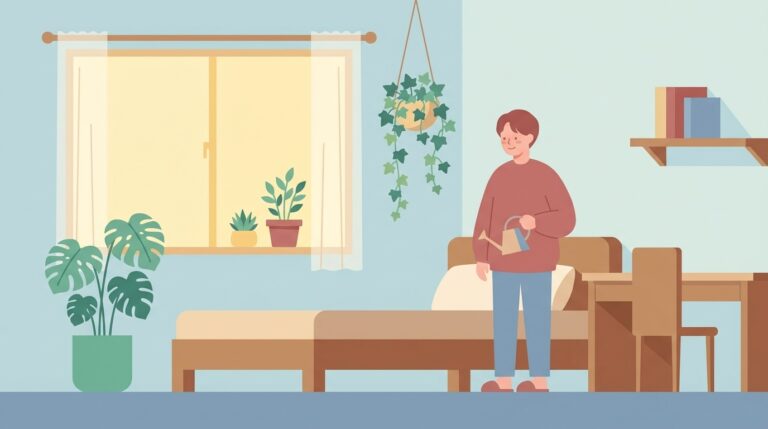
Have you ever stared at your desk or a corner of your room and felt that something was missing? Maybe the space felt a bit sterile, cold, or entirely disconnected from nature. This is a common pain point for many urban dwellers in Korea, where living in compact apartments, studio flats (called 원룸 won-rum), or bustling officetels is the norm.
Recently, one of our advanced C1 students, Sarah, confessed: “I wanted to spruce up my Korean apartment with plants, but when I visited a local plant market, I struggled to explain the aesthetic vibe I wanted. I knew the basic words for ‘flower’ and ‘pot,’ but I couldn’t express complex design concepts or talk about ‘planterior’ trends naturally!”
If you’ve felt this way, you’re not alone. In Korea, plants are no longer just passive decorations; they are 반려식물 (companion plants). “Planterior” (a portmanteau of plant and interior) has evolved into an art form of creating a personal sanctuary amidst concrete jungles.
Today, we are diving deep into the C1-level linguistic nuances of Korean Planterior Interior Tips (플랜테리어 인테리어 팁). Mastering these expressions won’t just elevate your vocabulary; it will allow you to design, discuss, and connect with local plant enthusiasts (“식집사” sik-jipsa or plant butlers) on a deeply cultural level. Ready to turn your space into a green oasis? Let’s begin!
Phase 2: 핵심 표현 3선 심층 분석 (Deep-Dive Expressions)
1. 플랜테리어로 분위기를 바꾸다 (Pullanterieolo bunwigireul bakkuda)
- Pronunciation: Plan-te-ri-eo-ro boon-wi-gi-reul ba-kkoo-da (Think of “boon-wi-gi” as “boon” + “we” + “gi” like the start of guitar)
- Meaning: To transform the atmosphere with planterior.
- K-Culture Moment: You will hear this phrase constantly on popular home styling YouTube channels like 오늘의집 (Ohou / Today’s House) or lifestyle vlogs. It refers to the dramatic shift in a room’s energy when greenery is introduced.
- Editor’s Insight: While “바꾸다” simply means “to change,” combining it with “분위기” (atmosphere/vibe) elevates the action. In Korea’s fast-paced society, “changing the vibe” of your home is a form of emotional reset.
- Situation Spectrum: Casual ✅ | Semi-formal ✅ | Formal ✅
- 🤔 Think About It: How does your culture view the relationship between interior decor and mental well-being? In Korea, changing the home environment is often seen as a direct reflection of self-care.
2. 초록초록한 싱그러움 (Chorok-chorokhan singgeureoum)
- Pronunciation: Cho-rok-cho-rok-han sing-geu-reo-oom (Rhymes with “so-rock” repeated, and “sing-geu” like sing + good without the ‘d’)
- Meaning: Lush, vibrant green freshness / leafy vitality.
- K-Culture Moment: This is a highly sensory, expressive term used in K-Dramas when characters escape the concrete city to cozy suburban cafes or lush plant stores.
- Editor’s Insight: “초록” means green, but duplicating it to “초록초록하다” turns it into a vivid, cute, and colloquial adjective describing something brimming with lush greenery. “싱그러움” is the noun form of “싱그럽다” (to be fresh/vibrant). Together, it describes that therapeutic, fresh-air feeling of a plant-filled room.
- Situation Spectrum: Casual ✅ | Semi-formal ✅ | Formal ⚠️ (Too colloquial for strict business reports, but great for lifestyle marketing)
- 🤔 Think About It: Notice how Korean uses reduplication (repeating words like 초록초록) to amplify sensory feelings. What color-related double words exist in your native language?
3. 플랜트 테라피로 힐링하다 (Pullaenteu terapiro hillinghada)
- Pronunciation: Plant te-ra-pi-ro heel-ling-ha-da (Direct loan words combined with Korean grammar)
- Meaning: To heal through plant therapy.
- K-Culture Moment: Healing (힐링) is a massive cultural keyword in Korea. With high stress levels from work and study, Koreans actively seek “Plant Therapy” to combat burnout.
- Editor’s Insight: Although “테라피” (therapy) and “힐링” (healing) are English loan words, their usage in Korean implies a holistic, lifestyle-oriented emotional recovery. Saying “힐링하다” with plants shows you understand modern Korean wellness culture.
- Situation Spectrum: Casual ✅ | Semi-formal ✅ | Formal ✅
- 🤔 Think About It: Why do you think “healing” has become such a dominant theme in modern Korean lifestyle trends?
Phase 3: 교과서 한국어 vs 진짜 한국어 (Textbook vs. Real-world)
Scenario 1: Suggesting where to put plants
- 📖 Textbook Korean: “식물을 방에 배치하세요.” (Singmureul bange baechihaeseyo.)
- Translation: “Place the plants in the room.”
- 🗣️ Real-world Korean: “밋밋한 공간에 초록초록한 포인트로 생기를 불어넣어 보세요.” (Mit-mit-han gong-gan-e chorok-chorok-han po-in-teu-ro saeng-gi-reul bul-eo-neo-eo bo-se-yo.)
- Translation: “Try breathing life into a dull space with a vibrant, leafy green focal point.”
- 💡 Why the difference? The textbook phrase sounds like an instruction manual. Real Koreans use descriptive terms like “밋밋하다” (to be flat/dull) and “생기를 불어넣다” (to breathe in vital energy) to describe the aesthetic goals of interior design.
Scenario 2: Asking for plant recommendations for a specific spot
- 📖 Textbook Korean: “어떤 식물이 좋습니까?” (Eotteon singmuri joseumnikka?)
- Translation: “Which plant is good?”
- 🗣️ Real-world Korean: “우리 집 거실 조도(light level)랑 어울리는 찰떡인 반려 식물이 있을까요?” (Oo-ri jip geo-sil jo-do-rang eo-wool-li-neun chal-tteok-in ban-ryeo sing-mu-ri it-seul-kka-yo?)
- Translation: “Is there a ‘pet plant’ that is an absolute match for the lighting level in my living room?”
- 💡 Why the difference? At a C1 level, asking for “good plants” is too simplistic. Real-world interior discussions use technical terms like “조도” (illuminance/lighting level) and endearing slang like “찰떡” (sticky rice cake, meaning a perfect, inseparable match).
Phase 4: K-Culture 딥다이브 & 비언어적 매너 (Deep-Dive & Manners)
4-1. 눈치 (Nunchi) & Non-verbal Etiquette in Plant Styling
In Korea, plants are treated as living, breathing companions. When you visit a boutique plant shop in areas like Yeonnam-dong or Seongsu-dong, observing local etiquette shows high emotional intelligence:
* The Gentle Touch: Avoid pinching or pulling leaves to check if they are real. Instead, gently support the underside of a leaf with your palm if you must inspect it.
* Nunchi with Space: Korean apartments often have limited sunlight due to high-rise layouts. When asking a designer or seller for advice, it’s polite to show photos of your window placement on your phone. This practical step demonstrates respect for the plant’s life and the seller’s expertise.
4-2. The
Frequently Asked Questions (FAQ)
Q: What does "플랜테리어로 분위기를 바꾸다 (Pullanterieolo bunwigireul bakkuda)" mean in Korean and how do you pronounce it?
A: In Korean, "플랜테리어로 분위기를 바꾸다 (Pullanterieolo bunwigireul bakkuda)" is pronounced [Plan-te-ri-eo-ro boon-wi-gi-reul ba-kkoo-da (Think of "boon-wi-gi" as "boon" + "we" + "gi" like the start of guitar] and means: To transform the atmosphere with planterior.
Q: What does "초록초록한 싱그러움 (Chorok-chorokhan singgeureoum)" mean in Korean and how do you pronounce it?
A: In Korean, "초록초록한 싱그러움 (Chorok-chorokhan singgeureoum)" is pronounced [Cho-rok-cho-rok-han sing-geu-reo-oom (Rhymes with "so-rock" repeated, and "sing-geu" like sing + good without the 'd'] and means: Lush, vibrant green freshness / leafy vitality.
Q: What does "플랜트 테라피로 힐링하다 (Pullaenteu terapiro hillinghada)" mean in Korean and how do you pronounce it?
A: In Korean, "플랜트 테라피로 힐링하다 (Pullaenteu terapiro hillinghada)" is pronounced [Plant te-ra-pi-ro heel-ling-ha-da (Direct loan words combined with Korean grammar] and means: To heal through plant therapy.







