

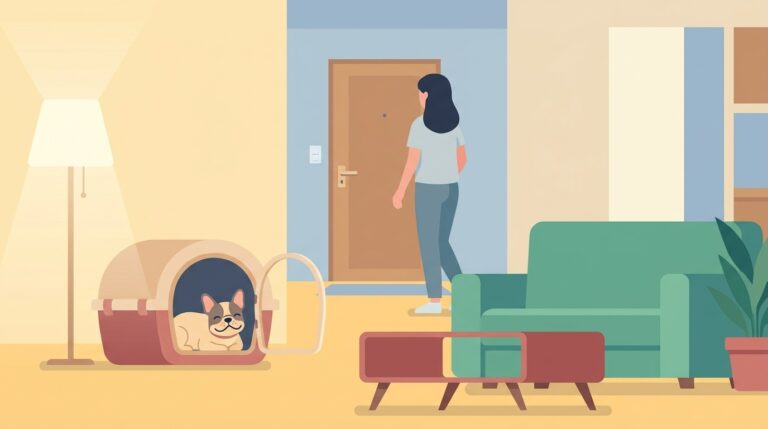
Handling Pet Separation Anxiety: The Sophisticated Guide to Behavior Correction in Korea
Phase 1: Empathy (Opening)
안녕하세요! Welcome back to another premium edition of Daily Hangul. I am your chief editor and 10-year local culture navigator.
Imagine this scenario: You have just moved into a beautiful, high-rise officetel in the bustling heart of Seoul with your beloved furry companion. You leave for a quick cup of iced americano, only to return to a polite but deeply concerning post-it note on your door from your neighbor, or worse, a message from the building manager. Your pet has been howling, scratching the door, and displaying severe distress. In Korea’s dense urban environments, where walls are thin and high-rise living is the norm, 반려동물 분리 불안 (pet separation anxiety) is not just a personal heartache; it is a critical community concern.
Today, we are diving deep into the sophisticated world of Korean pet care culture. This C2-level guide is built on real-world behavioral studies and local insights. By mastering these expressions and cultural paradigms, you will not only soothe your pet but also communicate with veterinarians and professional trainers at an elite level. Let’s master the art of positive reinforcement and modern Korean canine diplomacy!
Phase 2: Three Core Expressions Deep Dive
1. 분리 불안 (Bun-ri Bul-an)
- Pronunciation: Bun-ri Bul-an (Sounds like “boon-ree bool-ahn” with a soft, flowing transition between syllables)
- Meaning: Separation Anxiety (Literally: Separation [분리] + Anxiety [불안])
- K-Culture Moment: You will hear this term constantly on popular Korean pet-rehabilitation variety shows like EBS’s 세상에 나쁜 개는 없다 (There Are No Bad Dogs in the World) or KBS’s 개는 훌륭하다 (Dogs Are Incredible). When a dog barks uncontrollably when left alone, the MC invariably diagnoses it as “분리 불안 증세” (symptoms of separation anxiety).
- Editor’s Insight: While in English we often say “My dog gets anxious when I leave,” Koreans conceptualize this as a clinical/behavioral state of ‘anxiety born of separation.’ When speaking to a Korean vet, using “분리 불안” immediately conveys that you understand it as a behavioral issue requiring systematic training, rather than just a spoiled pet throwing a tantrum.
- Situation Spectrum: Casual (✅) / Semi-formal (✅) / Formal (✅)
- 🤔 Think About It: How does your native language frame a pet’s distress? Is it seen as emotional longing, or a psychological state of anxiety? In Korea, framing it as ‘불안’ (anxiety) highlights the collective responsibility of the guardian to provide psychological security.
2. 하우스 훈련 / 켄넬 훈련 (Ha-u-seu Hun-ryeon / Ken-nel Hun-ryeon)
- Pronunciation: Ha-u-seu Hun-ryeon / Ken-nel Hun-ryeon (Sounds like “house hoon-ryeon” / “ken-nel hoon-ryeon” with a rolled ‘r’ sound in ryeon)
- Meaning: Crate/Kennel Training (Literally: House/Kennel + Training [훈련])
- K-Culture Moment: On pet-focused YouTube channels, trainers emphasize that a kennel is not a prison but a dog’s personal sanctuary (안식처). They teach “하우스!” as a command for the dog to retreat to their safe space voluntarily.
- Editor’s Insight: Historically, dogs in Korea were kept outdoors as guard dogs. However, with the rapid transition to indoor apartment living, “하우스/켄넬 훈련” has become the gold standard of modern positive reinforcement (긍정 강화) training. It is highly respected when a guardian actively practices this.
- Situation Spectrum: Casual (✅) / Semi-formal (✅) / Formal (✅)
- 🤔 Think About It: In some cultures, keeping a dog in a crate is perceived as restrictive. In modern Korea, it is viewed as providing a “private den” (굴) essential for reducing spatial anxiety in loud apartment complexes.
3. 보호자 의존도 (Bo-ho-ja Ui-jon-do)
- Pronunciation: Bo-ho-ja Wee-jon-do (Sounds like “bo-ho-jah wee-john-doh”)
- Meaning: Dependency rate on the guardian (Literally: Guardian [보호자] + Dependency [의존] + Degree [도])
- K-Culture Moment: Professional dog behavioral therapists use this term to explain why a dog shadows their owner everywhere, even to the bathroom. High dependency indicates a lack of self-soothing skills.
- Editor’s Insight: Notice the shift in terminology: Koreans rarely use “주인” (owner/master) anymore. Instead, they use “보호자” (guardian/protector). Thus, “보호자 의존도” measures how much the pet relies on you for emotional stability. Lowering this dependency through structured space separation is the key to curing anxiety.
- Situation Spectrum: Casual (⚠️ – slightly clinical) / Semi-formal (✅) / Formal (✅)
- 🤔 Think About It: Changing the word from “owner” to “guardian” shifts the power dynamic. Does your language make this distinction, and how does it affect your relationship with your pet?
Phase 3: Textbook Korean vs. Real Korean
Scenario 1: Describing your dog’s crying behavior when alone
- 📖 Textbook Korean: “개가 혼자 있을 때 웁니다.” (Gae-ga hon-ja is-seul ttae um-ni-da. – “The dog cries when alone.”)
- 🗣️ Real Korean: “우리 애가 분리불안이 심해서, 혼자 남겨지면 쉴 새 없이 하울링을 해요.” (U-ri ae-ga bun-ri-bul-an-i sim-hae-seo, hon-ja nam-gyeo-ji-myeon swil sae eop-si ha-ul-ring-eul hae-yo. – “Our little one has severe separation anxiety, so when left alone, they howl incessantly.”)
- 💡 Why the Difference? Advanced speakers refer to their pets affectionately as “우리 애” (our child/baby) rather than “개” (dog). Additionally, using onomatopoeic and loan words like “하울링” (howling) or “낑낑거림” (whining) provides precise behavioral feedback to professionals.
Scenario 2: Explaining your training method to a veterinarian
- 📖 Textbook Korean: “훈련을 통해 고치겠습니다.” (Hun-ryeon-eul tong-hae go-chi-get-seum-ni-da. – “I will fix it through training.”)
- 🗣️ Real Korean: “점진적 둔감화 교육이랑 카밍 시그널을 활용해서 행동 교정 중이에요.” (Jeom-jin-jeok dun-gam-hwa gyo-yuk-i-rang ka-ming si-geu-neol-eul hwal-yong-hae-seo haeng-dong gyo-jeong jung-i-e-yo. – “I am currently doing behavior modification using gradual desensitization training and calming signals.”)
- 💡 Why the Difference? Modern Korean pet guardians use highly specialized psychological terms. Saying “행동 교정” (behavior correction) and “둔감화” (desensitization) positions you as an informed, responsible guardian who utilizes advanced training methodologies.
Phase 4: K-Culture Deep Dive & Non-verbal Manners
4-1. The Silent Departure & Cool Return (의연한 대처)
In Korea, when practicing behavior correction for separation anxiety, the most crucial non-verbal manner is 의연함 (equanimity/composure).
* The Gesture: When leaving the house, never make eye contact, say goodbye, or hug your dog. Koreans call this “외출 전 눈인사 금지” (no eye contact before leaving).
* The Attitude: When returning, ignore your dog for at least 5 minutes until their excitement level drops. Do not speak in a high-pitched voice. Walk in silently, put your keys down, wash your hands, and only greet them when they are completely calm. This teaches the dog that your departures and arrivals are non-events.
4-2. The “Dog President” (개대통령) Phenomenon
Korea is currently experiencing an unprecedented “Pet Humanization” era. At the center of this movement is trainer Kang Hyung-wook (강형욱), affectionately dubbed the “개대통령” (Dog President). His philosophy revolutionized Korean pet culture from the old school “force-based obedience” to “understanding canine psychology and educating the guardian.”
In Korean high-rise apartments, barking is a major source of civil complaints (층간소음 – inter-floor noise). Therefore, modern Korean pet owners are highly proactive about behavior modification. Investing in professional behavioral consultation is seen as a sign of high social responsibility.
Phase 5: Real-Life Roleplay Scenario
The Setting
A high-end veterinary behavior clinic in Cheongdam-dong, Seoul.
* Guardian Min-ji (민지): Deeply concerned about her French Bulldog, Tori, who has been causing neighbor complaints due to barking.
* Dr. Han (한 원장님): A sophisticated behavioral veterinarian with a calming, reassuring tone.
[Scene Start]

민지: (걱정스러운 목소리로) 원장님, 저희 토리가 분리불안 증세가 너무 심해져서요. 제가 나가기만 하면 문 앞을 긁고 난리가 나요.
Min-ji: (In a worried voice) Director, our Tori's separation anxiety has gotten so severe. The moment I leave, he scratches the door and goes wild.

한 원장님: (차분하게 차트를 보며) 아하, 토리가 많이 불안해하는군요. 외출하실 때 보통 어떻게 인사를 하세요?
Dr. Han: (Calmly looking at the chart) Ah, Tori must be feeling very anxious. How do you usually say goodbye when you head out?

민지: (안타까운 표정으로) 미안하니까 "엄마 금방 올게!" 하면서 꼭 안아주고 간식도 많이 뿌려주고 나가요.
Min-ji: (With a regretful expression) Because I feel bad, I hug him tightly, say "Mommy will be back soon!", and scatter lots of treats before leaving.

한 원장님: (고개를 저으며) 아, 그 행동이 오히려 토리의 불안을 증폭시키는 원인이 될 수 있어요. 나가기 직전의 과도한 자극은 금물입니다.
Dr. Han: (Shaking his head) Ah, that behavior might actually be the trigger amplifying Tori's anxiety. Excessive stimulation right before leaving is a strict no-no.

민지: (놀란 눈으로) 아, 정말요? 저는 토리를 안심시켜 주려고 한 행동이었는데... 그럼 어떻게 해야 하죠?
Min-ji: (With wide eyes) Oh, really? I did that to reassure him... What should I do then?

한 원장님: (미소를 지으며) 오늘부터는 외출 10분 전부터 토리에게 어떤 관심도 주지 마세요. 무관심이 최고의 약입니다.
Dr. Han: (Smiling) Starting today, do not give Tori any attention from 10 minutes before you leave. Indifference is the best medicine.

민지: (메모를 하며) 아... 나가기 전 무관심이군요. 켄넬 교육도 병행하는 게 도움이 될까요?
Min-ji: (Taking notes) Ah... indifference before leaving. Would incorporating crate training simultaneously help?

한 원장님: (끄덕이며) 아주 좋은 생각입니다! 하우스를 자신만의 안전한 요새로 인식하게 만드는 교육부터 시작해 보시죠.
Dr. Han: (Nodding) That is an excellent idea! Let's start with training him to perceive the house as his own safe fortress.

[Scene End]
🔀 Interactive Choice Point
How should Min-ji respond to Dr. Han to demonstrate her understanding of C2-level behavior correction protocols?
- Option A: “네, 가자마자 하우스에 가둬 둘게요.” (Yes, I will lock him in his house as soon as I go home.)
- Option B: “알겠습니다. 문을 열어둔 상태로 켄넬 안에 간식을 넣어주면서 점진적으로 긍정적인 기억을 심어줘야겠네요.”
- Option C: “그냥 짖을 때마다 소리쳐서 짖지 못하게 혼내면 안 되나요?”
Feedback on Your Choice:
- Option A (Bad): Locking a dog inside a crate immediately without training will induce claustrophobia and worsen separation anxiety. 🚫
- Option B (Best): Excellent! This shows deep understanding of positive reinforcement. By keeping the door open and introducing treats, you build a positive association (점진적 긍정 강화) with the crate. 🏆
- Option C (Risk): Yelling at an anxious dog only increases their arousal and anxiety, potentially leading to fear-aggression. ⚠️
Phase 6: 10-Second Emotion Shadowing Drill
Let’s practice advanced prosody and emotional delivery. Pay attention to the pauses (/) and mimic the psychological tone.
- [🥺 Deeply concerned, seeking professional advice]
- “우리 애가 / 혼자 있을 때 / 긁는 소리가 너무 심해서 / 이웃집에 민폐를 끼칠까 봐 / 너무 피가 마르는 심정이에요.”
- U-ri ae-ga / hon-ja is-seul ttae / geul-neun so-ri-ga neo-mu sim-hae-seo / i-ut-jibe min-pye-reul kki-chil-kka bwa / neo-mu pi-ga ma-reu-neun sim-jeong-i-e-yo.
- “My baby’s scratching sounds are so severe when left alone / I’m terrified of causing a nuisance to my neighbors / It feels like my blood is running dry (I’m incredibly anxious).”
- [😎 Confident, knowledgeable guardian explaining their routine]
- “외출 전후로 / 의연하게 대처하고 / 매일 5분씩 / 카밍 시그널 훈련을 해줬더니 / 분리불안이 / 몰라보게 호전되었어요.”
- Oe-chul jeon-hu-ro / ui-yeon-ha-ge dae-cheo-ha-go / mae-il o-bun-ssik / ka-ming si-geu-neol hun-ryeon-eul hae-jweot-deo-ni / bun-ri-bul-an-i / mol-ra-bo-ge ho-jeon-doe-eot-seo-yo.
- “By maintaining my composure / before and after going out / and doing 5 minutes of calming signal training daily / the separation anxiety / has improved beyond recognition.”
Phase 7: K-Culture Mini Dictionary
- 댕댕이 (Daeng-daeng-i) | Noun | An adorable slang term for puppy or doggo. Subverting the shape of the letters “멍멍” (mung-mung) to look like “댕댕”. Used widely on social media and pet cafes.
- 개통령 (Gae-tong-nyeong) | Noun | “Dog President.” A portmanteau of “개” (dog) and “대통령” (president). It is the ubiquitous nickname of celebrity trainer Kang Hyung-wook.
- 펫팸족 (Pet-fam-jok) | Noun | A portmanteau of “Pet” and “Family” + “Tribe” (족). Refers to the growing demographic of Koreans who view their pets as equal, irreplaceable family members.
- 카밍 시그널 (Calming Signal) | Noun | Dog body language signals used to diffuse tension (e.g., yawning, licking chops). Modern Korean pet owners study these diligently to understand their dog’s emotional states.
Phase 8: Traveler’s Survival Kit
Survival Phrases for Pet Parents in Korea
- “이 근처에 반려동물 동반 가능한 카페가 있나요?”
- I geun-cheo-e ban-ryeo-dong-mul dong-ban ga-neung-han ka-pe-ga in-na-yo?
- Pro Tip: “Is there a dog-friendly cafe nearby?” Perfect for navigating pet-friendly urban areas in Seoul.
- “이 아이가 분리불안 증세가 있어서 구석진 자리로 부탁드립니다.”
- I a-i-ga bun-ri-bul-an jeung-se-ga is-seo-seo gu-seok-jin ja-ri-ro bu-tak-deu-rim-ni-da.
- Pro Tip: “Since this little one has some separation anxiety, could we please get a quiet corner seat?”
- “혹시 행동 교정 전문 수의사 선생님을 추천해 주실 수 있나요?”
- Hok-si haeng-dong gyo-jeong jeon-mun su-ui-sa seon-saeng-nim-eul chu-cheon-hae ju-sil su in-na-yo?
- Pro Tip: “Could you perhaps recommend a veterinarian specializing in behavior correction?”
Editor’s Travel Note
When traveling with pets in Korea, download the app “반려생활” (Banryeo Saenghwal) or use the filter “반려동물 동반” on Naver Maps. These tools show thousands of verified pet-friendly accommodations, restaurants, and playgrounds. Note: Major public transport networks allow small pets under 10kg, provided they are in secure carriers/strollers.
Phase 9: “한 발 더 깊이” (Deepening Thought)
Language reflects societal transformations. In the 1990s, the common Korean word for pet was 애완동물 (Ae-wan-dong-mul), which translates literally to “toy animal” or “plaything.” Today, that word is almost entirely obsolete, replaced by 반려동물 (Ban-ryeo-dong-mul), meaning “companion animal”—partners who journey through life alongside us. Likewise, owners are no longer “주인” (masters) but “보호자” (guardians). This linguistic evolution highlights a profound shift toward viewing animals as sentient beings with their own psychological needs, which explains the national obsession with treating and curing behavioral issues like separation anxiety rather than giving up on pets.
💬 Your Turn: How has the terminology surrounding pets evolved in your home country? Do you see a similar shift in cultural perceptions of animal psychological health? Let us know in the comments below!
Phase 10: FAQ & Avoiding Misconceptions
Q: Why is my dog’s separation anxiety worse in a Korean apartment?
A: Korean apartments are built very close to each other. External sounds like elevators dinging, neighbors walking down hallways, or deliveries can trigger high vigilance in dogs. This chronic arousal, combined with being alone, accelerates separation anxiety. Soundproofing front doors with rubber seals and leaving white noise on can greatly help.
Q: Is crating my dog considered cruel by Korean standards?
A: Not at all. Modern Korean veterinary medicine actively advocates for crate training (켄넬/하우스 훈련) as a safe-haven practice. As long as the crate is introduced positively with food and comfort, and the dog is not left confined for excessive hours, it is viewed as exemplary guardian behavior.
Q: Can I get evicted if my dog barks due to separation anxiety?
A: While there are no direct laws for immediate eviction, severe, persistent barking can lead to mediation by the apartment management office (관리사무소) and potential fines under local noise pollution acts (층간소음 규정). It is highly recommended to communicate with neighbors and show that you are actively seeking professional behavior correction.
🚨 The Pet Guardian’s Common Mistakes Board
- Mistake 1: Punishing the dog after returning home and finding a mess.
- Correct Action: Clean it up silently. Dogs cannot link punishment with an act they did hours ago; it only increases their fear of your return.
- Mistake 2: Saying a long, emotional goodbye.
- Correct Action: Keep exits completely clinical. Ignore your pet for 10-15 minutes before stepping out.
- Mistake 3: Thinking a long weekend walk cures anxiety.
- Correct Action: While exercise is great, separation anxiety is a cognitive issue. Implement systematic step-away training (1-minute, 5-minute, 10-minute intervals) daily.
Phase 11: Action Mission & Engagement
Your Action Mission
- Bronze Medal: Leave your house for exactly 3 minutes without saying goodbye, filming your pet’s reaction from an old phone or pet cam.
- Silver Medal: Share a photo of your pet’s safe space or kennel on Instagram, tag
@DailyHangul, and use the phrase: “우리 애 하우스 훈련 시작했어요!” (Started our baby’s crate training!) - Gold Medal: The next time you visit a vet or pet-friendly cafe, ask the staff: “혹시 이 근처에 댕댕이 데리고 갈 만한 공원이 있을까요?” (Is there a park nearby where I can take my doggo?)
🎮 K-Culture Mission
Watch one episode of 세상에 나쁜 개는 없다 (There Are No Bad Dogs in the World) on YouTube. Try to spot how many times the trainer mentions “보호자의 태도” (the guardian’s attitude) as the key to curing the dog’s anxiety!
Phase 12: Interactive Quiz Challenge
1. Situational Judgment
Your friend says: “우리 강아지가 내가 외출하면 문을 계속 긁어.” (My puppy keeps scratching the door when I go out.) Which of the following is the most helpful, scientifically-backed advice in professional Korean pet care?
* A) “더 큰 소리로 혼을 내야 해.”
* B) “외출 전에 격하게 놀아주고 큰 소리로 인사하고 나가봐.”
* C) “의연하게 나가는 연습이랑 켄넬 훈련을 천천히 병행해봐.”
2. Fill-In-The-Blank
To lower a dog’s dependency on you, you must manage their ( ) 의존도 (Guardian dependency rate).
* Clue: Starts with “보호자”.
3. True or False
In modern Korea, referring to yourself as the “주인” (owner) of a dog is preferred over “보호자” (guardian).
* True / False
🔍 Check the Answer Key & Explanations
- Answer: C
- Explanation: Curing separation anxiety requires a quiet, low-excitation departure combined with systematic crate training to foster independence.
- Answer: 보호자 (Bo-ho-ja)
- Explanation: Reducing “보호자 의존도” (guardian dependency rate) helps the dog build self-soothing mechanics.
- Answer: False
- Explanation: Modern Korean pet culture heavily favors the term “보호자” (guardian) to reflect mutual companionship and ethical responsibility, while “주인” is increasingly seen as outdated.
- Explanation: Modern Korean pet culture heavily favors the term “보호자” (guardian) to reflect mutual companionship and ethical responsibility, while “주인” is increasingly seen as outdated.






