

Understanding ‘Gundaesliga’: The Ultimate Icebreaker in Korean Culture
안녕하세요! (An-nyeong-ha-se-yo!) Welcome back to Daily Hangul! I’m your Korean best friend and editor, ready to guide you through the real, unfiltered side of Korean culture.
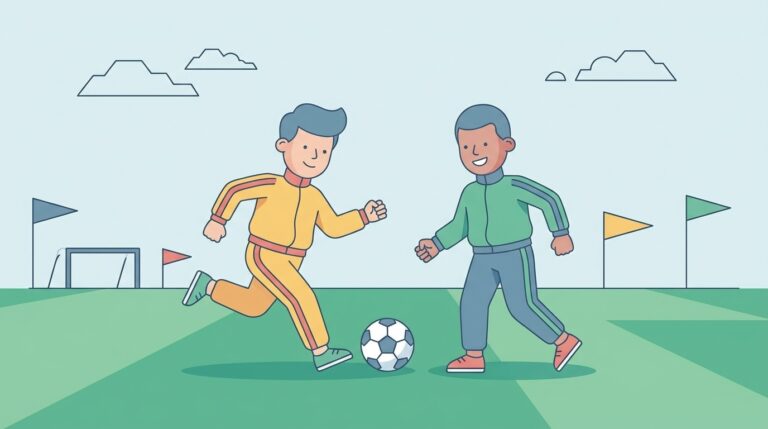
If you have ever hung out with a group of Korean men, you might have noticed a peculiar phenomenon. At some point, the conversation inevitably drifts toward their time in the military. And when it does, one topic reigns supreme: 군대스리가 (Gundaesliga)—military soccer.
To many foreigners, this sounds like just another casual weekend sport. But in Korea, military soccer is a legendary rite of passage, packed with unique social codes, hilarious slang, and ultimate bonding moments. Let’s dive deep into this fascinating subculture so you can join the conversation like a true local!
Phase 2: Three Core Gundaesliga Expressions You Must Know
1. 군대스리가 (Gundaesliga)
- Pronunciation: Gun-dae-seu-ri-ga (Sounds like “Bundesliga,” the German soccer league)
- Meaning: Military Soccer (군대 [Gun-dae / Military] + 분데스리가 [Bun-de-seu-ri-ga / Bundesliga])
- K-Culture Moment: Often featured in military-themed variety shows like Steel Troops (강철부대) or talked about in K-Dramas like D.P. when soldiers gather on the dirt field.
- Editor’s Insight: This isn’t just a friendly game. It is a high-stakes, hyper-competitive match where ranks are temporarily forgotten—until someone tackles the commanding officer too hard! Using this word shows you understand the unique humor of Korean military life.
- Situation Spectrum: Casual ✅ | Semi-formal ⚠️ | Formal 🚫
- 🤔 Think About It: Why do you think sports become such a powerful tool for survival and bonding in high-stress, restricted environments like the military?
2. 개발 (Gae-bal)
- Pronunciation: Gae-bal (Sounds like “get-bal” with a soft ‘g’)
- Meaning: “Dog foot” (Someone who is terrible at soccer or sports)
- K-Culture Moment: When a character in a drama misses an open goal and his friends laughingly shout, “야! 너 진짜 개발이다!” (Hey! You are such a dog foot!)
- Editor’s Insight: In Korean, prefixing a word with ‘개’ (gae / dog) often adds a negative or extreme meaning. ‘개발’ refers to a foot that cannot control a soccer ball. It is used playfully among friends, but avoid using it with superiors!
- Situation Spectrum: Casual ✅ | Semi-formal 🚫 | Formal 🚫
- 🤔 Think About It: Do you have a funny idiom in your native language for someone who is clumsy at sports?
3. 군대에서 축구한 얘기 (Gun-dae-e-seo chuk-gu-han yae-gi)
- Pronunciation: Gun-dae-eh-suh chook-goo-han yae-ghee
- Meaning: “Stories of playing soccer in the army”
- K-Culture Moment: A classic trope in Korean comedy. It is widely joked that the #1 most boring story for Korean women is “men talking about the military,” the #2 is “men talking about soccer,” and the absolute worst is “men talking about playing soccer in the military.”
- Editor’s Insight: While it’s joked about as boring, bringing this up with a Korean man is actually a golden key to instant friendship. It shows you know the classic Korean humor tropes.
- Situation Spectrum: Casual ✅ | Semi-formal ✅ | Formal 🚫
- 🤔 Think About It: What is a common topic in your country that people love to complain about but secretly enjoy discussing?
Phase 3: Textbook Korean vs. Real Korean
Let’s see how native speakers actually talk about sports skills compared to rigid textbook lessons.
Scenario 1: Admitting you are not good at soccer
- 📖 Textbook: “저는 축구를 잘 못합니다.” (Jeo-neun chuk-gu-reul jal mot-ham-ni-da.) – “I am not good at soccer.”
- 🗣️ Real Korean: “저 완전 개발이에요!” (Jeo wan-jeon gae-bal-i-e-yo!) – “I’m a total dog-foot (clutzy at soccer)!”
- 💡 Why it’s different: The textbook version is polite but dry. Using “개발” instantly breaks the ice, making people laugh and feel closer to you.
Scenario 2: Expressing absolute determination
- 📖 Textbook: “열심히 하겠습니다.” (Yeol-sim-hi ha-get-sam-ni-da.) – “I will work hard.”
- 🗣️ Real Korean: “군대 축구처럼 목숨 걸고 할게요!” (Gun-dae chuk-gu-cheo-reom mok-sum geol-go hal-gae-yo!) – “I’ll bet my life on it like military soccer!”
- 💡 Why it’s different: Comparing your passion to military soccer shows you understand how intense and serious Koreans are about their hobbies.
Phase 4: K-Culture Deep Dive & Non-Verbal Manners
4-1. Nunchi (눈치) on the Dirt Field
When playing Gundaesliga, physical skill is only half the battle; the other half is 눈치 (Nunchi – situational awareness).
* The Golden Rule: If the Battalion Commander (대령님) or Sergeant Major (주임원사) has the ball, you do not slide-tackle them like you are in the Premier League.
* The Body Language: When a higher-ranking officer scores, everyone—regardless of team—claps enthusiastically while bowing slightly. This subtle mix of hierarchy and sportsmanship is uniquely Korean!
4-2. The “Kkal-kkal-i” (깔깔이) Fashion
After military discharge, many Korean men bring home their yellow quilted inner jacket, affectionately called 깔깔이 (Kkal-kkal-i). It is the ultimate lounge wear. Seeing a Korean guy wearing a Kkal-kkal-i while watching soccer on TV is the peak cultural embodiment of relaxed post-military life.
Phase 5: Real-Life Roleplay Scenario
Setting: A casual Korean BBQ restaurant after a long week of work. Hans (an expat) is dining with Minjun (a senior colleague who finished his military service years ago).
- Minjun: (Sighs happily, sipping some cold drink) “아, 오늘 일 진짜 힘들었네. 퇴근하고 고기 먹으니까 살 것 같다!”
(Ah, today was so tough. Eating meat after work makes me feel alive!) - Hans: 🎭 [Nodding supportively] “맞아요, 민준 대리님. 오늘 고생 많으셨어요!”
(You’re right, Assistant Manager Minjun. You worked so hard today!) - Minjun: “한스는 주말에 뭐 해? 운동 같은 거 좋아해?”
(Hans, what are you doing this weekend? Do you like sports?) - Hans: 🎭 [Smiling warmly] “네, 저 축구 진짜 좋아해요! 매주 친구들이랑 해요.”
(Yes, I really love soccer! I play with my friends every week.) - Minjun: “오, 진짜? 나도 군대 있을 때는 거의 매일 축구했지. 완전 날아다녔어!”
(Oh, really? When I was in the army, I played soccer almost every day. I was flying across the field!) - Hans: 🎭 [Leaning in with eyes wide with curiosity] “혹시 그 유명한 ‘군대스리가’ 출신이신가요?”
(By any chance, are you a veteran of the famous ‘Gundaesliga’?) - Minjun: (Bursting into laughter, highly impressed) “하하하! 한스, ‘군대스리가’를 알아? 야, 대단하다!”
(Hahaha! Hans, you know ‘Gundaesliga’? Wow, amazing!) - Hans: 🎭 [Laughing playfully] “그럼요! 근데 대리님, 군대 축구 얘기 시작하면 오늘 밤새우셔야 해요!”
(Of course! But Manager, if you start talking about military soccer, we might have to stay up all night!)
🔀 Interactive Choice: How should Hans respond next to keep the vibe fun?
- Option A: “군대 축구 얘기는 재미없으니까 다른 얘기 해요.” (Military soccer stories are boring, let’s talk about something else.)
- Option B: “우와! 대리님 축구 하시는 모습 직접 보고 싶어요. 다음 주에 같이 차요!” (Wow! I want to see you play soccer in person. Let’s play together next week!)
- Option C: “저는 완전 개발이라서 대리님께 한 수 배워야겠어요!” (I am a total dog-foot, so I should learn a thing or two from you!)
Feedback:
- Option A (Bad): Too direct! While Koreans joke that military stories are boring, saying it outright to a superior might hurt their pride.
- Option B (Risk): Friendly, but it might commit you to a highly competitive weekend match where you have to run for 90 minutes with your boss!
- Option C (Best – Recommended!): Perfect! Using the slang “개발” (dog-foot) displays humbleness while keeping the tone incredibly fun and lighthearted.
Phase 6: 10-Second Emotion Shadowing Drill
Practice these sentences out loud to master the natural rhythm and emotional delivery!
- “군대스리가에서는 / 과장님이 / 메시네요!”
- [🤣 Laughing and teasingly] Gun-dae-seu-ri-ga-e-seo-neun / gwa-jang-nim-i / Me-si-ne-yo!
- (In Gundaesliga, you are the Messi, Manager!)
- “저는 / 완전 개발이라 / 응원만 / 열심히 할게요!”
- [🥺 Apologetic but cute] Jeo-neun / wan-jeon gae-bal-i-ra / eung-won-man / yeol-sim-hi hal-gae-yo!
- (Since I’m a total dog-foot, I will just cheer super hard!)
Phase 7: K-Culture Mini Dictionary
- 전역 (Jeon-yeok): Military discharge. When a Korean man officially finishes his service.
- PX (Post Exchange): The military convenience store where soldiers buy cheap snacks like frozen dumplings (냉동만두) and strawberry milk.
- 전투축구 (Jeon-tu chuk-gu): “Combat Soccer.” Another nickname for Gundaesliga, emphasizing its rough, energetic nature.
- 활동복 (Hwal-dong-bok): The official military athletic uniform/tracksuit worn during free time and soccer matches.
Phase 8: Survivor Kit for Travelers
Survival Expressions
- “군대 얘기 해주세요!” (Gun-dae yae-gi hae-ju-se-yo!) – “Please tell me your military stories!” (Use this to instantly win the heart of any Korean male host or guide!)
- “다치지 마세요!” (Da-chi-ji ma-se-yo!) – “Don’t get hurt!” (Commonly said before any Gundaesliga match starts.)
- “나이스 슛!” (Na-i-seu syut!) – “Nice shot!” (The universal cheering word on Korean soccer fields.)
Editor’s Travel Note
If you want to experience military history firsthand while traveling, visit the War Memorial of Korea in Seoul. To find your way easily, avoid Google Maps (which can be inaccurate in Korea due to security laws) and download the Naver Map App for flawless walking and subway directions.
Phase 9: Deep Thoughts: A Window into Korean Brotherhood
Why does military soccer remain such a vivid memory for Korean men even decades after their discharge? In a society that highly values collective effort and hierarchical order, military service is often the first place young men experience intense communal living.
Gundaesliga represents a rare moment of release, raw joy, and genuine brotherhood amidst rigid discipline. Understanding this game means understanding the emotional landscape of Korean manhood.
💬 Your Turn: Have you ever watched a sports game that felt more like a battle than a hobby? Tell us in the comments below!
Phase 10: FAQ & Avoiding Misunderstandings
Q: Can women use the word “Gundaesliga”?
A: Absolutely! While mostly lived by men, female speakers frequently use “군대스리가” when teasing their male friends or family members about their exaggerated army soccer stories.
Q: Is Gundaesliga played on nice grass fields?
A: Historically, no! Classic military soccer is famous for being played on hard, dusty dirt fields (연병장). If you play on grass, it’s not “real” Gundaesliga!
Q: How can I avoid offending someone when talking about the military?
A: Never downplay their service. Military duty in Korea is challenging and mandatory. Always show respect for their sacrifice before joking around.
🚨 Common Mistakes Alert!
- Using “개발” in formal business meetings: It’s too slangy. Use “축구를 잘 못합니다” instead.
- Tackling too hard: If playing with older Koreans, focus on passing rather than intense physical contact.
- Assuming everyone loved the army: Some men had tough experiences. Let them bring up the topic first!
Phase 11: Action Missions
- Bronze Medal: Next time a Korean guy mentions the army, ask him: “군대스리가 해보셨어요?” (Have you tried Gundaesliga?)
- Silver Medal: Post a picture of your favorite sport on social media and caption it: “오늘도 열심히! 하지만 축구는 완전 개발… ⚽”
- Gold Medal: Join a local Korean soccer club (동호회) and shout “나이스 슛!” during the game.
Phase 12: Interactive Quiz Challenge
Test your knowledge below!
Q1: What does ‘개발’ (Gae-bal) literally translate to? (Click to reveal)
Answer: Dog foot. It playfully describes someone who is clumsy at soccer.
Q2: True or False: You should tackle the highest-ranking officer as hard as you can during military soccer to show your dedication. (Click to reveal)
Answer: False! You must exercise ‘Nunchi’ (situational awareness) and show respectful restraint.







