

Choosing Your Digital Companion: The Ultimate Korean E-Reader Comparison Guide (C1 Masterclass)
Phase 1: 공감 (스토리 몰입형 오프닝)
안녕하세요! 매일한글 에디터입니다. 😊
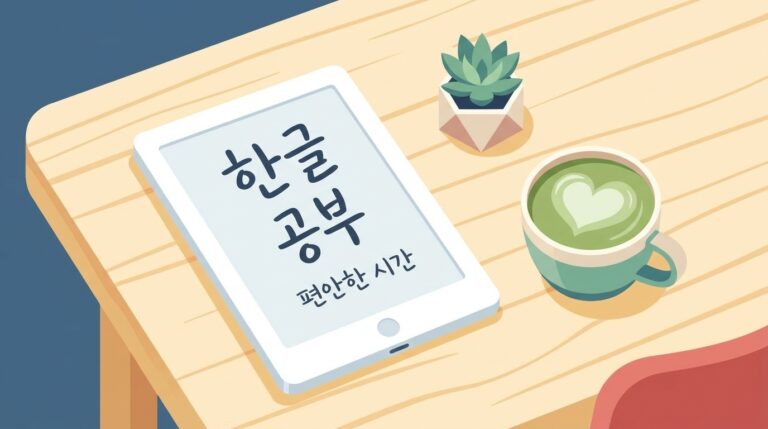
Imagine sitting in a sun-drenched cafe in the heart of Yeonnam-dong (연남동). You have a steaming warm matcha latte in front of you, and you want nothing more than to dive into that chunky 600-page Korean bestseller everyone on Instagram is talking about. But there is a catch: carrying a hefty “brick book” (벽돌책) in your canvas bag on a packed Seoul subway Line 2 is a physical workout you didn’t sign up for.
This is exactly where the great Korean tech dilemma begins. Should you buy a Crema (크레마) for its seamless access to local public libraries, or invest in a Ridi Paper (리디페이퍼) for its lightning-fast page turns?
Many of our advanced learners at Daily Hangul have reached out saying, “I want to participate in Korean online book clubs (독서 모임) and review tech gadgets, but textbook expressions feel too robotic!” Don’t worry. Today, we are moving past dry vocabulary and diving into the living, breathing language of Korean bookworms and tech enthusiasts. By the end of this guide, you will be able to debate screen-glare and cost-efficiency like a native digital nomad!
Phase 2: 핵심 표현 3선 심층 분석
1. 가성비가 좋다 vs. 가심비가 좋다 (Cost-efficiency vs. Emotional Satisfaction)
- Pronunciation: [Gaseongbiga jotta / Gasimbiga jotta] (ga-seong-bee-ga jot-ta / ga-sim-bee-ga jot-ta)
- Meaning:
- 가성비 (Price-to-performance ratio): “This cheaper e-reader gets the job done perfectly.”
- 가심비 (Price-to-emotional-satisfaction ratio): “It’s expensive, but the aesthetic design makes my heart happy every time I hold it.”
- K-Culture Moment: You will hear tech YouTubers like ITSub (잇섭) weighing these two words when comparing the latest budget models with premium e-readers.
- Editor’s Insight: While 가성비 focuses purely on cold, hard specs per won, 가심비 (incorporating 心 – heart) represents the millennial/Gen Z shift towards mental peace and aesthetic pleasure.
- Situation Spectrum: Casual ✅ | Semi-formal ✅ | Formal ✅
- 🤔 Think About It: Is your current tech purchase driven more by 가성비 or 가심비? Why do you think modern Korean consumers coined a word specifically for emotional utility?
2. 눈이 피로하다 vs. 눈 시림이 덜하다 (Eyes are fatigued vs. Less eye-straining/burning)
- Pronunciation: [Nuni pirohada / Nun sirimi deolhada] (noon-ee pee-ro-ha-da / noon she-rim-ee deol-ha-da)
- Meaning:
- 눈이 피로하다: General eye fatigue.
- 눈 시림이 덜하다: Literally, “less coldness/stinging in the eyes.” It describes the soothing relief of reading on an e-ink screen compared to a glaring smartphone.
- K-Culture Moment: Essential vocabulary used in online forums like Naver’s e-Book Cafe when members review screen light color temperatures (warm vs. cool tones).
- Editor’s Insight: The word 시리다 usually describes cold wind or sensitive teeth. Applying it to eyes (눈이 시리다) beautifully captures that dry, stinging, watery sensation you get after staring at blue light for hours.
- Situation Spectrum: Casual ✅ | Semi-formal ✅ | Formal ⚠️ (Use ‘안구 건조가 덜하다’ in official tech reports)
- 🤔 Think About It: How does your native language describe that specific burning sensation from digital screens? Does it use temperature-based words like Korean does?
3. 책장을 넘기는 손맛이 있다 (The tactile joy of flipping pages)
- Pronunciation: [Chaekjang-eul neomgineun sonmasi itda] (chaek-jang-eul neom-ghee-neun son-ma-shi eet-da)
- Meaning: The satisfying tactile feedback of physically turning pages.
- K-Culture Moment: Used by purists who refuse to switch to e-readers because they cherish the smell and feel of paper books.
- Editor’s Insight: 손맛 (literally “hand-taste”) is a legendary Korean word. It’s used for a grandmother’s secret seasoning touch, the tug of a fish on a fishing rod, and here, the tactile romanticism of holding physical literature.
- Situation Spectrum: Casual ✅ | Semi-formal ✅ | Formal 🚫
- 🤔 Think About It: Why is sensory feedback (like 손맛) so deeply tied to consumer loyalty in both food and technology?
Phase 3: 교과서 한국어 vs. 진짜 한국어
Let’s look at how textbooks describe tech versus how native Koreans actually write reviews on social media and blogs.
Situation 1: Describing a laggy, slow e-reader screen
- 📖 Textbook Style: “이 전자책 단말기는 반응 속도가 다소 느립니다.” (This e-reader device’s response speed is somewhat slow.)
- 🗣️ Real K-Style: “이 기기는 페이지 넘길 때 은근히 버벅거려요.” (This device stutter-lags quite a bit when turning pages.)
- 💡 Why it’s different: 버벅거리다 is the perfect onomatopoeic verb for computer lag, stuttering, or freezing. Adding 은근히 (subtly/surprisingly) gives it a nuanced, natural flow.
Situation 2: Strongly recommending a premium device
- 📖 Textbook Style: “독서를 많이 하시는 분들에게 이 제품을 권장합니다.” (I recommend this product to those who read a lot.)
- 🗣️ Real K-Style: “활자 중독이신 분들은 이거 사시면 돈값 제대로 해요.” (If you’re a text-addict, buying this will absolutely be worth every single penny.)
- 💡 Why it’s different: 활자 중독 (text/print addict) is a highly colloquial, endearing term for heavy readers. 돈값 하다 (to do its money’s worth) is a vivid way of saying something is worth the price.
Phase 4: K-Culture 딥다이브 & 비언어적 매너
4-1. 눈치(Nunchi) & Tech Etiquette
When comparing gadgets in a physical store (like Kyobo Book Centre’s sam corner), Koreans rarely test devices roughly.
* The Gentle Tap: Use the pad of your index finger, not your nail, to tap the screen. E-ink screens are delicate (often called “설탕 액정” – sugar screens, meaning they break easily).
* The Quiet Contrast: If you’re discussing the device with a friend, use low tones. A slow, thoughtful nod while whispering, “가벼운 건 좋은데, 물리키가 없네…” (It’s nice that it’s light, but there are no physical keys…) shows high cultural sensitivity and tech-savviness.
4-2. The Rise of Subscription Culture (구독 플랫폼)
Korea’s reading culture has evolved rapidly with platforms like Milly’s Library (밀리의 서재) and Ridi Select (리디셀렉트). Because Koreans live in a fast-paced society, many prefer carrying thousands of books in a single light device. It has sparked a trend called “북스타그렘” (Bookstagram), where people post aesthetic screenshots of their e-reader home screens customized with adorable, custom-designed Korean fonts.
Phase 5: 실전 롤플레이 시나리오
Setting: A trendy book-cafe in Hapjeong (합정). You are meeting Minji (민지), an avid reader and tech blogger, to get her opinion before purchasing your first Korean e-reader.
- Minji: “여기 오느라 고생하셨어요! 요즘 어떤 리더기 알아보고 계세요?”
- You: “반가워요, 민지 씨. 요즘 책 읽을 때 눈 시림이 너무 심해서 전자책 단말기를 하나 장만할까 해요.”
- Minji: “(손에 든 리디페이퍼를 보여주며) 아, 정말 잘 생각하셨어요! 눈 건강에는 확실히 이북 리더기가 최고죠.”
- You: “근데 크레마랑 오닉스 중에 뭐가 더 가성비가 좋은지 잘 모르겠어요.”
- Minji: “가성비를 따지신다면 도서관 연동이 편한 크레마가 낫고, 해외 원서까지 넓게 보실 거면 오닉스가 돈값 할 거예요.”
- You: “아하… 저는 주로 한국 소설이랑 에세이를 많이 읽는 편이에요.”
- Minji: “그럼 크레마 모티프가 딱이겠네요! 화이트 감성이라 가심비도 제대로 만족시킬 걸요?”
- You: “(미소를 지으며) 오, 실물 보니까 진짜 예쁘네요. 당장 질러야겠어요!”
🔀 Interactive Choice Point
How do you respond to Minji’s recommendation to finalize the conversation naturally?
- Option A: “그럼 제가 바로 구매 결정을 내리겠습니다.” (I will make a purchase decision immediately.)
- Option B: “안 그래도 디자인 보고 완전 꽂혔는데, 민지 씨 말 들으니까 지름신 제대로 오네요!”
- Option C: “비싸니까 그냥 종이책이나 읽을게요.” (Since it’s expensive, I’ll just read paper books.)
💡 Feedback Matrix
- Best (Option B): Excellent! 꽂히다 (to be hooked/captivated) and 지름신 오다 (to feel the urge to impulse-buy, literally “the god of spending money is coming”) are perfect C1 idiomatic expressions that make you sound like a true local.
- Risk (Option A): grammatically correct, but way too formal and clinical for a casual cafe conversation with a friend. It sounds like a business transaction.
- Bad (Option C): A bit blunt and dismissive of Minji’s helpful explanation, breaking the flow of the friendly conversation.
Phase 6: 10초 감정 섀도잉 드릴
Let’s practice speaking with real-life emotional intonation! Pay attention to the pauses (/) and the emotional cues in the brackets.
- [🥺 Deep in dilemma, weighing physical vs. digital]
- “종이책의 / 손맛을 포기하긴 아쉬운데, / 휴대성은 / 전자책이 압승이네요.”
- (Jong-i-chaek-ui / son-mas-eul po-gi-ha-gin a-swi-un-de, / hyu-dae-seong-eun / jeon-ja-chaek-i ap-seung-i-ne-yo.)
- “It’s sad to give up the tactile feel of paper books, but in terms of portability, e-readers win by a landslide.”
- [🤩 Totally excited and highly recommending a product]
- “이거 화면 전환할 때 / 버벅거림도 전혀 없고 / 가벼워서, / 진짜 돈값 제대로 하더라고요!”
- (I-geo hwa-myeon jeon-hwan-hal ttae / beo-beok-geo-rim-do jeon-hyeo eop-go / ga-byeo-wo-seo, / jin-jja don-gkap je-dae-ro ha-deo-ra-go-yo!)
- “When switching screens, there’s absolutely no lagging and it’s so light—it’s seriously worth every penny!”
Phase 7: K-Culture 미니 사전
| Word (한글/Romanization) | Literal Meaning | Real-Life Usage Notes |
|---|---|---|
| 벽돌책 (Byeok-dol-chaek) | Brick book | Thick, intimidating books (usually 500+ pages) that are hard to carry around. |
| 완독 (Wan-dok) | Complete reading | Finishing a book from cover to cover. Used often on social media challenge tags (#완독기록). |
| 이북카페 (I-buk-ka-pe) | E-book cafe | Large Naver/Daum online communities where users share custom fonts, sleep screens, and tech reviews. |
| 서재 꾸미기 (Seo-jae kku-mi-gi) | Decorating the study | Setting up personalized digital folders, fonts, and covers inside your e-reader to make it look cute. |
Phase 8: 여행자를 위한 생존 키트
If you visit a bookstore in Seoul, keep these phrases ready!
- “이 단말기, 범용기로 쓸 수 있나요?”
- [I dan-mal-gi, beom-yong-gi-ro sseul su in-na-yo?]
- Pro Tip: A “범용기” (open-OS device) allows you to install various app files like Milly’s Library or Yes24, unlike “전용기” (closed-OS devices) which lock you into one ecosystem.
- “액정 필름 붙여서 쓰면 가독성이 떨어지나요?”
- [Aek-jeong pil-reum but-hyeo-seo sseu-myeon ga-dok-seong-i tteo-reo-ji-na-yo?]
- Pro Tip: Ask this if you want to know if a matte screen protector will ruin the text clarity (가독성).
- “케이스랑 파우치 재고 있나요?”
- [Ke-i-seu-rang pa-u-chi jae-go in-na-yo?]
- Pro Tip: Essential when looking for protective accessories to guard your fragile e-reader screen.
🗺️ Editor’s Travel Note:
If you are visiting Seoul, make your way to the massive Kyobo Book Centre Gwanghwamun Store. They have a dedicated “sam” (샘) e-reader display zone where you can physically hold and play with the screens. Before purchasing, download the Milly’s Library App on your phone to see if you enjoy the subscription catalog first!
Phase 9: “한 발 더 깊이” (생각 질문)
In Korea, the shift from physical bookshelves to curated digital libraries reflects a larger sociological trend: “Minimal Life” (미니멀 라이프) paired with hyper-customization. Space in Seoul apartments is highly premium, making massive physical libraries a luxury. Instead, Koreans express their identity by customizing their digital screens with unique fonts, stickers, and handmade pouches.
- 💬 Your Turn: Do you feel that owning a digital e-reader takes away from the “romance” of reading, or does it actually encourage you to read more by making it accessible? Let us know your thoughts in the comments below!
Phase 10: FAQ & 오해 방지
Q: What is the main difference between Crema (크레마) and Onyx (오닉스) for a foreign learner?
A: Crema is optimized entirely for the Korean ecosystem. It has built-in integration with Korean public libraries and domestic bookstores. Onyx, on the other hand, is an Android-based open device, making it much easier to download international apps (like Kindle, Libby, or Scribd) alongside your Korean reading apps.
Q: Can I use “가성비” when talking about high-end, expensive devices?
A: Yes, but only if the performance far exceeds its high price tag. However, if you bought an expensive device simply because it looks incredibly beautiful and makes you happy, it is much more natural to say “가심비가 좋다” instead.
Q: Is “버벅거리다” appropriate to use in a formal business presentation?
A: No. 버벅거리다 is highly colloquial. In a formal presentation, product launch, or technical paper, you should use terms like “시스템 지연이 발생하다” (system delay occurs) or “구동 속도가 저하되다” (operation speed decreases).
🚨 Common Mistakes Warning Board
- Mistake 1: Calling the screen 차갑다 (cold) instead of saying “눈이 시리다” when describing eye-strain. 차갑다 only refers to physical touch temperature.
- Mistake 2: Saying “책을 지우다” (to erase a book) when removing a downloaded book from your e-reader. The correct term is “책을 책장에서 삭제하다” (to delete from the bookshelf).
- Mistake 3: Using “책 기계” (book machine). Always refer to it as “전자책 단말기” (e-reader terminal) or simply “이북 리더기” (e-book reader).
Phase 11: 액션 미션 & 참여 유도
- 🥉 Bronze Mission: Write a 2-sentence review of your current reading device (phone, tablet, paper, or e-reader) using the word 가성비 or 가심비 in the comments.
- 🥈 Silver Mission: Share a picture of your current book or e-reader on Instagram, tag
@DailyHangul, and use the hashtag#완독도전(challenging to finish reading). - 🥇 Gold Mission: Next time you talk to a Korean friend or your Daily Hangul tutor, use the expression “눈 시림이 덜하다” to explain why you prefer paper or e-ink screens.
-
🎮 K-Culture Search Mission: Go to YouTube and search for “이북 리더기 추천” (E-reader recommendation) or “크레마 모티프 내돈내산” (Crema Motif bought with my own money). Try to catch how many times they say 버벅거림 (lag) or 손맛 (tactile feel)!
Phase 12: 인터랙티브 퀴즈 챌린지
Test your C1 Korean tech and reading vocabulary!
1. Which word perfectly describes the dry, burning sensation you get from staring at a bright LCD screen for too long?
- A) 눈이 차갑다
- B) 눈이 시리다
- C) 눈이 시원하다
2. Fill in the blank with the natural colloquial word for “lagging/stuttering”:
- “이 리더기는 보급형이라 그런지 가끔 페이지 넘길 때 ________.”
3. True or False: “가심비” means you bought something purely based on the cheapest price available.
👉 Click here for Answers & Explanations!
- Answer: B (눈이 시리다)
- Explanation: 시리다 captures that specific cold, sensitive, stinging discomfort. 시원하다 means refreshing, which is the exact opposite!
- Answer: 버벅거려요 (or 버벅거린다)
- Explanation: 버벅거리다 is the standard colloquial term for lag in electronic devices.
- Answer: False
- Explanation: That is 가성비. 가심비 refers to emotional satisfaction, even if the price is a bit high!
- Explanation: That is 가성비. 가심비 refers to emotional satisfaction, even if the price is a bit high!







