

Saving Lives in Korean: Mastering CPR & Emergency First Aid (C1)
안녕하세요! 매일한글 (Daily Hangul)의 수석 에디터이자 여러분의 한국 생활을 지켜줄 든든한 한국인 단짝 친구입니다.
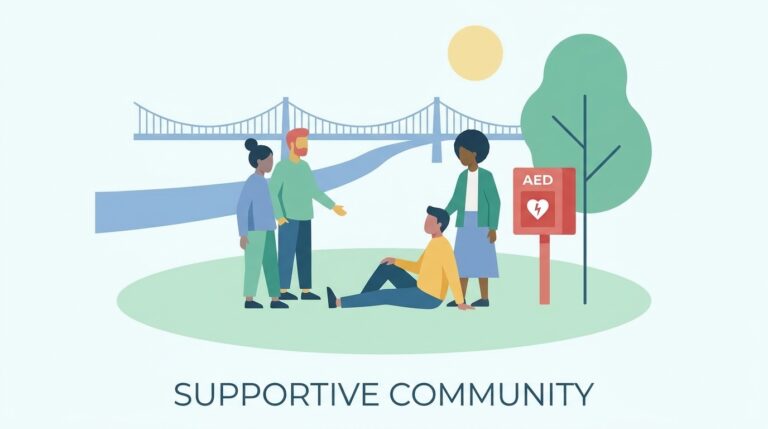
Imagine you are enjoying a peaceful evening walk along the Han River (한강공원), or riding a crowded Seoul subway during rush hour. Suddenly, the person next to you gasps, clutches their chest, and collapses. The atmosphere instantly turns icy with panic. People crowd around, murmuring, but no one is taking charge.
As a C1-level Korean learner, you have the linguistic capacity to do more than just stand by and worry. You have the power to step up, command the crowd, and coordinate with emergency services in flawless, high-pressure Korean. In critical medical emergencies, the first four minutes—known in Korea as the 골든타임 (Golden Time)—determine life or death.
Today, we will equip you with the exact, highly sophisticated medical and safety phrases needed to lead a life-saving rescue, handle bystanders, and interface with Korean paramedic teams. Let’s learn how to be a real-life hero in Korea.
Phase 2: Deep Dive into 3 Core Emergency Expressions
When adrenaline is surging, your brain defaults to what you have practiced. Here are three crucial C1-level safety expressions analyzed to their core nuances.
1. 의식을 잃고 쓰러지셨어요. 빨리 119에 신고해 주세요! (의식을 잃고 쓰러지셨어요. 빨리 일일구에 신고해 주세요!)
- Pronunciation: Ui-sig-eul il-go sseu-reo-ji-syeo-sseo-yo. Ppal-li il-il-gu-e sin-go-hae ju-se-yo!
(Sound Analogy: “Wee-sheeg-eul eel-goh ssu-ruh-jee-shuh-suh-yo. Ppal-lee eel-eel-goo-eh sheen-goh-hae joo-seh-yo!”) - Meaning: They lost consciousness and collapsed. Please call 119 quickly!
- K-Culture Moment: This is the iconic line shouted by heroic bystanders or emergency room doctors in medical dramas like Hospital Playlist (슬기로운 의사생활) or Dr. Romantic (낭만닥터 김사부).
- Editor’s Insight: At C1 level, simply saying “도와주세요!” (Help!) is too vague. Using medical terminology like 의식 (consciousness) immediately signals the gravity of the situation to surrounding Koreans and prompts them to act immediately.
- Situation Spectrum: Casual: ⚠️ (Too urgent for informal speech) | Semi-formal: ✅ | Formal: ✅
- 🤔 Think About It: Why does specifying the exact state of the patient (“의식을 잃었다”) get faster results from Korean bystanders compared to a generic cry for help?
2. 자동심장충격기(AED) 좀 가져다주시겠어요? (자동심장충격기 좀 가져다주시겠어요?)
- Pronunciation: Ja-dong-sim-jang-chung-gyeok-gi jom ga-jeo-da-ju-si-get-eo-yo?
(Sound Analogy: “Jah-dong-sheem-jang-choong-gyuhk-ghee johm gah-juh-dah-joo-shee-geht-uh-yo?”) - Meaning: Could you please bring the Automated External Defibrillator (AED)?
- K-Culture Moment: You’ll spot these bright red boxes labeled 자동심장충격기 or AED in every subway station, apartment security office, and public building in Korea.
- Editor’s Insight: While “AED” is widely understood, using the proper Korean terminology 자동심장충격기 (literally: “automatic heart shocker”) shows exceptional linguistic command and will immediately direct bystanders to look for the official public safety devices installed nearby.
- Situation Spectrum: Casual: 🚫 | Semi-formal: ✅ | Formal: ✅
- 🤔 Think About It: How does Korea’s highly dense urban structure affect the placement and accessibility of AEDs in apartment complexes and subway networks?
3. 기도를 확보하고 가슴 압박을 시작하겠습니다. (기도를 확보하고 가슴 압박을 시작하겠습니다.)
- Pronunciation: Gi-do-reul hwak-bo-ha-go ga-seum ap-bag-eul si-jak-ha-get-seum-ni-da.
(Sound Analogy: “Ghee-doh-ruhl hwak-boh-hah-goh gah-seum ahp-bahg-eul shee-jahk-hahg-eht-seum-nee-dah.”) - Meaning: I will secure the airway and begin chest compressions.
- K-Culture Moment: This is the formal protocol statement spoken by first responders or trained citizens to reassure both the victim’s family and the crowd that systematic CPR is underway.
- Editor’s Insight: The ending -겠습니다 expresses a strong, professional intention. Using this phrasing establishes you as a competent rescuer, which prevents panic from spreading among the onlookers.
- Situation Spectrum: Casual: 🚫 | Semi-formal: ⚠️ | Formal: ✅
- 🤔 Think About It: How does the linguistic use of authoritative and polite endings (-겠습니다) help manage crowd psychology during a public emergency?
Phase 3: Textbook Korean vs. Real-World Korean
In emergency situations, textbook phrases can sound too detached or unnatural. Let’s bridge the gap.
Scenario 1: Directing Bystanders to Call for Help
- 📖 Textbook Korean: “119에 전화해 주세요.” (Please call 119.)
- 🗣️ Real-World Korean: “거기 빨간색 티셔츠 입으신 분, 빨리 119에 신고해 주시고 자동심장충격기 좀 가져다주세요!” (You there, wearing the red T-shirt, please call 119 quickly and bring the AED!)
- 💡 Why the Difference? In psychology, this is known as preventing the “Bystander Effect” (방관자 효과). If you just say “call 119,” everyone assumes someone else will do it. Directly designating a person by their clothing (“빨간색 티셔츠 입으신 분”) is the standard first-aid protocol taught in Korea to guarantee immediate action.
Scenario 2: Explaining the Patient’s State to emergency operators
- 📖 Textbook Korean: “이 사람이 아주 아픕니다.” (This person is very sick.)
- 🗣️ Real-World Korean: “환자가 의식이 없고 맥박이 뛰지 않습니다. 자가 호흡이 불가능한 상태입니다!” (The patient is unconscious and has no pulse. They are unable to breathe on their own!)
- 💡 Why the Difference? C1 speakers must use precise medical markers like 맥박 (pulse) and 자가 호흡 (self-breathing) to give 119 dispatchers the critical data they need to dispatch paramedic units with the right gear.
Phase 4: K-Culture Deep-Dive & Non-verbal Manners
4-1. Emergency Body Language: Direct Pointing (지목)
In normal Korean etiquette, pointing directly at someone with your index finger is considered rude. However, during CPR/Emergency protocols, this rule is completely reversed.
* The Gesture: Lock eyes with a specific bystander, raise your arm, and point directly at them. Say their identifying feature clearly: “거기 안경 쓰신 남성분!” (You, the gentleman wearing glasses!)
* The Mindset: Be authoritative. Your tone must be a sharp, clear command, not a timid request. This non-verbal confidence instantly coordinates the crowd.
4-2. Cultural Code: The Good Samaritan Law (선한 사마리아인 법)
Many foreigners worry: “If I perform CPR on a Korean citizen and something goes wrong, will I be held legally liable?”
In Korea, Article 5-2 of the Emergency Medical Service Act—popularly known as the 선한 사마리아인 법 (Good Samaritan Law)—protects lay rescuers who provide emergency assistance in good faith. Even if minor injuries (like cracked ribs, which frequently occur during proper CPR) happen, you are legally protected from civil and criminal liability. Korea warmly encourages civic courage!
Phase 5: Real-Life Roleplay Scenario
Setting: A blistering hot summer afternoon at Yeouido Hangul Park. A middle-aged man suddenly collapses near the convenience store while running.
Characters:
* 지아 (Ji-a): A C1-level foreign resident who holds a first-aid certification.
* 시민 (Bystander): A panicked passerby frozen in shock.
시민: (놀란 목소리로) 어머, 어떡해! 이 사람 갑자기 쓰러졌어요! 어떡하지?

지아: (🎭 단호하고 침착하게 환자 곁으로 다가가 맥박을 짚으며) 잠시만요, 길 좀 비켜주세요.

시민: (허둥지둥하며) 심장마비인가요? 숨을 안 쉬는 것 같아요!

지아: (🎭 시민의 눈을 똑바로 응급 지목하며) 거기 파란색 모자 쓰신 남성분! 지금 바로 119에 신고해 주세요! 그리고 스피커폰 켜주세요.

시민: 네? 아, 네! 119요! 지금 전화 걸게요!

지아: (🎭 주변을 둘러보며 소리치며) 다른 분들 중에 지하철역 안에서 '자동심장충격기' 좀 가져다주실 분 계신가요?

시민: 제가 가겠습니다! 바로 옆 여의나루역 매표소 옆에 있어요!

지아: (🎭 두 손을 포개어 깍지를 끼고 환자의 가슴 중앙에 놓으며) 감사합니다! 저는 지금부터 119 구급대원이 도착할 때까지 가슴 압박을 시작하겠습니다. 분당 100회 속도로 진행합니다.
🔀 Interactive Choice Point
The bystander returns running with the AED, but doesn’t know how to turn it on, and you are exhausted from performing chest compressions. What is your next move?
- Choice A: “비켜봐요, 제가 할게요!” (Push them aside and do it yourself, stopping CPR.)
- Choice B: “당황하지 마시고 기계 전원 버튼부터 누르세요. 패드는 제가 붙이겠습니다.” (Instruct them calmly to turn it on while you keep compressions going.)
- Choice C: “구급대원 올 때까지 그냥 손으로만 계속 하겠습니다.” (Ignore the AED and just continue manually.)
📢 Feedback:
- Best Choice – B: Perfect! Standard medical protocol dictates that chest compressions must not be interrupted. Giving a clear, step-by-step directive to the bystander (“기계 전원 버튼부터 누르세요”) utilizes teamwork effectively.
- Bad Choice – A: Risk of brain damage increases significantly if CPR is stopped for more than 10 seconds. Keep pushing!
- Risk Choice – C: AED greatly increases survival rates. Not using an available AED compromises the patient’s recovery odds.
Phase 6: 10-Second Emotion Shadowing Drill
Emergency situations require you to speak with sharp, rhythmic clarity. Practice these with the emotional markers and natural breath pauses (/).
[🚨 urgent and commanding]
“거기 / 검은색 백팩을 매신 분, / 지금 바로 / 119에 / 신고해 주세요!”
(Geoh-ghee / geom-eun-saek baek-paek-eul mae-shin boon, / jee-geum bah-roh / eel-eel-goo-eh / sheen-goh-hae joo-seh-yo!)-
[💪 professional and reassuring]
“제가 / 심폐소생술 자격증이 있으니 / 지금부터 / 가슴 압박을 / 시작하겠습니다.”
(Jeh-gah / sheem-pyeh-soh-saeng-sool jah-gyeok-jeung-ee ee-seu-nee / jee-geum-boo-tuh / gah-seum ahp-bahg-eul / shee-jahk-hah-geht-seum-nee-dah.)
Phase 7: K-Culture Mini-Dictionary
- 골든타임 (Golden Time) | Golden Hour / Critical Window
In Korea, this refers to the critical 4-minute window for starting CPR to prevent irreversible brain damage. - 선한 사마리아인 법 (Good Samaritan Law) | Good Samaritan Law
The legal code protecting people who provide emergency aid from civil or criminal liabilities. - 안전디딤돌 (Safety Stepping Stone) | Emergency Ready App
The official disaster safety app of the Korean government providing real-time alerts and evacuation map listings. - 심장제동기 / 자동심장충격기 (AED) | Automated External Defibrillator
The lifesaving portable device used to restart hearts in sudden cardiac arrest.
Phase 8: Emergency Survival Kit for Travelers
Top 3 Lifesaving Phrases
- “119에 신고해 주시고 위치는 여의도 공원 앞이라고 해주세요!”
(Please call 119 and tell them we are in front of Yeouido Park!)
Pro Tip: Always state your landmark clearly for faster dispatch. - “여기 응급 환자가 있으니 길 좀 비켜주세요!”
(We have an emergency patient here, please clear the way!)
Pro Tip: Say this loudly to manage crowds in congested spots like Hongdae or Myeongdong. - “제 가방 안에 상비약이 있습니다.”
(There is emergency medicine inside my bag.)
Pro Tip: Essential to know if you have personal medical conditions.
📝 Editor’s Travel Note
When traveling or living in Korea, download the government-recommended application 안전디딤돌 (Emergency Ready App). It provides real-time disaster alerts, shelters, and medical facilities near you in English. Additionally, save 119 (Fire and Medical Emergency) and 112 (Police) on speed dial.
(Note: Local emergency service protocols and emergency numbers are subject to government updates, so check official portals before traveling.)
Phase 9: “한 발 더 깊이” (Deep Reflection on Korean Rescue Culture)
In Western cultures, privacy and personal space are highly guarded, which can sometimes make people hesitate to physically touch or intervene with strangers in public. However, Korean society is deeply rooted in 공동체 의식 (collective consciousness) and 정 (Jeong, relational warmth). When an emergency strikes, Koreans feel a strong moral duty to protect members of their community. It is incredibly common to see a dozen complete strangers teaming up to lift a car to rescue a trapped scooter rider, or taking turns performing CPR on a collapsed pedestrian. Knowing these cultural nuances gives you the social permission to act boldly and collectively when a life is on the line.
💬 Your Turn: Have you ever witnessed or participated in a public emergency rescue in your country? How does the local response culture compare to Korea’s collective approach? Let us know in the comments below!
Phase 10: FAQ & Avoiding Misunderstandings
Q: Can I be sued in Korea if I perform CPR on a stranger and they get hurt?
A: No. Under the Korean Good Samaritan Law (선한 사마리아인 법), any layperson who provides emergency medical assistance in good faith is legally exempt from civil and criminal liability, even if the patient experiences bodily harm during the rescue.
Q: Can I speak English when calling 119 in Korea?
A: Yes! The Seoul 119 emergency center has a 24/7 translation service support system. Once you call, you can request an English interpreter by saying “영어 통역 부탁드립니다” (Yeong-eo tong-yeok bu-tak-deurim-ni-da).
Q: Where are AEDs usually located in Korea?
A: They are legally mandated in public spaces with high foot traffic. Look for red cabinets inside subway stations (near the station office), public offices, train stations, and inside the security office (경비실) of apartment complexes.
🚨 Common Mistakes Warning Board
- Mistake 1: Calling 112 instead of 119 for medical emergencies.
Correct Action: Always dial 119 for fire and health crises; 112 is strictly for police. - Mistake 2: Hesitating to tear or cut open a patient’s top clothing when applying AED pads.
Correct Action: AED pads must touch bare skin directly. Korean emergency protocols prioritize life-saving over modesty. - Mistake 3: Not specifying a person when asking for help.
Correct Action: Eye-contact, point, and call out: “거기 노란색 모자 쓰신 분!” (You, wearing the yellow hat!)
Phase 11: Action Mission & Engagement
- Bronze Level 🥉: Memorize the term “자동심장충격기” and spot one in your neighborhood or a K-Drama scene.
- Silver Level 🥈: Record yourself shadowing the Phase 6 commanding emergency phrase, focusing on a strong, authoritative voice tone.
- Gold Level 🥇: If you live in Korea, locate the nearest AED in your subway station or apartment and write a short Korean guide post on social media explaining how to find it, tagging
@DailyHangul!
Phase 12: Interactive Quiz Challenge
Let’s test your emergency readiness in high-level Korean!
1. Situational Judgment
You need to direct a bystander to bring the AED immediately. Which phrase is correct and grammatically appropriate for a C1 speaker?
* A) 저기요, 심장 박스 좀 주세요.
* B) 거기 안경 쓰신 분, 자동심장충격기 좀 가져다주시겠어요?
* C) 119에 전화하면 기계 줍니다.
2. Fill in the Blank
Emergency medical situations require action within the first four minutes. This critical window is called “_______ 타임” in Korean.
3. True or False
In Korea, you can be held legally responsible for broken ribs during bystander CPR.
👀 Click here to reveal the answers and explanations!
Answers:
1. B is correct. It directly designates a person (“거기 안경 쓰신 분”) and uses the precise medical name for AED (“자동심장충격기”) in an elegant semi-formal tone.
2. 골든 (Golden). The correct term is 골든타임 (Golden Time).
3. False. The 선한 사마리아인 법 (Good Samaritan Law) legally shields you from liabilities when assisting in good faith.
Stay safe, stay prepared, and remember—your C1 Korean skills could save a life today! Don’t forget to bookmark this guide, and share it with your fellow learners. 다음에 또 만나요! 👋







