

Talk About Regrets in Korean Like a True Best Friend: Master the B1 Art of ‘I Should Have…’
안녕하세요! (Annyeonghaseyo!) Daily Hangul’s Senior Editor here, your ultimate local cultural navigator.
We’ve all been there: You watch a heartbreaking K-Drama scene where the main lead stares into the rain, sighing deeply, wishing they hadn’t let “the one” walk away. Or maybe, on a more practical note, you went to a beautiful Hanok cafe in Seoul, hesitated to order that signature black sesame latte, settled for an iced americano, and spent the rest of the night thinking, “Ah, I should have tried it!”
Expressing regret is deeply human, and in Korea, it’s a major way we bond. Sharing our “if only” moments—whether about love, food, or buying those concert tickets—creates an instant, warm connection (정, Jeong). Today, we are going to move past stiff textbook sentences and learn how to express your deepest (and funniest) regrets in natural B1-level Korean, complete with the emotional nuances that will make native speakers say, “Wow, you really get us!”
Phase 2: Deep-Dive into 3 Essential Regret Expressions
To express regret in Korean, we use specific grammatical structures that carry different weights of emotion. Let’s master the top three.
1. ~을걸 그랬어요 (-eul-geol geu-raet-eo-yo)
- Pronunciation: eul-geol gu-ret-eo-yo (Sounds like “ool-guhl” followed by “g’ray-suh-yo”).
- Meaning: “I should have [done something]…” (but I didn’t).
- K-Culture Moment: You’ll hear this constantly in romantic dramas when a character regrets not confessing their feelings: “그때 말할걸 그랬어요” (I should have told them then).
- Editor’s Insight: This is the most common, versatile way to express light-to-medium regret. It’s soft and reflective, implying that you made a choice and now wish you had chosen the other path.
- Situation Spectrum: Casual (말할걸 그랬어 ⚠️) | Semi-formal (말할걸 그랬어요 ✅) | Formal (🚫 – too personal for formal speeches).
- 🤔 Think About It: In English, “I should have” can sometimes sound like a self-reproach. In Korean, “~을걸 그랬어요” sounds more like a gentle sigh. How does softening your regrets change how you share them with friends?
2. ~지 말걸 그랬어요 (-ji mal-geol geu-raet-eo-yo)
- Pronunciation: jee mahl-geol gu-ret-eo-yo (Sounds like “jee mahl-guhl g’ray-suh-yo”).
- Meaning: “I shouldn’t have [done something]…” (but I did).
- K-Culture Moment: Think of eating a late-night cup of super spicy Shin Ramyun at a Han River convenience store at 2 AM, knowing you have a photoshoot or flight early the next morning. “먹지 말걸 그랬어요…” (I shouldn’t have eaten it…).
- Editor’s Insight: The negative counterpart to the first expression. It’s perfect for those moments of mild self-directed frustration after making a silly mistake.
- Situation Spectrum: Casual (하지 말걸 그랬어 ⚠️) | Semi-formal (하지 말걸 그랬어요 ✅) | Formal (🚫).
- 🤔 Think About It: Why do you think food regrets are so universally understood in Korean culture? (Hint: Late-night delivery culture or 야식 ya-shik is practically a national sport!).
3. ~았/었어야 했는데 (-at/eot-eo-ya haen-neun-de)
- Pronunciation: as-suh-ya haet-neun-de / uht-suh-ya haet-neun-de.
- Meaning: “I ought to have / I really had to do [something]…” (Stronger sense of obligation/missed duty).
- K-Culture Moment: Missing the ticket drop for a BTS or Blackpink concert because your internet lagged. “티켓팅 미리 연습했어야 했는데!” (I really should have practiced ticketing beforehand!).
- Editor’s Insight: This expresses a stronger, heavier regret than “~을걸 그랬어요”. It implies there was a clear necessity or duty that you missed, and now you are facing the consequences.
- Situation Spectrum: Casual (했어야 했는데 ⚠️) | Semi-formal (했어야 됐는데/했어야 했는데 ✅) | Formal (했어야 했습니다 ⚠️).
Phase 3: Textbook Korean vs. Real-Life Korean
Let’s look at how textbooks teach regret versus how your cool Korean friends actually talk.
Scenario 1: Regretting not buying a stylish jacket in Hongdae
- 📖 Textbook Style: “그 옷을 사지 않아서 후회합니다.” (Geu oseul saji anaseo huhoehamnida. – “I regret not buying those clothes.”)
- 🗣️ Real-Life Style: “아, 그 옷 그냥 살걸 그랬어요! 눈에 계속 밟혀요.” (Ah, geu ot geunyang sal-geol geu-raet-eo-yo! Nune gyeosok balp-hyeo-yo. – “Ah, I should have just bought that outfit! I can’t get it out of my head/It keeps dancing before my eyes.”)
- 💡 Why the difference? The textbook version is grammatically correct but sounds like a formal written confession. The real-life version uses “살걸 그랬어요” for natural regret and the beautiful idiom “눈에 밟히다” (literally, “to be stepped on by the eye”), meaning you keep visualizing something you missed.
Scenario 2: Eating something too spicy
- 📖 Textbook Style: “매운 음식을 먹은 것을 후회해요.” (Maeun eumsigeul meogeun geoseul huhoehaeyo. – “I regret eating spicy food.”)
- 🗣️ Real-Life Style: “아, 괜히 먹었다… 진짜 후회돼요.” (Ah, gwen-hi meog-eot-da… jinjja hu-hoe-dwae-yo. – “Ah, I shouldn’t have eaten that for no good reason… I really regret it.”)
- 💡 Why the difference? Real Koreans use “괜히” (gwen-hi – pointlessly, in vain) to immediately set up a tone of regret before even saying the verb.
Phase 4: K-Culture Deep-Dive & Non-Verbal Nuances
4-1. The “Aigo” Hand & Eye Contact
When Koreans express regret, they rarely stand stiffly.
* The Gesture: Lightly slap your forehead or your chest (near your heart) while saying “아…” (Ah…). This physicalizes the feeling of a heavy chest (답답함 – dapdapham).
* The Sigh: A slow shake of the head with a soft sigh (ha-oo…) is crucial. Avoid direct, intense eye contact; looking slightly down or to the side conveys genuine reflection and humility.
4-2. The “Soju Truth” Culture (취중진담)
In Korean society, sharing deep regrets often happens over a casual meal of Samgyeopsal (pork belly) and a drink. The phrase “취중진담” (chwi-jung-jin-dam) means “truth spoken under the influence.” Sharing a regret is not seen as weak; rather, it’s an invitation to deepen a friendship. Telling someone “그때 그 말을 했어야 했는데…” (I should have said those words back then…) shows you trust them with your vulnerable side.
Phase 5: Interactive Roleplay Scenario
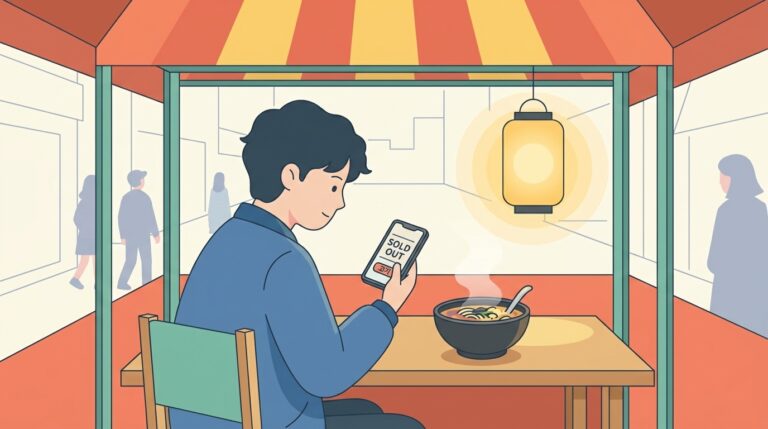
Setting: You are sitting with your Korean friend, Minjun (민준), at a cozy, dimly lit pocha (street-food tent) in Sinchon. Rain is pattering against the plastic tarp.
Your Character: An exchange student/traveler who just missed out on booking a weekend trip to Jeju Island with friends.
민준: 왜 그래요? 얼굴에 근심이 가득해요. 무슨 일 있어요?
(Min-jun: Why the long face? You look so worried. Is something up?)

유미 (You): 아, 민준 씨... 저 진짜 후회되는 일이 있어요.
(Yumi: Ah, Minjun... I have something I really regret.)

민준: 뭔데요? 저한테 다 말해 봐요. 제가 들어줄게요.
(Min-jun: What is it? Tell me everything. I'm listening.)

유미 (You): 친구들이랑 이번 주말에 제주도 가기로 했잖아요. 그런데 티켓을 미리 안 샀어요.
(Yumi: You know my friends and I were supposed to go to Jeju Island this weekend? Well, I didn't buy the tickets in advance.)

민준: 아 참... 제주도 비행기 표는 진짜 빨리 매진되는데...
(Min-jun: Oh dear... Jeju flight tickets get sold out really fast...)

유미 (You): 맞아요. 아까 보니까 표가 하나도 없더라고요. 미리 예매할걸 그랬어요.
(Yumi: Exactly. When I checked earlier, there were zero tickets left. I should have booked in advance.)

민준: 에이, 속상하겠네요. 다음부터는 가고 싶으면 바로 결제해요!
(Min-jun: Aw, that must be so upsetting. Next time, if you want to go, just pay immediately!)

유미 (You): 네, 다음부터는 진짜 망설이지 말아야겠어요. 괜히 고민했나 봐요.
(Yumi: Yeah, next time I really shouldn't hesitate. I guess I spent too much time overthinking for nothing.)
🔀 Choose Your Path!
What do you say next to Minjun?
- Option A: “민준 씨가 저 대신 비행기 표 찾아주세요.” (Minjun, please find flight tickets for me instead.)
- Option B: “속상한데 맛있는 거나 먹어야겠어요. 여기 닭발 하나 더 시킬까요?” (I’m sad, so I should just eat something delicious. Shall we order one more spicy chicken feet here?)
- Option C: “돈을 아꼈으니까 다행이에요.” (Since I saved money, it’s a relief.)
Feedback on Your Choice:
- Option A (Bad): 🚫 Asking someone to fix a personal mistake right away might feel slightly demanding in Korean culture, especially in a casual setting.
- Option B (Best): ✅ Perfect! This is incredibly natural. Transitioning from a regret to finding comfort in food (먹는 걸로 풀다) with your friend is the ultimate Korean way to handle minor disappointments!
- Option C (Risk): ⚠️ While logical, it shuts down the emotional bonding of sharing a regret a bit too quickly. Minjun might not know how to continue the comforting vibe.
Phase 6: 10-Second Emotional Shadowing Drill
Read these out loud, mimicking the rhythm (/ represents a tiny pause) and the emotional prompts!
[🥺 Sighing with deep regret]
“아… / 그때 / 그냥 / 살걸 그랬어요…”
(Ah… / geu-tae / geun-yang / sal-geol geu-raet-eo-yo…)-
[🤦 Hand-on-forehead frustration]
“괜히 / 먹었어! / 진짜 / 후회돼요…”
(Gwen-hi / meog-eot-eo! / jin-jja / hu-hoe-dwae-yo…) -
[😢 Sad and longing]
“더 / 자주 / 연락했어야 했는데 / 미안해요.”
(Deo / ja-ju / yeol-rak-haes-suh-ya haet-neun-de / mi-an-hae-yo.)
Phase 7: K-Culture Mini-Dictionary
- 이불킥 (I-bul-kik) | Blanket Kick | Replaying an embarrassing moment or regret in your head when you’re in bed, making you kick your blankets in frustration.
- 눈에 밟히다 (Nun-e Balp-hi-da) | To linger in one’s eyes | When you regret not buying an item or not saying goodbye to someone, and their image keeps popping up in your mind.
- 지름신 (Ji-reum-sin) | The God of Urge Spending | A combination of “지르다” (to impulse buy) and “신” (God). When you regret not buying something, you might say “지름신이 오셨을 때 샀어야 했는데!” (I should have bought it when the shopping god visited me!).
- 현타 (Hyeon-ta) | Reality Hit / Epiphany | Short for 현자타임 (Sage Time). The moment of empty reality you feel right after a big regret or an impulse purchase.
Phase 8: Traveler’s Survival Kit
Survival Expressions for Regret
- 포기하지 말걸 그랬어요. (Po-gi-ha-ji mal-geol geu-raet-eo-yo.)
- Pro Tip: Use this if you gave up waiting in a long queue for a famous restaurant like London Bagel Museum in Anguk, only to realize later it was worth the wait!
- 일찍 일어났어야 했는데… (Il-jjik i-reo-nas-seo-ya haet-neun-de…)
- Pro Tip: Crucial when you overslept and missed your KTX high-speed train to Busan.
- 괜히 매운 맛으로 시켰어요. (Gwen-hi mae-un maseu-ro si-kyeot-eo-yo.)
- Pro Tip: Say this to a waiter with a teary smile when you ordered level 3 spicy Yeopgi Tteokbokki and your stomach is crying.
📌 Editor’s Travel Note:
To avoid ticket-related regrets, always download the 네이버 지도 (Naver Map) and 코레일톡 (Korail Talk) apps ahead of your trip. Train tickets sell out early on weekends, and you don’t want to sigh “미리 예매할걸 그랬어요” on the platform!
Phase 9:
Frequently Asked Questions (FAQ)
Q: What does "~을걸 그랬어요 (-eul-geol geu-raet-eo-yo)" mean in Korean and how do you pronounce it?
A: In Korean, "~을걸 그랬어요 (-eul-geol geu-raet-eo-yo)" is pronounced [eul-geol gu-ret-eo-yo (Sounds like "ool-guhl" followed by "g'ray-suh-yo"] and means: "I should have [done something]..." (but I didn't).
Q: What does "~지 말걸 그랬어요 (-ji mal-geol geu-raet-eo-yo)" mean in Korean and how do you pronounce it?
A: In Korean, "~지 말걸 그랬어요 (-ji mal-geol geu-raet-eo-yo)" is pronounced [jee mahl-geol gu-ret-eo-yo (Sounds like "jee mahl-guhl g'ray-suh-yo"] and means: "I shouldn't have [done something]..." (but I did).
Q: What does "~았/었어야 했는데 (-at/eot-eo-ya haen-neun-de)" mean in Korean and how do you pronounce it?
A: In Korean, "~았/었어야 했는데 (-at/eot-eo-ya haen-neun-de)" is pronounced [as-suh-ya haet-neun-de / uht-suh-ya haet-neun-de.] and means: "I ought to have / I really had to do [something]..." (Stronger sense of obligation/missed duty).







