

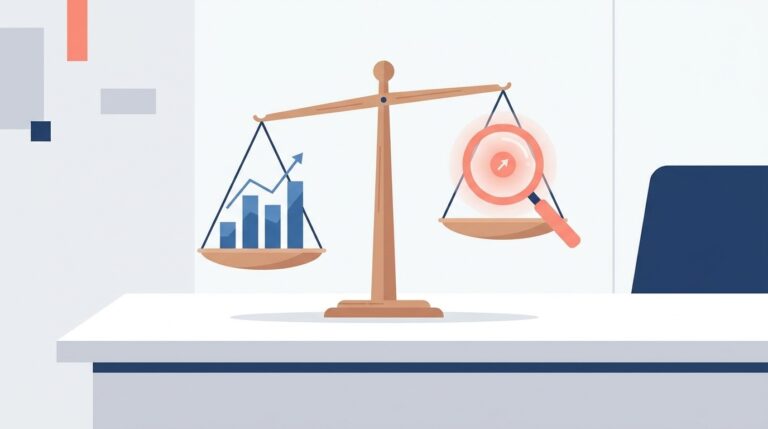
Beyond the Numbers: Cracking Korea’s Fierce Statistics Controversy Like a Local
Phase 1: Empathy (스토리 몰입형 오프닝)
안녕하세요! 매일한글(Daily Hangul)의 수석 에디터이자 여러분의 든든한 한국 문화 내비게이터입니다.
Have you ever sat down with a group of Korean friends or colleagues, only to feel completely lost when the conversation suddenly shifted to hot-button socio-political issues? As a C2-level learner, you’ve likely mastered daily chit-chat, but discussing national policies, economics, or institutional statistics can still feel like navigating a maze.
Imagine this scene: You are watching a tense Korean news debate on JTBC or reading an editorial in The Chosun Ilbo or The Hankyoreh. The anchors are fiercely arguing over “통계청의 가계동향조사 개편 (The reorganization of Statistics Korea’s Household Income and Expenditure Survey).” One side claims it’s a necessary scientific update, while the other side screams “data massaging” to hide policy failures.
This isn’t just a boring dry academic topic. In Korea, statistics are a battlefield. By mastering the high-level vocabulary and understanding the cultural undertones of this controversy, you will transition from a “fluent foreigner” to an intellectually engaging “insider” who truly understands the complex socio-economic anxieties of modern Korea. Let’s dive deep into the world of Korean data politics!
Phase 2: 핵심 표현 3선 심층 분석
1. 표본 왜곡 (Pyobon waegok)
- Pronunciation: [Pyo-bon wae-gok] (Rhymes with the English word gawk with a soft ‘w’ sound at the beginning)
- Meaning: Sample Distortion / Sampling Bias
- K-Culture Moment: This term is a staple in high-stakes political dramas like Chief of Staff (보좌관) or Money Game (머니게임), where rival factions accuse each other of manipulating demographic pools to support their agendas.
- Editor’s Insight: 표본 means “sample” and 왜곡 means “distortion.” In Korea’s fast-paced policymaking, changing who you ask is often criticized as a shortcut to getting the results you want to see. It implies a subtle, deliberate manipulation rather than an accidental statistical error.
- Situation Spectrum: Casual (⚠️ – too heavy) | Semi-formal (✅) | Formal (✅)
- 🤔 Think About It: How does your home country’s government handle changes in statistical methodology? Is it met with immediate political skepticism like in Korea?
2. 시계열 단절 (Sigye-yeol danjeol)
- Pronunciation: [Shi-gyeh-yeol dan-jeol] (Think of she + gye as in ‘get’ + yeol as in ‘yell’, followed by dan-jeol)
- Meaning: Break in Time-Series Data / Time-Series Discontinuity
- K-Culture Moment: Used by economic analysts on Korean YouTube channels like 3ProTV (삼프로TV) when explaining why economic progress under different presidential administrations cannot be compared objectively.
- Editor’s Insight: Literally translating to “time-sequence severance,” this phrase is used when a survey method changes so drastically that you can no longer compare “apples to apples” over consecutive years. It is often used with a tone of frustration, implying that valuable historical data has been rendered useless.
- Situation Spectrum: Casual (🚫) | Semi-formal (✅) | Formal (✅)
- 🤔 Think About It: Why is preserving historical continuity in data so sacred to researchers, and why do politicians often disregard it?
3. 통계의 정치화 (Tong-gye-ui jeong-chi-hwa)
- Pronunciation: [Tong-gyeh-ui jeong-chi-hwa] (Rhymes with tong + gay + we + jeong-chee-hwa)
- Meaning: Politicization of Statistics
- K-Culture Moment: Frequently featured in newspaper opinion pieces discussing the loss of institutional independence of Statistics Korea (통계청).
- Editor’s Insight: This phrase highlights a major socio-political pain point in Korea: the suspicion that supposedly objective governmental institutions are being pressured by the Blue House (or the current administration) to produce favorable data.
- Situation Spectrum: Casual (⚠️) | Semi-formal (✅) | Formal (✅)
- 🤔 Think About It: Does the general public in your country trust government-issued data, or is there a similar sentiment of “the politicization of statistics”?
Phase 3: 교과서 한국어 vs 진짜 한국어
Here is how textbook Korean differs from the raw, high-level vocabulary used in real Korean professional and academic circles.
Situation 1: Accusing a report of having manipulated or heavily framed statistics
- 📖 교과서 한국어: “이 통계는 신뢰성이 낮아 보입니다.”
(This statistic seems to have low reliability.) - 🗣️ 진짜 한국어: “이건 전형적인 통계 마사지를 거친 결과물 아닌가요?”
(Isn’t this a classic result of “data massaging”?) - 💡 왜 다를까?: While “low reliability” is polite, native speakers, journalists, and policy analysts use the slang-adjacent professional term 통계 마사지 (statistical massaging) to vividly mock data that has been selectively edited or formatted to look clean and positive.
Situation 2: Expressing that a survey method changed to favor a specific narrative
- 📖 교과서 한국어: “조사 방식이 바뀌어 오차가 발생했습니다.”
(The survey method changed, causing an error.) - 🗣️ 진짜 한국어: “정부 입맛에 맞게 표본을 쪼개서 아전인수 격으로 해석했네요.”
(They split the sample to suit the government’s taste and interpreted it in a self-serving way.) - 💡 왜 다를까?: The phrase 입맛에 맞게 (to suit one’s taste/agenda) combined with the idiom 아전인수 (Drawing water to one’s own rice field / Self-serving interpretation) shows a sophisticated, deeply idiomatic grasp of Korean rhetorical nuance.
Phase 4: K-Culture 딥다이브 & 비언어적 매너
4-1. 눈치 (Nunchi) & Professional Gestures
When discussing sensitive topics like government statistics in a Korean business or academic setting, your body language speaks volumes:
* The Skeptical Squint (의구심의 눈빛): When someone presents questionable data, Koreans rarely shout “That’s wrong!” Instead, they slightly narrow their eyes, tilt their head by about 5 degrees, and softly say, “아… 그렇습니까?” (Ah… is that so?). This non-verbal cue signals intellectual skepticism without breaking harmony.
* The Document Tap (자료 지적): When pointing out a discrepancy in a report, do not point your finger directly at the person. Instead, use the back of your pen or your index finger to gently tap the specific data cell on the paper. This keeps the criticism focused strictly on the numbers (물증), not the person.
4-2. Cultural Code: The Fight Over “Income-Led Growth”
To truly understand the statistics controversy, you must understand 소득주도성장 (Income-Led Growth)—the signature economic policy of the Moon Jae-in administration. When the policy was implemented, minimum wages rose sharply. However, the subsequent quarterly Household Income Survey showed that the income gap had actually widened.
Shortly after, the head of Statistics Korea was replaced, and the survey methodology was revamped—which suddenly made the numbers look better. This triggered a national uproar: Was it a scientific update to reflect the increasing number of single-person households, or was it a cover-up? Understanding this context allows you to discuss Korean politics at a native-level depth.
Phase 5: 실전 롤플레이 시나리오
Setting: A high-end café near the Government Complex Sejong.
Characters:
* 민우 (Min-woo): A senior researcher at a government-funded economic think tank.
* 지현 (Ji-hyun): An sharp-witted investigative economic journalist.
민우: 지현 씨, 이번에 발표된 가계동향조사 결과 보셨어요? 분배 지표가 눈에 띄게 개선됐더라고요.
      [Min-woo: Ji-hyun, did you see the newly released Household Income and Expenditure Survey? The distribution indicators have visibly improved.]

지현: 🎭 (냉소적인 미소를 지으며 차를 한 모금 마신다) 아, 그 개편된 방식으로 조사한 결과 말이죠? 그걸 곧이곧대로 믿으시는 건 아니겠죠?
      [Ji-hyun: (Sipping her tea with a cynical smile) Ah, you mean the results based on the reorganized method? You don't actually believe that at face value, do you?]

민우: 🎭 (당황한 듯 안경을 고쳐 쓰며) 곧이곧대로라니요. 가구원 수 변동을 반영하기 위해 가중치를 조정한 과학적 개편입니다.
      [Min-woo: (Flustered, adjusting his glasses) What do you mean face value? It was a scientific reorganization adjusting weights to reflect changes in household sizes.]

지현: 과학적 개편이라... 하지만 이번 개편으로 인해 결국 시계열 단절이 발생했잖아요. 지난 정권 데이터랑 비교가 불가능해졌는데, 이게 우연일까요?
      [Ji-hyun: Scientific reorganization... but in the end, this change caused a time-series discontinuity. It's impossible to compare with the previous administration's data now. Is that just a coincidence?]

민우: 표본의 대표성을 높이려면 어쩔 수 없는 선택이었습니다. 통계의 정확성을 위한 고육지책이었단 말입니다.
      [Min-woo: It was an inevitable choice to increase the representativeness of the sample. It was a last-resort measure for the sake of statistical accuracy.]

지현: 🎭 (노트북 화면을 민우 쪽으로 돌리며) 고육지책이라기엔 타이밍이 너무 절묘하네요. 정책 실패론이 대두되자마자 통계청장이 바뀌고 조사법이 바뀌었으니까요.
      [Ji-hyun: (Turning her laptop screen toward Min-woo) Calling it a last resort is a bit too convenient, don't you think? Right when the policy failure narrative gained traction, the commissioner was replaced and the methodology changed.]

민우: 지현 씨, 그건 지나친 정치적 해석입니다. 현장 조사원들의 노고까지 폄훼하진 마세요.
      [Min-woo: Ji-hyun, that is an over-politicized interpretation. Please do not disparage the hard work of the field researchers.]

지현: 폄훼가 아니라 합리적 의심이죠. 대중들이 왜 이번 조사를 두고 '통계 마사지'라고 부르는지 귀를 기울이셔야 합니다.
      [Ji-hyun: It's not disparagement; it's a reasonable suspicion. You need to listen to why the public is calling this survey 'statistical massaging.']
🔀 Interactive Choice:
How should Min-woo respond to Ji-hyun’s sharp accusation of “statistical massaging”?
- Option A: “맞아요. 사실 저희 연구원 내부에서도 표본 왜곡 우려가 끊이지 않았습니다.”
(Agreeing and leaking internal concerns.) - Option B: “합리적 의심을 넘어선 선동입니다. 국가 통계의 신뢰성을 흔드는 발언은 자제해 주세요.”
(Taking a hardline stance, accusing her of instigation.) - Option C: “그 부분에 대한 우려는 인지하고 있습니다. 다만, 이번 개편이 지닌 학술적 보완점도 분명히 존재합니다.”
(Acknowledging the concern while steering back to academic merits.)
📊 Feedback:
- Option A (Risk): Too risky! Admitting internal doubts so easily to a journalist might lead to a front-page exposé. Great for drama, bad for a government researcher’s career!
- Option B (Bad): Too aggressive. Accusing an economic journalist of “instigation” (선동) will immediately shut down any productive debate and ruin your professional relationship.
- Option C (Best): Perfect C2 response! You calmly acknowledge her point (우려는 인지하고 있습니다) to maintain a polite atmosphere, but immediately pivot to defend your position from an objective, academic angle.
Phase 6: 10초 감정 섀도잉 드릴
Let’s practice advanced cadence and emotional delivery. The / marks represent natural pauses, and the brackets guide your tone of voice.
Sentence 1:
[🧐 차분하지만 뼈를 때리는 어조로 – Calm but piercing tone]
“시계열이 / 완전히 끊겨 버렸는데, / 이걸 어떻게 / 객관적인 데이터라고 / 볼 수 있겠습니까?”
(Si-gye-yeol-i / wan-jeon-hi kkeun-kyeo beo-ryeon-neun-de, / i-geol eo-tteo-ke / gaek-gwan-jeok-in de-i-teo-ra-go / bol su it-get-seum-ni-ka?)
Translation: “The time-series is completely severed; how can we possibly view this as objective data?”
Sentence 2:
[🛡️ 억울하지만 단호하게 방어하며 – Feeling wronged but defending firmly]
“학술적인 / 보완 작업을 / 정치적인 / 압박으로 / 몰아가는 것은 / 지나친 비약입니다.”
(Hak-sul-jeok-in / bo-wan ja-geop-eul / jeong-chi-jeok-in / ap-bak-eu-ro / mor-a-ga-neun geot-eun / ji-na-chin bi-yak-im-ni-da.)
Translation: “Framing academic refinement work as political pressure is an extreme leap of logic.”
Phase 7: K-Culture 미니 사전
| Word (Pronunciation) | Meaning | Cultural/Business Usage |
|---|---|---|
| 가계동향조사 (Ga-gye-dong-hyang-jo-sa) |
Household Income & Expenditure Survey | The economic barometer of Korea, showing how much people earn and spend. |
| 소득분배지표 (So-deuk-bun-bae-ji-pyo) |
Income Distribution Indicators | Indicators like the Gini coefficient or the Quintile Share Ratio. A highly sensitive metric for social equity in Korea. |
| 표집 오차 (Pyo-jip o-cha) |
Sampling Error | Used in research presentations to defend data variance. |
| 기저 효과 (Gi-jeo hyo-gwa) |
Base Effect | The distortion of a statistical figure due to comparing it to an abnormally low or high baseline period. |
Phase 8: 여행자를 위한 생존 키트 (Professional Edition)
If you are visiting Korea for a business trip, academic conference, or internship, these three sentences will earn you instant respect from Korean professionals.
- “자료의 출처가 어디인가요?” (Ja-ryo-ui chul-cheo-ga eo-di-in-ga-yo?)
- Meaning: “What is the source of this data?”
- Pro Tip: Always ask this before quoting any statistics in a business proposal.
- “통계적으로 유의미한 수치인가요?” (Tong-gye-jeok-eu-ro yu-ui-mi-han su-chi-in-ga-yo?)
- Meaning: “Is this a statistically significant figure?”
- Pro Tip: Perfect for challenging a colleague’s generalized claims in a presentation.
- “원자료(raw data)를 볼 수 있을까요?” (Won-ja-ryo-reul bol su it-eul-ka-yo?)
- Meaning: “Could I see the raw data?”
- Pro Tip: Asking for 원자료 (raw data) immediately labels you as a serious analyst.
✈️ Editor’s Travel Note:
When looking for reliable Korean data, avoid random blog posts. Use the official KOSIS 국가통계포털 (Korean Statistical Information Service), a comprehensive portal managed directly by Statistics Korea. It provides excellent English translations and exportable spreadsheets for academic and professional projects. (Note: System interfaces may update over time; verify current navigation options on the site).
Phase 9: “한 발 더 깊이” (생각 질문)
한국 사회는 유독 ‘객관적인 수치’와 ‘공신력 있는 기관의 통계’에 집착하는 경향이 있습니다. 이는 급격한 압축 성장을 거치며 투명한 평가 기준이 필요했던 역사적 배경과 관련이 깊습니다. 하지만 역설적이게도 그렇기 때문에 통계청의 조사 방식 하나조차도 온 국민의 감시 대상이 되며 정치적 프레임 전쟁의 중심에 서게 됩니다.
숫자는 정말로 거짓말을 하지 않을까요? 아니면 숫자가 가장 정교한 거짓말쟁이가 될 수 있을까요?
💬 Your Turn: Do you think governments should be allowed to change statistical methodologies mid-way through their terms if it improves technical accuracy, even if it disrupts the historical continuity of the data? Let me know your thoughts in the comments below! (Feel free to write in Korean!)
Phase 10: FAQ & 오해 방지
Q: Why did the reorganization of the Household Income Survey cause such a big controversy?
A: Because the reorganization changed the sample composition. Critics argued that by changing the ratio of lower-income to higher-income households in the sample pool, the government artificially made the income distribution look more equal than it actually was under their signature economic policy.







