

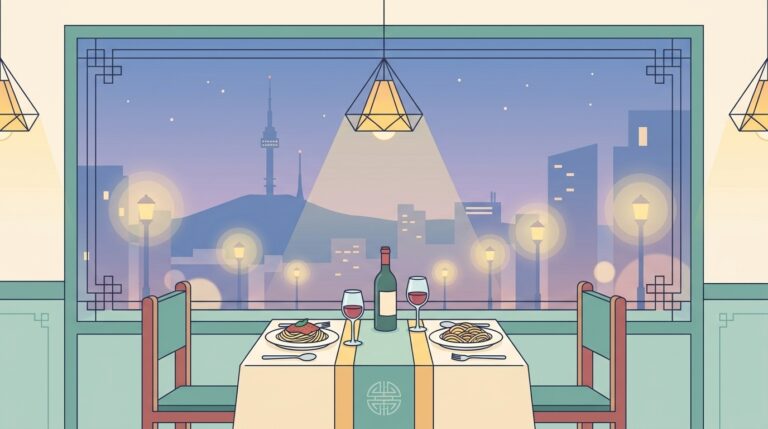
How to Nail Your First Korean Sogeting: Reserving the Perfect Pasta Spot Like a Local
Phase 1: Empathy (안녕하세요! Welcome Back! 👋)
안녕하세요! It’s your favorite Korean bestie and Daily Hangul’s Lead Editor here!
Imagine this: You finally asked out that amazing person you’ve had your eye on, or perhaps a close friend set you up on a 소개팅 (sogeting – a blind date). The excitement is real, but suddenly, panic sets in. In Korea, the absolute golden rule of a successful first date is finding a restaurant with the perfect 분위기 (bunwigi – vibe/atmosphere). And 9 times out of 10, that means a chic, cozy pasta restaurant.
You want to show your date that you have excellent taste and manners, so you decide to call or message a trendy spot in Gangnam or Hongdae. But how do you secure that coveted window seat without sounding like a robotic textbook?
Don’t worry! Today, we are going to master the art of reserving a high-vibe pasta spot. This guide is built on real-life feedback from our B1-level learners who successfully navigated their first dates in Seoul. Let’s get you ready to impress! 🍝✨
Phase 2: Core Expressions Deep Dive 🔎
Let’s break down the 3 magical sentences you need to reserve like a seasoned Seoulite.
1. 혹시 분위기 좋은 파스타 집 아는 데 있어요? (Hoksi bunwigi joeun paseuta jip aneun de isseoyo?)
- Pronunciation: Hok-shee boon-wee-ghee jo-eun pah-seu-tah jeep ah-neun deh ee-ssuh-yo? (Sounds like: “Hawk-she” + “boon-we-gi”…)
- Meaning: “By any chance, do you know any pasta restaurants with a good vibe?”
- K-Culture Moment: You’ll hear this exact line in K-Dramas like Business Proposal or Because This Is My First Life when characters ask their friends for date-spot recommendations.
- Editor’s Insight: 혹시 (by any chance) is the ultimate politeness softener in Korean. Starting your question with hoksi instantly makes you sound polite, natural, and friendly.
- Situation Spectrum:
- Casual (Friends): ✅
- Semi-formal (Co-workers): ⚠️ (Change to ‘아시는 곳 있으세요?’)
- Formal (Business): 🚫
- 🤔 Think About It: Why do you think Koreans place so much emphasis on ‘분위기’ (vibe) rather than just the taste of the food on a first date? How does this compare to your culture?
2. 창가 자리로 예약할 수 있을까요? (Changga jariro yeyakhal su isseulkkayo?)
- Pronunciation: Chang-gah jah-ree-roh yeh-yahk-hahl soo ee-sseul-kkah-yo?
- Meaning: “Could I reserve a window seat?”
- K-Culture Moment: In bustling city areas like Myeongdong or Seongsu-dong, window seats offer gorgeous city light views—perfect for lowering first-date tension.
- Editor’s Insight: -ㄹ 수 있을까요? (Could I/Is it possible to…?) is far more natural and softer than the standard textbook grammar -고 싶습니다 (I want to…). It shows respect to the restaurant staff.
- Situation Spectrum:
- Casual: ⚠️ (Sounds too formal for close friends)
- Semi-formal: ✅
- Formal: ✅
- 🤔 Think About It: In Korea, asking for specific seating is common and welcomed. What is the go-to seat in your country when you want to make a great impression?
3. 소개팅하기 좋은 자리로 부탁드립니다. (Sogetinghagi joeun jariro butakdeurimnida.)
- Pronunciation: So-get-ting-hah-ghee jo-eun jah-ree-roh boo-tahk-deu-rim-nee-dah.
- Meaning: “A good seat for a blind date, please (quiet/semi-private).”
- K-Culture Moment: Korean restaurant staff are absolute pros. If you mention it’s for a sogeting, they will actively try to place you away from the noisy kitchen or restroom entrance!
- Editor’s Insight: 부탁드립니다 (I kindly request) is the gold standard for asking favors in Korean service settings. It strikes the perfect balance of politeness and clarity.
- Situation Spectrum:
- Casual: 🚫
- Semi-formal: ✅
- Formal: ✅
- 🤔 Think About It: How does it feel to openly tell a host that you are on a blind date? In Korea, it’s a helpful hint that ensures you get the best hospitality!
Phase 3: Textbook Korean vs. Real Korean 🗣️
Let’s look at how textbooks teach reservations versus how actual Koreans talk on the phone or app.
Scenario 1: Requesting a Reservation
- 📖 Textbook style: 예약을 원합니다. (Yeyageul wonhamnida. – “I want a reservation.”)
- 🗣️ Real Korean: 혹시 오늘 저녁 예약 가능할까요? (Hoksi oneul jeonyeok yeyak ganeunghalkkayo? – “Is reservation possible for tonight by any chance?”)
- 💡 Why the difference? Saying “I want a reservation” sounds like a command. Using 가능할까요? (Is it possible?) sounds cooperative and incredibly polite.
Scenario 2: Asking for Recommendations
- 📖 Textbook style: 맛있는 음식이 무엇입니까? (Masinneun eumsigi mueosimnikka? – “What is the delicious food?”)
- 🗣️ Real Korean: 여기 시그니처 메뉴가 뭐예요? (Yeogi sigeunicheo menyuga mwoyeyo? – “What is the signature menu here?”)
- 💡 Why the difference? No one says “delicious food” in real life. Koreans love using the English loanword 시그니처 메뉴 (signature menu) or 대표 메뉴 (representative menu).
Phase 4: K-Culture Deep Dive & Non-verbal Manners 🍝
4-1. The “Nunchi” (눈치) of Table Manners
When you arrive at the pasta place, your language is only 50% of the equation. The other 50% is 눈치 (nunchi – situational quick-wittedness).
* The Water & Cutlery Duty: When you sit down, don’t just wait. Actively grab the water bottle, pour a glass for your date first, and pull out the cutlery from the side-table drawer. Placing a tissue down first and laying the spoon and fork on top is a massive green flag in Korea!
4-2. Why Pasta?
Why is pasta the undisputed champion of Korean sogeting? Unlike K-BBQ, where you get sweaty grilling meat, or soups (gukbap) where you might splash broth on your nice clothes, pasta is clean, portioned individually, and eaten with a fork. It keeps the focus entirely on conversation and maintaining eye contact.
Phase 5: Real-Life Roleplay Scenario 🎭
Let’s practice! You are 민우 (Minwoo), and you are calling a trendy pasta restaurant in Mapo-gu. The staff member is 직원 (Jigwon).
- 직원: 네, 올리브 파스타입니다. 무엇을 도와드릴까요?
(Yes, this is Olive Pasta. How may I help you?) - 민우: (😊 Friendly tone) 안녕하세요! 혹시 이번 주 토요일 저녁 7시에 예약 가능할까요?
(Hello! By any chance, is a reservation available this Saturday at 7 PM?) - 직원: 잠시만요… 네, 7시 대에 자리 있습니다. 몇 분이신가요?
(One moment… Yes, we have seats at 7. How many people?) - 민우: 두 명이에요. 저… 혹시 창가 자리로 예약할 수 있을까요?
(Two people. Um… by any chance, could we reserve a window seat?) - 직원: 아, 창가 자리는 마감되었고 안쪽 부스석만 남아있는데 괜찮으신가요?
(Ah, window seats are fully booked and only inside booth seats are left. Is that okay?) - 민우: (🤔 Thinking quickly) 아, 부스석도 괜찮아요! 소개팅하기 좋은 자리로 부탁드립니다.
(Ah, booths are fine too! A good quiet seat for a blind date, please.) - 직원: 아, 소개팅이시군요! 알겠습니다. 조용하고 안락한 부스로 배정해 드릴게요. 성함과 연락처 부탁드립니다.
(Ah, a blind date! Got it. I’ll assign you a quiet and cozy booth. Name and contact number, please?) - 민우: 김민우이고, 010-1234-5678입니다. 잘 부탁드립니다!
(I’m Kim Minwoo, 010-1234-5678. Thank you so much!)
🔀 Your Interactive Choice:
If the staff said, “We have no seats inside at all, only terrace seats (which are cold in winter),” what would you say?
- A) “그럼 그냥 테라스로 해주세요.” (Then just do the terrace.)
- 🚫 Bad: Your date will freeze! Cold temperatures kill the cozy vibe.
- B) “혹시 대기 예약을 걸어둘 수 있을까요?” (Could I join the waiting list by any chance?)
- ⚠️ Risk: High risk for a first date. If you don’t get in, you have no backup plan.
- C) “아, 알겠습니다! 다음에 연락드릴게요. 감사합니다.” (Ah, I see! I will contact you next time. Thank you.) and search for another venue.
- ✅ Best: Always have a solid, confirmed alternative venue for a sogeting.
Phase 6: 10-Second Emotion Shadowing Drill 🎙️
Try saying these out loud with emotional cues and natural pauses (/).
[😊 Excited & Polite]
안녕하세요! / 혹시 이번 주 토요일 / 저녁 7시에 / 예약 가능할까요?
(An-nyeong-ha-se-yo! / Hok-si i-beon ju to-yo-il / jeo-nyeok ilgop-si-e / ye-yak ga-neung-hal-kka-yo?)-
[🥺 Desperate but Sweet]
저… / 혹시 창가 자리로 / 예약할 수 있을까요? / 꼭 부탁드립니다!
(Jeo… / hok-si chang-ga ja-ri-ro / ye-yak-hal su is-seul-kka-yo? / kkok bu-tak-deu-rim-ni-da!)
Phase 7: K-Culture Mini-Dictionary 📖
- 소개팅 (Sogeting): A blind date set up by a mutual friend.
- 애프터 (After): Asking for a second date. (e.g., “애프터 신청했어요” – I asked her out for a second date.)
- 분위기 맛집 (Bunwigi Matjib): Literally “vibe delicious house.” A restaurant famous for its great aesthetic and mood rather than just food.
- 주선자 (Juseonja): The matchmaker/mutual friend who set up the date. It is common to buy them a meal or coffee if the date goes well!
Phase 8: Traveler’s Survival Kit 🧳
Survival Expressions for Dining
- 웨이팅 얼마나 걸려요? (Waiting eolmana geollyeoyo?) – How long is the wait?
- 메뉴판 좀 다시 보여주세요. (Menyupan jom dasi boyeojuseyo.) – Please show me the menu again.
- 화장실 어디에 있어요? (Hwajangsil eodie isseoyo?) – Where is the restroom?
🗺️ Editor’s Travel Note
In Korea, making reservations over the phone can be intimidating. Download the 캐치테이블 앱 (Catch Table App) or search on the 네이버 지도 앱 (Naver Map App). Many places allow 1-click digital reservations where you can write “소개팅자리 부탁드립니다” in the memo box!
Phase 9: “One Step Deeper” (Thinking Points) 🧠
In Western dating, meeting up for a casual drink or coffee is common. However, Korean sogeting is highly structured. From the choice of pasta to the predetermined “after” cafe, it shows that you respect the other person’s time and effort. Setting up a nice reservation is a sign of high emotional intelligence in modern Korean society.
💬 Your Turn: Have you ever been on a blind date? What is the “default” food for dates in your home country? Tell me in the comments below! 👇
Phase 10: FAQ & Common Mistakes 🙋♀️
Q: What if I don’t eat pasta? Can I do Korean BBQ for a blind date?
A: Unless both of you are hardcore meat lovers who agreed beforehand, avoid BBQ on the first date. The smell of charcoal gets in your hair and clothes, and shouting over a loud grill is not romantic!
Q: Do I need to pay for everything on the first date?
A: Traditionally, the person who asked the other out pays for dinner, and the other person pays for the round of coffee or dessert afterward. This is called the “Dinner-then-Cafe” routine.
Q: Can I use informal Banmal (반말) during the date to seem closer?
A: Big mistake! Always stick to polite 존댓말 (honorifics) on the first date, even if you are the same age, until you both explicitly agree to speak casually.
🚨 Common Mistakes Board
- Mistake 1: Saying “너 이름이 뭐야?” (What is your name? – casual).
- Correct: 성함이 어떻게 되세요? (What is your name? – polite).
- Mistake 2: Ordering messy food like squid ink pasta.
- Correct: Stick to cream, tomato, or oil pasta to avoid black teeth mid-conversation!
- Mistake 3: Not reserving in advance.
- Correct: Trendy places in Seoul have 2-hour waiting lines. Always reserve at least 3 days in advance!
Phase 11: Action Mission 🏆
- 🥉 Bronze: Read the Phase 6 Shadowing Drill aloud 3 times in front of the mirror.
- 🥈 Silver: Leave a comment below using the phrase “혹시 ~ 예약 가능할까요?” with your favorite food.
- 🥇 Gold: Watch a K-drama dating scene and count how many times they eat pasta or use the word “분위기”!
Phase 12: Interactive Quiz Challenge 🎮
Test your skills before your big date!
- Which phrase is the most polite way to ask for a window seat?
- A) 창가 자리 줘 (Changga jari jwo)
- B) 창가 자리로 예약할 수 있을까요? (Changga jariro yeyakhal su isseulkkayo?)
- C) 창가 자리 원해요 (Changga jari wonhaeyo)
- True or False: In Korea, it is considered rude to tell the restaurant staff that you are on a blind date (소개팅).
👉 Click to reveal Answers & Explanations!
- Correct Answer: B
- Explanation: B uses the soft, polite ending “-ㄹ 수 있을까요?” which is perfect for service environments. A is too casual (banmal), and C is too direct.
- Correct Answer: False
- Explanation: It is highly recommended to mention it! The staff will often go out of their way to give you a quiet, cozy table so your conversation doesn’t get interrupted.
- Explanation: It is highly recommended to mention it! The staff will often go out of their way to give you a quiet, cozy table so your conversation doesn’t get interrupted.







