

Speak Like a Local at Traditional Korean Music Concerts: The Magic of Heung and Chuimsae
Phase 1: Empathy (스토리 몰입형 오프닝)
안녕하세요! 매일한글 (Daily Hangul)의 수석 에디터입니다.
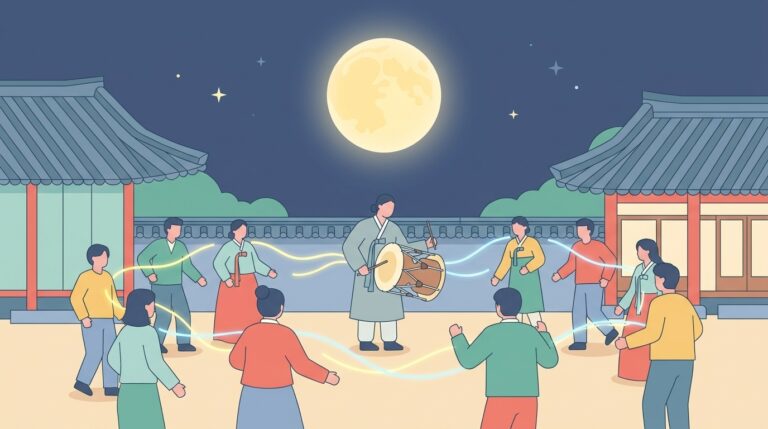
Imagine sitting in a beautiful courtyard of a traditional Hanok village on a cool autumn evening. The dramatic beat of the Buk (북 – traditional drum) fills the air, and the soulful melody of the Daegeum (대금 – bamboo flute) begins to soar. The energy is absolutely infectious.
Suddenly, the Korean grandmother sitting next to you raises her hands, sways her shoulders, and passionately shouts, “Eolssigu!” (얼씨구!) right in the middle of the song. Instead of getting annoyed, the performer smiles broadly and plays with even more intensity.
At this moment, you might feel a wave of confusion: “Wait, is it okay to make noise during a concert? Isn’t that rude? How do I join in without looking foolish?”
If you’ve felt this way, you are not alone! Many of our intermediate learners tell us they feel like passive outsiders at traditional Korean performances. In Western classical concerts, absolute silence is a sign of respect. But in Korean traditional music, known as Gugak (국악), silence means the performance is boring!
This guide is built from real-world student feedback to help you break down that virtual “fourth wall.” By learning the art of active appreciation, you will transform from a nervous spectator into a true cultural insider who knows how to feel and share the Heung (흥 – collective joy).
Frequently Asked Questions (FAQ)
Q: What does "매일한글" mean in Korean and how do you pronounce it?
A: In Korean, "매일한글" is pronounced [Daily Hangul] and means: 의 수석 에디터입니다.







