

How to Say “I’m Nervous” in Korean Like a True Local
Phase 1: Empathy (Welcome to the Heart-Pounding World of Korean Interviews!)
안녕하세요! (Annyeonghaseyo!) Your favorite Daily Hangul Editor is back!
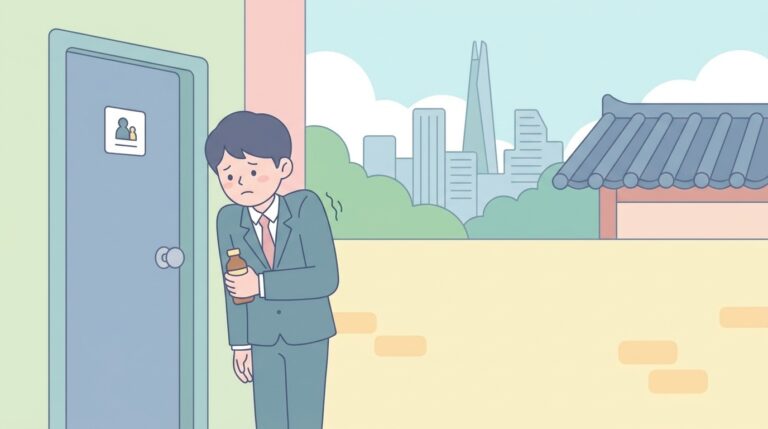
Imagine this: You are standing in the sleek, glass hallway of a major company in Seoul. Your suit is perfectly pressed, your resume is tucked under your arm, and your name is about to be called. Suddenly, your palms sweat, your knees shake, and you feel like your heart is doing a K-pop dance routine inside your chest.
If you’ve watched K-dramas like Start-Up or Misaeng (Incomplete Life), you’ve definitely seen characters in this exact situation—gulping down a tiny herbal drink or clutching their chests in agony.
Feeling nervous is a universal human experience, but how you express it in Korean can completely change how you connect with others. Today, we’re diving into the real, authentic ways to say “I’m nervous” so you can sound natural, find comfort from Korean friends, and maybe even impress an interviewer with your cultural savvy! Let’s get into it!
Phase 2: Deep Dive into 3 Core Expressions
1. 떨려요 (tteollyeoyo)
- Pronunciation: tteol-lyeo-yo (Think of a fast, tense double “t” sound like the snap of a rubber band: ttol-yuh-yo)
- Meaning: “I’m trembling / My heart is fluttering (with nerves or excitement).”
- K-Culture Moment: You’ll hear this constantly in K-pop backstage videos. Right before going on stage, idols look at the camera, clutch their chests, and whisper: “진짜 떨려요!” (I’m so nervous!)
- Editor’s Insight: While the dictionary translates this as “to shake/tremble,” Koreans use it for any situation where anticipation makes their heart race. It can mean nervous anxiety (like an interview) or romantic excitement (like a first date).
- Situation Spectrum:
- Casual (반말): 떨려 (tteollyeo) ✅
- Semi-formal (존댓말): 떨려요 (tteollyeoyo) ✅
- Formal (하십시오체): 떨립니다 (tteollimnida) ✅
- 🤔 Think About It: In English, we say “I have butterflies in my stomach.” In Korean, we focus on the physical sensation of “shaking” (떨림). Why do you think Korean expresses anxiety through movement rather than internal sensation?
2. 긴장돼요 (ginjang-dwaeyo)
- Pronunciation: gin-jang-dwae-yo (Pronounced like gin-jahng-gway-yo but with a softer “dw” sound)
- Meaning: “I am feeling tense / I am nervous.”
- K-Culture Moment: In the office drama Misaeng, the interns sit stiffly in their chairs, shoulders raised, looking absolutely frozen. That physical state of tension is exactly 긴장 (gin-jang).
- Editor’s Insight: This is the most standard, objective, and safe expression to use. If you want to sound professional yet honest during a formal setting (like a job interview or a speech), this is your go-to word.
- Situation Spectrum:
- Casual (반말): 긴장돼 (ginjang-dwae) ✅
- Semi-formal (존댓말): 긴장돼요 (ginjang-dwaeyo) ✅
- Formal (하십시오체): 긴장됩니다 (ginjang-deumnida) ✅
- 🤔 Think About It: 긴장 (tension/nervousness) is a noun, and 되다 means “to become.” So, you are literally saying “Tension is happening to me.” It’s a great way to separate your core self from the temporary feeling of anxiety!
3. 청심환 먹어야겠어요 (cheongsimhwan meogeoyagesseoyo)
- Pronunciation: cheong-sim-hwan meo-geo-ya-get-seo-yo (Sounds like chung-sheem-hwan mug-uh-yah-get-suh-yo)
- Meaning: “I think I need to take a Cheongsimhwan (herbal calming pill).”
- K-Culture Moment: Before the notoriously difficult Korean College Scholastic Ability Test (Suneung), mothers always pack a bottle of liquid Cheongsimhwan in their children’s lunchboxes.
- Editor’s Insight: This is an incredible cultural idiom! Cheongsimhwan (우황청심원) is a traditional Korean herbal medicine used to calm palpitations and anxiety. Saying you need to take one is a humorous, hyper-local way of saying, “I’m absolutely terrified right now!”
- Situation Spectrum:
- Casual (반말): 청심환 먹어야겠어 (cheongsimhwan meogeoyagesseor) ✅
- Semi-formal (존댓말): 청심환 먹어야겠어요 (cheongsimhwan meogeoyagesseoyo) ✅
- Formal (하십시오체): 🚫 (Too casual and idiomatic to say directly to an interview panel!)
- 🤔 Think About It: What is the go-to home remedy or calming ritual in your culture when someone is incredibly anxious? How does it compare to drinking herbal medicine?
Phase 3: Textbook Korean vs. Real Korean
Let’s compare what traditional textbooks teach you against what real Koreans actually say on the streets of Seoul.
Situation 1: Expressing high anxiety before a big event
- 📖 Textbook Korean: “저는 매우 걱정스럽습니다.” (Jeoneun maeu geokjeongseoreopsumnida. / I am very worried.)
- 🗣️ Real Korean: “아, 진짜 떨려서 미치겠어요!” (Ah, jinjja tteollyeoseo michigesseoyo! / Oh, I’m so nervous I’m going crazy!)
- 💡 Why the difference? The textbook version sounds like you are reading a formal report about your psychological state. Real Koreans use 미치겠어요 (“going crazy”) to express intense emotions naturally.
Situation 2: Encouraging someone who is shaking
- 📖 Textbook Korean: “용기를 가지십시오.” (Yonggireul gajisipsio. / Please have courage.)
- 🗣️ Real Korean: “떨지 말고 화이팅! 잘할 수 있어요!” (Tteolji malgo hwaiting! Jalhal su isseoyo! / Don’t shake, fighting! You can do it!)
- 💡 Why the difference? “용기를 가지십시오” sounds like a general leading troops into battle in a historical drama. In daily life, “화이팅” (Fighting!) and telling someone not to shake (떨지 마세요) feels warm, modern, and supportive.
Phase 4: K-Culture Deep Dive & Non-verbal Manners
4-1. Body Language of a Korean Interviewee
If you find yourself in a Korean interview, words are only half the battle. Your posture speaks volumes!
* The Entrance (입장): Walk in, stand next to your chair, and bow at a polite 30-degree angle. Say, “잘 부탁드립니다” (Jal butakdeurimnida / I look forward to your kind guidance).
* The Seating Posture (공수): Sit up straight. Men should place their hands lightly on their thighs in loose fists. Women should place their hands clasped together neatly on their lap. Avoid wild hand gestures, as keeping your hands still shows composure and respect.
* Eye Contact (시선 처리): Staring intensely into the interviewer’s eyes can sometimes feel confrontational in Korea. Aim your gaze softly at the bridge of their nose or their forehead to show attention without causing discomfort.
4-2. The “Fighting” Culture
Have you noticed how Koreans offer energy drinks like Vita 500 or Bacchus before a big event? Sharing small physical tokens of encouragement is a huge part of Korean 정 (Jeong – affection/bonding). If you see a colleague sweating before a presentation, hand them a cold bottle of vitamin drink and say “화이팅!”—it’s the ultimate Korean comforting gesture.
Phase 5: Interactive Roleplay Scenario
Setting: The hallway outside the interview room of
Frequently Asked Questions (FAQ)
Q: What does "떨려요 (tteollyeoyo)" mean in Korean and how do you pronounce it?
A: In Korean, "떨려요 (tteollyeoyo)" is pronounced [tteol-lyeo-yo (Think of a fast, tense double "t" sound like the snap of a rubber band: ttol-yuh-yo] and means: "I'm trembling / My heart is fluttering (with nerves or excitement)."
Q: What does "긴장돼요 (ginjang-dwaeyo)" mean in Korean and how do you pronounce it?
A: In Korean, "긴장돼요 (ginjang-dwaeyo)" is pronounced [gin-jang-dwae-yo (Pronounced like gin-jahng-gway-yo but with a softer "dw" sound] and means: "I am feeling tense / I am nervous."
Q: What does "청심환 먹어야겠어요 (cheongsimhwan meogeoyagesseoyo)" mean in Korean and how do you pronounce it?
A: In Korean, "청심환 먹어야겠어요 (cheongsimhwan meogeoyagesseoyo)" is pronounced [cheong-sim-hwan meo-geo-ya-get-seo-yo (Sounds like chung-sheem-hwan mug-uh-yah-get-suh-yo] and means: "I think I need to take a Cheongsimhwan (herbal calming pill)."







