

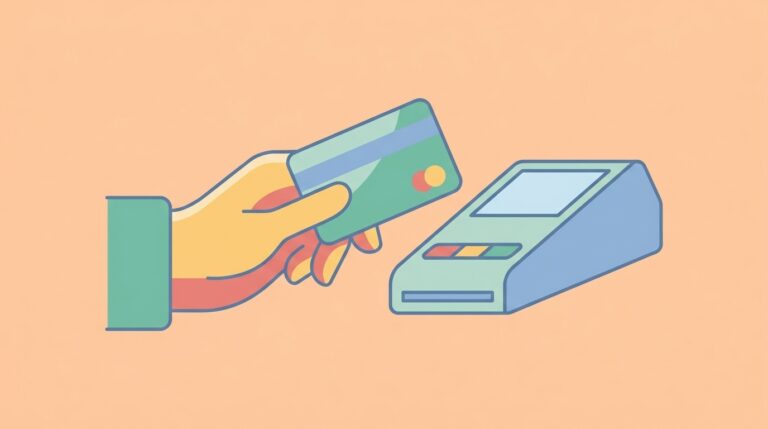
No Tips Allowed! Navigating Korea’s No-Tipping Culture and Payment Etiquette Like a Local
Phase 1: Empathy (An Editor’s Welcome)
안녕하세요! Welcome back to another Masterclass with Daily Hangul. I’m your lead editor and culture navigator.
Picture this: You’re dining at a stunning, Hanok-style fine dining lounge in Samcheong-dong. The service is immaculate. The sommelier explains the historical lineage of your Yakju (traditional liquor) with poetic grace. As the bill arrives, your hand instinctively reaches for extra cash to leave on the table. You calculate a neat 15% or 20% in your head, feeling generous.
But wait! Your Korean friend gently grabs your wrist with a panicked look, whispering, “아니야, 그러지 마!” (No, don’t do that!).
In many Western cultures, leaving a generous tip is the ultimate sign of respect. In Korea, however, leaving extra cash on the table can spark genuine confusion, embarrassment, or even be perceived as an accidental insult—as if you imply the establishment doesn’t pay its staff well. Navigating this sharp contrast is a hallmark of C2-level cultural fluency. Today, we’re diving deep into the socio-cultural mechanics of Korea’s “no-tipping” environment and the sophisticated linguistic codes of paying like a true local.
Phase 2: Three Core Expressions Deep Dive
To confidently handle transactions and understand the structural nuances of Korean payments, master these three advanced expressions:
1. 잔돈은 안 주셔도 됩니다 (Jan-doneun an jusyeodo doemnida.)
- Pronunciation: Jan-doneun ahn joo-sheo-do doem-nee-da (Sounds like: “Jahn-done-un an ju-shuh-do dwem-nee-dah”)
- Meaning: “You may keep the change.” (Literally: “As for the small change, you don’t have to give it to me.”)
- K-Culture Moment: Typically heard in late-night taxi rides in K-dramas when the protagonist needs to make a dramatic exit and hands a 10,000 won bill for a 9,200 won fare.
- Editor’s Insight: This is the only socially acceptable form of “tipping” in modern Korea, and it’s strictly confined to taxi rides or delivery services when cash is used. It is not viewed as a formal tip, but rather as a polite gesture of convenience so the driver doesn’t have to fish for coins while driving.
- Situation Spectrum: Casual (⚠️) / Semi-formal (✅) / Formal (✅)
- 소 Think About It: In your culture, is keeping the change considered a lazy shortcut or a genuine tip? In Korea, it bridges the gap between efficiency and small-scale generosity.
2. 봉사료가 포함된 가격인가요? (Bongsaryoga pohamdoen gagyeogingayo?)
- Pronunciation: Bong-sa-ryo-ga po-ham-doen ga-gyeok-in-ga-yo? (Sounds like: “Bong-sah-ryoh-gah poh-hahm-dwen gah-gyuck-een-gah-yoh”)
- Meaning: “Is the service charge included in this price?”
- K-Culture Moment: Used in high-end luxury hotels, hotel bars, or premium spa wellness centers in Gangnam.
- Editor’s Insight: Under the South Korean Food Sanitation Act, all restaurants and cafes must display the “final price” (부가세/VAT and service charges included). However, in rare ultra-luxury services, you might want to clarify if a separate 10% Service Charge (봉사료) is already factored into the bill to avoid double payment.
- Situation Spectrum: Casual (🚫) / Semi-formal (⚠️) / Formal (✅)
- 소 Think About It: Why does a centralized service charge feel more comfortable to East Asian sensibilities than discretionary individual tipping?
3. 따로 계산해도 괜찮을까요? (Ttaro gyesanhaedo gwaenchanheulkkayo?)
- Pronunciation: Tta-ro gye-san-hae-do gwaen-chan-heul-kka-yo? (Sounds like: “Tah-roh gyeh-sahn-hae-do gwen-chahn-hool-kah-yoh”)
- Meaning: “Would it be okay if we pay separately?”
- K-Culture Moment: An essential phrase used when dining out with coworkers or classmates after a long group study session.
- Editor’s Insight: While splitting bills is common globally, the way it is handled in Korea requires tact. Asking the cashier politely before swiping multiple cards is a sign of high-level social awareness, as it takes extra time at the POS terminal.
- Situation Spectrum: Casual (✅) / Semi-formal (✅) / Formal (⚠️)
- 소 Think About It: Does paying separately dilute the warm communal feeling of a meal (Jeong/ᅥ), or is it a pragmatic necessity of modern city life?
Phase 3: Textbook Korean vs. Real-Life Korean
Let’s compare rigid textbook phrasing with the authentic, high-level natural language used by native speakers.
Situation 1: Deciding to split the bill among close friends
- 거 Textbook Korean: “우리 각자 내기로 해요.” (Uri gakja naegiro haeyo. / Let’s decide to pay individually.)
- ᅵ Real-Life Korean: “우리 엔분의 일(N분의 1)로 정산할까요?” (Uri en-bun-ui-il-lo jeongsanhal-kkayo? / Shall we split it N-ways and settle the amount?)
- ᅡ Why the difference? “가ᅩ내다” is technically correct but feels cold and clinical. Modern Koreans borrow the mathematical algebraic variable “N” to say “N-분의 1” (one over N), and use “꺼산하다” (to settle/reconcile accounts) to sound natural and friendly.
Situation 2: Generously insisting on paying for the entire group
- 거 Textbook Korean: “제가 모두의 음식을 사겠습니다.” (Jega modueui eumsigeul sagessumnida. / I will buy everyone’s food.)
- ᅵ Real-Life Korean: “오늘 계산은 제가 쏠게요! 다음번에 사세요.” (Oneul gyesaneun jega ssolgeyo! Daumbeone saseyo. / Today’s bill is on me! You can buy next time.)
- ᅡ Why the difference? “쏘ᄱ다” (to shoot/fire) is the ultimate colloquial expression for treating others. By adding “다음번에 사세요” (you buy next time), you gracefully preserve the social cycle of reciprocity (Jeong), avoiding making the other party feel overly indebted.
Phase 4: K-Culture Deep Dive & Non-Verbal Manners
4-1. The Body Language of Payment: “Two-Handed Respect”
In Korea, payment is not just a commercial transaction; it’s an exchange of energy.
* The Two-Handed Rule: When handing over your credit card or cash, and when receiving the card and receipt back, always use two hands. If you must use one hand, place your left hand gently under your right forearm or elbow as a sign of support and respect.
* Eye Contact and Bowing: Maintain a gentle, polite smile, and offer a slight head nod (목인사) rather than staring intensely at the clerk.
4-2. The “Nunchi” (눈치) of Fighting Over the Bill
You have likely seen K-Drama scenes where two characters physically wrestle at the cash register, trying to force the clerk to take their card. This is “Nunchi” in action.
[Western Culture] ----------------------> [Korean Culture]
Individualistic Tipping                    Communal Reciprocity
(Reward for individual worker)             (Building long-term social bond)
In Korea, the concept of “Jeong” (ᅥ) dictating human relationships means that paying for someone else is an investment in the relationship. If you try to tip an individual waiter, you break the social balance by creating a hierarchical “master-servant” dynamic. Instead, paying for the whole meal is seen as a lateral act of affection, which the other person is expected to return in a future meeting.
Phase 5: Real-Life Roleplay Scenario
Setting: A sophisticated dining lounge, “Myeongdong Garden,” after a satisfying business-casual dinner between Min-woo (a Korean coordinator) and Sarah (an advanced foreign professional).
- Min-woo: 사장님, 저희 계산해 주시겠어요?
(Sajangnim, jeohui gyesanhae jusigesseoyo?)
ᄇ [Raising a hand slightly, making polite eye contact with the owner.] - Cashier: 네, 이쪽 카운터에서 도와드리겠습니다. 맛있게 드셨나요?
(Ne, ijjok kaunteo-eseo dowadeurigessumnida. Masitge deusyeotnayo?)
ᄇ [Smiling warmly behind the register.] - Sarah: 정말 훌륭했어요! 특히 갈비 양념이 깊고 맛있었습니다. 혹시… 카드 두 개로 따로 계산해도 괜찮을까요?
(Jeongmal hullyunghaessoyo! Teokhi galbi yangnyeomi gipgo masisseotnumnida. Hoksi… kadeu du gaero ttaro gyesanhaedo gwaenchanheulkkayo?)
ᄇ [Handing over two cards with both hands respectfully.] - Cashier: 아, 당연하죠! 어떻게 나누어 결제해 드릴까요? 반반씩 해 드릴까요?
(Ah, dangyeonhajyo! Eotteokke nanueo gyeoljehae deurilkkayo? Banbanssik hae deurilkkayo?)
ᄇ [Taking the cards with two hands.] - Min-woo: 아, 세라 씨! 이번엔 제가 내려고 했는데… 저번에 커피도 사주셨잖아요.
(Ah, Sarah-ssi! Ibeonen jega naeryeogo haetneunde… jeobone keopido sajusyeotjanayo.)
ᄇ [Making a playful, mock-disappointed face.] - Sarah: 에이, 그땐 가벼운 커피였는걸요. 오늘 요리가 너무 푸짐했으니 정확히 반씩 정산해요. 그게 제 마음이 편해요!
(Ei, geuttaen gabyeoun keopiyeotneungeollyo. Oneul yoliga neomu pujimhaesseuni jeonghakhi banssik jeongsanhaeyo. Geuge je maeumi pyeonhaeyo!)
ᄇ [Smiling and gently insisting with an open posture.] - Min-woo: 하하, 세라 씨의 세련된 한국식 매너에 양보해야겠네요. 알겠습니다, 사장님! 반반 결제해 주세요.
(Haha, Sarah-ssi-ui seryeondaen hanguksik maeneoe yangbohaeyagetneyo. Algetnumnida, sajangnim! Banban gyeoljehae juseyo.)
ᄇ [Nodding in agreement.] - Cashier: 네, 각각 45,000원씩 결제되었습니다. 여기 카드와 영수증입니다. 감사합니다!
(Ne, gakgak sasibomanwon-ssik gyeoljedeo-eotnumnida. Yeogi kadeuwa yeongsujeung-imnida. Gamsahamnida!)
ᄇ [Returning the cards with both hands and bowing slightly.]
ᄅ Interactive Branching Point
What should Sarah do if she notices a jar of cash labeled “Tip” on the counter of a touristy cafe in Itaewon?
- Choice A: Drop a 10,000 KRW bill in. This shows ultimate generosity.
- Choice B: Ignore the jar. Tipping jars in Korea are often highly unusual anomalies designed for tourists and are not culturally expected.
- Choice C: Ask the barista, “왜 팁 박스가 있어요?” (Why is there a tip box?) in a confrontational tone.
Feedback:
- Best Choice: Choice B. Most native Koreans avoid these jars. They are occasionally placed in high-density tourist areas to capitalize on foreign customs, but ignoring them is completely natural and expected.
- Bad Choice: Choice C. This might make the barista feel defensive or embarrassed about their shop’s setup.
- Risk Choice: Choice A. While well-intentioned, it creates an unnecessary precedent and is unnecessary for standard service.
Phase 6: 10-Second Shadowing Drill
Practice delivery with emotional gravity to sound completely organic:
- Paying Separately (Polite & Tentative):
혹시 / 따로따로 / 결제하는 것도 / 괜찮을까요?- [Hoksi / ttaro-ttaro / gyeolje-haneun geot-do / gwaenchanh-eulkkayo?]
- Emotional Map:
[ᄒ 조심스럽고 정중하게 - Polite and soft-spoken]
- Insisting on Paying (Playful & Confident):
오늘 / 계산은 / 제가 쏠게요! / 다음번에 / 사세요.- [Oneul / gyesan-eun / jega ssol-geyo! / Daum-beon-e / saseyo.]
- Emotional Map:
[ᄋ 기쁘고 위풍당당하게 - Cheerful and confident]
Phase 7: K-Culture Mini Dictionary
- 더치페이 (Deochi-pei) | Dutch Pay: The localized loanword for splitting the bill. While widely understood, “엔분의 일” (En-bun-ui-il) sounds more sophisticated for advanced speakers.
- 엔분의 일 (En-bun-ui-il) | Split the bill evenly: Dividing the total bill strictly by the number of participants.
- 골든벨 (Gol-deun-bel) | Golden Bell: Derived from an old school quiz show. To “ring the golden bell” (고ᄳ던베ᄳ야 왜ᄱ다) means to spontaneously pay for everyone in the room or at the table.
- 시치미 (Sichimi) | Acting Innocent: In social payment situations, “시치미 떼다” means pretending not to notice the bill has arrived in order to avoid paying.
Phase 8: Survival Kit for Travelers
Survival Phrases:
- “카드 결제 되나요?” (Kadeu gyeolje doenayo?) – Do you accept credit cards?
- “영수증은 버려주세요.” (Yeongsujeungeun beoryeojuseyo.) – Please discard the receipt for me (extremely common in daily convenience store purchases).
- “할부 몇 개월로 해드릴까요?” (Halbu myeot gaewollo haedreulkkayo?) – “How many months of installment payment would you like?” (A phrase cashiers will ask C2-level shoppers purchasing high-value luxury goods over 50,000 KRW. Simply reply: “일시불이요” (Ilsibur-iyo) meaning “Single payment, please”).
Editor’s Travel Note:
Korea is almost entirely cashless. From taxis to tiny street food stalls in major cities, cards or mobile payments (like Samsung Pay) are preferred. Before your trip, download the Naver Map App to check restaurant reviews and see if they require pre-payment at kiosks (키오스크), which are increasingly common in fast-casual places.
Note: Payment terminal layouts may vary by regional network updates.
Phase 9: “One Step Deeper” (Reflective Cultural Essay)
In Western societies, tipping acts as an economic meritocracy—an direct feedback loop between the customer and the service provider. In Korea, however, the absence of tipping stems from a deeply ingrained neo-Confucian collectivism. The waiter, the cook, and the business owner are viewed as a cohesive unit. To isolate one waiter with a personal monetary gift disrupts the harmony of the collective effort.
Furthermore, the social transaction is based on “Jeong” (ᅥ). True relationships are circular, not transactional. If I pay for your dinner today, our connection is kept alive because you will buy my lunch next time. A tip, on the other hand, closes the transaction immediately, leaving no emotional thread for the future.
ᄒ Your Turn: How does your home country balance transactional payments and personal relationships? Let us know in the comments below!
Phase 10: FAQ & Common Mistakes
Q: Can I leave cash on the table at a restaurant if the service was exceptional?
A: No, please avoid this. The staff will likely chase you down the street thinking you forgot your money. If you wish to express extreme gratitude, a polite, deep bow and a sincere “정말 대단한 서비스였습니다. 잘 먹었습니다!” (It was truly great service. I ate well!) will mean infinitely more to the team than a few banknotes.
Q: Is tipping taxi drivers ever expected?
A: Generally, no. However, if a taxi driver helps you carry heavy luggage or drives through a massive snowstorm to get you to the airport, saying “잔돈은 안 주셔도 됩니다” (Keep the change) is a beautifully natural and highly appreciated gesture.
Q: What should I do if a restaurant bill includes a “Service Charge” (봉사료)?
A: Under Korean consumer law, the final price shown on the menu is what you pay. If a premium venue lists a service charge, it is already automatically calculated and added to the total bill before it reaches you. You do not need to add anything extra.
ᄒ Common Mistakes Alert:
- Mistake 1: Leaving coins on a cafe table. (Action: Take all change with you. Leaving coins looks like trash or neglect.)
- Mistake 2: Handing cash/card with only one hand while looking away. (Action: Use two hands and make polite, momentary eye contact.)
- Mistake 3: Insisting on split-billing down to the single won at a traditional market. (Action: Use cash or have one person pay, then settle up via wire transfer later using banking apps.)
Phase 11: Action Mission & Engagement
- Bronze Mission: Practice saying “따로따로 결제해 주세요” (Please pay separately) in front of the mirror three times with polite hand gestures.
- Silver Mission: Share this post on your socials with the hashtag
#DailyHangulEtiquetteand tag a friend you want to “shoot” dinner for (쏠게요!). - Gold Mission: Next time you visit a Korean business, hand over your payment card with two hands, keep your head slightly bowed, and say “감사합니다” (Thank you) with genuine warmth.
Phase 12: Interactive Quiz Challenge
Test your high-level Korean cultural intelligence with these three scenarios:
- True or False: Tipping a hotel porter in Seoul 5,000 KRW is a mandatory Korean custom.
- Identify the Nuance: What does “오늘 계산은 제가 쏠게요” mean socially?
- Fill in the Blank: “돈을 ( ) 계산해 주세요.” (Please split/separate the payment.)
ᄒ View Answers & Explanations
- False: It is absolutely not mandatory or expected. In international luxury hotels, it might be accepted, but it is never required.
- Answer: It means you are treating the group, taking responsibility for the bill, and inviting them into a friendly cycle of future reciprocity.
- Answer: 따로 (ttaro) or 따로따로 (ttaro-ttaro) – meaning separately.







