

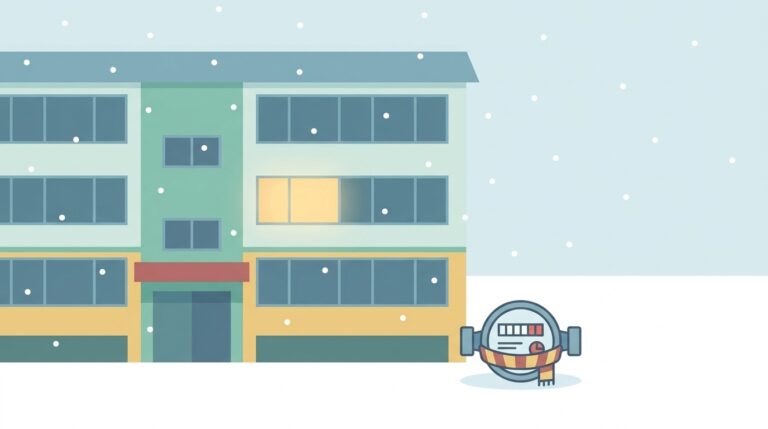
Survival in Siberian Seoul: Master the Korean Winter and Save Your Pipes Like a Local
Phase 1: Empathy (공감)
안녕하세요! Your favorite Daily Hangul editor here. If you are reading this, chances are you’ve looked at your weather app and seen that dreaded blue bar dropping way below zero, or perhaps you’ve heard a high-pitched emergency siren blaring from your phone.
Imagine this: It’s 7:00 AM on a freezing January morning in Seoul. The temperature outside is a bone-chilling -15°C. You crawl out from under your warm duvet, head to the bathroom to wash your face, turn the faucet, and… nothing. Not a single drip. A cold shiver runs down your spine, and it has nothing to do with the weather. Your water meter has frozen and burst.
Navigating Korea’s brutal winter (affectionately termed “Siberian Seoul” or 서베리아) is a rite of passage for any advanced expat. Today, we are moving beyond simple textbook phrases like “추워요” (It’s cold). We are equipping you with C2-level, real-world linguistic tools to handle emergency cold wave alerts (한파 특보), manage water meter freeze-bursts (수도 계량기 동파), and negotiate repairs with your landlord like a seasoned Korean native. Based on real-life expat horror stories and community feedback, this guide will save your apartment—and your wallet.
Phase 2: Core Expressions (핵심 표현 3선 심층 분석)
1. 수도 계량기가 동파되다 (Sudo gyeryanggi-ga dongpa-doeda)
- Pronunciation: Soo-do gyeh-ryang-gi-ga dong-pa-doe-da (Sounds like “sue-do” + “gay-ryang-gee-ga” + “dong-pa-doe-da”)
- Meaning: The water meter is frozen and ruptured (burst).
- K-Culture Moment: You’ll hear this word echoing through apartment elevators and group chats (단톡방) the moment winter hits. It’s the ultimate winter nightmare for renters and landlords alike.
- Editor’s Insight: “동파 (冬破)” is a Sino-Korean legal and technical term where 동 (冬) means winter and 파 (破) means to break or rupture. C2 learners should note that using “동파되다” rather than the casual “얼어 터지다” (to freeze and pop) instantly signals to your landlord or the repair service that you understand the official nature of the damage.
- Situation Spectrum: Casual (⚠️ – too technical for light chatter), Semi-formal (✅), Formal (✅).
- 🤔 Think About It: In your home country, is water infrastructure maintenance the sole responsibility of the city, or do tenants share the burden of preventing frozen pipes as they do in Korea?
2. 한파 특보가 발효되다 (Hanpa teokbo-ga balhyo-doeda)
- Pronunciation: Han-pa teok-bo-ga bal-hyo-doe-da (Sounds like “han-pa” + “tuck-bo-ga” + “bal-hyo-doe-da”)
- Meaning: A cold wave special advisory/warning has taken effect.
- K-Culture Moment: This is the formal phrasing used by news anchors on KBS or SBS, and it appears in those loud, vibrating emergency disaster alerts (재난문자) sent by the metropolitan government.
- Editor’s Insight: “발효(發效)되다” means “to take effect” or “to come into force” (not to be confused with “발효(醱酵)” which means fermentation, like kimchi!). When a weather warning is “발효” active, it triggers legal and administrative guidelines for public offices and building managers.
- Situation Spectrum: Casual (🚫 – sounds too robotic), Semi-formal (⚠️), Formal (✅).
- 🤔 Think About It: Korean public administrative systems are highly digitized, sending localized warnings instantly. How does this compare to the weather alert systems you grew up with?
3. 물을 졸졸 흘려보내다 (Mureul joljol heullyeobonaeda)
- Pronunciation: Moo-reul jol-jol heul-ryeo-bo-nae-da (Sounds like “moo-reul” + “jol-jol” [rhymes with ‘droll-droll’] + “hull-yeo-bo-nae-da”)
- Meaning: To let the water trickle/drip slowly.
- K-Culture Moment: This is the gold-standard advice passed down by Korean grandmothers and building managers to keep the plumbing alive overnight.
- Editor’s Insight: “졸졸” is an onomatopoeic mimetic word (의태어) describing a thin, continuous stream of liquid. C2 speakers know that using mimetic words in instructions shows an advanced, natural grasp of Korean physical dynamics.
- Situation Spectrum: Casual (✅), Semi-formal (✅), Formal (⚠️).
- 🤔 Think About It: Why does Korean culture embrace mimetic words like “졸졸” even in official municipal instructions, whereas English often relies on dry, technical verbs like “drip” or “trickle”?
Phase 3: Textbook Korean vs. Real Korean (교과서 한국어 vs. 진짜 한국어)
Scenario 1: Describing the extreme winter cold
- 📖 Textbook Korean: “오늘 날씨가 매우 춥습니다.” (Today the weather is very cold.)
- 🗣️ Real Korean: “오늘 날씨 완전 칼바람 불고 장난 아니에요. 귀가 떨어져 나갈 것 같아요!” (Today’s weather is no joke; the wind is like a knife. I feel like my ears are going to fall off!)
- 💡 Why the difference? Textbook phrases are clinically objective. Real Koreans use highly sensory, hyperbolic language like 칼바람 (knife-wind) and bodily-loss metaphors to convey the painful humidity-and-wind combination of Korean winters.
Scenario 2: Instructing someone to leave the tap running
- 📖 Textbook Korean: “동파를 방지하기 위해 온수를 조금 틀어 놓으십시오.” (To prevent freezing, please keep the hot water turned on slightly.)
- 🗣️ Real Korean: “동파 안 나게 뜨거운 물 쪽으로 아주 살짝만 졸졸 틀어 놓으세요.” (Turn it ever so slightly toward the hot water side and let it trickle so you don’t get a freeze-burst.)
- 💡 Why the difference? Real Koreans emphasize “뜨거운 물 쪽으로” (toward the hot water side) because the hot water pipes, surprisingly, freeze more easily when left stagnant. “졸졸 틀어 놓다” is the precise, living phrase used in real households.
Phase 4: K-Culture Deep Dive & Non-verbal Manners (비언어적 매너)
4-1. Nunchi (눈치) & Gestures
When dealing with a landlord (임대인) or building manager (관리소장님) during a cold wave, empathy and posture are key.
* The Cold Shiver Gesture: When explaining that your pipes are frozen, naturally hunch your shoulders, rub your hands together, and blow warm air into them (호호 불다). This non-verbal physical cue reinforces the urgency without you sounding demanding.
* Tone of Respect: Always start your grievance with an acknowledgement of the landlord’s trouble: “추운 날씨에 고생이 많으십니다, 사장님…” (You are working hard in this cold weather, boss…). This softens the blow before delivering the bad news of a broken water meter.
4-2. Cultural Codes: The “Ondol” and “Villa” Culture
Unlike modern high-rise apartments (아파트), older low-rise buildings called 빌라 (villas) have water meters located in outdoor hallways with minimal insulation. This makes them highly susceptible to the Siberian winds. Understanding the structure of a Korean villa and terms like 보일러실 (boiler room) and 계량기 함 (meter box) is crucial for navigating landlord-tenant dynamics.
Phase 5: Real-world Roleplay Scenario (실전 롤플레이 시나리오)
Setting: A freezing January morning in a Mapo-gu villa. You wake up to zero running water. You must call Mr. Kim, your landlord, to report the issue.
- Landlord (Mr. Kim): “여보세요? 아이구, 오늘 날씨 진짜 장난 아니죠? 무슨 일 있어요?”
- User (C2 Learner): “
🎭 (조심스럽고 다급한 목소리로)안녕하세요, 사장님. 다른 게 아니라 아침에 일어나 보니 물이 전혀 안 나와서요. 혹시 수도 계량기가 동파된 게 아닐까 싶어서 연락드렸습니다.” - Landlord: “어라? 어젯밤에 내가 분명히 단톡방에 물 졸졸 틀어 놓으라고 공지 올렸는데… 혹시 안 흘려보냈어요?”
- User: “
🎭 (억울하지만 공손함을 유지하며)아, 저도 어제 밤새 온수 쪽으로 물을 약하게 틀어 놓긴 했거든요. 그런데 워낙 기록적인 한파라 그런지 복도에 있는 계량기 함 내부가 얼어버린 것 같아요.” - Landlord: “아이고, 그랬구만. 어제 영하 18도까지 내려갔으니 견딜 수가 없었겠지. 내가 지금 바로 계량기 함 열어서 확인해 볼게요. 혹시 계량기 유리가 깨져 있어요?”
- User: “
🎭 (외투를 걸치고 현관문을 열며 복도를 확인하는 뉘앙스로)네, 제가 지금 확인해 보니까 계량기 유리 부분이 완전히 금이 가고 얼음이 꽉 차 있네요. 교체해야 할 것 같아요.” - Landlord: “에고, 동파가 확실하네! 이건 수도사업소에 신고해서 교체해야 해요. 내가 바로 전화할 테니까 집에서 춥지 않게 보일러 외출 모드로 돌려놓고 대기해요.”
- User: “
🎭 (감사해하며 안도하는 한숨을 쉬며)네, 알겠습니다, 사장님! 추운데 고생 많으십니다. 신속하게 처리해 주셔서 정말 감사합니다.”
🔀 Interactive Decision Points (선택 분기점)
- Option A: “이거 원래 건물 관리 소홀이니까 사장님이 전액 해결해 주셔야죠!” (This is poor building maintenance, so you must pay for everything!)
- Feedback (Bad/Risk): Oh dear! While legally correct in some contexts, demanding full payment aggressively destroys 정 (Jeong) and will likely make the landlord defensive, prompting him to blame you for not leaving the water running.
- Option B: “제가 온수 쪽으로 물을 틀어놨는데도 이 사달이 났네요. 복도 보온재가 너무 노후화된 것 같습니다. 같이 가서 상태를 확인해 보실까요?” (I left the hot water running and this disaster still happened. It seems the hallway insulation is too old. Shall we check it together?)
- Feedback (Best): Perfect! You politely proved your preventive actions (“온수 쪽으로 물을 틀어놓음”) while gently pointing out structural flaws (“보온재 노후화”), shifting the responsibility naturally without sounding accusatory.
- Option C: “아… 제가 한국 겨울이 처음이라 잘 몰랐어요… 죄송합니다… 비용은 제가 낼게요.” (Ah… I didn’t know because this is my first Korean winter… I’m sorry… I’ll pay for the cost.)
- Feedback (Risk): While polite, taking 100% of the blame immediately makes you liable for repair costs that could legally be the landlord’s responsibility, especially during extreme natural disasters.
Phase 6: 10-second Emotion Shadowing Drill (10초 감정 섀도잉 드릴)
Practice these sentences with native-level prosody and emotional markers. / indicates a slight pause.
- “오늘 날씨 / 완전 칼바람 불고 / 장난 아니에요!”
- [🥶 Shivering violently, teeth chattering in extreme cold]
- “동파 안 나게 / 뜨거운 물 쪽으로 / 아주 살짝만 / 졸졸 틀어 놓으세요.”
- [👵 Warm, caring tone like a grandmother worried about her family]
- “계량기 유리가 / 완전히 금이 가고 / 얼어붙었어요!”
- [😱 High-pitched anxiety, realization of a household disaster]
Phase 7: K-Culture Mini Dictionary (핵심 키워드 4개)
- 보온재 (Boonjae) | Insulation material | The thermal padding (often old clothes, bubble wrap, or styrofoam) stuffed inside the water meter box to block icy winds.
- 수도사업소 (Sudo-saeopso) | Waterworks Office | The local government branch responsible for municipal water lines and replacing broken water meters.
- 한파 경보 (Hanpa gyeongbo) | Cold Wave Warning | The highest level of winter weather alert, issued when temperatures drop rapidly by 15°C or more, or remain below -15°C for days.
- 외출 모드 (Oechul mode) | “Away” Mode (Boiler) | A setting on Korean boiler controllers that keeps the floor heating running at a minimal baseline temperature to prevent internal pipe freezing while you are out.
Phase 8: Traveler & Expat Survival Kit
Survival Expressions TOP 3
- 계량기 함에 안 쓰는 옷 좀 넣어주세요.
- Romanization: Gyeryanggi ham-e an sseuneun ot jom neoeojuseyo.
- Pro Tip: Tell your roommate or landlord this to ensure the water meter is packed with insulating clothes.
- 온수가 아예 안 나와요.
- Romanization: Onsu-ga aye an nawayo.
- Pro Tip: Use this when cold water runs but the hot water line is frozen.
- 보일러에 에러 코드가 떠요.
- Romanization: Boilloe-e ereo kodeu-ga tteoyo.
- Pro Tip: When the boiler freezes, it flashes codes like “02” or “95”—tell this to the technician.
Editor’s Travel Note 📌
If you live in Seoul, save the number 120 (Dasan Call Center) on your phone. They offer multi-language support and can instantly connect you to your local 수도사업소 (Waterworks Office) to report a frozen meter. (Disclaimer: Municipal emergency procedures and fees may vary by district; verify local guidelines via 120 Dasan Call Center).
Phase 9: “한 발 더 깊이” (One Step Deeper)
In Korea, winterization isn’t just an individual chore; it’s a neighborhood communal effort. The collective anxiety over “동파” (dongpa) binds neighbors together in a shared battle against the Siberian winds. In older villa areas, you’ll see handwritten signs taped to the entrance doors begging residents to “keep the tap dripping!” This highlights the Korean concept of 우리 (Uri – We/Us), where a single resident’s neglect can cut off water for the entire building.
💬 Your Turn: Have you ever experienced a utility emergency in a foreign country? How does your culture handle winter preparations compared to Korea’s ultra-connected, community-wide warning systems? Share your stories in the comments below!
Phase 10: FAQ & Common Mistakes (FAQ 및 오해 방지)
Q: Can I use boiling water to melt a frozen water meter?
A: Absolutely not! Pouring boiling water directly onto a frozen meter or pipe will crack the glass or rupture the pipe due to sudden thermal expansion. Always use lukewarm water (미온수) or a hair dryer on a cool/low setting.
Q: Who pays for the replaced water meter—the landlord or the tenant?
A: Generally, if the tenant took preventive measures (leaving water dripping, insulating the box) and it still froze due to extreme cold, the landlord pays. However, if the tenant went on vacation for days, turned off the boiler completely, and left the window open, the tenant is liable.
Q: What does “외출” (Away) mode on the boiler actually do?
A: It maintains a low base temperature (usually around 10°C to 15°C) inside the pipes so they don’t freeze while saving gas. Never turn off the boiler completely during a “한파 경보” (Cold Wave Warning).
🚨 Common Mistakes Warning Board
- Mistake: Wrapping the water meter with wet towels.
- Correct Action: Wet materials will freeze solid and accelerate the damage! Only use completely dry clothes, bubble wrap, or professional insulating foam.
- Mistake: Setting the dripping water to “cold water only” (냉수).
- Correct Action: If you only drip cold water, the hot water line can still freeze solid. Always turn the tap lever slightly toward the “hot water” (온수) side.
- Mistake: Turning off the boiler entirely to save on gas bills when leaving the house for a week in January.
- Correct Action: The repair bill for burst pipes will be 100 times higher than the gas bill. Keep it on “외출” (Away) or at 15°C.
Phase 11: Action Mission & Engagement
- Bronze Mission 🥉: Check your own water meter box (수도 계량기함) today. Take a photo and identify if it has proper dry insulation.
- Silver Mission 🥈: Post a picture of your winter home setup on Instagram with the hashtag
#DailyHangul #동파방지and write: “오늘 한파 경보라서 물 졸졸 틀어놨어요!” - Gold Mission 🥇: The next time a cold wave alert hits, text your landlord or Korean friend: “오늘 진짜 칼바람 부네요. 동파 조심하세요!”
- 🎮 K-Culture Mission: Find a scene in a slice-of-life K-drama (like Reply 1988) where a character is shivering, and spot the word 보일러 (boiler).
Phase 12: Interactive Quiz Challenge (인터랙티브 퀴즈 챌린지)
1. Scenario Judgment
Your phone blares with a “한파 경보” alert. What is the most appropriate action for your bathroom faucet before going to sleep?
* A) Turn it off completely to save water.
* B) Turn it slightly toward the hot water side and let it drip slowly (졸졸).
* C) Pour boiling water down the drain.
Reveal Answer & Explanation
Correct Answer: B
Keeping hot water trickling prevents both the cold and hot water lines from freezing. Off (A) will cause freezing, and boiling water (C) can damage modern PVC pipes!
2. Fill-in-the-blank
“어젯밤 기록적인 추위로 우리 집 수도 계량기가 _________.”
(Our water meter froze and burst due to record-breaking cold last night.)
Reveal Answer & Explanation
Correct Answer: 동파되었어요 (or 동파됐어요)
This is the standard, formal Sino-Korean expression for a winter freeze-burst.
3. True or False
Wrapping your water meter in wet blankets is an effective way to prevent freezing.
Reveal Answer & Explanation
Correct Answer: False
Wet blankets will freeze into a solid block of ice, making the meter freeze even faster. Use dry materials only!







