

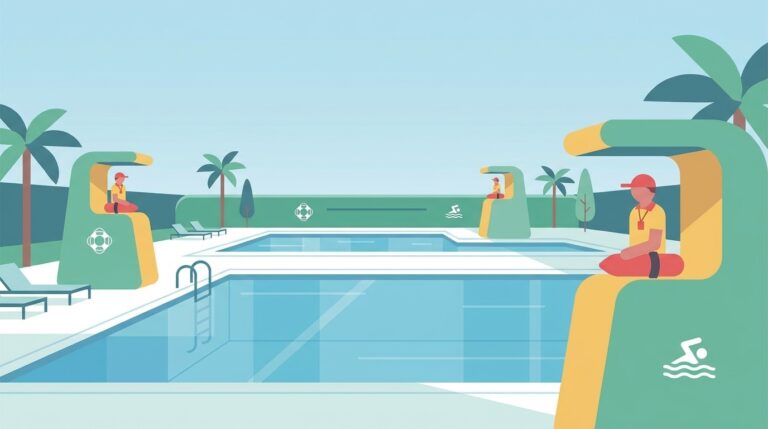
Phase 1: Empathy (스토리 몰입형 오프닝)
안녕하세요! Your trusted companion and Senior Editor at Daily Hangul is back with another premium curation. Imagine this: It is a scorching mid-August afternoon, and you find yourself at one of Korea’s premier luxury wellness resorts in Gapyeong, famous for its sprawling infinity pools and state-of-the-art water attractions. You want to ensure that the water quality meets the pristine standards required for your sensitive skin, or perhaps you spot a minor structural hazard on a pool deck.
At a C2 proficiency level, simply saying “물 깨끗해요?” (Is the water clean?) or “조심하세요” (Be careful) no longer suffices. To navigate these elite leisure environments seamlessly and advocate for safety with absolute authority, you must wield highly precise, technical, and socially sophisticated vocabulary. Based on composite case studies of international safety auditors and luxury travelers in Korea, we have designed this masterclass to elevate your linguistic precision. You will learn to articulate complex safety protocols and chemical water metrics with the natural elegance of a native safety director.
Phase 2: Core Expressions 3 (핵심 표현 3선 심층 분석)
1. 수질 정화 장치가 가동되다 (su-jil jeong-hwa jang-chi-ga ga-dong-doe-da)
- Pronunciation: [su-jil jeong-hwa jang-chi-ga ga-dong-doe-da] (Sounds like “sue-jeel jung-hwa jahng-chee-gah gah-dong-dweh-dah”)
- Meaning: The water purification system is in operation/running.
- K-Culture Moment: This formal phrasing frequently appears in Korean investigative documentaries like PD Note or upscale corporate thrillers when safety inspectors verify the operational integrity of high-end leisure facilities.
- Editor’s Insight: While the verb 작동하다 (to operate) is used for general machinery and small appliances, 가동되다 (to run/be mobilized) is reserved for industrial-scale systems, factories, and heavy municipal facilities. Using 가동되다 instantly elevates your register to a professional, authoritative level.
- Situation Spectrum: Casual (⚠️) | Semi-formal (✅) | Formal (✅)
- 🤔 Think About It: How does your native language distinguish between a small device turning on and a large-scale municipal system being mobilized?
2. 미끄럼 방지 패드가 마모되다 (mi-kkeu-reom bang-ji pae-deu-ga ma-mo-doe-da)
- Pronunciation: [mee-kkeu-reom bahng-jee pae-deu-gah mah-moh-dweh-dah] (Sounds like “mee-kkeu-rum bahng-jee pah-deh-gah mah-moh-dweh-dah”)
- Meaning: The anti-slip pads are worn out/abraded.
- K-Culture Moment: You will hear this precise term during morning news safety briefings or when a detail-oriented protagonist in a legal K-drama points out building maintenance negligence.
- Editor’s Insight: 마모되다 (wear down/abrade) is a Sino-Korean technical term (磨耗). Instead of using the casual “닳았어요” (worn out), utilizing 마모되다 pinpoints the exact physical degradation of material, which is crucial when filing official liability complaints or requesting maintenance.
- Situation Spectrum: Casual (🚫) | Semi-formal (⚠️) | Formal (✅)
- 🤔 Think About It: Why does formal Korean utilize specific Hanja-derived terms (like 마모) to describe physical wear, whereas casual Korean relies on native verbs?
3. 안전요원을 배치하다 (an-jeon-yo-won-eul bae-chi-ha-da)
- Pronunciation: [ahn-jeon-yoh-won-eul bae-chee-hah-dah] (Sounds like “ahn-jun-yoh-won-eul beh-chee-hah-dah”)
- Meaning: To deploy/station lifeguards.
- K-Culture Moment: Often featured in behind-the-scenes reality shows detailing the intense preparation of seasonal workers at major theme parks like Caribbean Bay.
- Editor’s Insight: The verb 배치하다 (to deploy/arrange strategically) carries a heavy nuance of administrative planning. It is not merely “having people there” (있다); it implies that personnel have been systematically positioned to maximize coverage and safety.
- Situation Spectrum: Casual (⚠️) | Semi-formal (✅) | Formal (✅)
- 🤔 Think About It: How does the active voice in “배치하다” place structural responsibility directly on the management or organization?
Phase 3: Textbook Korean vs. Real Korean (교과서 한국어 vs. 진짜 한국어)
Situation 1: Warning someone about a highly slippery poolside tile
- 📖 Textbook: 바닥이 미끄러우니 주의하십시오. (Please be careful as the floor is slippery.)
- 🗣️ 진짜 한국어: 여기 바닥에 물기가 흥건해서 디디다가 미끄러지기 십상이에요. (The floor here is drenched in water, so it’s incredibly easy to lose your footing and slip.)
- 💡 Why? The textbook sentence is a passive, rigid translation of signboards. Natural native speakers use vivid descriptors like 흥건하다 (to be drenched/flooded) and advanced grammatical structures like ~기 십상이다 (to be highly prone to an adverse outcome) to convey immediate, practical warnings.
Situation 2: Inquiring about chemical water treatment and filtration standards
- 📖 Textbook: 물이 깨끗하게 청소되었습니까? (Has the water been cleaned cleanly?)
- 🗣️ 진짜 한국어: 혹시 잔류 화학 물질이나 염소 농도 조절은 기준치에 맞게 투명하게 관리되고 있나요? (Are the residual chemical levels and chlorine concentrations being transparently managed within standard limits?)
- 💡 Why? C2-level speakers do not ask if the water is “clean.” They ask about specific metrics like 잔류 화학 물질 (residual chemicals) and 기준치 (standard reference points), reflecting deep awareness of safety regulations.
Phase 4: K-Culture Deep Dive & Non-verbal Manners (문화 딥다이브)
4-1. 눈치 (Nunchi) & Professional Gestures
When pointing out a safety or hygiene issue in Korea, direct confrontation can cause a “loss of face” (체면). To practice impeccable Nunchi, approach the facility manager or the senior lifeguard quietly. Do not point directly at a puddle or worn-out pad with a single index finger—which is considered aggressive. Instead, gesture with an open palm facing upward (손바닥을 펼쳐 가리키기) and use a soft but serious tone. Introduce your concern by validating their hard work first: “고생 많으십니다. 다름이 아니라…” (Thank you for your hard work. The reason I am here is…).
4-2. The Korean Rash Guard Phenomenon
If you visit any Korean water park, you will notice something unique: almost everyone wears 래시가드 (rash guards) and 수영모 (swim caps) or baseball caps. This is not merely fashion; it is deeply tied to water quality management (수질 관리). Caps prevent loose hair from clogging the high-tech filtration systems, and rash guards reduce the shedding of skin cells and sunscreen oil into the pools. Adhering to these unwritten dress codes is a sign of civic respect and advanced cultural assimilation.
Phase 5: Real-Life Roleplay Scenario (실전 롤플레이 시나리오)
Characters
- 유진 (Yujin): The highly meticulous Chief Safety Inspector at a luxury mountain-side water park in Gangwon-do.
- 한스 (Hans): A senior safety auditor from an international hospitality certification agency.
[Scene: The mechanical control deck of a luxury resort pool overlooking the pristine valley.]

한스: 유진 씨, 성수기 개장을 앞두고 수질 정화 장치의 가동 상태를 먼저 점검해야 할 것 같습니다.
      (Yujin, ahead of the peak season opening, I believe we must first inspect the operational status of the water purification system.)

유진: 🎭 (자신감 넘치는 미소를 지으며) 네, 안심하십시오. 우리 리조트는 실시간 여과 시스템을 가동하여 미세 오염 물질까지 완전히 걸러내고 있습니다.
      (Yes, rest assured. Our resort operates a real-time filtration system to completely filter out even micro-pollutants.)

한스: 🎭 (매의 눈으로 바닥을 훑어보며) 훌륭하군요. 하지만 야외 유수풀 초입의 미끄럼 방지 패드가 일부 마모된 것을 발견했습니다. 낙상 사고의 위험이 있어 보입니다.
      (Excellent. However, I noticed that some of the anti-slip pads at the entrance of the outdoor lazy river are worn out. There seems to be a risk of fall accidents.)

유진: 🎭 (진지하게 메모를 하며) 아, 그 부분은 미처 파악하지 못했네요. 개장 전까지 해당 구역의 패드를 전면 교체하고 경고 표지판을 보강하겠습니다.
      (Ah, I had not caught that part. Before opening, we will completely replace the pads in that zone and reinforce the warning signs.)

한스: 수영모와 래시가드 착용 규정이 철저히 지켜지지 않으면 여과기에 과부하가 걸릴 텐데요. 수질 기준 초과에 대한 예방책은 마련해 두셨나요?
      (If the swim cap and rash guard regulations are not strictly enforced, the filtration system will be overloaded. Have you prepared preventive measures against exceeding water quality standards?)

유진: 🎭 (테블릿의 매뉴얼을 보여주며) 물론입니다. 수질 정화 가동 주기를 단축했고, 매 정시마다 안전요원을 배치하여 규정 준수 여부를 집중 단속할 예정입니다.
      (Of course. We have shortened the water purification operation cycle, and we plan to deploy lifeguards every hour to intensively monitor compliance.)

한스: 아주 빈틈이 없군요. 수질 검사 성적서도 상시 공개되어 있겠죠?
      (Extremely meticulous. I assume the water quality test reports are also publicly displayed at all times?)

유진: 🎭 (고개를 끄덕이며) 네, 매표소 옆과 웹사이트에 실시간 수치를 연동해 투명하게 공개하고 있습니다. 안심하고 점검하셔도 좋습니다.
      (Yes, the real-time figures are linked and transparently displayed next to the ticket booth and on our website. You may proceed with the audit with peace of mind.)
🔀 Choose Your Path!
If Hans asks you to perform an emergency shutoff of a contaminated pool, how will you respond?
- A) “지금 바로 모든 밸브를 잠그고 수질 정화 장치 가동을 전면 중단하겠습니다.”
- 🚫 Bad: Shutting down the purification system when a pool is contaminated actually worsens stagnation. You should isolate the pool but keep filtration running.
- B) “해당 구역의 유입 밸브를 신속히 차단하고, 안전요원을 긴급 배치하여 이용객의 진입을 통제하겠습니다.”
- ✅ Best: Perfect. You isolated the source, utilized personnel (안전요원 배치), and managed passenger control flawlessly.
- C) “수질 기준 초과 수치를 먼저 정확히 계산한 후, 내일 아침에 조치를 취하도록 하겠습니다.”
- ⚠️ Risk: High safety risk! Delaying safety hazards due to calculation bureaucracy can lead to severe accidents and legal repercussions.
Phase 6: 10-Second Emotional Shadowing Drill (10초 감정 섀도잉 드릴)
Focus on the rhythmic pauses (/) and replicate the emotional tones to sound exceptionally natural.
Sentence 1
- Emotion: [⚠️ 단호하고 경고조로 – Stern and Warning]
- Korean: 미끄럼 방지 타일이 / 심하게 마모되어 있어 / 낙상 사고의 우려가 / 매우 큽니다.
- Romanization: [mi-kkeu-reom bang-ji ta-il-i / sim-ha-ge ma-mo-doe-eo i-sseo / nak-sang sa-go-ui u-ryeo-ga / mae-u keum-ni-da]
- English: The anti-slip tiles are severely worn down, so the risk of fall accidents is exceptionally high.
Sentence 2
- Emotion: [😊 정중하면서도 확신에 차서 – Polite and Confident]
- Korean: 저희 리조트는 / 수질 정화 장치를 / 상시 가동하여 / 최적의 잔류 화학 수치를 / 유지하고 있습니다.
- Romanization: [jeo-hui ri-jo-teu-neun / su-jil jeong-hwa jang-chi-reul / sang-si ga-dong-ha-yeo / choe-jeok-ui jan-ryu hwa-hak su-chi-reul / yu-ji-ha-go it-seum-ni-da]
- English: Our resort keeps the water purification system running at all times to maintain optimal residual chemical levels.
Phase 7: K-Culture Mini Dictionary (K-Culture 미니 사전)
- 잔류 염소 (jan-ryu yeom-so) | Residual Chlorine: The amount of chlorine remaining in the water after treatment. It is the gold standard for verifying sanitation at high-end pools.
- 수질 기준 초과 (su-jil gi-jun cho-gwa) | Exceeding Water Quality Standards: A critical legal violation in Korea that can shut down a hotel facility instantly.
- 심장마비 예방 (sim-jang-ma-bi ye-bang) | Heart Attack Prevention: The primary reason why stretching and mandatory warm-ups are heavily emphasized before entering Korean pools.
- 안전불감증 (an-jeon-bul-gam-jeung) | Safety Insensitivity/Complacency: A vital cultural/societal term referring to a state of being numb to hazards. Calling out 안전불감증 implies a high civic awareness.
Phase 8: Traveler’s Survival Kit (여행자를 위한 생존 키트)
Survival Expressions TOP 3
- “배수구 주변에 흡입력이 강하니 접근하지 않도록 주의해주세요.”
- [bae-su-gu ju-byeon-e heup-im-nyeok-i gang-ha-ni jeop-geun-ha-ji an-to-rok ju-ui-hae-ju-se-yo.]
- Pro Tip: Use this to warn families with children near the filtration drains.
- “여기에 미끄럼 방지 조치가 미흡해서 아이가 넘어질 뻔했습니다.”
- [yeo-gi-e mi-kkeu-reom bang-ji jo-chi-ga mi-heup-hae-seo a-i-ga neo-meo-jil ppeon-haet-seum-ni-da.]
- Pro Tip: A polite but firm way to demand immediate anti-slip tape placement.
- “수질 정화 장치 점검 일지를 좀 확인할 수 있을까요?”
- [su-jil jeong-hwa jang-chi jeom-geom il-ji-reul jom hwa-gin-hal su is-seul-kka-yo?]
- Pro Tip: Perfect for luxury travelers with chemical allergies who need absolute verification.
Editor’s Travel Note
Before booking any private pool villa or water park in Korea, check the official municipal safety ratings. You can check local environment and water parameters on the Korea Water Resources Corporation portal or download the regional safety map apps. Disclaimer: Real-time sensor data and administrative compliance records may vary by province, so check the latest regulatory updates on-site.
Phase 9: “한 발 더 깊이” (생각 질문 – Deep Dive Insight)
In Korea, public safety and hygiene are viewed through the lens of 공동체 의식 (collective community consciousness). While in many Western countries, safety warnings are formatted as “Enter at your own risk” (personal liability), Korean safety regulations place the burden heavily on structural management and community compliance. When you ask for a “수질 검사 성적서” (water quality report) or point out a “마모된 미끄럼 패드” (worn-out pad), you are not perceived as a demanding customer, but rather as an active, responsible participant in maintaining public safety and preventing collective “안전불감증” (complacency).
💬 Your Turn: Does your country place safety and cleanliness liability on the individual, or is there a strong structural regulatory body that oversees public recreational areas? Share your thoughts in the comments below!
Phase 10: FAQ & Avoiding Misunderstandings (FAQ & 오해 방지)
Q: Why do Korean water parks enforce such strict rules on wearing caps and rash guards?
A: It is directly linked to municipal water filtration guidelines. Restricting loose hair and excess sun oils helps avoid clogging and keeps chemical treatments at a safe, low level.
Q: What is the linguistic difference between ‘작동’ and ‘가동’ in safety inspections?
A: 작동 refers to mechanical movements of parts (e.g., a button working). 가동 implies a systemic, facility-wide process (e.g., running the entire water plant).
Q: Can I demand to see water quality reports in English at standard Korean resorts?
A: While luxury international hotels will have bilingual reports, many regional Korean resorts may only have them in Korean. Using the phrase “수질 검사 성적서 확인 부탁드립니다” will help you get the official document immediately.
🚨 Common Mistakes Board (흔한 실수 피하기)
- Mistake 1: Demanding a refund because “물이 더러워요” (The water is dirty).
- Correct Action: Say “수질 기준치가 초과된 것 같습니다” (It seems the water quality standards have been exceeded). It sounds professional and gets immediate attention.
- Mistake 2: Pointing and shouting “안전요원!” (Lifeguard!) during a minor hazard.
- Correct Action: Approach the station and say “여기에 낙상 우려 구역이 있으니 확인 바랍니다” (There is a fall hazard zone here, please check).
- Mistake 3: Saying “기계 꺼주세요” (Turn off the machine) for filtration issues.
- Correct Action: Ask “수질 정화 장치 가동 주기를 조절할 수 있나요?” (Can the water purification system operation cycle be adjusted?).
Phase 11: Action Mission & Engagement (액션 미션 & 참여 유도)
- 🥉 Bronze Mission: Pronounce 수질 정화 장치 (su-jil jeong-hwa jang-chi) three times in front of your mirror with a serious, professional expression.
- 🥈 Silver Mission: Draft a polite, advanced-level safety request email in the comments below using the phrase ~기 십상입니다 and 마모되다.
- 🥇 Gold Mission: When you visit a luxury resort or pool villa in Korea, look for the official 수질 검사 성적서 (Water Quality Test Report) usually posted near the entrance, take a picture, and tag @DailyHangul on social media!
Phase 12: Interactive Quiz Challenge (인터랙티브 퀴즈 챌린지)
1. Which term is most appropriate when describing a heavily abraded safety floor mat at a luxury pool?
- A) 닳은 매트
- B) 가동된 패드
- C) 마모된 미끄럼 방지 패드
2. Fill in the blank: “바닥에 물기가 가득하여 미끄러지기 ________.”
- A) 쉽습니다
- B) 십상입니다
- C) 좋습니다
3. True or False: In Korea, wearing a swim cap or rash guard is purely a personal fashion statement and has no bearing on public hygiene/filtration.
- A) True
- B) False
🔍 Click here to reveal the answers and explanations!
- Answer: C
- Explanation: C2-level precision demands the term “마모된 미끄럼 방지 패드” (abraded anti-slip pad) to convey structural wearing in a professional context.
- Answer: B
- Explanation: While ‘쉽습니다’ (easy) is grammatically fine, ‘~기 십상입니다’ is the premium idiomatic construction for highly probable adverse outcomes like slipping.
- Answer: B (False)
- Explanation: Rash guards and caps are heavily tied to “수질 관리” (water quality control) to prevent excessive skin oil and loose hair from clogging pool filtration filters.
- Explanation: Rash guards and caps are heavily tied to “수질 관리” (water quality control) to prevent excessive skin oil and loose hair from clogging pool filtration filters.







