

Navigating the Minsik-i Law Debate: Master Korea’s Most Controversial Driving Law Like a Native
Phase 1: 공감 (An Empathetic, Story-Driven Opening)
안녕하세요! 매일한글 (Daily Hangul)의 수석 에디터이자 여러분의 든든한 현지 문화 내비게이터입니다.
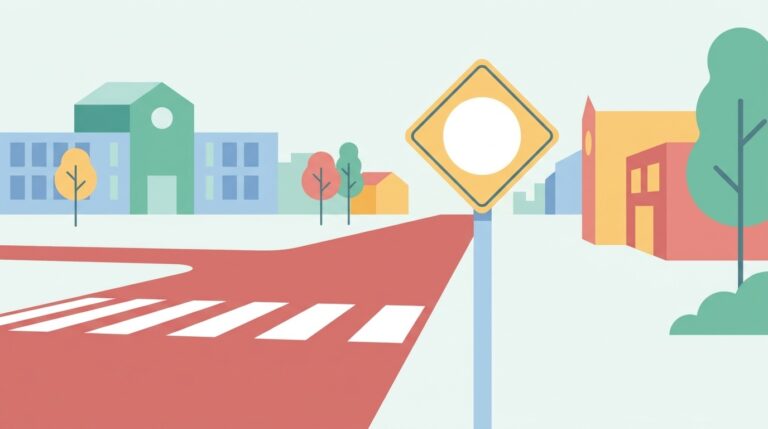
Imagine you are driving down a cozy, colorful street in Seoul. Suddenly, the asphalt beneath you turns a vibrant, warning shade of red, and yellow signs reading 어린이 보호구역 (School Zone) flash overhead. Your Korean passenger grips the dashboard, whispering tense advice: “여기 진짜 조심해. 잘못하다가 민식이법 걸리면 인생 피곤해져.” (Be careful here. If you get caught under the Minsik-i Law, your life gets incredibly complicated.)
If you have driven in Korea recently, or even if you just watch Korean news or YouTube channels like Han Moon-chul TV, you have likely heard about 민식이법 (Minsik-i Law). Passed in 2020 to protect children in school zones, this law has sparked one of the most intense socio-legal debates in modern Korea.
For C2 (Advanced) learners, discussing this topic isn’t just about knowing basic traffic vocab. It’s about understanding the delicate balance between public safety and legal fairness in Korean society. Today, we’ll dive deep into the sophisticated language, nuances, and social perspectives surrounding this hot-button issue.
Phase 2: 핵심 표현 3선 심층 분석 (In-Depth Analysis of 3 Key Expressions)
1. 과잉 처벌 논란 (Gwa-ing cheo-beol nol-lan)
- Pronunciation: [Gwa-ing chuh-buhl noll-ahn] (Rhymes with “Quang chuh-buhl noll-ahn”)
- Meaning: Controversy over excessive/disproportionate punishment
- K-Culture Moment: This phrase dominates current affairs talk shows, legal dramas like Juvenile Justice (소년심판), and editorial columns when discussing whether the penalties for drivers in school zones outweigh the severity of their actual negligence.
- Editor’s Insight: 과잉 means excess, 처벌 means punishment, and 논란 means controversy. In advanced Korean debates, pairing this with the verb 불거지다 (to flare up) makes you sound incredibly fluent: “민식이법 시행 이후 과잉 처벌 논란이 불거졌다.” (Controversy over excessive punishment flared up after the implementation of the Minsik-i Law.)
- Situation Spectrum: Casual ⚠️ | Semi-formal ✅ | Formal ✅
- 🤔 Think About It: How does your home country balance child safety laws with the rights of motorists? Does a similar “excessive punishment” debate exist there?
2. 민식이법 놀이 (Min-sik-i-beob nol-i)
- Pronunciation: [Min-shig-i-bup nol-ee]
- Meaning: The “Minsik-i Law game” (A highly controversial dark slang term referencing children intentionally teasing, chasing, or jumping in front of moving cars inside school zones to scare drivers).
- K-Culture Moment: This term is frequently seen in dashcam compilation videos on YouTube and online community forums like Bobae Dream (보배드림). It represents a deep frustration among Korean drivers.
- Editor’s Insight: Though labeled a “game” (놀이), it carries a very cynical and worried tone. Using this phrase shows a deep awareness of Korean online culture and driving anxieties.
- Situation Spectrum: Casual ✅ | Semi-formal ✅ | Formal 🚫
- 🤔 Think About It: Why do you think a well-intentioned law resulted in such a cynical societal phenomenon? How does language reflect these unintended consequences?
3. 울며 겨자 먹기 (Ul-myeo gyeo-ja meok-gi)
- Pronunciation: [Uhl-myeo gyuh-ja muhk-gi]
- Meaning: Eating mustard while crying (An idiom meaning to do something highly undesirable under duress or because you have absolutely no other choice).
- K-Culture Moment: Drivers in Korea often say they take long, 15-minute detours just to avoid entering a school zone, describing the action as 울며 겨자 먹기.
- Editor’s Insight: This idiom is perfect for expressing the reluctant resignation felt by drivers who must comply with extremely strict regulations even when they feel the laws are unfair.
- Situation Spectrum: Casual ✅ | Semi-formal ✅ | Formal ✅
- 🤔 Think About It: Is there an equivalent idiom in your language for reluctantly doing something unpleasant because of societal or legal pressure?
Phase 3: 교과서 한국어 vs 진짜 한국어 (Textbook vs. Real-Life Korean)
Situation 1: Giving warning advice about driving through a school zone
- 📖 Textbook Korean: 어린이 보호구역에서는 감속하여 운전하십시오.
(Please reduce your speed and drive carefully in the child protection zone.) - 🗣️ Real-Life Korean: 야, 여기 스쿨존이니까 그냥 기어간다고 생각하고 운전해. 안 그러면 골치 아파져.
(Hey, this is a school zone, so drive like you’re literally crawling. Otherwise, it gets incredibly messy.) - 💡 Why the Difference? While textbooks use official terms like 감속 (deceleration), native Korean drivers use highly descriptive, colloquial verbs like 기어가다 (to crawl) to emphasize the extreme caution needed to avoid the harsh penalties of the law.
Situation 2: Reacting to unfair traffic blame
- 📖 Textbook Korean: 운전자에게 과실이 많이 찍혔습니다.
(A lot of fault has been attributed to the driver.) - 🗣️ Real-Life Korean: 이건 진짜 운전자가 독박 쓰는 법이라니까. 피할 수가 없잖아!
(I’m telling you, this is a law where the driver just takes the entire fall. There’s no way to avoid it!) - 💡 Why the Difference? 독박 쓰다 is a vivid colloquialism meaning “to take all the blame/financial hit unfairly” (originally from the card game Go-Stop). Advanced speakers use it to criticize policies they perceive as inherently biased against one party.
Phase 4: K-Culture 딥다이브 & 비언어적 매너 (Non-Verbal Manners)
4-1. Nunchi & Driving Gestures in Korea
When navigating a Korean school zone, 눈치 (Nunchi – social intuition) is physical. If you must drive through one, it is common practice to turn on your hazard lights (비상등) even if you are moving, signaling to cars behind you: “I am going extremely slowly, and I will stop instantly if a child appears.” If a pedestrian or child crosses, drivers will often put their hand up near the rearview mirror in a slight waving motion to show gratitude and respect to the parents or school crossing guards standing by.
4-2. The Han Moon-chul Phenomenon (한문철 TV)
To understand the legal psyche of Korean drivers, you must understand 한문철 TV (Han Moon-chul TV) on YouTube. Hosted by a charismatic traffic lawyer, this channel has millions of views and dissects real-life dashcam (블랙박스) footage. It is the virtual town square where the “Minsik-i Law” controversy is constantly debated, showing how highly Koreans value fairness, objective evidence, and safety.
Phase 5: 실전 롤플레이 시나리오 (Practical Roleplay Scenario)
Setting: Inside a car driving through Mapo, Seoul, approaching a brightly colored school zone during school dismissal hours.
Characters:
* 지우 (Ji-woo): Your highly cautious Korean passenger who has been driving in Seoul for over a decade.
* You (C2 Driver): An advanced expat driver navigating the chaotic Seoul streets.
- 지우: 🎭 (Tensely pointing ahead) 야, 저기 빨간 도로 보이지? 이제부터 어린이 보호구역이니까 속도 확 줄여.
- You: 응, 알고 있어. 시속 30km 제한 맞지? 발 떼고 천천히 가고 있어.
- 지우: 🎭 (Looking left and right nervously) 맞아. 특히 요즘 같은 하교 시간에는 애들이 어디서 튀어나올지 몰라. 민식이법 때문에 진짜 조심해야 돼.
- You: 그런데 솔직히 운전자가 아무리 조심해도 사고를 100% 피하기는 어렵잖아. 너무 가혹하다는 의견도 많던데?
- 지우: 🎭 (Sighing and nodding) 맞아, 그래서 과잉 처벌 논란이 끊이질 않는 거야. 고의성이 없어도 가중처벌을 받으니까 운전자 입장에선 억울할 수밖에 없지.
- You: 맞아, 일부러 사고를 내는 사람은 없잖아. 게다가 ‘민식이법 놀이’ 같은 부작용까지 생겼다고 들었어.
- 지우: 🎭 (Frowning with frustration) 진짜 심각해 그거. 일부러 차에 부딪히는 시늉을 하는 애들 영상을 보면 진짜 기가 막히더라. 법의 취지는 좋은데 현실성이 좀 떨어지는 면이 있어.
- You: 그렇네. 법을 지키려다 오히려 운전자가 독박 쓰는 구조는 확실히 개선될 필요가 있어 보여.
🔀 Interactive Choice Point
How do you respond to Ji-woo’s point about improving the law?
- Option A: “맞아, 법의 취지인 ‘어린이 보호’와 ‘운전자 인권’ 사이에서 균형을 잡는 개정이 시급해.”
- Option B: “그러니까 애초에 법을 그렇게 허술하게 만들면 안 됐어. 당장 폐지해야 돼!”
- Option C: “귀찮으니까 앞으로는 스쿨존 우회하는 내비게이션 옵션만 켜고 다녀야겠다.”
📊 Feedback on Your Choices
- Best (Option A): Excellent! This shows highly sophisticated C2 fluency, addressing both the humanitarian intent (어린이 보호) and legal balance (운전자 인권) in a nuanced, respectful tone.
- Bad (Option B): Too aggressive and lacks structural nuance. Demanding flat-out abolition (당장 폐지) without acknowledging safety concerns can make you sound culturally insensitive during delicate socio-legal discussions.
- Risk (Option C): Pragmatic but avoids the linguistic challenge. While highly relatable (many Koreans do this!), it shifts the conversation away from the deep societal analysis expected at the C2 level.
Phase 6: 10초 감정 섀도잉 드릴 (10-Second Shadowing Drill)
Practice the subtle rising and falling tones of natural, frustrated debate. Pause at the slashes (/).
- [😱 Expressing deep anxiety & caution]
“스쿨존에서는 / 아무리 조심해도 / 운전자가 독박 쓰기 / 십상이라니까?”
(In school zones, no matter how careful you are, it’s so easy for the driver to take the entire fall!) -
[😔 Expressing logical resignation]
“법의 취지는 공감하지만, / 과잉 처벌 부분은 / 울며 겨자 먹기로 / 받아들일 수밖에 없네.”
(I agree with the intent of the law, but the excessive punishment part is something we just have to accept like eating mustard while crying.)
Phase 7: K-Culture 미니 사전 (Mini Dictionary)
- 민식이법 (Minsik-i-beob) | Minsik-i Law
- Act passed in 2020 named after a young boy, Kim Min-sik, who tragically passed away in a school zone. It enforces severe, mandatory minimum punishments for drivers who cause injury or death to children in school zones.
- 가중처벌 (Gajung-cheobeol) | Aggravated Punishment
- Increasing the severity of the penalty based on specific legal conditions (e.g., committing a traffic violation in a protected zone).
- 블랙박스 (Beul-laek-bak-seu) | Dashcam (Blackbox)
- Literally “black box,” but refers to dashcams. Virtually mandatory for all drivers in Korea to protect themselves from legal disputes.
- 우회 도로 (U-hoe Do-ro) | Detour / Bypass Road
- Alternatives to direct paths, highly searched by Korean drivers specifically to bypass red-painted school zones.
Phase 8: 여행자를 위한 생존 키트 (Traveler’s Survival Kit)
If you plan on renting a car in Korea, here are the top 3 driving phrases to memorize instantly:
- “네비게이션에 스쿨존 우회 기능이 있나요?”
- Pronunciation: [Ne-bi-ge-i-shyeon-e Seu-kul-zon u-hoe gi-neung-i in-na-yo?]
- Translation: “Does the navigation have a feature to bypass school zones?”
- “여기 어린이 보호구역이니까 천천히 갈게요.”
- Pronunciation: [Yeo-gi eo-rin-i bo-ho-gu-yeok-i-ni-kka cheon-cheon-hi gal-ge-yo.]
- Translation: “Since this is a child protection zone, I will go slowly.”
- “블랙박스 녹화 잘 되고 있죠?”
- Pronunciation: [Beul-laek-bak-seu nok-hwa jal doe-go it-jyo?]
- Translation: “The dashcam is recording properly, right?”
💡 Editor’s Travel Note:
When driving in Korea, global maps like Google Maps often lack real-time details due to national security regulations. To avoid accidentally hitting a strict school zone, always use local navigation apps. Be sure to perform a 네이버 지도 앱 다운로드 (Naver Map app download) or get KakaoMap before starting your engine. These apps feature built-in alarms that sound repeatedly as you approach any school zones.
Phase 9: “한 발 더 깊이” (Go One Step Deeper – Reflection)
Korea’s legal landscape heavily reflects a collective responsibility to protect the vulnerable. While Western laws often emphasize “proven intent” and strict boundaries of individual negligence, Korean public sentiment (국민정서) heavily influences legislation, occasionally resulting in rapid, sweeping laws like the Minsik-i Law. This highlights the collective cultural value of prioritizing communal safety, even if it places a immense burden of extreme caution on individual citizens.
💬 Your Turn: How is pedestrian safety handled in your country? Do you think drivers should carry absolute responsibility in school zones, or should children and parents share the legal burden? Leave a comment below—let’s discuss in high-level Korean!
Phase 10: FAQ & 오해 방지 (FAQ Schema & Common Mistakes)
Q: Does the Minsik-i Law apply even if I drive below the 30km/h speed limit?
A: Yes. This is the biggest misconception! Even if you drive under 30km/h, if an accident occurs involving a child due to “negligence in safe driving duty” (안전운전 의무 위반), you can still face severe aggravated punishments. Speed is only one factor of compliance.
Q: Why do Koreans call it “Minsik-i Law” instead of “School Zone Act”?
A: In Korea, highly publicized laws are often colloquially named after the victims whose cases initiated the legislation (e.g., 세월호법, 구하라법). It helps the public remember the human face and story behind the legal change.
Q: Is “민식이법 놀이” actually legal for children?
A: No, it is not a legal act; it is dangerous behavior. However, because children under 14 are legally classified as minors (촉법소년), they cannot be criminally punished, which further fuels the frustration of drivers who bear the full burden.
| 🚨 Common Mistake | 💡 Correct Action |
|---|---|
| Assuming you are safe if you drive at 29km/h. | Even at 10km/h, you must actively watch for darting children. |
| Disregarding school zones during late-night hours. | While school traffic is low at night, the legal status of the zone remains active 24/7 in most areas. |
| Not checking if your rental car’s dashcam is working. | Always verify that the ‘Blackbox’ is blinking and recording before taking off! |
Phase 11: 액션 미션 & 참여 유도 (Action Mission)
- Bronze Mission 🥉: Find a Korean news clip about “민식이법” on YouTube and try to spot the word “과잉 처벌” or “독박” in the comments.
- Silver Mission 🥈: Post an explanation of the Minsik-i Law on your social media using at least two advanced vocabulary terms we learned today (e.g., 과잉 처벌, 울며 겨자 먹기).
- Gold Mission 🥇: Strike up a conversation with your Korean language exchange partner or tutor. Ask them: “민식이법에 대한 본인의 솔직한 생각은 어때요? 과잉 처벌이라고 보시나요?” (What are your honest thoughts on the Minsik-i Law? Do you view it as excessive punishment?)
Phase 12: 인터랙티브 퀴즈 챌린지 (Interactive Quiz)
Test your knowledge of high-level Korean driving culture!
- Which idiom means reluctantly following strict driving rules because you have no other choice?
- A) 식은 죽 먹기
- B) 울며 겨자 먹기
- C) 밑 빠진 독에 물 붓기
- True or False: Driving under 30km/h completely exempts you from the Minsik-i Law in case of a school zone accident.
🔍 Click to reveal the Answer & Explanation!
1. Correct Answer: B) 울며 겨자 먹기
* Explanation: “울며 겨자 먹기” (eating mustard while crying) perfectly describes doing something unwillingly under pressure, like taking a massive detour to avoid a school zone. (A means “a piece of cake,” and C means “pouring water into a bottomless bucket.”)
2. Correct Answer: False
* Explanation: Even if you drive under the speed limit, you can be penalized if you fail your general duty of safe driving (안전운전 의무).







