

새벽 배송과 로켓 배송: Master Korea’s Ultra-Fast Delivery Talk Like a Local
Phase 1: 공감 (The Heart of Korean Speed)
안녕하세요! Your favorite language and culture companion from Daily Hangul is back!
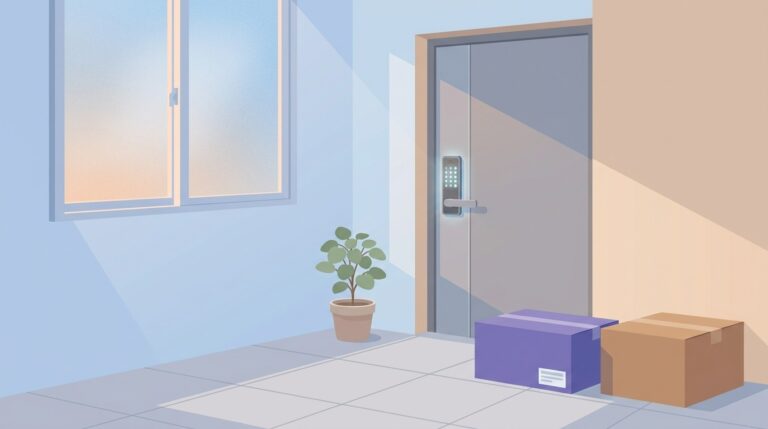
Imagine this: It’s 11:30 PM. You’re lying in bed in your cozy Seoul studio, and you suddenly realize you have no fresh milk, avocados, or coffee beans for breakfast. In most parts of the world, this means a sad, dry morning. But in Korea? You open an app, tap a few buttons, and fall asleep. By 6:00 AM, a neat box is sitting quietly right outside your door.
Welcome to the magic of 새벽 배송 (Saebyeok-baesong – Dawn Delivery) and 로켓 배송 (Roket-baesong – Rocket Delivery).
As a C1-level learner, you likely already know the word for delivery (배달). But do you know how to talk about the complex emotions of waiting for a parcel, tracking its minute-by-minute journey, or leaving polite, nuanced instructions for the courier without sounding like a rigid textbook? Today, we will dive into the deep socio-linguistic layers of Korea’s hyper-convenient logistics and learn the idioms that will make your Korean friends say, “와, 진짜 한국인 다 됐네요!” (Wow, you’ve practically become Korean!).
Phase 2: 핵심 표현 3선 심층 분석 (Core Expressions Deep-Dive)
1. 문 앞 배송 (Mun-ap baesong)
- Pronunciation: [Mun-ap bae-song] (Sounds like moon-up + bae-song)
- Meaning: Front-door delivery (leaving the package right at your doorstep).
- K-Culture Moment: This is the default setting for almost all modern Korean logistics. In many K-Dramas, you’ll see characters opening their doors in pajamas to pick up boxes without ever interacting with a human.
- Editor’s Insight: Why “문 앞” and not just “배송”? This expression reflects Korea’s high-trust society. Packages are rarely stolen, making “문 앞 배송” the absolute standard.
- Situation Spectrum:
- Casual: ✅
- Semi-formal: ✅
- Formal: ✅
- 🤔 Think About It: How does package security work in your country? Why do you think Koreans feel so safe leaving high-value electronics right at their front doors?
2. 칼같이 도착하다 (Kal-gat-i dochakhada)
- Pronunciation: [Kal-ga-chi do-chak-ha-da] (Think of Kal as in ‘knife’, and gach-ee)
- Meaning: To arrive sharp on time / with absolute precision (literally, “to arrive like a knife-cut”).
- K-Culture Moment: You order fresh vegetables to arrive before 7 AM. At exactly 6:45 AM, you get a notification. Your Korean roommate says: “역시 쿠팡은 칼같아.” (As expected, Coupang is sharp as a knife.)
- Editor’s Insight: This idiom is used whenever a schedule, payment, or delivery is executed with zero delay. It shows how highly Koreans value punctuality and efficiency.
- Situation Spectrum:
- Casual: ✅
- Semi-formal: ✅
- Formal: ⚠️ (Use ‘정확하게 도착하다’ in formal business presentations)
- 🤔 Think About It: Punctuality in Korea is a sign of respect. How does the word “칼” (knife) add a layer of sharp intensity to this concept?
3. 배송조회 (Baesong-johwe)
- Pronunciation: [Bae-song jo-hoe] (Sounds like bae-song + jo-hway)
- Meaning: Delivery tracking / Shipment lookup.
- K-Culture Moment: Koreans check their “배송조회” multiple times a day. It is practically a national hobby driven by the dopamine hit of seeing “배송 출발” (Out for delivery).
- Editor’s Insight: While textbook Korean teaches “택배를 기다리다” (waiting for a parcel), advanced speakers will say “배송조회 해봤어?” (Have you checked the tracking?) when their package is slightly delayed.
- Situation Spectrum:
- Casual: ✅
- Semi-formal: ✅
- Formal: ✅
- 🤔 Think About It: Is tracking packages a stressful or exciting experience for you?
Phase 3: 교과서 한국어 vs 진짜 한국어 (Textbook vs. Real-Life Korean)
Situation 1: Asking if the package has shipped yet
- 📖 교과서 한국어: “제가 주문한 물건이 발송되었습니까?” (Has the item I ordered been dispatched?)
- 🗣️ 진짜 한국어: “혹시 송장 떴어요?” (By any chance, has the tracking/waybill number appeared?)
- 💡 왜 다를까? “송장” refers to the shipping label/waybill. In modern e-commerce, a package is considered on its way once the tracking number (송장 번호) is generated. Asking if the “송장” has appeared is the natural, insider way to check shipment status.
Situation 2: Expressing amazement at the speed
- 📖 교과서 한국어: “배송 속도가 참 빠릅니다.” (The delivery speed is very fast.)
- 🗣️ 진짜 한국어: “거의 빛의 속도로 왔는데요?” 또는 “이거 완전히 총알 배송이네요!” (It came almost at the speed of light! / This is literally bullet delivery!)
- 💡 왜 다를까? C1 speakers use metaphors to emphasize speed. “총알 배송” (bullet delivery) and “빛의 속도” (speed of light) show emotional excitement and native-level fluency.
Phase 4: K-Culture 딥다이브 & 비언어적 매너 (Deep Dive & Non-Verbal Manners)
4-1. 눈치 (Nunchi) & Non-Verbal Etiquette for Dawn Delivery
When you use 새벽 배송, the golden rule is quietness. Delivery drivers work hard through the night to drop off packages.
* No Doorbell at Night: When filling out delivery requests, never choose “벨을 눌러주세요” (Please ring the bell). Instead, select “종벨 없이 문 앞” (No bell, leave at front door).
* Recycling Etiquette: Dawn deliveries usually come in specialized insulated bags (like Market Kurly’s Purple Box or Coupang’s Fresh Bag). Leaving these bags outside your door before the next delivery window is a silent, crucial non-verbal pact between you and the driver.
4-2. The Cultural Evolution of “빨리빨리” (Ppalli-Ppalli)
Korea’s “Ppalli-Ppalli” (hurry-hurry) culture isn’t just about impatience; it’s an obsession with seamless flow. In K-Dramas like Crash Landing on You or My Mister, delivery and quick logistics are shown as fundamental lifelines. This ultra-fast network evolved from the physical post-Korean War rebuilding phase directly into the digital age, creating a society where waiting more than 24 hours feels like an anomaly.
Phase 5: 실전 롤플레이 시나리오 (Real-Life Roleplay)
Setting: Ji-won (지원) is helping her foreign roommate, Sarah (사라), order a fresh breakfast box for tomorrow morning using a Korean delivery app at 10:50 PM.
- 지원: 사라야, 내일 아침에 샐러드 먹는다고 했지? 지금 주문해야 새벽 배송 맞출 수 있어! (Sarah, did you say you were eating salad tomorrow morning? We need to order now to hit the dawn delivery cutoff!)
- 사라 (C1): 맞다! 깜빡할 뻔했네. 마켓컬리 앱 켰는데, 공동현관 비밀번호 적는 칸은 어떻게 해야 돼? (Right! I almost forgot. I opened the Market Kurly app, but what should I do with the common entrance password section?)
- 지원: 🎭 (휴대폰을 가리키며) 거기 ‘공동현관 출입방법’에 꼭 ‘공동비번’이랑 ‘문 앞 배송’을 선택해 놔야 기사님이 들어오실 수 있어. (Pointing at the phone: In that ‘Common Entrance Access Method’ section, you must select ‘Common Password’ and ‘Front-Door Delivery’ so the driver can get in.)
- 사라 (C1): 아하, 안 그러면 경비실에 맡겨지거나 반송될 수도 있겠구나. 배송 요청 사항에 “벨 누르지 마세요”라고 쓰는 게 좋겠지? (Ah, otherwise it might be left in the guardroom or returned. It’s better to write “Do not ring the bell” in the delivery request, right?)
- 지원: 응, 새벽에 벨 울리면 온 가족이 깨니까! 그냥 ‘문 앞 배송 후 사진 전송’ 옵션으로 해 놔. (Yeah, if the bell rings at dawn, the whole house wakes up! Just set it to ‘Deliver at door and send a photo’.)
- 사라 (C1): 오케이, 결제 끝! 내일 아침 7시 전에는 칼같이 도착하겠지? (Okay, payment done! It will arrive sharp before 7 AM tomorrow, right?)
- 지원: 그럼! 쿠팡이나 컬리는 거의 시간 약속 하나는 끝내주거든. (Of course! Coupang and Kurly are absolutely stellar when it comes to keeping time promises.)
- 사라 (C1): 아침에 눈뜨자마자 문 앞으로 나가 봐야겠다. 진짜 한국 배달 시스템은 볼 때마다 감탄만 나와. (I’ll have to check the front door as soon as I open my eyes. Truly, the Korean delivery system never ceases to amaze me.)
🔀 Interactive Choice
If the delivery app asks for “배송지 명칭” (Address Label), what should you write?
* A) 집 (Home)
* B) 내 방 (My Room)
* C) 대한민국 (South Korea)
💡 Feedback:
- Best (A): “집” or “회사” is perfect! It helps you manage multiple saved addresses easily.
- Risk (B): “내 방” is okay, but couriers delivery to the main door of the house, not your actual bedroom door inside an apartment!
- Bad (C): “대한민국” is too broad and might confuse the address management system.
Phase 6: 10초 감정 섀도잉 드릴 (10-Second Emotional Shadowing)
Let’s practice speaking like a native with pauses (/) and emotional cues.
- [😊 Expressing absolute awe and excitement]
- “우와, / 밤 11시에 주문했는데 / 아침에 보니까 / 칼같이 와 있더라고요!“
- (U-wa, / bam yeol-han-si-e ju-mun-haet-neun-de / a-chim-e bo-ni-ka / kal-gat-i wa it-deo-ra-go-yo!)
- [🥺 Politely requesting a driver in a note]
- “기사님, / 아기가 자고 있으니 / 벨은 누르지 마시고 / 문 앞에 놔주세요.“
- (Gi-sa-nim, / a-gi-ga ja-go it-eu-ni / bel-eun nu-reu-ji ma-si-go / mun-ap-e nwa-ju-se-yo.)
Phase 7: K-Culture 미니 사전 (Mini Dictionary)
- 로켓배송 (Roket-baesong) | Rocket Delivery
- Usage: Coupang’s signature next-day delivery service. In conversation, it’s used as a synonym for ultra-fast processing. (“내 숙제도 로켓배송처럼 빨리 끝났으면 좋겠다.”)
- 새벽배송 (Saebyeok-baesong) | Dawn Delivery
- Usage: Delivery before 7 AM for orders placed the previous night. Popularized by Market Kurly and Coupang Fresh.
- 택배 기사님 (Taekbae gisanim) | Delivery Driver
- Usage: A respectful title used to refer to or address delivery workers. Always use “기사님” rather than “배달원” to show proper respect.
- 문앞샷 (Mun-ap-syat) | Front-door proof-of-delivery photo
- Usage: The photo sent by the driver showing your package placed safely at your door.
Phase 8: 여행자를 위한 생존 키트 (Traveler’s Survival Kit)
Survival Expressions TOP 3
- “공동현관 비밀번호는 *1234# 입니다.”
- Rom: Gong-dong-hyeon-gwan bi-mil-beon-ho-neun il-i-sam-sa-shop im-ni-da.
- Pro Tip: Essential for apartment dwellers so the dawn delivery driver can enter the building lobby.
- “경비실에 맡겨주세요.”
- Rom: Gyeong-bi-sil-e mat-gyeo-ju-se-yo.
- Pro Tip: Use this if you are away and want the security guard to keep your valuable package safe.
- “송장 번호 확인 부탁드립니다.”
- Rom: Song-jang beon-ho hwa-gin bu-tak-deu-rim-ni-da.
- Pro Tip: Ask customer service this when a package is delayed.
📝 Editor’s Travel Note
To experience these apps fully, you’ll need a verified Korean phone number linked to your Alien Registration Card (ARC). If you are a short-term traveler, utilize hotel concierge desks or guesthouse hosts to order on your behalf. To download and browse the interfaces, check out the Coupang App on Google Play or look up Market Kurly on App Store to familiarize yourself with modern Korean UI!
Disclaimer: Delivery policies, subscription costs, and dawn service coverage areas are subject to change depending on local region and corporate terms.
Phase 9: 한 발 더 깊이 – 생각 질문 (Deep Reflection)
While we marvel at the “칼같은” precision of Korean deliveries, it is worth reflecting on the human machinery behind it. The convenience of Dawn Delivery is made possible by the nocturnal labor of thousands of 택배 기사님들 (delivery drivers) who work through freezing winters and humid summers. In recent years, Korean society has engaged in deep discussions about the welfare and workload of these essential workers, leading to new laws that mandate rest periods.
💬 Your Turn: Do you think extreme convenience always comes at a human cost? How does your country balance the speed of service with workers’ rights? Let us know in the comments below!
Phase 10: FAQ & 오해 방지 (FAQ & Common Mistakes)
Q: Can foreigners use Dawn Delivery apps without an Alien Registration Card (ARC)?
A: Generally, major apps like Coupang and Market Kurly require identification verification (본인인증) via a Korean mobile number registered under your real name (ARC). However, some global services or local proxies can help you order. Alternatively, you can ask a Korean friend to send you a “gift” via KakaoTalk Gift (카카오톡 선물하기) which also delivers to your door!
Q: What if my package gets lost or stolen from my doorstep?
A: Package theft is extremely rare in South Korea due to CCTV coverage in hallways and elevator lobbies. If a package goes missing, check your app’s “문앞샷” (photo proof). If it was indeed delivered to the wrong door, the logistics company will typically reimburse or redeliver very quickly through customer service.
Q: Does dawn delivery run on weekends and holidays?
A: Yes! Services like Coupang Rocket Delivery run 365 days a year, including major holidays like Chuseok and Lunar New Year, though delivery times might be slightly adjusted during peak seasons.
🚨 흔한 실수 (Common Mistakes) 경고판
- Mistake: Writing your address without the apartment building number (동) and unit number (호).
- Correct Action: Always write it in this format:
101동 202호(Building 101, Unit 202).
- Correct Action: Always write it in this format:
- Mistake: Selecting “직접 받고 받기” (Receive in person) for a 3 AM delivery.
- Correct Action: Always select “문 앞” (Front Door) unless you want to be woken up by a polite knock at dawn!
- Mistake: Not providing the lobby gate passcode (공동현관 비밀번호).
- Correct Action: Always double-check that you input the
#or*key correctly in the password field.
- Correct Action: Always double-check that you input the
Phase 11: 액션 미션 & 참여 유도 (Action Missions)
- 🥉 Bronze Mission: Go to a Korean e-commerce website (or search engine like Naver) and type “배송조회“. Observe how the interface looks.
- 🥈 Silver Mission: Screenshot a delivery box scene from your favorite K-Drama and share it on Instagram. Tag us @DailyHangul with the caption: “이거 정말 칼같이 도착했네요!“
- 🥇 Gold Mission: Next time you stay at a guesthouse or Airbnb in Korea, request the host: “택배 오면 문 앞에 놔주세요.” without using any translation app!
Phase 12: 인터랙티브 퀴즈 챌린지 (Interactive Quiz)
1. Situation Quiz
You want to ask a shop owner when your package will actually be dispatched because you haven’t received a tracking number yet. What is the most natural C1-level expression?
* A) 언제 배달합니까?
* B) 송장 언제쯤 떠요?
* C) 택배 기사님 언제 오나요?
👉 정답 보기 (Click to reveal)
정답: B) 송장 언제쯤 떠요?
Explanation: “송장” (tracking/waybill) is the industry standard slang used by consumers to ask if a shipment has been processed. Option A is too textbook, and Option C asks about the driver instead of the shop’s dispatch time.
2. Fill-in-the-Blanks
Fill in the blank with the correct adverb to express “on the dot/sharp precision”:
* “기차표를 예매했는데, 출발 시간에 (_______) 맞춰서 도착했어요!”
👉 정답 보기 (Click to reveal)
정답: 칼같이
Explanation: “칼같이” means precisely on the dot or strictly following a standard, which fits perfectly with arriving exactly on departure time.
3. True or False
- Q: “새벽 배송” means the delivery driver will ring your doorbell at 4 AM to make sure you receive the food fresh.
👉 정답 보기 (Click to reveal)
정답: False
Explanation: Ringing doorbells at dawn is a huge social taboo in Korea. The default setting is always quiet front-door delivery (문 앞 배송).







