

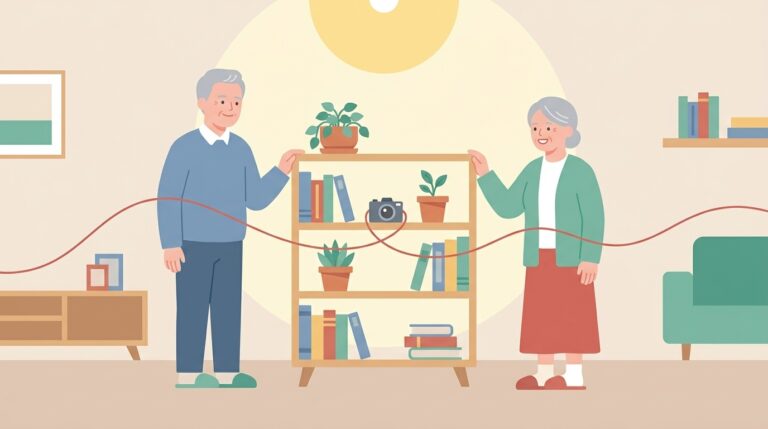
Phase 1: Empathy (An Invitation to Korea’s Evolving Family Landscape)
안녕하세요! Welcome back to another deep-dive session with Daily Hangul. As your trusted cultural navigator, I often get asked by advanced learners: “How do older couples in Korea talk about their relationships today? Is it still all about enduring together until their hair turns white?”
Traditionally, the ultimate marital virtue in Korea was encapsulated in the phrase 검은 머리 파뿌리 될 때까지 (geomeun meori pappuri doel ttae-kkaji) — “until black hair turns to white leek roots.” But times are changing rapidly. Today, many elderly Korean couples are rewriting the script of their golden years.
Instead of enduring unhappy marriages or facing the social and financial strain of a late-life divorce (황혼이혼, hwanghon-ihon), they are choosing a fascinating middle ground: 졸혼 (jolhon), or “graduating from marriage.”
If you’ve been watching recent K-dramas or reality shows, you’ve likely seen this term pop up. As a C2-level learner, understanding this concept isn’t just about adding a trendy word to your vocabulary; it is about grasping the delicate shift from rigid Confucian family obligations to individual self-actualization in modern Korea. Let’s unpack the linguistic nuances and cultural undertones of this fascinating phenomenon.
Phase 2: Deep Dive into 3 Key Expressions
1. 졸혼하다 (jol-hon-hada)
- Pronunciation: [Jol-hon-ha-da] (Think of “Jol” like the first syllable of “jolt”, and “hon” like the first syllable of “honesty”)
- Meaning: To “graduate” from marriage. (Literal: 졸업 [graduation] + 결혼 [marriage])
- K-Culture Moment: In modern family dramas, when an elderly matriarch suddenly packs her bags not because she wants a divorce, but because she wants to live alone in a small apartment in the countryside, she confidently declares: “우리 졸혼하기로 했어.” (We agreed to graduate from marriage.)
- Editor’s Insight: This is not a legal term. It is a social contract where a couple remains legally married but lives completely separate lives, pursuing their own hobbies and lifestyles without interfering in each other’s business. It carries a much less taboo connotation than divorce (이혼) in Korea.
- Situation Spectrum: Casual (✅) | Semi-formal (✅) | Formal (⚠️ – used in discussions, but not in legal documents)
- 🤔 Think About It: How does your culture view older couples who choose to live apart without divorcing? Is there a equivalent term for this in your native language?
2. 각자의 삶을 살다 (gak-ja-ui salm-eul sal-da)
- Pronunciation: [Gak-ja-ui sal-meul sal-da] (Note the liaison: salm-eul sounds like sal-meul)
- Meaning: To live one’s own life / To lead independent lives
- K-Culture Moment: Often used during family councils when adult children are shocked by their parents’ decision. A parent might calmly say: “이제는 서로를 놓아주고, 각자의 삶을 살기로 했다.” (We decided to let each other go now and live our own lives.)
- Editor’s Insight: While it sounds simple, this phrase carries a heavy emotional weight. In a highly collectivist society like Korea, choosing to prioritize “my own life” over “the family unit” represents a massive psychological paradigm shift.
- Situation Spectrum: Casual (✅) | Semi-formal (✅) | Formal (✅)
- 🤔 Think About It: In Korean, the possessive pronoun 우리 (our) is usually preferred over 내 (my). Why do you think using 각자의 삶 (each other’s own life) feels so revolutionary in this context?
3. 정으로 살다 (jeong-euro sal-da)
- Pronunciation: [Jeong-eu-ro sal-da]
- Meaning: To live together out of affection, deep bond, or sheer habit (rather than passionate romantic love).
- K-Culture Moment: When elderly characters in a show are asked if they still love their spouse, they often laugh and say: “사랑은 무슨… 그냥 정으로 사는 거지.” (Love? What love… we just live together out of jeong.)
- Editor’s Insight: 정 (Jeong) is one of the most untranslatable Korean concepts. It is a mixture of affection, attachment, shared history, sympathy, and even a little bit of pity (애증, love-hate). Living “out of jeong” means the initial passion has faded, but the deep, comfortable connection remains.
- Situation Spectrum: Casual (✅) | Semi-formal (✅) | Formal (🚫)
- 🤔 Think About It: Does “jeong” sound like a positive or negative force in a long-term relationship to you?
Phase 3: Textbook Korean vs. Real Conversational Korean
Let’s compare the sterile sentences found in standard academic textbooks with the vivid, nuanced Korean spoken by native speakers.
Situation 1: Explaining why an older couple lives separately
- 📖 Textbook style: “우리는 이혼하지 않고 따로 삽니다.”
(We do not divorce and live separately.) - 🗣️ Real Conversational Korean: “우리는 서류상으로만 부부고, 사실상 졸혼해서 각자 라이프를 즐기고 있어요.”
(We are only married on paper; practically speaking, we’ve graduated from marriage and are enjoying our own independent lives.) - 💡 Why the difference? The textbook sentence is grammatically correct but lacks the modern social context. Using 서류상으로만 (on paper only) and 사실상 졸혼해서 (practically graduated) shows a sophisticated grasp of contemporary Korean societal structures.
Situation 2: Describing a long-married couple’s lack of romantic passion
- 📖 Textbook style: “노부부는 서로 사랑하지 않지만 같이 삽니다.”
(The elderly couple does not love each other but lives together.) - 🗣️ Real Conversational Korean: “이제 와서 무슨 불타는 사랑이겠어요. 다들 미운 정 고운 정 다 들고, 결국 정으로 사는 거죠.”
(At this point, what burning love would there be? We’ve gone through thick and thin together, and ultimately, we live out of sheer bond.) - 💡 Why the difference? The idiom 미운 정 고운 정 (literally: “hated jeong and sweet jeong”) beautifully captures the complex emotional baggage of a decades-long marriage. Saying “정으로 산다” is infinitely more natural and culturally empathetic than saying they “don’t love each other.”
Phase 4: K-Culture Deep Dive & Non-verbal Manners
4-1. Reading the Room (Nunchi) & Respectful Distance
When interacting with elderly Korean couples, or discussing their marital status, 눈치 (Nunchi) is paramount:
* Avoid Intrusive Questions (호구조사 금지): Never ask elderly Koreans directly why they are living apart or if they are divorced. If they mention they are “졸혼 중” (mid-marriage graduation), simply nod and say, “멋지게 사시네요” (You are living a cool life) or “두 분의 선택을 응원합니다” (I support both of your choices).
* Physical Space and Affection: Unlike Western couples, older Korean couples rarely hold hands or hug in public. Affection is non-verbal and subtle: placing a piece of fish on top of the other’s rice bowl, or nagging them to wear a warmer jacket (“날씨 추운데 옷 좀 따뜻하게 입고 다니지!”).
4-2. The Silver Screen Reflection: Once Again and My Love, Don’t Cross That River
To truly understand the emotional landscape of Korean elderly couples, watch these two cultural touchstones:
1. Drama: Once Again (한 번 다녀왔습니다): This hit drama explores the theme of divorce and marital separation across generations, showcasing the changing attitudes of both elderly parents and their adult children.
2. Documentary: My Love, Don’t Cross That River (님아, 그 강을 건너지 마오): A tear-jerking documentary showing the traditional side—a couple married for 76 years who wear matching hanboks and show a pure, lifelong devotion. Contrast this traditional ideal with the modern rise of 졸혼 to understand the duality of modern Korean values.
Phase 5: Practical Roleplay Scenario
Setting: A modern cafe in Seoul. Jimin (지민) is having a chat with her Aunt Hyekyeong (혜경), an elegant 63-year-old woman who recently declared “졸혼” from her husband of 35 years.
Characters:
- 이모 (Aunt Hyekyeong): Modern, independent, and calm.
- 지민 (Jimin): Respectful but curious niece, seeking to understand her aunt’s decision.
이모: (찻잔을 내려놓으며) 지민아, 요즘 내 얼굴 좋아 보이지 않니?
     [Hyekyeong: (Setting down her tea cup) Jimin, don't I look great these days?]

지민: (미소를 지으며) 네, 이모! 훨씬 편안해 보이세요. 정말 졸혼하시고 나서 더 젊어지신 것 같아요.
     [Jimin: (Smiling) Yes, Aunt! You look so much more relaxed. I think you've gotten younger since you graduated from marriage.]

이모: (웃음) 그래. 네 이모부랑 매일 사소한 걸로 투닥거릴 때보다, 이렇게 각자 사니까 서로 소중한 걸 알겠더라.
     [Hyekyeong: (Laughs) Indeed. Rather than bickering over petty things with your uncle every day, living separately like this makes us appreciate each other more.]

지민: 주변 친척분들 시선이나 걱정 때문에 처음엔 고민 많으셨잖아요.
     [Jimin: You worried a lot at first because of the relatives' views and concerns, didn't you?]

이모: (고개를 끄덕이며) 황혼이혼은 좀 부담스럽고, 자식들 눈치도 보였지. 하지만 우리 세대도 이젠 '나의 삶'을 찾을 권리가 있잖니.
     [Hyekyeong: (Nods) Late-life divorce felt too burdensome, and I was conscious of my children. But our generation also has the right to find 'our own lives' now.]

지민: 맞아요. 이모의 선택이 정말 용기 있고 멋진 것 같아요.
     [Jimin: Absolutely. I think your choice was really courageous and wonderful.]

이모: 고맙다, 지민아. 매주 주말에만 만나서 같이 밥 한 끼 먹으니까 오히려 연애할 때 느낌도 나고 좋단다.
     [Hyekyeong: Thank you, Jimin. Since we only meet once a week on weekends to have a meal together, it actually feels like when we were dating, which is quite nice.]

지민: 서로의 공간을 존중하니까 오히려 정이 더 깊어지는 법인가 봐요.
     [Jimin: I guess respecting each other's space actually deepens the bond (jeong) even more.]
🔀 Interactive Choice Points
How should Jimin respond to show deep C2-level cultural and linguistic empathy?
- Option A: “그래도 같이 사시는 게 나중에 덜 외롭지 않을까요?” (But wouldn’t living together be less lonely later on?)
- Feedback (Risk): While a natural concern, this might sound slightly critical of her aunt’s brave decision. It leans into traditional worries.
- Option B: “맞아요. 미운 정 고운 정 다 들어도, 각자 시간 가지는 게 최고죠!” (Exactly. Even with all the love and hate accumulated, having one’s own space is the best!)
- Feedback (Best): Excellent! Uses the idiom 미운 정 고운 정 perfectly and validates the modern perspective on personal space.
- Option C: “이혼하시는 것보다는 법적으로 부부로 남는 게 재산 분할에도 유리해요.” (Leaving yourselves legally married is more advantageous for asset division than getting divorced.)
- Feedback (Bad): Too cold, overly pragmatic, and socially inappropriate for a warm family chat.
Phase 6: 10-Second Emotional Shadowing Drill
To sound like a native speaker, you must master the cadence of emotional resignation mixed with affectionate acceptance.
Practice Sentence:
“에휴, 사랑은 무슨… / 다 살다 보니까 / 미운 정 고운 정 다 들어서 / 정으로 사는 거지요.”
- Romanization: E-hyu, sa-rang-eun mu-seun… / da sal-da bo-ni-kka / mi-un jeong go-un jeong da deul-eo-seo / jeong-eu-ro sa-neun geo-ji-yo.
- Emotional Guide:
- Start with a soft sigh (에휴).
- Pause slightly at each
/mark. - Speak with a warm, slightly chuckling, and wise tone
[👵 Wise and affectionate resignation].
- English Translation: “Sigh, love? What love… as we live through life, we gather both bitter and sweet bonds, so we just live out of deep affection.”
Phase 7: K-Culture Mini Dictionary
- 백년해로 (Baeng-nyeon-hae-ro | 百年偕老):
- Translation: Growing old together in marital harmony for a hundred years.
- Usage: The traditional ideal. Often used in wedding speeches: “두 사람이 백년해로하기를 기원합니다.” (I wish you two a long and harmonious marriage.)
- 황혼이혼 (Hwang-hon-i-hon):
- Translation: Late-life divorce / Twilight divorce.
- Usage: Divorcing after decades of marriage, usually after the children have grown up and married.
- 시월드 (Si-world):
- Translation: The world of the husband’s family (in-laws).
- Usage: A slang term capturing the high stress a Korean wife faces from her husband’s relatives, often a catalyst for wanting a 졸혼 later in life.
- 품위유지 (Pum-wi-yu-ji):
- Translation: Maintaining one’s dignity/grace.
- Usage: Elderly Koreans often emphasize living their silver years gracefully without being a burden to their children.
Phase 8: Travel & Cultural Survival Kit
Survival Expressions for Silver Generation Interaction:
- “건강은 좀 어떠세요?” (Geon-gang-eun jom eo-tteo-se-yo?)
- Pro Tip: Use this respectful phrase when asking older Koreans about their well-being. It is highly appreciated.
- “요즘 두 분 좋아 보이세요.” (Yo-jeum du bun jo-a bo-i-se-yo.)
- Pro Tip: A safe, polite compliment to pay an elderly couple without prying into their living arrangements.
- “인생은 육십부터라잖아요!” (In-saeng-eun yuk-sip-bu-teo-ra-ja-na-yo!)
- Pro Tip: “They say life begins at sixty!” A great way to cheer up and connect with modern Korean seniors who are starting new chapters.
Editor’s Travel Note:
If you are traveling in Seoul and want to observe the vibrant life of Korea’s silver generation, visit the historic area of Insadong or Tapgol Park. However, don’t just expect to see traditional grandfathers playing Baduk. Today’s seniors are tech-savvy! They navigate Seoul’s complex subway system using the [T-money Card system] and coordinate their active social lives via KakaoTalk. When you interact with senior staff at traditional tea houses, showing respect while recognizing their modern lifestyles will open up many warm conversations.
Phase 9: “One Step Deeper” (A Reflective Essay)
In the West, the pursuit of individual happiness is often taken for granted. If a marriage isn’t working, divorce is a personal choice. But in Korea, a marriage has historically been a union of two families, not just two individuals.
The rise of 졸혼 (Jolhon) represents a fascinating cultural compromise. It allows the older generation to preserve the “family frame”—preventing the social stigma and family division of legal divorce—while granting them the freedom to reclaim their individual identity. It is a soft revolution, balancing the deeply ingrained Confucian duty toward family stability with the modern desire for personal peace.
💬 Your Turn: Do you think “marriage graduation” is a practical solution to long-term marital fatigue, or is it just a temporary escape from addressing deeper issues? Let us know in the comments below!
Phase 10: FAQ & Common Mistakes
Q: Is “졸혼” legally recognized in Korea?
A: No, 졸혼 is purely a social and personal agreement. On paper, the couple remains legally married. Therefore, they retain inheritance rights and mutual legal obligations, which is why some couples prefer it over divorce.
Q: How do adult children in Korea react to their parents’ “졸혼”?
A: Initially, many adult children oppose it due to traditional values and worry about their parents’ health living alone. However, as social awareness grows, more children are supporting their parents’ decision to live happily in their twilight years.
Q: Can younger couples “졸혼”?
A: No, the term 졸혼 is specifically reserved for couples who have been married for decades (usually 25-30+ years) and have finished raising their children. It implies having “completed/graduated” from active parenting and household-building duties.
🚨 Common Mistakes Warning Board
- Using 이혼 (ihon) and 졸혼 (jolhon) interchangeably:
- Wrong: “우리 부모님은 지난달에 졸혼해서 법적으로 남남이 되었어요.”
- Correct: “우리 부모님은 지난달에 이혼해서 법적으로 남남이 되었어요.” (If they are legally separated, use 이혼. If they are just living apart by choice but legally married, use 졸혼.)
- Using informal language when discussing an elder’s marriage:
- Wrong: “할머니, 할아버지랑 졸혼했어?”
- Correct: “할머니, 혹시 할아버지랑 졸혼하셨어요?” (Always use honorific suffixes when speaking to or about elders.)
Phase 11: Action Mission & K-Culture Challenge
🏆 Your Action Mission
- Bronze Level: Write a 3-sentence diary entry in Korean expressing your thoughts on 졸혼 using the expression 각자의 삶을 살다.
- Silver Level: Find a K-drama clip on YouTube that discusses 황혼이혼 or 졸혼 and practice shadowing one line.
- Gold Level: Engage with a Korean friend or language exchange partner and ask them: “한국에서 요즘 졸혼에 대한 인식이 어떻게 변하고 있나요?” (How is the perception of Jolhon changing in Korea these days?)
🎮 K-Culture Mission
Watch a family drama episode (like Once Again or My Unfamiliar Family) and count how many times the elders use the word 정 (Jeong) versus 사랑 (Love) when describing their relationship. Share your findings in our community page!
Phase 12: Interactive Quiz Challenge
Test your cultural and linguistic mastery below!
1. Match the term with the correct definition:
- A. 졸혼 (Jolhon)
- B. 황혼이혼 (Hwanghon-ihon)
- C. 백년해로 (Baengnyeonhaero)
(1) Divorcing in the twilight years of marriage.
(2) Graduating from marriage; living separately while remaining legally married.
(3) Growing old together in absolute harmony for a century.
👉 Click to see the Answer & Explanation
- Answers: A-(2), B-(1), C-(3)
- Explanation: 졸혼 is the peaceful separation without legal divorce, 황혼이혼 is the actual legal late-life divorce, and 백년해로 is the traditional ideal of growing old together.
2. True or False?
- “정으로 살다 (jeong-euro salda) implies that the couple is deeply, passionately in love like newlyweds.”
👉 Click to see the Answer & Explanation
- Answer: False
- Explanation: It actually implies that the passionate, fiery romantic love has evolved into a comfortable, deep emotional bond, habit, and affection built over decades of shared life.







