

Master the Art of ‘Daeng-Camping’: The C1 Guide to Dog-Friendly Glamping in Korea
Phase 1: Empathy (Opening)
안녕하세요! Welcome back to another edition of Daily Hangul, your premium cultural compass. I’m your senior editor and local culture navigator.
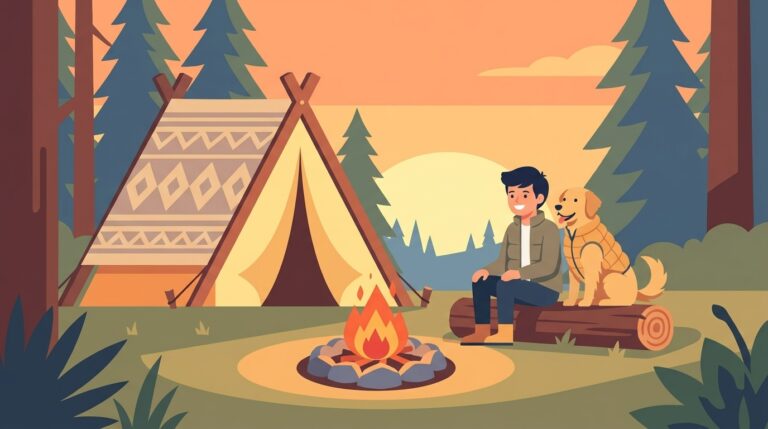
Imagine this: The crisp evening air of Gapyeong (가평), the gentle crackle of a private campfire, and the smell of premium Hanwoo beef grilling. You turn to your side, and there is your absolute best friend—your beloved dog—relaxing in a matching tiny camping chair. Welcome to the golden era of 댕캠핑 (Daeng-camping), a beautiful portmanteau of ‘댕댕이’ (daeng-daeng-i, an affectionate slang for dog) and ‘캠핑’ (camping).
Glamping in Korea has evolved into a highly sophisticated, ultra-luxurious experience. However, as an advanced C1 learner, you probably know that navigating the intricate web of Korean 펫티켓 (petiquette) and campsite regulations requires more than just Google-translated phrases. Many of our premium learners have shared their anxiety: “What if my dog barks at night? How do I politely ask the camp host about off-leash zones without sounding demanding?”
Don’t worry! Today, we will dive deep into the nuanced, polite, and culturally resonant language of luxury dog-friendly glamping, ensuring that both you and your furry companion are welcomed like VIPs (Very Important Pups).
Phase 2: Key Expressions Deep Dive
Here are three highly sophisticated C1-level expressions designed to help you communicate seamlessly with luxury glamping hosts.
1. 혹시 반려견 동반 가능한 객실이 아직 남아있나요? (Hoksi ballyeogyeon dongban ganeunghan gaeksiri ajik nama-innayo?)
- Pronunciation Analogy: “Hoke-shee bal-ryuh-gyun dong-bahn gah-nung-hahn gek-shee-ree ah-jik nah-mah-een-nah-yo?”
- Meaning: “By any chance, are there any pet-friendly rooms still available?”
- K-Culture Moment: You will hear this elegant phrasing in lifestyle vlogs of sophisticated urbanites planning weekend getaways. It uses 반려견 (companion dog) instead of the older, slightly outdated term 애완견 (pet/toy dog), instantly showing respect for your animal companion.
- Editor’s Insight: Beginning with 혹시 (by any chance) softens the inquiry. Using 동반 (accompaniment/together with) is the industry standard for high-end establishments, signaling that you are an experienced and polite pet parent.
- Situation Spectrum:
- Casual: 반려견이랑 갈 수 있는 방 있어요? (⚠️ – A bit too casual for booking)
- Semi-formal/Formal: 혹시 반려견 동반 가능한 객실이 아직 남아있나요? (✅ – Perfect)
- 🤔 Think About It: How does your native language distinguish between a “pet” and a “life companion”? In Korea, this linguistic shift from “애완” (plaything) to “반려” (partner) reflects a massive socio-cultural shift.
2. 혹시 오프리쉬 존 외의 공용 구역에서는 목줄 착용이 필수인가요? (Hoksi opeuriswi jon oe-ui gong-yong gu-yeogeseoneun mokjul chagyongi pilsuingayo?)
- Pronunciation Analogy: “Hoke-shee oh-pu-ree-shee jone we-ui gong-yong goo-yuh-geh-suh-neun mok-jool chah-gyong-ee peel-soo-een-gah-yo?”
- Meaning: “Is wearing a leash mandatory in public areas outside of the off-leash zone?”
- K-Culture Moment: In modern Korea, “Konglish” terms like 오프리쉬 (off-leash) are widely accepted at premium dog parks and glamping sites. Asking this upfront shows that you respect local laws and other guests’ personal space.
- Editor’s Insight: Using 공용 구역 (public/common areas) and 필수 (mandatory/essential) elevates your Korean to a highly professional, respectful C1 tier. It assures the host that you are proactive about safety.
- Situation Spectrum:
- Casual: 목줄 계속 해야 돼요? (⚠️ – Sounds slightly complaining)
- Semi-formal/Formal: 혹시 오프리쉬 존 외의 공용 구역에서는 목줄 착용이 필수인가요? (✅ – Highly respectful)
- 🤔 Think About It: Korea has strict public safety laws regarding dogs. Why do you think showing linguistic responsibility beforehand eases the host’s mind so effectively?
3. 다른 반려견들과 접촉할 때 주의해야 할 돌발 상황이나 규칙이 있을까요? (Dareun ballyeogyeondeul-gwa jeopchokal ttae ju-uihaeya hal dolbal sanghang-ina gyuchigi isseulkkayo?)
- Pronunciation Analogy: “Dah-reun bal-ryuh-gyun-deul-gwah jup-choke-hahl tteh joo-ui-heh-yah hahl dohl-bahl sahng-hahng-ee-nah gyoo-chee-gee ee-ssul-kkah-yo?”
- Meaning: “Are there any unexpected situations or rules we should be careful of when interacting with other companion dogs?”
- K-Culture Moment: Seen in pet rehabilitation shows like SBS’s Animal Farm or Kang Hyung-wook’s dog education programs, where preventing 돌발 상황 (unexpected/sudden situations) is highly emphasized.
- Editor’s Insight: The term 접촉 (contact/interaction) is highly formal and precise. Asking about safety rules beforehand signals to the camp host that your dog is well-trained and that you are an exemplary handler.
- Situation Spectrum:
- Casual: 다른 개들이랑 놀 때 조심할 거 있어요? (⚠️ – Too simple for a C1 speaker)
- Semi-formal/Formal: 다른 반려견들과 접촉할 때 주의해야 할 돌발 상황이나 규칙이 있을까요? (✅ – Excellent, socially conscious)
- 🤔 Think About It: How does anticipating potential conflict through polite inquiry reflect the Korean cultural concept of minimizing trouble for others?
Phase 3: Textbook Korean vs. Real Korean
Let’s compare stiff, textbook-style Korean with the nuanced, natural phrasing used by modern Korean dog owners.
Situation 1: Asking about weight limits for dogs
- 📖 Textbook: 개가 들어갈 수 있습니까? (Gae-ga deul-eo-gal su its-seumni-ka? – “Can the dog enter?”)
- 🗣️ Real Korean: 혹시 몇 킬로그램(kg)까지 입실 제한이 없는지 여쭤봐도 될까요? (Hoksi myeot kkil-lo-geu-raem-kka-ji ip-sil je-han-i eomp-neun-ji yeot-jjeo-bwa-do doel-kka-yo? – “May I ask up to how many kilograms there are no check-in restrictions?”)
- 💡 Why the Difference? Asking “Can a dog enter?” sounds blunt and elementary. Luxury glamping sites in Korea often categorize pet-friendly rooms by dog weight (소형견/중형견/대형견). Asking about 입실 제한 (room entry restriction) directly makes you sound extremely knowledgeable.
Situation 2: Asking someone to shorten their leash in a polite way
- 📖 Textbook: 개한테 목줄을 채우세요. (Gae-han-te mok-jul-eul chae-u-se-yo. – “Put a leash on your dog.”)
- 🗣️ Real Korean: 죄송한데 저희 아이가 조금 예민해서요, 리드줄을 조금만 짧게 쥐어주실 수 있을까요? (Joe-song-han-de jeo-hui a-i-ga jo-geum ye-min-hae-seo-yo, ri-deu-jul-eul jo-geum-man jjal-ge jwi-eo-ju-sil su isseul-kkayo? – “I’m sorry, but our child/dog is a bit sensitive, so could you hold your lead just a bit shorter?”)
- 💡 Why the Difference? Demanding someone leash their dog can spark a conflict. Instead, blaming your own “sensitive child” (저희 아이 is widely used by Korean pet owners to refer to their dogs) and asking them to shorten their 리드줄 (lead line) is the ultimate, non-confrontational way to handle tension.
Phase 4: K-Culture Deep Dive & Non-verbal Manners
4-1. Nunchi (눈치) & Gestures
When glamping in Korea, pet owners practice high-level 눈치 (social sensing).
* The “Apology Bow”: If your dog barks unexpectedly at another camper, do not just say “Sorry.” Give a quick, 15-degree bow with a slightly remorseful expression while gently pulling your dog closer to you.
* Passing Etiquette: When passing another dog on a narrow path, shorten your leash, turn your body slightly away, and make brief eye contact with the other owner to show you have full control over your pet.
4-2. The Cultural Phenomenon of ‘Meong-tteorigi’ (멍때리기)
In Korea’s fast-paced society, “spacing out” or 멍때리기 (Meong-tteorigi) is a legitimate form of mental therapy. During glamping, this is divided into:
1. 불멍 (Bul-meong): Staring blankly at the campfire.
2. 물멍 (Mul-meong): Staring blankly at a nearby river or lake.
3. 숲멍 (Sup-meong): Gazing into the deep forest trees.
Now, add your dog into the mix, and you get 반려견과 함께하는 멍때리기 (Zoning out with your dog). It is incredibly common to see dogs wearing adorable, matching high-end camping outfits (시밀러룩 – similar look) with their owners, both staring into the campfire in peaceful silence.
Phase 5: Real Roleplay Scenario
Setting: You have arrived at “Forest & Paws Glamping” in Gapyeong. You are checking in with your lovable Golden Retriever, Bori (보리). You meet the friendly yet meticulous camp host, 사장님 (Sajangnim).
- 사장님: 어머나! 보리가 정말 순하게 생겼네요. 가평 포레스트 앤 포즈에 오신 걸 환영합니다!
(Oh my! Bori looks so gentle. Welcome to Gapyeong Forest & Paws!) - You: 안녕하세요, 사장님! 공기도 좋고 시설이 정말 고급스러워서 보리도 벌써 신난 것 같아요.
(🎭 Smiling warmly, patting Bori) (Hello, Sajangnim! The air is great and the facilities are so luxurious; I think Bori is already excited.) - 사장님: 감사합니다. 아시다시피 저희가 다른 이용객들의 안전을 위해 몇 가지 반려견 이용 수칙을 안내해 드리고 있어요.
(Thank you. As you know, we guide you through a few dog-use regulations for the safety of our other guests.) - You: 네, 당연히 협조해야죠. 혹시 저희 객실 근처에 오프리쉬로 뛰어놀 수 있는 전용 놀이터가 따로 있을까요?
(🎭 Tilting head politely) (Yes, of course we should cooperate. By any chance, is there a private playground nearby our room where he can run off-leash?) - 사장님: 네, 3번 글램핑 텐트 뒤쪽에 펜스가 쳐진 잔디밭이 있어요. 거기서는 자유롭게 풀어놓으셔도 됩니다. 다만 공용 구역에서는 목줄을 꼭 착용해 주세요!
(Yes, behind Glamping Tent No. 3, there is a fenced lawn. You can let him loose freely there. However, please make sure to wear a leash in common areas!) - You: 알겠습니다! 혹시 배변 봉투 수거함은 어디에 배치되어 있는지 여쭤봐도 될까요?
(🎭 Pointing gently to your dog’s pouch) (Understood! May I ask where the waste bag collection bins are located?) - 사장님: 아주 훌륭한 매너를 가지셨네요! 수거함은 전용 놀이터 입구와 분리수거장 옆에 있습니다. 밤 10시 이후에는 매너타임이라 아이가 너무 크게 짖지 않도록 케어해 주시면 감사하겠습니다.
(You have excellent manners! The collection bins are at the playground entrance and next to the recycling station. After 10 PM is “manner time,” so we’d appreciate it if you ensure your child doesn’t bark too loudly.) - You: 걱정 마세요. 저희 보리가 밤에는 얌전하게 잘 자는 편이에요. 돌발 상황이 생기지 않도록 제가 계속 예의주시하겠습니다.
(🎭 Nodding reassuringly) (Don’t worry. Our Bori sleeps quite gently at night. I will keep a close eye on him to prevent any unexpected situations from happening.)
🔀 Interactive Choice Point
The host mentions “Manner Time” (매너타임) starting at 10 PM. Suddenly, another guest’s small dog starts barking aggressively at Bori near the campfire. How do you respond?
- Option A: “저기요, 매너타임인데 그쪽 개 좀 조용히 시켜 주실래요?” (Hey, it’s manner time. Can you make your dog quiet?)
- Option B: “죄송한데 저희 아이가 덩치는 커도 겁이 많아서요. 혹시 아주 조금만 거리를 둬 주실 수 있을까요?” (Excuse me, but although our child is big, he is very cowardly. Could you perhaps keep just a little bit of distance?)
- Option C: (Ignore them completely and walk away, pulling Bori’s leash tightly without saying anything.)
💡 Feedback & Analysis:
- Option A (Bad): Extremely confrontational. While logically correct about the time, using “그쪽 개” (your dog – cold phrasing) will immediately ruin the peaceful glamping vibe and create social tension.
- Option B (Best): Pure C1 perfection! By humbly describing your big dog as “cowardly” (겁이 많다) and using the soft request “혹시 아주 조금만…”, you defuse potential conflict instantly while setting a healthy boundary.
- Option C (Risk): Passive-aggressive. It might prevent an immediate argument, but the silence and tight leash pull can leave an awkward, uncomfortable atmosphere around the shared campfire area.
Phase 6: 10-Second Emotion Shadowing Drill
Let’s practice speaking with real Korean emotion. Pay close attention to the pause points marked by / and the emotional markers.
[🥺 Apologetic and extra soft]- “죄송한데 / 저희 아이가 / 겁이 많아서 / 리드줄을 / 조금만 / 짧게 잡아주시면 / 감사하겠습니다.”
- “Joe-song-han-de / jeo-hui a-i-ga / geop-i man-a-seo / ri-deu-jul-eul / jo-geum-man / jjal-ge ja-ba-ju-si-myeon / gam-sa-ha-get-seum-ni-da.”
[😊 Cheerful and polite during check-in]- “사장님, / 반려견 동반 가능한 / 산책로가 / 따로 있나요? / 경치가 / 정말 예술이네요!”
- “Sa-jang-nim, / bal-ryeo-gyeon dong-ban ganeunghan / san-chaek-ro-ga / tta-ro in-na-yo? / Gyeong-chi-ga / jeong-mal ye-sul-i-ne-yo!”
Phase 7: K-Culture Mini Dictionary
- 댕댕이 (Daeng-daeng-i) | Slang for Dog
- Usage: Born out of internet play where the Korean characters for “멍멍이” (meong-meong-i) look visually similar to “댕댕이”. It is now a widely used affectionate term in marketing and daily life.
- 개모차 (Gae-mo-cha) | Dog Stroller
- Usage: A blend of “개” (dog) and “유모차” (baby stroller). Since pet-friendly high-end glamping sites and cafes often require dogs to not touch the indoor floor, renting or bringing a “gaemocha” is extremely common.
- 불멍 (Bul-meong) | Fire-gazing
- Usage: The ultimate glamping activity. Sitting in front of a fire pit doing absolutely nothing.
- 펫티켓 (Pet-i-ket) | Pet + Etiquette
- Usage: A crucial social concept in Korea. It refers to carrying poop bags, maintaining leashes, and preventing excessive barking in public spaces.
Phase 8: Traveler’s Survival Kit
Survival Expressions TOP 3
- 혹시 반려견 패드가 더 필요하면 어디서 받을 수 있나요?
- Rom: Hoksi ballyeogyeon paedeuga deo piryohamyeon eodiseo badeul su innayo?
- Pro Tip: Useful when your dog goes through their indoor peeing pads faster than expected at a glamping site.
- 공용 사워실에 반려견 동반 입장이 가능한가요?
- Rom: Gong-yong sa-weo-sire ballyeogyeon dongban ipjang-i ganeunghan-gayo?
- Pro Tip: Always ask this before taking your dog to communal washing areas. Some high-end places provide specialized pet showers.
- 여기 근처에 반려견이 갈 수 있는 동물병원이 있을까요?
- Rom: Yeogi geoncheo-e ballyeogyeoni gal su inneun dongmul-byeong-weoni isseulkkayo?
- Pro Tip: An absolute must-know for unexpected emergencies in rural camping locations like Gapyeong or Hongcheon.
Editor’s Travel Note 🗺️
When planning dog-friendly glamping in Korea, downloading the right apps is half the battle. We highly recommend using the search terms below on your app store to locate top-tier pet apps:
* Look up 반려생활 (Ballyeo-saenghwal) to book high-end, pet-certified glamping locations with strict cleanliness filters.
* Use 하트독 (Heart Dog) to find nearby dog-friendly cafes, restaurants, and scenic parks near your campsite.
* Tip: High-end glamping sites often charge an extra fee per dog (usually 20,000 to 50,000 KRW) upon check-in, even if the room is marked “pet friendly”. Always have some extra card or cash payment ready!
(Note: Local policies and fees are subject to change depending on season and destination.)
Phase 9: “한 발 더 깊이” (Think Deeper)
In Korea, the shift in terminology from 애완견 (pet dog) to 반려견 (companion dog) represents a deep sociological transformation. Traditionally, dogs in agricultural Korea served utilitarian purposes. However, with the rapid rise of single-person households and declining birth rates, dogs have stepped into the role of primary family members.
This is why modern Koreans address their pets as 저희 아이 (our child) or 우리 막내 (our youngest family member). When you speak to a camp host using these terms, you aren’t just practicing advanced grammar; you are signaling your assimilation into the contemporary Korean belief that dogs are sensitive, respected partners in life.
💬 Your Turn: How has pet culture changed in your country? Do you use terms similar to “our child”? Let us know in the comments below!
Phase 10: FAQ & Common Mistakes
Q: Can I bring my large dog (over 15kg) to any pet-friendly glamping site in Korea?
A: No. Many standard “pet-friendly” sites have strict weight limits (often under 8kg or 10kg) due to room sizes and safety concerns. Always check the “대형견 가능” (Large-dog allowed) filter on accommodation apps or ask specifically: “혹시 대형견도 입실 가능한가요?” (By any chance, are large dogs allowed to check in?)
Q: What does “Manner Time” (매너타임) mean at Korean campsites?
A: “Manner Time” typically starts at 10 PM. During this time, all loud noises, music, and heavy movement must stop. For pet owners, this means keeping your dog inside the glamping tent and ensuring they do not bark, as sound travels extremely well through tent walls.
Q: Do I need to bring my dog’s vaccination certificate?
A: Some high-end, luxury glamping sites require proof of rabies vaccination (광견병 예방접종 증명서) upon check-in to prevent cross-contamination. It is highly recommended to keep a photo of the certificate on your phone.
🚨 Common Mistakes Board
- Calling your dog ‘개’ (Gae) in formal conversation: While grammatically correct, referring to your dog as just “개” to a host sounds cold.
- Correct Action: Use 반려견 or 저희 강아지 (our puppy) / 저희 아이 (our child).
- Letting your dog run off-leash the moment you see green grass: Not all grassy areas at campsites are off-leash zones.
- Correct Action: Always confirm by asking: “여기서 목줄을 풀어놓아도 괜찮을까요?” (Is it okay to unleash here?)
- Using ‘너’ (You) to address other owners: When asking another owner about their dog, never use “너”.
- Correct Action: Address them as 견주님 (pet owner) or simply say 혹시… to initiate a polite conversation.
Phase 11: Action Mission & Participation
The Daily Hangul 3-Step Challenge
- 🥉 Bronze Mission: Practice saying “혹시 반려견 동반 가능한가요?” three times with our Shadowing guide.
- 🥈 Silver Mission: Go to Instagram, find a beautiful Korean dog-glamping picture using the hashtag
#댕캠핑or#반려견동반글램핑, and leave a polite Korean comment like: “저도 저희 아이랑 꼭 가보고 싶네요!” (I really want to go with our child too!) - 🥇 Gold Mission: When booking your next stay or visiting a dog-friendly cafe, directly ask the staff: “혹시 오프리쉬 존이 따로 있나요?” and observe their warm reaction!
🎮 K-Culture Mission: Watch a popular Korean healing variety show (like House on Wheels or I Live Alone). Spot one scene where a celebrity takes their pet on a trip, and note down how they speak to their pet!
Phase 12: Interactive Quiz Challenge
Test your C1 pet glamping mastery! Check your answers using the toggle dropdowns below.
1. Situational Judgment
You are checking in, and the host asks about your dog’s size. Which response is the most natural, polite, and grammatically advanced?
* A) 우리 개는 큽니다. (Our dog is big.)
* B) 저희 아이가 골든 리트리버라 25킬로 정도 나가는데, 입실에 문제가 없을까요? (Our child is a Golden Retriever and weighs about 25kg; would there be any issue with checking in?)
* C) 개 무게는 상관없잖아요. (The dog’s weight shouldn’t matter.)
🔍 Reveal Answer & Explanation
Correct Answer: B
Why? Option B uses the respectful term “저희 아이” (our child), politely specifies the breed and weight, and asks for verification using the soft indirect question form “~는데, 문제가 없을까요?”. This is textbook C1 level polite Korean!
2. Fill in the Blank
Complete this essential sentence to ask if a leash is mandatory:
“혹시 오프리쉬 존 외의 구역에서는 ( ) 착용이 필수인가요?”
🔍 Reveal Answer & Explanation
Correct Answer: 목줄 (Mok-jul – Leash) or 리드줄 (Ri-deu-jul – Lead line)
Explanation: Both terms are widely accepted, though “목줄” is the native Korean word and “리드줄” is commonly used in pet-focused communities.
3. True or False
Q: In Korea, it is considered polite to let your dog roam completely freely around the glamping campfire area as long as other guests are present to play with them. (T / F)
🔍 Reveal Answer & Explanation
Correct Answer: False
Explanation: Even if other guests seem friendly, always maintain control of your dog. Some people may have hidden cynophobia (fear of dogs) or allergy issues. Keep your dog leashed outside of designated “Off-Leash Zones” (오프리쉬 존) to maintain perfect 펫티켓!







