

Phase 1: Empathy (Your Colorful Autumn Adventure Awaits!)
안녕하세요! (An-nyeong-ha-se-yo!) Hello! I am your Daily Hangul editor and your trusted Korean bestie.
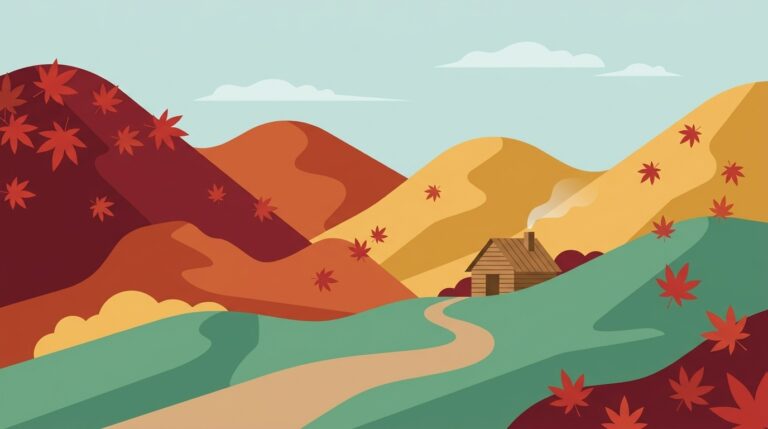
Imagine this: You are walking down a mountain path, surrounded by a breathtaking canopy of fiery red, golden yellow, and deep orange maple leaves. The crisp autumn air fills your lungs, and friendly local hikers pass you by, smiling warmly. This is 단풍 놀이 (Danpung Nori)—the beloved Korean tradition of autumn foliage viewing!
As an A1 beginner, you might feel a bit nervous about hiking in Korea. “What if I get lost?” “How do I ask someone to take my photo under these beautiful trees?” Don’t worry at all! Today, we are going to learn 3 super simple, high-impact phrases that will make you feel like a local on any Korean trail. Our previous students told us that using just one of these phrases opened up heartwarming conversations with local hikers! Let’s dive in. 🍁
Phase 2: 3 Core Expressions Deep Dive
Let’s look at the three magic phrases you need for your autumn hike.
1. 단풍이 예뻐요! (Danpung-i yeoppeoyo!)
- Pronunciation: dan-pung-ee ye-ppuh-yo (Sounds like: “Dan-pung-ee” + “ye” as in yes + “ppuh-yo”)
- Meaning: The autumn leaves are pretty!
- K-Culture Moment: You will hear this phrase whispered, sighed, and shouted in excitement all over Korean mountains like Seoraksan or Bukhansan in October and November.
- Editor’s Insight: 단풍 (Danpung) means “autumn foliage/maple leaves,” and 예뻐요 (yeoppeoyo) means “is pretty.” It is polite and perfect for talking to anyone you meet.
- Situation Spectrum:
- Casual (to friends): 단풍 예쁘다! (Danpung yeoppeuda!) ⚠️
- Semi-formal (to strangers/polite): 단풍이 예뻐요! (Danpung-i yeoppeoyo!) ✅
- Formal (too stiff for hiking): 단풍이 아름답습니다. (Danpung-i areumdapseumnida.) 🚫
- 🤔 Think About It: Does your native language have a specific single word just for “autumn foliage” like Korea’s “단풍”?
2. 같이 사진 찍을래요? (Gachi sajin jjeugeollaeyo?)
- Pronunciation: gah-chee sah-jin jee-geul-lay-yo (Sounds like: “Gah-chee” + “sah-jean” + “jee-geul-lay-yo”)
- Meaning: Would you like to take a picture together?
- K-Culture Moment: In Korea, capturing an 인생샷 (Insaengsyat – life shot/best photo of your life) against the autumn leaves is a must! You can ask a friendly hiker this phrase.
- Editor’s Insight: 같이 (Gachi) means “together,” 사진 (sajin) means “photo,” and 찍을래요? (jjeugeollaeyo?) means “would you like to take/shoot?”. It’s warm, inviting, and friendly.
- Situation Spectrum:
- Casual: 같이 사진 찍을래? (Gachi sajin jjeugeollae?) ⚠️
- Semi-formal: 같이 사진 찍을래요? (Gachi sajin jjeugeollaeyo?) ✅
- Formal: 사진을 함께 촬영하시겠습니까? (Sajineul hamkke chwaryeonghasigesseumnika?) 🚫
- 🤔 Think About It: How do you feel when a stranger asks to take a photo with you? In Korea, hikers love sharing memories with travelers!
3. 등산하러 가요! (Deungsanhareo gayo!)
- Pronunciation: deung-san-ha-ruh gah-yo (Sounds like: “Deung-sahn-hah-ruh” + “gah-yo”)
- Meaning: Let’s go hiking! / I’m going hiking!
- K-Culture Moment: In Korea, hiking isn’t just exercise; it’s a lifestyle! On weekends, subway stations near mountains are packed with people wearing bright, colorful hiking gear.
- Editor’s Insight: 등산 (Deungsan) means “hiking/mountain climbing.” -러 가요 (-reo gayo) means “go to do [something].”
- Situation Spectrum:
- Casual: 등산 가자! (Deungsan gaja!) ⚠️
- Semi-formal: 등산하러 가요! (Deungsanhareo gayo!) ✅
- Formal: 등산하러 갑시다. (Deungsanhareo gapsida.) ⚠️
- 🤔 Think About It: Why do you think hiking is so popular among all age groups in Korea?
Phase 3: Textbook Korean vs. Real Korean
Let’s compare what textbooks teach you versus how Koreans actually talk on the trail!
Situation 1: Expressing amazement at the view
- 📖 Textbook Korean: 산이 아주 아름답습니다. (Sani aju areumdapseumnida.)
- “The mountain is very beautiful.” (A bit too formal and stiff for a casual hike.)
- 🗣️ Real Korean: 와, 단풍 대박이에요! (Wa, danpung daebagieyo!)
- “Wow, the autumn leaves are amazing/awesome!”
- 💡 Why the difference? 대박 (Daebak) is the ultimate Korean word for “awesome.” Combining it with “단풍” shows genuine, modern excitement!
Situation 2: When you are tired climbing up
- 📖 Textbook Korean: 저는 피곤합니다. (Jeoneun pigonhamnida.)
- “I am tired.” (Sounds like a robot in a classroom.)
- 🗣️ Real Korean: 아이고, 힘들어 죽겠어요! (Aigo, himdeureo jukgesseoyo!)
- “Oh my, I’m dying of tiredness!”
- 💡 Why the difference? 아이고 (Aigo) is the universal Korean sigh of exhaustion or surprise. Adding 죽겠어요 (jukgesseoyo – dying of…) is a cute, dramatic way locals express being tired without sounding negative.
Phase 4: K-Culture Deep Dive & Non-verbal Manners
4-1. Hands and Smiles: Non-verbal Manners on the Trail
- The Two-Handed Handover: If you ask someone to take a photo of you, always hand over your phone with both hands. It shows great respect!
- The Friendly “안녕하세요” (Hello): In Korea, it is polite to say “안녕하세요” or simply “안녕하세요~” in a singing tone when you pass other hikers on narrow mountain trails.
4-2. The Post-Hiking Reward: Pajeon & Makgeolli
In Korea, hiking is incomplete without the feast at the food stalls near the mountain entrance!
After sweating, hikers gather to eat 파전 (Pajeon – green onion pancake) and drink cold 막걸리 (Makgeolli – sweet Korean rice wine). It’s the ultimate reward! Try saying: “파전 주세요!” (Pajeon juseyo! – Please give me Pajeon!)
Phase 5: Real-life Roleplay Scenario
Let’s practice! You are hiking up Bukhansan Mountain in Seoul. You meet Yujin, a friendly Korean hiker wearing bright orange gear.
- Yujin (Friendly local): 안녕하세요! 오늘 날씨가 참 좋지요? (An-nyeong-ha-se-yo! Oneul nal-ssi-ga cham jot-ji-yo?)
- 🎭 Smiling warmly and wiping sweat from her forehead.
- “Hello! The weather is really nice today, isn’t it?”
- You: 네, 안녕하세요! 정말 좋아요. (Ne, an-nyeong-ha-se-yo! Jeong-mal jo-ah-yo.)
- 🎭 Smiling back and waving slightly.
- “Yes, hello! It is really nice.”
- Yujin: 오늘 단풍 보러 오셨어요? (Oneul dan-pung bo-ruh o-shyeot-eo-yo?)
- 🎭 Pointing at the beautiful red trees.
- “Did you come to see the autumn leaves today?”
- You: 네, 단풍이 정말 예뻐요! (Ne, dan-pung-i jeong-mal ye-ppeo-yo!)
- 🎭 Looking up at the trees with sparkling eyes.
- “Yes, the autumn leaves are really pretty!”
- Yujin: 맞아요. 여기가 진짜 명당이에요! 사진 찍어드릴까요? (Ma-ja-yo. Yeo-gi-ga jin-jja myeong-dang-i-e-yo! Sa-jin jjik-eo-deu-ril-kka-yo?)
- 🎭 Gently gesturing towards your smartphone.
- “That’s right. This spot is the absolute best! Shall I take a photo for you?”
- You: 와, 감사합니다! 같이 사진 찍을래요? (Wa, gam-sa-hap-ni-da! Ga-chi sa-jin jjik-eul-rae-yo?)
- 🎭 Handing your phone with both hands and gesturing to stand together.
- “Wow, thank you! Would you like to take a picture together?”
- Yujin: 좋아요! 자, 김치~ 치즈~ (Jo-ah-yo! Ja, gim-chi~ chi-jeu~)
- 🎭 Standing next to you, making a cute V-sign with her fingers.
- “I’d love to! Ready, Kimchi~ Cheese~”
- You: 하나, 둘, 셋, 찰칵! 감사합니다! (Ha-na, dul, set, chal-kak! Gam-sa-hap-ni-da!)
- 🎭 Smiling brightly for the camera.
- “One, two, three, click! Thank you!”
🔀 Choose Your Path!
How do you want to respond to Yujin now that the photo is taken?
* A) “배고파요. 파전 먹으러 가요!” (Baegopayo. Pajeon meogeureo gayo! – I’m hungry. Let’s go eat green onion pancakes!)
* Feedback: [Best Choice!] Yujin will laugh and happily guide you to the best restaurant at the bottom of the mountain! 🌟
* B) “저는 이제 집에 갑니다.” (Jeoneun ije jibe gamnida. – I am going home now.)
* Feedback: [Too Cold] While correct, it feels a bit abrupt and cuts off the warm vibe. ⚠️
* C) “힘들어 죽겠어요! 살려주세요!” (Himdeureo jukgesseoyo! Sallyeojuseyo! – I’m dying of tiredness! Save me!)
* Feedback: [Dramatically Funny] Yujin will find this hilarious and might offer you some mountain snacks (like sliced cucumber)! 😂
Phase 6: 10-Second Emotion Shadowing Drill
Practice speaking like a real Korean! Pay attention to the pauses (/) and emotions inside the brackets.
- [😊 Expressing pure joy and excitement]
- “와~ / 단풍이 / 진짜 / 예뻐요!”
- Wa~ / dan-pung-i / jin-jja / ye-ppeo-yo!
- [🤝 Warmly and politely inviting someone]
- “혹시 / 같이 / 사진 / 찍을래요?”
- Hok-si / ga-chi / sa-jin / jjik-eul-rae-yo?
- [😫 Playfully tired near the peak]
- “아이고, / 힘들어 / 죽겠어요!”
- Ai-go, / him-deu-ruh / juk-get-eo-yo!
Phase 7: K-Culture Mini Dictionary
- 단풍 (Danpung) | Autumn Foliage | Refers to the changing colors of leaves in autumn. Locals plan trips months in advance to see the peak “Danpung.”
- 막걸리 (Makgeolli) | Korean Rice Wine | A milky, sweet, and slightly fizzy traditional rice wine. It pairs perfectly with mountain air.
- 등산복 (Deungsanbok) | Hiking Clothes | Ultra-bright, colorful, high-tech hiking outfits worn by Koreans of all ages. Wearing bright colors is a huge trend!
- 인생샷 (Insaengsyat) | Life Shot | Slang for the absolute best photo of your life. Mountains in autumn are prime locations for this.
Phase 8: Traveler’s Survival Kit
Here are 3 extra phrases to keep in your pocket when hiking in Korea!
- 정상이 어디예요? (Jeongsang-i eodi-ye-yo?)
- Where is the summit/peak?
- Pro Tip: Use this when you are feeling lost on the trail.
- 화장실이 어디예요? (Hwajangsil-i eodi-ye-yo?)
- Where is the restroom?
- Pro Tip: Keep in mind that restrooms on mountains are usually near the entrance!
- 조심하세요! (Josim-ha-se-yo!)
- Be careful!
- Pro Tip: Say this to hikers passing by on slippery or steep rocks.
🗺️ Editor’s Travel Note: Before you go, make sure to download the Naver Map App or KakaoMap App. Google Maps does not work well for detailed hiking trails in South Korea! Note: Trail accessibility and transport options can change, so always check the latest trail status on the official Korea National Park Service website before heading out.
Phase 9: “한 발 더 깊이” (A Step Deeper)
In many Western cultures, hiking is a solo, quiet, and introspective activity. However, in Korea, 등산 (hiking) is deeply tied to 공동체 문화 (community culture). Koreans love hiking in groups, sharing packed lunches (like kimbap, fresh cucumbers, and cherry tomatoes) at the summit, and striking up conversations with strangers. It’s an extension of “Jeong” (정)—the warm feeling of connection and affection.
💬 Your Turn: How does this compare to hiking culture in your country? Let me know in the comments below!
Phase 10: FAQ & Avoiding Mistakes
Q: Can I use “단풍이 예뻐요” to describe cherry blossoms in spring?
A: No! 단풍 (Danpung) specifically refers to autumn leaves. For cherry blossoms in spring, you should say “벚꽃이 예뻐요!” (Beotkkot-i yeoppeoyo!).
Q: What should I wear when hiking in Korea? Can I wear casual clothes?
A: While casual sneakers are okay for very easy trails, Korean mountains are often rocky and steep. Wearing proper hiking shoes is highly recommended. Also, don’t be shy to wear bright colors—it’s part of the fun!
Q: Is it rude to ask strangers to take a picture for me?
A: Not at all! In fact, Koreans love helping travelers take photos. Just hand over your camera with both hands and say “사진 좀 찍어주세요” (Sajin jom jjik-eo-ju-se-yo – Please take a photo).
🚨 Common Mistakes Alert!
- Mistake 1: Saying “단풍 사요” (Danpung sayo) thinking it means “I like autumn leaves”.
- Correction: “사요” means “to buy.” Use “단풍이 좋아요” (Danpung-i jo-ah-yo – I like autumn leaves) instead!
- Mistake 2: Bowing 90 degrees to everyone on the trail.
- Correction: A simple nod of the head and a smiling “안녕하세요~” is perfect and natural while hiking.
- Mistake 3: Not bringing cash or card.
- Correction: Most food stalls near mountain entrances accept cards, but having some cash is great for buying small snacks like warm corn or sweet rice cakes along the path.
Phase 11: Action Mission & Challenge
Complete these missions to test your real-world Korean skills!
- 🥉 Bronze Mission: Practice saying “단풍이 예뻐요!” out loud three times with your eyes closed, matching the emotional tone of Phase 6!
- 🥈 Silver Mission: Share a photo of autumn leaves on your Instagram/Twitter and caption it: “등산하러 가요! 🍁”
- 🥇 Gold Mission: Next time you see someone in Korea taking a photo near autumn leaves, walk up to them politely and ask: “같이 사진 찍을래요?”
- 🎮 K-Culture Mission: Watch a scene from your favorite K-drama set in autumn (like Goblin or My Love from the Star) and listen for when they say the word “예쁘다” (pretty) or “단풍”!
Phase 12: Interactive Quiz Challenge
Test your knowledge before you hit the trail!
1. What does “단풍” mean?
▶ Click here to see the answer!
Answer: Autumn foliage / maple leaves. (Excellent job! 🍁)
2. Fill in the blank: “같이 사진 _________?” (Would you like to take a picture together?)
▶ Click here to see the answer!
Answer: 찍을래요? (jjik-eul-rae-yo?)
3. True or False: It is polite to hand over your phone with only one hand when asking for a photo in Korea.
▶ Click here to see the answer!
Answer: False! You should hand over your phone with both hands to show respect and warmth. 🙌
See you on the trail! 단풍 놀이 재미있게 하세요! (Have fun autumn foliage viewing!)







