

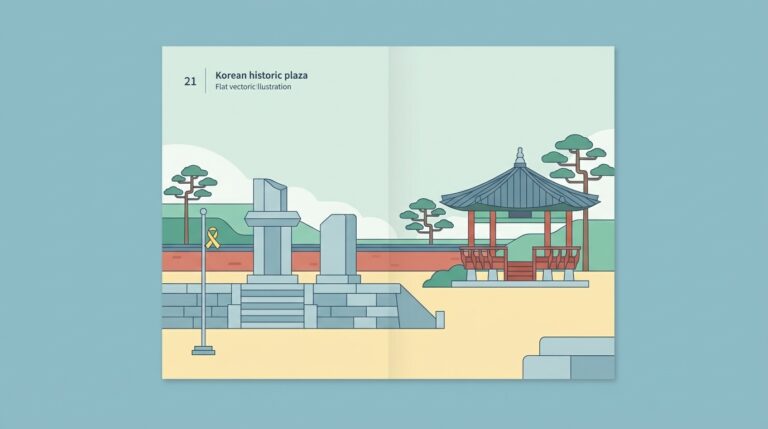
The Heartbeat of Korean Modern History: Understanding Korea’s Journey to Democracy
Phase 1: Empathy (스토리 몰입형 오프닝)
안녕하세요! I’m your Daily Hangul editor and your personal Korean culture guide.
Have you ever been watching a historical K-Drama like Youth of May (오월의 청춘) or watching the masterpiece film A Taxi Driver (택시운전사), and found yourself deeply moved, yet struggling to find the right words in Korean to talk about it?
You are not alone. Many of our intermediate (B2) learners tell us, “I want to talk about Korean history and show my respect, but I’m afraid of using the wrong words and sounding insensitive.”
Today, we are diving deep into the historical significance of Korea’s democratization movement (민주화 운동). Modern Korea is famous for its glittering neon lights, K-Pop, and high-tech lifestyle. But beneath this vibrant surface lies a history of incredible resilience, collective pain, and a fierce fight for freedom. By learning how to discuss this topic respectfully, you will unlock a much deeper, soul-level connection with your Korean friends. Let’s learn together!
Phase 2: Core Expressions (핵심 표현 3선 심층 분석)
Let’s master three essential terms that will help you discuss Korean history with depth and respect.
1. 민주주의 (Democracy)
- Pronunciation: Min-ju-ju-ui (sounds like “min-joo-joo-ee”)
- Meaning: Democracy
- K-Culture Moment: You will hear this word echoed in almost every Korean political film set in the 1980s. It represents the ultimate goal of the citizens who stood up against authoritarian regimes.
- Editor’s Insight: In English, “democracy” can sound like a dry, political textbook word. But to Koreans, 민주주의 is a warm, emotional term. It represents a hard-won victory paid for by the sacrifices of ordinary citizens—students, taxi drivers, and mothers.
- Situation Spectrum: Casual (⚠️ – a bit heavy for everyday small talk, but beautiful in deep conversations), Semi-formal (✅), Formal (✅)
- 🤔 Think About It: In Korean, 민주 (Min-ju) literally means “people are the masters.” How does this literal translation compare to the word for “democracy” in your native language?
2. 희생 (Sacrifice)
- Pronunciation: Hui-saeng (sounds like “hwee-saeng”)
- Meaning: Sacrifice
- K-Culture Moment: In historical dramas, characters often talk about the “sacrifices” made by the older generation to build the free society young Koreans enjoy today.
- Editor’s Insight: When discussing Korea’s path to democracy, the word 희생 is almost always used with a deep sense of gratitude. Koreans hold a collective memory of debt to those who lost their lives during the Gwangju Uprising (May 18, 1980) and the June Struggle (1987).
- Situation Spectrum: Casual (⚠️), Semi-formal (✅), Formal (✅)
- 🤔 Think About It: Is “sacrifice” in your culture viewed as an individual choice, or is it remembered as a collective foundation for the nation’s future?
3. 역사를 잊지 않다 (To not forget history)
- Pronunciation: Yeok-sa-reul it-ji an-da (sounds like “yuck-sah-reul eet-jee ahn-dah”)
- Meaning: To never forget history
- K-Culture Moment: This phrase is commonly seen on banners, memorial sites, and social media posts during national memorial days in Korea.
- Editor’s Insight: This phrase is tied to a famous Korean proverb: “역사를 잊은 민족에게 미래는 없다” (A nation that forgets its history has no future). Using this expression shows that you understand the active duty Koreans feel toward keeping historical memories alive.
- Situation Spectrum: Casual (⚠️), Semi-formal (✅), Formal (✅)
- 🤔 Think About It: Why do you think preserving collective memory is such a powerful force in modern Korean society?
Phase 3: Textbook Korean vs. Real Korean (교과서 한국어 vs 진짜 한국어)
Let’s look at how textbooks teach these concepts versus how Koreans actually express them in real-life conversations.
Situation 1: Expressing the importance of historical movements
- 📖 Textbook Korean: “민주화 운동은 역사적으로 매우 중요합니다.” (Democratization movements are historically very important.)
- 🗣️ Real Korean: “민주화 운동 덕분에 지금의 우리가 있는 거죠.” (Thanks to the democratization movement, we are who we are today / we have what we have now.)
- 💡 Why is it different? The textbook sentence is grammatically correct but sounds like an encyclopedia. The real Korean version uses ~덕분에 (thanks to) to express personal, heartfelt gratitude to the historical figures.
Situation 2: Expressing respect for those who fought for freedom
- 📖 Textbook Korean: “그 사람들의 희생을 기억해야 합니다.” (We must remember those people’s sacrifices.)
- 🗣️ Real Korean: “그분들의 희생을 잊지 말아야 해요.” (We must never forget their sacrifices.)
- 💡 Why is it different? Substituting “그 사람들” (those people) with the respectful honorific “그분들” (those esteemed individuals) is absolutely crucial here. It instantly elevates your Korean and shows high cultural emotional intelligence.
Phase 4: K-Culture Deep Dive & Non-verbal Manners (K-Culture 딥다이브 & 비언어적 매너)
4-1. Nunchi (눈치) & Respectful Gestures
When visiting historical sites in Korea, like the National Cemetery or the May 18th National Cemetery in Gwangju, your non-verbal cues speak louder than words:
* The Silent Bow: When standing in front of memorial monuments, slightly bow your head and keep your hands clasped in front of you.
* Tone of Voice: Keep your voice soft and quiet. Avoid laughing loudly or taking playful selfies in front of grave markers or solemn exhibitions.
4-2. Cultural Code: The Yellow Ribbon and Cinema
In Korea, modern democratic struggles are highly symbolized. If you watch movies like 1987: When the Day Comes, you’ll notice how clothing colors, secret letters, and quiet solidarity represented survival. The collective trauma and ultimate triumph of these movements created a unique Korean concept called Han (한)—a deep sorrow and unresolved grief—which eventually transformed into active civic participation, seen even in modern candlelight protests.
Phase 5: Real-Life Roleplay Scenario (실전 롤플레이 시나리오)
Imagine you are visiting the National Museum of Korean Contemporary History in Seoul with your Korean university friend, Min-jun (민준).
- Min-jun: “여기가 바로 6월 민주항쟁의 역사를 담은 전시관이에요.”
(Here is the exhibition hall containing the history of the June Democracy Movement.) - Learner (You): “🎭 (Looking closely at the old photos) 영화 ‘1987’에서 봤던 장면들이 떠오르네요.”
(The scenes I saw in the movie ‘1987’ come to mind.) - Min-jun: “맞아요. 그 당시 평범한 대학생들과 시민들이 정말 많이 희생되셨죠.”
(Right. Back then, so many ordinary college students and citizens sacrificed their lives.) - Learner (You): “🎭 (Nodding solemnly) 그분들의 희생이 없었다면 지금의 민주주의도 없었겠죠?”
(Without their sacrifice, today’s democracy wouldn’t exist, right?) - Min-jun: “정확해요. 그래서 우리는 이 역사를 절대 잊지 않으려고 노력해요.”
(Exactly. That’s why we try never to forget this history.) - Learner (You): “🎭 (Speaking softly) 가슴이 먹먹해지네요. 한국의 역사를 배울수록 깊은 울림이 있어요.”
(My heart feels heavy. The more I learn about Korean history, the deeper the resonance.) - Min-jun: “그렇게 느껴줘서 정말 고마워요. 역사 공부를 참 진지하게 하시네요.”
(Thank you so much for feeling that way. You study history very seriously.) - Learner (You): “🎭 (Smiling warmly) 역사를 아는 것이 진짜 한국을 이해하는 첫걸음이니까요.”
(Because knowing history is the first step to truly understanding Korea.)
🔀 Interactive Choice Point
How would you respond if Min-jun asks: “한국의 민주화 운동에 대해 어떻게 생각해요?” (What do you think about Korea’s democratization movement?)
- Option A: “역사를 잊은 민족에게 미래는 없다는 말이 딱 와닿네요.”
- Feedback: Best! You used a famous cultural quote beautifully. This shows incredible cultural depth and empathy.
- Option B: “역사는 너무 복잡해서 제 머리가 아파요.”
- Feedback: Bad. This sounds very dismissive of a topic that is deeply sacred and emotional to many Koreans.
- Option C: “맞아요, 영화 ‘택시운전사’가 아주 재미있었어요.”
- Feedback: Risky. While true, calling a tragic historical film merely “fun” (재미있다) can sound slightly insensitive. It is better to say “인상 깊었어요” (it left a deep impression).
Phase 6: 10-Second Shadowing Drill (10초 감정 섀도잉 드릴)
Let’s practice speaking with the right emotional undertone. Pause slightly at the / marks.
- “그분들의 희생 덕분에 / 지금의 민주주의가 / 있는 거죠.”
- Pronunciation: Geu-bun-deul-ui hui-saeng deok-bun-e / ji-geum-ui min-ju-ju-ui-ga / in-neun geo-jyo.
- Emotion Guide: [🥺 Solemn and deeply grateful tone]
- “한국의 역사를 배울수록 / 더 깊은 울림이 / 있어요.”
- Pronunciation: Han-guk-ui yeok-sa-reul bae-ul-su-rok / deo gi-peun ul-lim-i / is-seo-yo.
- Emotion Guide: [😌 Sincere and thoughtful tone]
Phase 7: K-Culture Mini Dictionary (핵심 키워드 4개)
- 민주화 운동 (Min-ju-hwa Un-dong) | Democratization Movement | The collective civic uprisings in Korea, most notably the Gwangju Uprising (1980) and June Democratic Struggle (1987).
- 열사 (Yeol-sa) | Patriotic Martyr | A title given to historic figures who died fighting for national independence or democratic reform (e.g., 이한열 열사).
- 울림 (Ul-lim) | Echo / Emotional Resonance | Used when a movie, speech, or historical event deeply moves your heart.
- 잊지 않겠습니다 (It-ji an-gess-seup-ni-da) | We will not forget | A formal phrase of promise and remembrance used during memorial tributes.
Phase 8: Survival Kit for Travelers (여행자를 위한 생존 키트)
Survival Phrases TOP 3
- “여기는 어떤 역사적 장소인가요?”
- (Yeo-gi-neun eo-tteon yeok-sa-jeok jang-so-in-ga-yo?)
- Pro Tip: Use this to ask museum staff or guides about the significance of a historic site.
- “안내 책자 혹시 영어로 된 것도 있나요?”
- (An-nae chaek-ja hok-si yeong-eo-ro doen geot-do in-na-yo?)
- Pro Tip: Perfect for finding English pamphlets at historical landmarks.
- “안내해 주셔서 감사합니다.”
- (An-nae-hae ju-syeo-seo gam-sa-ham-ni-da.)
- Pro Tip: Say this with a respectful 30-degree bow to your guide when leaving.
Editor’s Travel Note
When exploring Korean historical museums like the National Museum of Korean Contemporary History in Seoul, navigating public transit is a breeze. Make sure to download the Naver Map app (네이버 지도) for real-time walking and subway routes. Note: Operating hours of historical sites may vary on national holidays, so check ahead.
Phase 9: “One Step Deeper” (생각 질문)
Modern Korean society is incredibly passionate about civic duties, protests, and community actions. This strong spirit of unity didn’t appear overnight—it was forged in the fire of the democratization movements where neighbors protected neighbors and students stood up for workers. When you see Koreans gathering peacefully with candles today, you are seeing a direct continuation of that history.
💬 Your Turn: Is there a historical movement in your home country that parallels Korea’s journey to democracy? How does your culture honor those who sacrificed for freedom? Let’s talk in the comments below!
Phase 10: FAQ & Common Mistakes (FAQ Schema)
Q: Why do Koreans get so emotional when talking about democratization?
A: Because it is very recent history. Unlike ancient dynasties, many living Koreans—including your friends’ parents or professors—personally participated in or lived through the protests of 1980 and 1987. It is living memory.
Q: Can a foreigner discuss these political topics openly with Koreans?
A: Absolutely, yes! In fact, Koreans are usually deeply impressed and touched when a foreigner shows genuine interest in their modern history. Just remember to approach the topic with respect, empathy, and humility.
Q: What is the difference between ‘열사’ (Yeol-sa) and ‘의사’ (Ui-sa)?
A: Both are martyrs, but 의사 (e.g., 안중근 의사) usually refers to someone who took active armed action against invaders, while 열사 (e.g., 이한열 열사) refers to someone who died protesting peacefully for democracy or justice.
🚨 Common Mistakes Alert!
| Mistake | What it sounds like | Correct Action |
|---|---|---|
| Calling martyrs “그 사람들” | “Those people over there” (casual/dismissive) | Use “그분들” to show respect. |
| Laughing/making jokes at a memorial | Insensitive and disrespectful | Keep a quiet, thoughtful posture. |
| Saying “역사가 재미있어요” | “This tragedy is fun to watch.” | Use “역사가 깊은 울림을 줍니다” instead. |
Phase 11: Action Mission (참여 유도)
- Bronze Level: Write down the phrase “그분들의 희생을 잊지 않겠습니다” (We will not forget their sacrifice) on a post-it note and practice reading it with real emotion.
- Silver Level: Post a movie poster of A Taxi Driver or 1987 on your Instagram story with the caption: “한국의 역사를 배울수록 깊은 울림이 있어요.” and tag us!
- Gold Level: Visit a Korean cultural center or virtual historic tour, write 3 sentences in Korean about what you felt using today’s B2 vocabulary, and share it with us.
-
🎮 K-Culture Mission: Watch the movie 1987 this weekend. Listen carefully to how many times characters say the words “민주주의” and “희생”!
Phase 12: Interactive Quiz Challenge (인터랙티브 퀴즈 챌린지)
1. Which term is the most polite and natural way to refer to democratization martyrs?
- A) 그 사람들 (Geu sa-ram-deul)
- B) 그 친구들 (Geu chin-gu-deul)
- C) 그분들 (Geu-bun-deul)
🔍 Click to see the answer!
Correct Answer: C
Using ‘그분들’ (those respected individuals) shows proper cultural honor and emotional intelligence.
2. Fill in the blank: “그분들의 ( ) 덕분에 지금의 민주주의가 있는 거죠.”
- A) 울림 (Ul-lim)
- B) 희생 (Hui-saeng)
- C) 역사 (Yeok-sa)
🔍 Click to see the answer!
Correct Answer: B (희생)
The sentence translates to: “Thanks to their sacrifice (희생), modern democracy exists.”
3. True or False: The Gwangju Democratization Movement occurred in the Joseon Dynasty.
- A) True
- B) False
🔍 Click to see the answer!
Correct Answer: B (False)
It occurred in May 1980, which is modern Korean history, not the Joseon Dynasty!







