

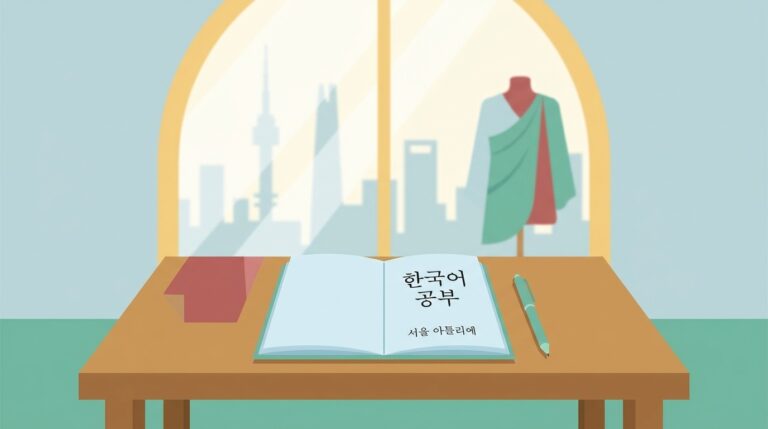
Step into the Atelier: Deciphering Haute Couture vs. Prêt-à-Porter in Korean Fashion Culture
안녕하세요! Welcome back, style mavens! It’s your favorite local culture navigator and Senior Editor of Daily Hangul.
If you’ve ever walked past the dazzling flagship stores of Cheongdam-dong (청담동) or watched K-drama style icons like Son Ye-jin in Crash Landing on You strut in gravity-defying, jaw-dropping couture, you’ve probably felt that sudden rush of awe. But here is a challenge: how do you express the subtle differences between the meticulous, artisanal craft of Haute Couture (오트 쿠튀르) and the sleek, commercial ready-to-wear allure of Prêt-à-Porter (프레타 포르테) in high-level Korean?
Many of our C1-level learners tell us, “I know the vocabulary for ‘clothes’ (옷) and ‘expensive’ (비싸다), but I can’t capture the sheer artistry, the draping, or the ‘vibe’ of high fashion when talking to Korean designers or boutique owners!”
Don’t worry. Today, we are upgrading your fashion lexicon from standard textbook definitions to the elite runway-level expressions used by Seoul’s top stylists and designers. Put on your chicest outfit, grab your sketchpad, and let’s dive into the world of Korean high fashion!
Phase 2: Deep Dive into 3 Elite Fashion Expressions
1. 한 땀 한 땀 (Han ttam han ttam)
- Pronunciation: [Han ttam han ttam] (Sounds like “Han tahm han tahm”)
- Meaning: Stitch by stitch; painstakingly handcrafted with ultimate devotion.
- K-Culture Moment: This expression became legendary after Hyun Bin’s character in the drama Secret Garden endlessly bragged about his sparkling tracksuit, saying it was “painstakingly made, stitch by stitch, by an Italian master” (이탈리아 장인이 한 땀 한 땀 만든 거야).
- Editor’s Insight: This is the absolute soul of Haute Couture (맞춤복/오트 쿠튀르). While the literal meaning is about sewing, Koreans use it metaphorically for anything created with immense time, dedication, and precision.
- Situation Spectrum: Casual ✅ | Semi-formal ✅ | Formal ✅
- 🤔 Think About It: How does your native language describe the physical dedication of an artisan? Is there a phrase as visual as “stitch by stitch”?
2. 기성복 vs. 맞춤복 (Giseongbok vs. Matchumbok)
- Pronunciation: [Gi-seong-bok vs. Ma-chum-bok] (Sounds like “Gee-sung-bok vs. Mah-choom-bok”)
- Meaning: Ready-to-wear (Prêt-à-Porter) vs. Bespoke/Custom-tailored (Haute Couture).
- K-Culture Moment: If you visit a high-end designer shop in Sinsa-dong or a classic tailor in Sogong-dong, you will hear the master ask, “맞춤복을 원하십니까, 아니면 라인업 기성복을 보시겠습니까?” (Would you like bespoke or our ready-to-wear lineup?)
- Editor’s Insight: ‘기성’ means already accomplished/made, and ‘맞춤’ comes from ‘맞추다’ (to customize/adjust). Knowing this distinction helps you navigate luxury department stores vs. private tailoring salons in Korea.
- Situation Spectrum: Casual ⚠️ (Slightly formal) | Semi-formal ✅ | Formal ✅
- 🤔 Think About It: Why has the global demand shifted toward giseongbok, and how does the preservation of matchumbok represent a luxury lifestyle in modern Seoul?
3. 핏이 딱 떨어지다 (Pit-i ttak tteoreojida)
- Pronunciation: [Pit-i ttak tteor-eo-ji-da] (Sounds like “Peet-ee tahk ddun-uh-jee-dah”)
- Meaning: To have a perfect, flawless silhouette; to fit like a glove.
- K-Culture Moment: Frequently used by fashion hosts on Korean home shopping networks and luxury runway commentators to describe a garment that drapes perfectly over the shoulders without a single wrinkle.
- Editor’s Insight: ‘핏’ is the Koreanized version of “fit.” Combined with ‘딱 떨어지다’ (to fall cleanly/exactly), it means the silhouette of the clothing matches the body structure perfectly, which is the ultimate goal of Prêt-à-Porter pattern-making.
- Situation Spectrum: Casual ✅ | Semi-formal ✅ | Formal ⚠️
- 🤔 Think About It: In Korean, the aesthetic focus is often on how the clothes “fall” (떨어지다) rather than just how tight or loose they are. How does this reflect Korean fashion’s obsession with clean silhouettes?
Phase 3: Textbook Korean vs. Real-Life Runway Korean
Let’s look at how textbooks keep you safe, while real life makes you sound like a seasoned fashion director.
Situation 1: Praising the drape of a jacket
- 📖 Textbook: “이 재킷은 저에게 아주 잘 맞습니다.” (This jacket fits me very well.)
- 🗣️ Real-Life: “이 재킷, 어깨선부터 핏이 아주 예술로 떨어지네요.” (The silhouette of this jacket falls like a work of art right from the shoulder line.)
- 💡 Why it’s different: Saying “잘 맞습니다” just means it’s not too small. But “예술로 떨어지다” (falls like art) elevates your compliment to appreciate the designer’s pattern-cutting skills.
Situation 2: Discussing the uniqueness of Haute Couture
- 📖 Textbook: “오트 쿠튀르는 비싸고 독특한 옷입니다.” (Haute couture is expensive and unique clothing.)
- 🗣️ Real-Life: “오트 쿠튀르는 희소성과 디테일의 디테일이 살아있어서 가치가 있어요.” (Haute couture is valuable because its rarity and absolute attention to detail are truly alive.)
- 💡 Why it’s different: High-level Korean utilizes advanced Hanja terms like 희소성 (rarity/scarcity) and conversational repetition like “디테일의 디테일” (the detail within the details) to emphasize extreme quality.
Phase 4: K-Culture Deep Dive & Non-verbal Manners
4-1. The High-Fashion Gesture: “손끝으로 느끼다” (Feeling with the Fingertips)
When examining high-fashion or couture pieces in a Korean atelier, never grab or pull the fabric. Korean designers view textiles as living canvases. Gently run the back of your fingers over the texture while tilting your head slightly to appreciate the light reflection. Combine this with a soft, slow nod and say: “원단 감이 참 고급스럽네요” (The fabric feel is truly luxurious). This shows immense respect for the textile selection process.
4-2. Seoul’s Fashion Epicenter: DDP & the Fusion of Heritage
At Seoul Fashion Week held at the futuristic Dongdaemun Design Plaza (DDP), the line between Haute Couture and Prêt-à-Porter is uniquely blurred. Korean designers are famous for taking traditional elements (like Hanbok silhouettes or Git collars) and blending them into ready-to-wear streetwear. Understanding this fusion is key to discussing contemporary Korean fashion.
Phase 5: Live Roleplay Scenario
Location: A high-end designer atelier in Cheongdam-dong, Seoul.
Characters:
* 지우 (Ji-woo): Head designer of an avant-garde boutique who blends traditional Korean lines with modern couture.
* You (C1 Fashion Enthusiast): An international collector looking for a standout piece.
- 지우: 어서 오세요! 이번 2024 F/W 컬렉션은 실크의 텍스처를 극대화하는 데 초점을 맞췄습니다.
- You: 반갑습니다, 디자이너님. 역시 컬렉션을 직접 보니 기성복과는 다른 오트 쿠튀르만의 아우라가 느껴지네요.
- 지우: 🎭 (미소를 지으며 감동한 듯) 와, 단번에 알아봐 주시니 정말 기쁩니다. 이 드레이핑 유선형 라인은 전부 저희 장인들이 손수 작업한 겁니다.
- You: 어쩐지 어깨선부터 흐르는 라인이 남다르다 했습니다. 정말 한 땀 한 땀 공들인 태가 나요.
- 지우: 맞습니다. 이 실크 레이스는 한국 전통 자수 기법을 현대적으로 재해석해서 제작한 거예요. 한번 피팅해 보시겠어요?
- You: 🎭 (거울 앞에서 착용해 보며 조심스레 감탄한다) 어머, 허리선이 과하지 않으면서도 핏이 정말 딱 떨어지네요. 불편함이 전혀 없어요.
- 지우: 고객님의 체형과 드레스의 입체 패턴이 완벽하게 조화를 이루네요. 예술입니다!
🔀 Interactive Branching: What will you say next?
- [Choice A] “이 드레스, 기성복 라인으로도 출시될 예정인가요? 가격이 궁금해요.”
- [Choice B] “이 고유한 드레이핑 디테일을 해치지 않는 선에서 소매 길이만 살짝 맞춤 조정(커스텀)할 수 있을까요?”
- [Choice C] “너무 예쁜데 그냥 똑같은 디자인으로 공장에서 대량 생산해서 싸게 팔면 안 되나요?”
💡 Feedback:
- Best Choice: B — Highly professional and respectful of the original silhouette. Asking for minor bespoke adjustments (맞춤 조정) aligns perfectly with the couture purchasing experience.
- Risk Choice: A — A valid question, but asking about commercial mass-production (기성복 라인) right after praising the unique draping might slightly dampen the exclusive haute couture mood.
- Bad Choice: C — Major faux pas! Suggesting factory mass production (대량 생산) to an independent artisan designer completely dismisses the value of their craft.
Phase 6: 10-Second Emotion Shadowing Drill
Train your facial muscles and intonation to match the passion of Korean fashion connoisseurs. Pay attention to the pauses (/) and emotional cues!
- [🤩 With glittering eyes and pure admiration]
“이 코트는요, / 그냥 옷이 아니라 / 장인이 한 땀 한 땀 완성한 / 하나의 예술 작품 같아요!”
(This coat is not just clothing; it feels like a work of art completed stitch by stitch by an artisan!) -
[😎 Confidently and elegantly]
“저는 대량 생산된 기성복보다 / 제 몸의 선을 살려주는 / 맞춤복의 정교함이 더 좋더라고요.”
(Rather than mass-produced ready-to-wear, I prefer the sophistication of tailored clothes that accentuate the lines of my body.)
Phase 7: K-Culture Mini Dictionary
| Word | Romanization | English Translation & Everyday Usage |
|---|---|---|
| 신상 | Sinsang | Short for 신상품 (New Arrival). Used constantly by shoppers and editors alike: “이거 신상이에요?” (Is this a new arrival?) |
| 자체 제작 | Jache Jejak | In-house production. Highly valued in Dongdaemun and online malls as a sign of unique design and high quality. |
| 착장 | Chakjang | An outfit, look, or OOTD. E.g., “오늘 착장 정보 좀 공유해 주세요.” (Please share today’s outfit details.) |
| 드레이핑 | Deureiping | Draping. The art of arranging fabric on a dress form, highly discussed in high-fashion circles. |
Phase 8: Traveler’s Survival Kit
Survival Expressions for High-End Shopping in Seoul:
- “피팅룸에서 입어봐도 될까요?” (Can I try this on in the fitting room?)
- Pronunciation: [Piting-rum-eseo ib-eo-bwa-do dwel-kka-yo?]
- “이 디자인으로 다른 원단이나 색상도 있나요?” (Are there other fabrics or colors available for this design?)
- Pronunciation: [I di-ja-in-euro dareun won-dan-ina saek-sang-do in-na-yo?]
- “수선 서비스는 어떻게 진행되나요?” (How does the alteration service work?)
- Pronunciation: [Su-seon seo-bi-seu-neun eo-tteok-he jin-haeng-bwa-yo?]
📌 Editor’s Travel Note:
To explore local designer showrooms, download the Naver Map App instead of Google Maps, as Google Maps does not update local walking routes efficiently in Korea. Search for “디자이너 쇼룸” (Designer Showroom) in Hannam-dong (한남동) or Seongsu-dong (성수동) to see where the magic happens!
Phase 9: “한 발 더 깊이” (One Step Deeper)
In western fashion, Haute Couture is often about theatricality and boundary-pushing shapes. In Korea, however, the highest tier of tailoring is deeply rooted in the concept of 정성 (Jeongseong) — a word meaning utmost sincerity, devotion, and heart. When a Korean tailor makes a suit matchumbok-style, they often study the client’s daily movements, posture, and even breathing patterns. It is an empathetic craft. Thus, calling something “한 땀 한 땀 만든 옷” is not just a description of labor, but a high praise of the creator’s soul and care for the wearer.
💬 Your Turn: Do you value the quick trends of fast fashion, or do you prefer investing in pieces built with Jeongseong? Let us know in the comments below!
Phase 10: FAQ & Common Mistakes
Q: What is the exact difference between 기성복 (Giseongbok) and 프레타 포르테 (Prêt-à-Porter) in daily Korean?
A: While both mean ready-to-wear, 기성복 is a general term used for any off-the-rack clothing (from cheap fast fashion to high-end brands). 프레타 포르테 is used specifically within the context of high fashion designer collections and runway shows.
Q: Can I use the expression “한 땀 한 땀” in daily conversation, or is it too dramatic?
A: It is slightly dramatic but in a very witty, charming way! If your friend spends hours making a tiny handmade keychain or writing a beautiful letter, saying “우와, 한 땀 한 땀 정성이 느껴지네!” will make them laugh and feel deeply appreciated.
Q: How do I tell a tailor that I want the clothes to fit snugly but comfortably?
A: You can say: “라인은 살려주되, 활동하기 편하게 해주세요.” (Keep the silhouette sharp, but make it comfortable to move in.)
🚨 Common Mistakes Alert!
- Mistake 1: Saying “이 옷은 저랑 디자인이 안 맞아요” to mean it doesn’t fit your body size.
- Correction: Use “안 맞아요” for fit issues, but for style mismatches, say “제 스타일/취향이 아니에요.”
- Mistake 2: Using “싸구려” (cheapie) directly to describe ready-to-wear clothing in front of a salesperson.
- Correction: Use “대중적인 브랜드” (popular/mass brand) or “일반 기성복” to maintain politeness.
- Mistake 3: Pronouncing “핏” (Fit) like “peeth”.
- Correction: It must end with a clean stop [Pit] (similar to the English word “Pete” but with a sharp glottal stop at the end).
Phase 11: Action Mission
- Bronze Mission: Look at your favorite outfit today and write down its key highlight using “핏이 딱 떨어지다” in your personal journal!
- Silver Mission: Take a photo of your OOTD (오늘의 착장), post it on Instagram, and tag us with the caption: “오늘 착장, 어깨라인 핏이 참 마음에 드네! #매일한글 #OOTD”
- Gold Mission: Walk into a local boutique or a high-end vintage shop and politely ask the staff about the fabric drape using the phrase: “이 재킷은 실루엣이 정말 예술로 떨어지네요. 자체 제작 상품인가요?”
Phase 12: Interactive Quiz Challenge
Test your high-fashion IQ! Click on the toggle boxes below to check the answers.
1. Which term describes a garment custom-tailored to an individual’s body?
- A) 기성복 (Giseongbok)
- B) 맞춤복 (Matchumbok)
- C) 신상 (Sinsang)
Reveal Answer & Explanation
Correct Answer: B) 맞춤복
Explanation: ‘맞춤복’ is customized tailored clothing (bespoke). ‘기성복’ is ready-to-wear, and ‘신상’ means new arrivals.
2. Fill in the blank: “이 드레스는 디자이너가 _________ 공들여 만든 오트 쿠튀르 피스입니다.”
- A) 대충대충 (Daechoong-daechoong)
- B) 한 땀 한 땀 (Han ttam han ttam)
- C) 빨리빨리 (Ppalli-ppalli)
Reveal Answer & Explanation
Correct Answer: B) 한 땀 한 땀
Explanation: ‘한 땀 한 땀’ (stitch by stitch) implies extreme care and craftsmanship. ‘대충대충’ means half-heartedly, and ‘빨리빨리’ means quickly-quickly.
3. True or False: In Korea, “핏이 딱 떨어지다” can only be used to describe formal business suits.
- A) True
- B) False
Reveal Answer & Explanation
Correct Answer: B) False
Explanation: It can be used for any clothing that fits flawlessly—including casual coats, denim, or even high-fashion t-shirts!







