

Decode the Code: Cracking Korea’s Plastic Recycling Symbols Like a Local
Phase 1: Empathy (스토리 몰입형 오프닝)
안녕하세요! Your favorite Korean culture navigator and Daily Hangul senior editor is back!
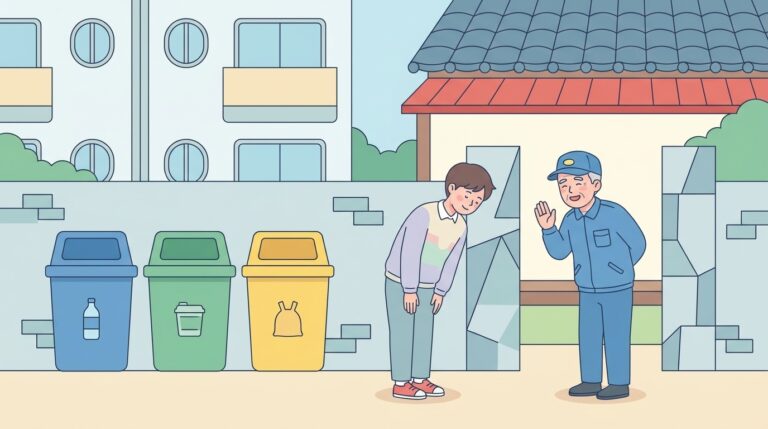
Picture this: You’ve just moved into a beautiful studio apartment in Seoul. You’ve successfully ordered your first chimaek (chicken and beer), devoured it, and now you’re left with a mountain of plastic containers. Confidently, you carry them down to the apartment’s recycling zone on Sunday evening. But as you stand before a row of pristine, color-coded bins, you freeze.
A stern but warm-hearted Gyeongbi-ajeossi (apartment security guard) watches you with hawk eyes. He gently points at your plastic salad container and shakes his head, pointing to a tiny triangular symbol with Korean characters like 페트, 플라스틱, or OTHER inside.
“총각/아가씨, 이건 여기 넣으면 안 돼요!” (You can’t put this here!)
Welcome to Korea’s legendary, ultra-efficient, and admittedly intimidating 분리수거 (bunriseugeo) system. In Korea, recycling isn’t just a chore—it’s a highly structured social contract. If you don’t know your HDPE from your OTHER, you might face anything from a gentle scolding from a neighbor to a hefty municipal fine of up to 300,000 KRW.
Don’t worry, my friend! Today, we are going to master the 플라스틱 재질별 분류 기호 (plastic recycling symbols by material) like a native. By the end of this guide, you won’t just avoid the recycling-police’s gaze; you’ll earn their ultimate respect. Let’s dive in!
Phase 2: Core Expressions Deep Dive (핵심 표현 3선 심층 분석)
1. 분리배출 (Bunribaechul)
- Pronunciation: [Bun-ri-bae-chul] (Rhymes with “moon-re-bag-tool”)
- Meaning: Separate Disposal / Sorting and Discharging waste.
- K-Culture Moment: You’ll see this word plastered across every residential trash zone, government campaign posters, and eco-friendly product packages in Korea. It’s the official civic term for sorting your trash properly.
- Editor’s Insight: While 분리수거 (bunriseugeo) means “sorting and collection” (done by the collectors), 분리배출 (bunribaechul) is the action you take to sort and put it out. Using “분리배출” shows a highly sophisticated, native-level grasp of Korean civic terminology.
- Situation Spectrum: Casual ⚠️ | Semi-formal ✅ | Formal ✅
- 🤔 Think About It: In many Western countries, “recycling” is a single, broad category. Why do you think Korean society splits this concept into “sorting/discharging” (분리배출) and “collection” (분리수거)?
2. 페트병 라벨을 떼다 (Peteubyeong rabel-eul tteda)
- Pronunciation: [Pe-teu-byeong ra-bel-eul tte-da] (Pronounce “peteu” like “pet” with a soft ‘u’ at the end)
- Meaning: To peel/rip off the plastic bottle label.
- K-Culture Moment: In K-Dramas featuring relatable daily life scenes, you’ll often see characters sitting on the floor, diligently peeling vinyl labels off water bottles before throwing them away.
- Editor’s Insight: Korea has a strict “Transparent PET bottle” separation rule. Transparent PET must go into a separate bin, but only after you remove the colored vinyl sleeve (라벨). Failing to peel this off is the #1 mistake foreigners make!
- Situation Spectrum: Casual ✅ | Semi-formal ✅ | Formal ⚠️
- 🤔 Think About It: How does this small, tactile action of “peeling labels” reflect the Korean concept of collective responsibility for the environment?
3. 내용물을 씻어서 말리다 (Naeyongmul-eul ssiseoseo mallida)
- Pronunciation: [Nae-yong-mul-eul ssi-seo-seo mal-li-da] (Say “ssi” with a sharp, tense ‘S’ sound)
- Meaning: To wash out the contents and dry them.
- K-Culture Moment: You order spicy tteokbokki. The plastic container turns bright red. A true Korean will scrub that container with dish soap and let it dry under the sun before putting it in the recycling bin.
- Editor’s Insight: If a plastic container is stained with food grease or red pepper oil (고춧가루), it is deemed unrecyclable and must go into the general waste (일반 쓰레기). “씻어서 말리다” is the golden rule of Korean recycling.
- Situation Spectrum: Casual ✅ | Semi-formal ✅ | Formal ✅
- 🤔 Think About It: Is “clean recycling” practiced with the same intensity in your home country? How does this change the way you view takeout containers?
Phase 3: Textbook Korean vs. Real Korean (교과서 한국어 vs 진짜 한국어)
In textbooks, recycling is taught with sterile, administrative phrases. In real life, Koreans use highly practical, conversational, and visual language.
Situation 1: Instructing someone to peel off a label
- 📖 Textbook: 플라스틱 용기의 라벨을 반드시 분리해 주세요.
(Please make sure to separate the label of the plastic container.) - 🗣️ 진짜 한국어: 이거 페트병 버릴 때 비닐 라벨은 꼭 떼고 버려야 돼요.
(When you throw away this PET bottle, you absolutely have to rip off the plastic label first.) - 💡 Why the difference? Real Koreans rarely say “용기” (container) in daily conversation; they specify “페트병” (PET bottle) or “통” (bin/container). Also, “떼다” (to peel/detach) is much more natural and common than “분리하다” (to separate) when dealing with labels.
Situation 2: Asking if a dirty plastic container can be recycled
- 📖 Textbook: 오염된 플라스틱은 재활용이 불가능합니까?
(Is contaminated plastic impossible to recycle?) - 🗣️ 진짜 한국어: 이거 빨간 국물 밴 거는 그냥 일반 쓰레기로 버려야 되죠?
(Since this is stained with red soup, I should just throw it in the general trash, right?) - 💡 Why the difference? Instead of “오염된” (contaminated), native speakers refer to the specific stain, usually “빨간 국물 밴 것” (stained with red soup/broth), which is the ultimate nemesis of Korean recycling. “일반 쓰레기” (general waste) is the practical term used instead of “재활용 불가능” (impossible to recycle).
Phase 4: K-Culture Deep Dive & Non-verbal Manners (비언어적 매너)
4-1. Nunchi (눈치) & The Art of “딱지 접기” (Folding Vinyl)
When you visit a recycling zone in a Korean apartment complex on a busy Sunday night, your 눈치 (nunchi – situational quick-wittedness) must be at 100%.
- The Gesture of Respect: If the security guard or an elderly neighbor is sorting nearby, always give a polite nod (목인사) and step aside to let them sort first if they have a large load.
- The Vinyl Fold (딱지 접기): When disposing of clean plastic wrappers or delivery bags (classified as 비닐/Vinyl), Koreans don’t just crumple them up. To save space, they fold them into neat, flat triangles (resembling a traditional game tile called 딱지). Doing this shows you are a highly cultured, considerate neighbor.
4-2. The Evolution of “라벨 프리” (Label-Free) in K-Beauty and K-Food
+-------------------------------------------------------------+
|                   KOREAN PLASTIC SYMBOLS                    |
+---------------------+---------------------------------------+
|  페트 (PET)         | Transparent beverage bottles (MUST BE |
|                     | LABEL-FREE & RINSED)                  |
+---------------------+---------------------------------------+
|  플라스틱 (PP/PE)   | Delivery containers, bottle caps,     |
|                     | shampoo bottles                       |
+---------------------+---------------------------------------+
|  비닐 (Vinyl)       | Snack bags, bubble wrap, plastic baggies|
+---------------------+---------------------------------------+
|  OTHER              | Multi-layered plastics (unrecyclable, |
|                     | often goes to energy recovery)        |
+---------------------+---------------------------------------+
Korea’s obsession with zero-waste has forced major food and cosmetics brands to change. If you watch modern K-dramas, you might notice characters drinking water from bottles without any brand labels. This isn’t just to avoid product placement (PPL) issues—it’s because “라벨 프리” (Label-Free) bottled water is now the norm in Korean supermarkets to make bunribaechul easier!
Phase 5: Real Roleplay Scenario (실전 롤플레이 시나리오)
Setting: The waste disposal zone of a clean apartment complex in Mapo, Seoul. Sunday at 8:00 PM.
NPC: 박 씨 (Mr. Park, 65) – The legendary apartment security guard (경비아저씨). He is known to be the “Sherlock Holmes of Recycling.”
[Scene Start]

Mr. Park: (Looking closely at your recycling bag, arms crossed)
아이고, 젊은이! 잠깐만요. 그 플라스틱 통 그대로 넣으면 안 되지!
(Aigo, young man/lady! Hold on a second. You can't just put that plastic container in like that!)

You: (Surprised, bowing slightly)
앗, 죄송합니다! 제가 뭘 잘못 넣었나요, 아저씨?
(Ah, I'm sorry! Did I put something in wrong, sir?)

Mr. Park: (Picks up a transparent coffee cup with a colorful straw still inside)
이거 봐요. 이 빨대는 '플라스틱 OTHER' 재질이라 따로 버려야 하고, 컵에 묻은 시럽도 덜 닦였잖아. 이거 물로 한번 헹궈 왔어요?
(Look at this. This straw is made of 'Plastic OTHER' material so it has to be discarded separately, and the syrup on the cup isn't washed off fully. Did you rinse this with water?)

You: (Embarrassed, scratching your head)
아... 빨대랑 컵을 분리해야 하는 줄 몰랐어요. 물로 대충 헹구긴 했는데 부족했나 봐요.
(Ah... I didn't know I had to separate the straw from the cup. I rinsed it with water quickly, but I guess it wasn't enough.)

Mr. Park: (Sighs softly but smiles warmly)
처음엔 다 그래요. 페트병은 라벨 딱 떼서 찌그러뜨리고, 이런 배달 통은 빨간 양념 싹 씻어서 플라스틱 칸에 넣는 거예요. 알겠지요?
(Everyone is like that at first. Peel off the label of PET bottles, crush them flat, and for these delivery containers, wash off all the red sauce and put them in the plastic bin. Got it?)

You: (Nodding dynamically)
네! 다음부터는 꼭 라벨 떼고 싹 다 씻어서 말려 올게요. 알려주셔서 감사합니다, 아저씨!
(Yes! Next time, I will definitely peel off the labels, wash everything thoroughly, and dry them before bringing them down. Thank you for teaching me, sir!)

[Scene End]
🔀 Interactive Choice Point
Mr. Park suddenly hands you an empty, greasy red tteokbokki container that you brought down. “이건 어떻게 버릴 거예요?” (How are you going to discard this?)
- Option A: “그냥 대충 물로 헹궈서 플라스틱 수거함에 쏙 넣을게요!”
- Option B: “아, 이건 양념이 안 지워지니까 깨끗이 씻어보고, 그래도 빨간색이 안 빠지면 종량제 봉투(일반 쓰레기)에 담아서 버릴게요!”
- Option C: “귀찮은데 그냥 비닐봉지에 싸서 아무 데나 던져둘래요.”
💡 Feedback:
- Option A (Risk): If you just rinse it casually leaving grease, Mr. Park will call you back. Red pepper oil binds with plastic, making it unrecyclable unless thoroughly scrubbed with dish soap.
- Option B (Best): Perfect! Stained plastics that cannot be cleaned must be thrown into the general trash (종량제 봉투). Mr. Park will smile and maybe even offer you a warm sweet potato!
- Option C (Bad): Absolutely not! You might get caught on CCTV and face a heavy fine, not to mention losing the trust of your entire neighborhood.
Phase 6: 10-Second Emotion Shadowing Drill (10초 감정 섀도잉 드릴)
Practice saying these high-frequency sentences with natural Korean cadence and emotion. The slashes / indicate pauses.
[🥺 Apologetic and polite]
죄송해요, / 제가 한국 분리수거 규정을 / 잘 몰랐어요. / 다음부터 꼭 신경 쓸게요.
(Joe-song-hae-yo, / je-ga han-guk bun-ri-su-geo gyu-jeong-eul / jal mol-lat-seo-yo. / Da-eum-bu-teo kkok sin-gyeong sseul-ge-yo.)-
[😊 Proud and cooperative]
아저씨! / 저 오늘 페트병 라벨도 / 싹 다 떼고, / 물로 깨끗이 씻어 왔어요!
(A-jeos-si! / Jeo o-neul pe-teu-byeong ra-bel-do / ssak da tte-go, / mul-lo kkae-kkeut-i ssi-seo wat-seo-yo!) -
[🤔 Clarifying nicely]
이건 / 플라스틱 아더(OTHER)라고 / 쓰여 있는데, / 일반 쓰레기로 / 버리는 게 맞나요?
(I-geon / peul-la-seu-tik a-deo-ra-go / sseu-yeo in-neun-de, / il-ban sseu-re-gi-ro / beo-ri-neun ge man-na-yo?)
Phase 7: K-Culture Mini Dictionary (K-Culture 미니 사전)
- 종량제 봉투 (Jongryangje Bongtu) | Volume-rate garbage bag
- Official, government-issued trash bags that you must purchase at supermarkets or convenience stores. General non-recyclable waste must only go in here.
- 라벨 프리 (Label-free) | Label-free products
- A massive consumer trend in Korea where beverages are sold without vinyl wrappers to eliminate plastic waste.
- 플라스틱 OTHER (Peullaseutik Other) | Other composite plastics
- Plastics made from mixed materials. Because they cannot be easily melted down together, they are generally classified as general waste or burnt for fuel recovery rather than recycled into new plastic.
- 수거일 (Sugeoil) | Collection day
- Designated days of the week when residents are allowed to bring out their recycling. Setting trash out on the wrong day is a major neighborhood taboo.
Phase 8: Survival Kit for Travelers (여행자를 위한 생존 키트)
Survival Expressions TOP 3
- 이거 어디에 버려요? (I-geo eo-di-e beo-ryeo-yo?)
- Where do I throw this away? (Perfect for cafes, hotels, or public spaces)
- 재활용 돼요? (Jae-hwal-yong dwae-yo?)
- Is this recyclable?
- 일반 쓰레기봉투 어디서 사요? (Il-ban sseu-re-gi-bong-tu eo-di-seo sa-yo?)
- Where can I buy general trash bags?
🗺️ Editor’s Travel Note
When living in or traveling through Korea, finding out the local waste rules can be tough because they differ slightly by district (구 – gu). To stay updated, use the official app: search for 내 손안의 분리배출 (My Handheld Recycling) online or download it directly to view clear photographic guides of what goes where. Please note: local municipal laws are subject to updates, so always verify with your local community center.
Phase 9: “One Step Deeper” (한 발 더 깊이)
Korea’s strict recycling system is deeply tied to the cultural concept of 우리 (Uri – Us/We) and community responsibility. In a densely populated country with limited land, landfilled waste is a critical national issue. Doing your bunriseugeo properly is viewed as a basic courtesy to your neighbors and the future generation. When you recycle diligently, you are telling Korean society: “I care about our shared space.”
💬 Your Turn: How does this compare to waste management in your country? Do you think social pressure helps or hurts the environment? Let us know in the comments below!
Phase 10: FAQ & Avoiding Misunderstandings (FAQ & 오해 방지)
Q: Can I recycle dirty pizza boxes or plastic delivery containers?
A: No. If cardboard or plastic is deeply stained with food residue (like oil or grease), it belongs in the general waste (종량제 봉투). Putting contaminated items in the recycling bin can contaminate entire batches of clean recyclables!
Q: What should I do with plastic bottle caps?
A: Ideally, remove the plastic cap, crush the bottle flat to remove air, and then screw the cap back on (or collect caps separately). Keeping the cap on prevents the bottle from expanding again during transport, and modern recycling facilities have floating systems that easily separate the caps from the bottles.
Q: Are cosmetic plastic bottles recyclable?
A: Look closely at the bottom. If it says “OTHER” or has metallic pumps, they are usually not recyclable and must be put in the general waste.
🚨 Common Mistakes (흔한 실수) Warning Board
- Mistake 1: Leaving residual liquid inside drink cups.
- Correct Action: Empty the liquid completely in a sink before recycling the cup.
- Mistake 2: Putting plastic toys or toothbrushes into the plastic recycling bin.
- Correct Action: These are composite materials. Unless they are 100% pure plastic, they must go to the general waste.
- Mistake 3: Thinking “OTHER” means “throw in plastic bin anyway.”
- Correct Action: If it is marked as vinyl, place it in the vinyl bin. If it is hard plastic marked “OTHER,” check local rules; many districts require it to go to general waste.
Phase 11: Action Mission & Engagement (액션 미션 & 참여 유도)
To lock in your C1-level knowledge, take on today’s Daily Hangul challenges:
- 🥉 Bronze Mission: Take a look at the plastic products in your room right now. Can you find the Korean recycling triangles? Take a picture of one and translate the material name (e.g., 페트, PP, OTHER).
- 🥈 Silver Mission: Share a photo of your folded vinyl triangle (딱지) on Instagram, tag
@DailyHanguland use the hashtag#BunribaechulMaster. - 🥇 Gold Mission: Next time you go to a convenience store or supermarket in Korea, buy a “라벨 프리” (label-free) product and practice peeling the cap ring off yourself!
Phase 12: Interactive Quiz Challenge (인터랙티브 퀴즈 챌린지)
Q1. Which of the following CANNOT be placed in the transparent PET bottle bin?
- A) A clean, label-free transparent water bottle.
- B) A transparent plastic takeout coffee cup.
- C) A clear plastic soy sauce bottle with the plastic handle removed.
Reveal Answer & Explanation
Correct Answer: B
Takeout coffee cups are made of various materials (PET, PS, PP) and often do not have the high purity of transparent water/beverage bottles. They should be sorted into the general ‘Plastic’ bin, not the dedicated ‘Transparent PET’ bin.
Q2. Fill in the blank: “페트병을 버릴 때는 반드시 ____을 떼고 버려야 합니다.”
- A) 뚜껑 (Cap)
- B) 라벨 (Label)
- C) 밑창 (Bottom)
Reveal Answer & Explanation
Correct Answer: B
You must always peel off the vinyl label (라벨) before recycling PET bottles.
Q3. True or False: If a delivery container is stained pink with kimchi or tteokbokki sauce even after washing, it can still go into the plastic recycling bin.
- A) True
- B) False
Reveal Answer & Explanation
Correct Answer: B (False)
If the stain cannot be removed and the plastic is permanently discolored, it is considered contaminated and must go into the general waste (종량제 봉투).







