

Phase 1: Empathy (스토리 몰입형 오프닝)
안녕하세요! Your trusty Korean language and culture companion from 매일한글 (Daily Hangul) is back!
Have you ever walked into a gleaming Olive Young in Seoul, picked up a top-rated cleansing oil, used it religiously, only to find mysterious tiny bumps cropping up on your skin? You’re not alone! Many of our advanced learners at Daily Hangul face this exact K-beauty paradox: using the world’s best skincare but getting disappointing results because of a tiny linguistic and cultural gap in understanding the product directions.
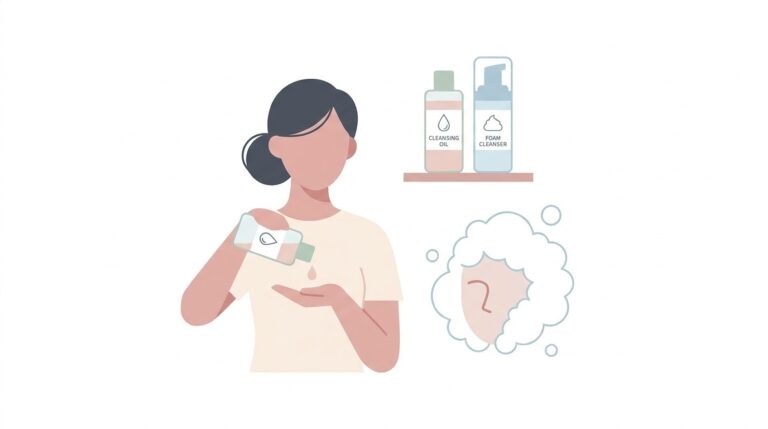
Today, we are elevating your Korean from textbook-stiff to beauty-guru fluent (C1 level). We will dissect the absolute essentials of 클렌징 오일과 폼 사용법 (How to use cleansing oils and foams) so you can discuss skincare like a Seoul native and finally unlock that elusive, radiant ‘glass skin’!
Phase 2: 핵심 표현 3선 심층 분석 (Deep Dive: Core Expressions)
1. 유화시키다 (Yuhwasikida)
- Pronunciation: [yu-hwa-si-ki-da] (Think: “you-wha-she-key-dah”)
- Meaning: To emulsify (transforming oil into a milky emulsion upon contact with water)
- K-Culture Moment: On popular K-Beauty YouTube channels (뷰튜버), you’ll constantly hear: “오일은 바르는 것보다 유화시키는 과정이 훨씬 중요해요!” (Emulsifying the oil is far more important than just applying it!)
- Editor’s Insight: Scientifically, ‘유화’ (乳化) literally translates to “milking” or turning into a milk-like state. In K-Beauty, skipping this step means leaving sticky oil in your pores, leading to breakouts.
- Situation Spectrum: Casual ✅ / Semi-formal ✅ / Formal ✅
- 🤔 Think About It: How does the detailed terminology of Korean skincare reflect the society’s high standards of diligence (부지런함) in personal grooming?
2. 뽀드득하다 (Ppodudeukhada)
- Pronunciation: [poh-deu-deuk-ha-da] (Mimics the squeaking sound of rubbing a clean window)
- Meaning: Squeaky-clean (describing skin stripped of all moisture and oils)
- K-Culture Moment: Older generations of Koreans loved a “뽀드득한 마무릿감” (a squeaky-clean finish). However, modern dermatologists in Korea warn: “뽀드득하게 세안하면 장벽이 무너집니다.” (Washing until squeaky-clean destroys your skin barrier.)
- Editor’s Insight: This is a classic sensory word (의태어). While it sounds satisfying, in contemporary skincare, it’s often used with caution. You want your skin to feel “촉촉하다” (moist), not “뽀드득하다”.
- Situation Spectrum: Casual ✅ / Semi-formal ✅ / Formal ⚠️
- 🤔 Think About It: How does your native language define the tactile “feeling” of clean skin compared to the Korean “뽀드득” or “촉촉”?
3. 이중 세안 (Ijung Seyean)
- Pronunciation: [ee-jung-seh-yan] (Rhymes with “ee-joong say-ahn”)
- Meaning: Double Cleansing (Oil followed by foam)
- K-Culture Moment: A golden rule on K-drama vanity tables. Even when characters come home completely exhausted or tipsy, they crawl to the bathroom muttering: “이중 세안은 하고 자야지…” (Must do double cleansing before sleeping…)
- Editor’s Insight: ‘이중’ (double) + ‘세안’ (cleansing/washing face). It is a Sino-Korean term. In casual conversations, you might hear ‘이중 세안’, but ‘이중 세수’ is rarely used because ‘세안’ specifically denotes cosmetic facial washing.
- Situation Spectrum: Casual ✅ / Semi-formal ✅ / Formal ✅
- 🤔 Think About It: Why does Korean have distinct words for everyday face washing (세수) versus cosmetic/skincare-focused facial cleansing (세안)?
Phase 3: 교과서 한국어 vs 진짜 한국어 (Textbook vs. Real-Life Korean)
Let’s bridge the gap between classroom Korean and actual Seoul beauty-talk.
- Situation 1: Discussing how thoroughly you wash your face.
- 📖 교과서 한국어: “얼굴을 깨끗하게 씻으세요.” (Wash your face cleanly.)
- 🗣️ 진짜 한국어: “모공 속까지 꼼꼼하게 세안하셔야 돼요.” (You have to cleanse meticulously, right down to the pores.)
- 💡 왜 다를까? C1 speakers avoid generic verbs like ‘씻다’ and use ‘세안하다’ combined with ‘꼼꼼하게’ (meticulously) and ‘모공 속’ (inside the pores) to show a nuanced understanding of skincare mechanics.
- Situation 2: Describing a foaming cleanser’s rich texture.
- 📖 교과서 한국어: “이 클렌징 폼은 거품이 많아요.” (This cleansing foam has lots of bubbles.)
- 🗣️ 진짜 한국어: “이 폼은 거품이 엄청 쫀쫀하고 조밀해요.” (This foam is incredibly dense, bouncy, and fine-textured.)
- 💡 왜 다를까? ‘쫀쫀하다’ (dense/firm/elastic) and ‘조밀하다’ (compact/fine) are the exact high-level descriptors used by Korean beauty experts to describe micro-bubbles that don’t sag.
Phase 4: K-Culture 딥다이브 & 비언어적 매너 (Deep Dive & Non-verbal Etiquette)
4-1. The “Rolling & Emulsification Pat” (롤링과 유화 탭)
When Koreans explain how to use cleansing oil, they don’t just speak; they use specific hand gestures. Rubbing your face roughly is a huge taboo!
* The Gesture: Lightly cup your hands, use only your ring and middle fingers, and draw small, gentle circles on your cheeks and nose. This is called 롤링 (rolling).
* The Emulsification Stage: Instead of splashing water instantly, they wet their fingertips slightly and tap their face gently to blend the water and oil until it turns milky white.
4-2. The Philosophy of “Washing” over “Painting”
In Korea, there’s a legendary cosmetic advertisement line from the 90s that shaped a generation: “화장은 하는 것보다 지우는 것이 중요합니다” (Cleansing is more important than putting on makeup). This cultural belief means that a pristine canvas (your natural skin) is valued far more than heavy concealer.
Phase 5: 실전 롤플레이 시나리오 (Interactive Roleplay)
Setting: A trendy Olive Young branch in Hongdae.
Characters:
* 지은 (Ji-eun): Olive Young’s passionate beauty advisor. (Always helpful, uses professional beauty terminology).
* Sarah: A skincare enthusiast searching for a solution to unexpected breakouts.
- 지은: (😊 밝게 미소 지으며) 고객님, 찾으시는 클렌징 제품 있으세요? 피부 고민 있으시면 편하게 말씀해 주세요!
- Sarah: (🥺 조금 시무룩한 표정으로) 아, 제가 요즘 이중 세안을 열심히 하는데도 턱 쪽에 자꾸 트러블이 올라와서요. 오일을 바꾸야 할까요?
- 지은: (😮 눈을 크게 뜨며 공감하듯) 아, 그러셨군요! 혹시 클렌징 오일 쓰실 때 유화 과정은 충분히 거치시나요?
- Sarah: (😅 머리를 긁적이며) 물을 아주 살짝만 묻혀서 대충 하얗게 변하자마자 바로 물로 헹궈내긴 하는데… 그게 문제였을까요?
- 지은: (💡 깨달음을 주듯 검지손가락을 세우며) 맞아요! 오일이 하얗게 유화될 때 모공 속 노폐물이 엉겨 나오거든요. 물을 조금씩 묻혀가며 최소 30초 이상 꼼꼼하게 롤링해 주셔야 해요. 오일 잔여물이 남으면 트러블의 원인이 됩니다!
- Sarah: (🤩 감탄하며) 아! 제가 유화 단계를 너무 급하게 건너뛰었네요. 추천해주신 대로 다시 써봐야겠어요!
🔀 Interactive Choice: What is Sarah’s best next response to Ji-eun?
- A) “그러면 오일 말고 세탁기 세제는 어디 있나요?”
- Feedback (Bad): Oops! You asked for laundry detergent instead of skincare. Let’s keep our laundry away from our faces!
- B) “그럼 혹시 유화가 잘 되면서도 자극이 적은 순한 오일이랑 약산성 폼클렌저 추천해 주실 수 있나요?”
- Feedback (Best): Perfect! You logically asked for a gentle emulsifying oil and a subacidic foam cleanser, matching the professional C1 flow seamlessly.
- C) “대충 아무거나 싼 걸로 대용량 하나 주세요.”
- Feedback (Risk): While practical, it completely dismisses the professional advice and interrupts the interactive skincare consultation.
Phase 6: 10초 감정 섀도잉 드릴 (10-Second Shadowing Drill)
Let’s practice the natural flow of spoken Korean. Pay attention to the pauses (/) and intonation!
[💡 조언하듯이 부드럽고 확신에 차서]
하얗게 / 유화될 때(↑) / 노폐물이 나오니까 / 꼼꼼하게 / 롤링하셔야 돼요.
(Ha-yah-ge / yu-hwa-doel ttae / no-pye-mul-i na-o-ni-kka / kkom-kkom-ha-ge / rol-ling-ha-syeo-ya dwae-yo.)-
[🤩 피부가 좋아져 신이 난 어조로]
약산성 폼으로 / 마무리하니까 / 전혀 뽀드득하지 않고 / 촉촉해요!
(Yak-san-seong pom-eu-ro / ma-mu-ri-ha-ni-kka / jeon-hyeo ppodudeukhaji anhgo / chok-chok-hae-yo!)
Phase 7: K-Culture 미니 사전 (Skincare Mini-Glossary)
- 속건조 (Sok-geonjo) | Inner skin dryness | The frustrating condition where your skin feels tight and dry on the inside, even if the surface looks oily.
- 약산성 (Yaksanseong) | Subacidic (Low pH) | A buzzword in K-beauty indicating a product matches the skin’s natural pH (around 5.5) to protect the skin barrier.
- 인생템 (Insaeng-tem) | Holy Grail Product | A portmanteau of 인생 (life) + 아이템 (item). A product so good you will use it for the rest of your life.
- 화해 (Hwahae) | ‘Hwahae’ App | Korea’s legendary cosmetic ingredient analysis app. Essential for checking hazardous ingredients.
Phase 8: 여행자를 위한 생존 키트 (Traveler’s Survival Kit)
Survival Expressions:
- “민감성 피부에도 자극 없이 쓸 수 있나요?”
- Pronunciation: [Min-gam-seong pi-bu-e-do ja-geuk eop-si sseul su in-na-yo?]
- Pro Tip: Use this to ask if a product is safe for hyper-sensitive skin.
- “이거 유화가 빠르게 잘 되는 오일인가요?”
- Pronunciation: [I-geo yu-hwa-ga bba-reu-ge jal doe-neun o-il-in-ga-yo?]
- Pro Tip: Ask this to ensure the oil emulsifies efficiently without leaving residue.
- “혹시 지금 원플러스원(1+1) 행사 진행 중인가요?”
- Pronunciation: [Hok-si ji-geum won-pleol-reo-seu-won haeng-sa jin-haeng jung-in-ga-yo?]
- Pro Tip: Spotting those red tags at Olive Young? Double-check if the buy-one-get-one-free deal is active!
Editor’s Travel Note: When shopping in Korea, don’t guess! We highly recommend checking out the 네이버 지도 앱 to find the nearest giant Olive Young flagship stores (like the Myeongdong Town branch), which carry a broader range of specialized deep-cleansing lines. Please note: App functions and operating hours may change seasonally.
Phase 9: “한 발 더 깊이” (A Deeper Cultural Reflection)
Skincare in Korea is more than just personal hygiene; it is a profound form of 자기관리 (self-management). The elaborate double-cleansing ritual reflects a broader societal mindset: that preparation, foundation, and unseen diligence are the cornerstones of outer beauty. While Western beauty trends often focus on fast-acting, high-potency spot treatments, Korean beauty favors patient, preventative care. Clean, radiant skin is viewed as an indicator of a disciplined, healthy lifestyle.
💬 Your Turn: Do you swear by the double cleansing method, or do you prefer a quick one-step wash? What does your skincare routine look like? Let us know in the comments below!
Phase 10: FAQ & 오해 방지 (FAQ Schema & Pitfalls)
Q: 클렌징 오일은 매일 쓰면 피부에 너무 자극적이지 않나요?
A: No! Modern K-beauty cleansing oils are formulated with gentle, plant-derived oils rather than heavy mineral oils. As long as you perform the 유화 (emulsification) process correctly and rinse thoroughly with lukewarm water, it is safe and highly recommended for daily makeup and sunscreen removal.
Q: “세수”와 “세안”은 어떻게 구별해서 써야 하나요?
A: Great question for C1 learners! 세수 (Sesu) is a native, general word used daily (e.g., “아침에 일어나서 세수했다” – I washed my face in the morning). 세안 (Seyean) is a more elegant Sino-Korean word specifically used in beauty, dermatology, or skincare contexts (e.g., “꼼꼼한 세안이 중요합니다” – Meticulous facial cleansing is important).
Q: 지성 피부(Oily skin)인데도 클렌징 오일을 써야 하나요?
A: Absolutely! “Like dissolves like.” Oil cleansers are excellent at melting away sebum (피지) and blackheads, which are oil-based. Just ensure you follow up with a water-based foam cleanser to remove any remaining oil residue.
🚨 흔한 실수 (Common Mistakes) 경고판!
- Using the verb “빨다” for face washing
- Mistake: “얼굴을 비누로 빨았어요.”
- Correct Action: “빨다” is strictly for clothes or fabrics. Always use 씻다 or 세안하다 for your face.
- Describing moisturized skin as “미끄럽다” (slippery)
- Mistake: “세수한 후에 얼굴이 미끄러워요.”
- Correct Action: “미끄럽다” implies a greasy, unsafe, or oily slip. Use 촉촉하다 (moist/hydrated) instead.
- Confusing “폼클렌징” and “바디워시”
- Mistake: Using general body soap on your face.
- Correct Action: Always specify 폼클렌저 or 클렌징 폼 to avoid damaging delicate facial skin.
Phase 11: 액션 미션 & 참여 유도 (Action Missions)
- 🥉 Bronze Mission (Solo): Read the ingredients label of your current cleanser. Can you translate at least three key terms into Korean (e.g., 오일, 폼, 약산성)?
- 🥈 Silver Mission (Social): Take a selfie of your nightly cleanser foam bubbles, post it on Instagram, tag
@DailyHangul, and use the hashtag#쫀쫀한거품. - 🥇 Gold Mission (Real World): The next time you visit a Korean cosmetics store (or shop online at Global Olive Young), type in the search bar: “약산성 폼클렌저” or “블랙헤드 클렌징 오일” and find your next Holy Grail item!
🎮 K-Culture Mission: Go to YouTube, search the term “올리브영 클렌징 추천” (Olive Young Cleansing Recommendation). Watch a 3-minute video and try to catch how many times the creator says the word “유화” or **







