

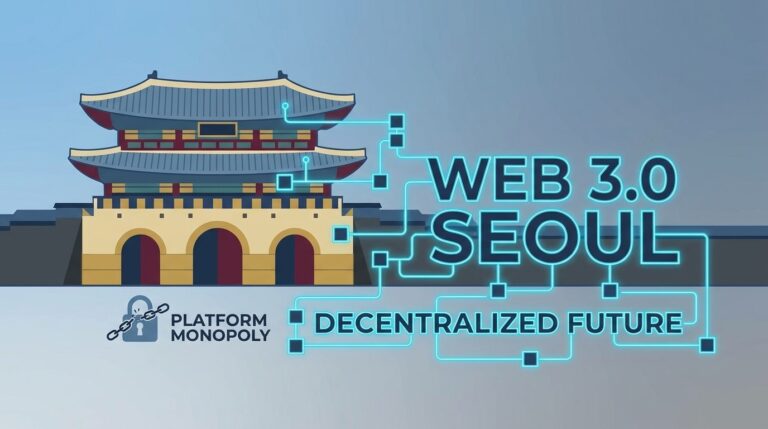
Breaking the Digital Hegemony: Navigating Korea\’s Web 3.0 Revolution and Platform Decentralization Like a Native
안녕하세요! Welcome back to another masterclass with Daily Hangul. I\’m your chief editor and native cultural navigator. Over the past decade, I\’ve watched Seoul morph from a city captivated by centralized tech giants into one of the world\’s most vibrant, hyper-connected hotbeds for Web 3.0 and blockchain innovation.
If you have spent any time in Seoul\’s trendy co-working spaces in Seongsu-dong (성수동) or attended tech meetups in Gangnam (강남), you\’ve probably noticed a massive shift. Young Korean developers, creators, and entrepreneurs are no longer just looking to climb the corporate ladders of tech oligopolies like Kakao or Naver. Instead, they are dreaming of 탈중앙화 (decentralization) and escaping the grasp of platform monopolies.
But here is the catch: when discussing complex topics like blockchain, tokenomics, and platform monopoly disruption in Korean, relying on standard textbook vocabulary will make you sound like a rigid 1990s economics professor. To truly connect with the visionaries of the Korean Web3 space, you need to understand the cultural undertones, the subtle idioms, and the sharp socio-economic critiques that define this digital revolution.
Let\’s dive deep into how Web 3.0 is reshaping the Korean language and cultural landscape, and equip you with the high-level linguistic toolkit to lead these conversations with absolute confidence.
Phase 2: 3 Core Expressions Deep Dive
To command respect in Korea\’s Web3 circle, you must master these three sophisticated expressions, each carrying deep linguistic and socio-cultural weight.
1. 탈중앙화 (脫中央化)
- Pronunciation: [Tal-jung-ang-hwa] / Sound-alike guide: “Tahl-joong-ahng-hwah”
- Meaning: Literal: “Moving away from the center” | Real-world Nuance: Decentralization (Specifically, the systemic dismantling of centralized authority or intermediary platforms using blockchain technology).
- K-Culture Moment: Picture a late-night debate in a moody craft beer pub in Yeouido, where young financial tech innovators are arguing how decentralized autonomous organizations (DAOs) will eventually replace traditional corporate hierarchies.
- Editor\’s Insight: In South Korea, centralization isn\’t just a technical term; it is a historical reality. Almost everything—from politics and economy to culture—has historically been concentrated in Seoul (서울 집중 현상). Therefore, when you use the term 탈중앙화, you are not just talking about node distribution; you are tapping into a deeply rooted cultural desire to democratize power and opportunity.
- Situation Spectrum:
- Casual (Friends/After-hours drinks): ✅ (Can be used playfully to describe splitting a bill directly without an app intermediary)
- Semi-formal (Tech Meetup/Colleagues): ✅ (The gold standard term)
- Formal (Keynote Speech/Whitepaper): ✅ (Absolutely essential)
- 🤔 Think About It: Why does the idea of “de-centering” feel so revolutionary to a generation that grew up in one of the most centralized, highly structured hyper-connected societies in the world? How does your native language frame the concept of decentralization?
2. 플랫폼 독점 탈피 (플랫폼 獨占 脫皮)
- Pronunciation: [Pleat-pom dok-jeom tal-pi] / Sound-alike guide: “Platform dock-jum tahl-pee”
- Meaning: Literal: “Shedding the skin of platform monopoly” | Real-world Nuance: Escaping or breaking free from platform monopolies (e.g., bypassing the high fee structures of giant app stores or content distributors).
- K-Culture Moment: This is the battle cry of modern K-Webtoon artists and indie K-Pop producers who are utilizing Web3 tools to publish directly to their global fandoms without losing 30-50% of their revenue to corporate gatekeepers.
- Editor\’s Insight: The word 탈피 (tal-pi) literally means a snake shedding its skin. It implies a painful but completely necessary evolutionary step. Using this phrase shows you view Web3 not just as a financial investment, but as a systemic liberation from digital feudalism.
- Situation Spectrum:
- Casual: ⚠️ (Slightly academic, but great when passionately discussing the struggles of creators)
- Semi-formal: ✅ (Perfect for pitch decks or strategy meetings)
- Formal: ✅ (Highly professional and politically conscious)
- 🤔 Think About It: In Korea, platforms like Kakao are deeply integrated into daily life (payment, taxi, shopping, chatting). To “shed” this monopoly requires a massive psychological shift. Does your country have a single platform that controls daily life as Kakao does in Korea?
3. 창작자 경제 (創作者 經濟)
- Pronunciation: [Chang-jak-ja gyeong-je] / Sound-alike guide: “Chahng-jack-jah gyung-jeh”
- Meaning: Literal: “Creator Economy” | Real-world Nuance: The Web3 Creator Economy (Where intellectual property rights and financial rewards are directly owned by the creators via NFTs and smart contracts, bypassing traditional agencies).
- K-Culture Moment: Imagine an independent K-Indie band launching their own fan-token ecosystem to fund their next vinyl release, bypass major streaming platform cuts, and directly reward loyal listeners.
- Editor\’s Insight: While Web2 enabled the “Creator Economy,” it still enriched the platforms first. In Korean Web3 discourse, 창작자 경제 represents the ultimate paradigm shift where the actual value creators reclaim their financial sovereignty.
- Situation Spectrum:
- Casual: ✅
- Semi-formal: ✅
- Formal: ✅
- 🤔 Think About It: How does the traditional Korean agency system (known for its tight control over idols and artists) interact with this decentralizing impulse of the Web3 creator economy?
Phase 3: Textbook Korean vs. Real Korean
Let\’s bridge the gap between classroom Korean and the sharp, punchy language spoken by real-world tech disruptors in Seoul.
Situation 1: Expressing the core mission of Web 3.0
- 📖 Textbook Korean: “중앙 통제 방식에서 벗어나 블록체인 네트워크를 통해 디지털 주권을 회복해야 합니다.”
(We must escape the centralized control method and recover digital sovereignty through a blockchain network.) - 🗣️ Real Korean: “대기업 ‘갑질’ 없는 찐 탈중앙화 플랫폼이 대세가 될 거예요.”
(A truly decentralized platform without big-corp “power trips” is bound to become the mainstream.) - 💡 Why the difference? Textbooks avoid colorful social terms. In the real Korean tech ecosystem, the word 갑질 (gap-jil—the abuse of power by a dominant party) is widely used to describe how massive Web2 platforms treat individual developers and creators. Adding 찐 (jjin—slang for “genuine” or “real”) shows you understand the difference between fake marketing buzzwords and true decentralization.
Situation 2: Critiquing platform high-fee structures
- 📖 Textbook Korean: “대형 플랫폼의 불공정한 수수료 배분 체계를 반대하며 직접적인 보상을 추구합니다.”
(We oppose the unfair commission distribution system of large platforms and seek direct compensation.) - 🗣️ Real Korean: “수수료 ‘떼기’ 없는 웹3로 가야 창작자가 직접 보상받죠.”
(We need to move to Web3 where there is no platform “skimming” so creators can get paid directly.) - 💡 Why the difference? While “수수료 배분” (commission distribution) is technically correct, industry insiders use the colloquial and slightly gritty verb 떼기 (tte-gi—skimming or cutting a slice off the top) to emphasize the exploitative nature of Web2 intermediaries.
Phase 4: K-Culture Deep Dive & Non-verbal Manners
4-1. The Paradox of “Nunchi” (눈치) in Decentralized Organizations (DAOs)
How do you run a flat, decentralized organization (DAO) in a society traditionally guided by hierarchical respect? This is the fascinating cultural friction occurring in Korea\’s Web3 spaces right now.
While Web3 advocates for no bosses, Korean social mechanics still heavily rely on 눈치 (Nunchi—the art of reading the room and sensing hierarchy). When participating in a Korean Web3 DAO meetup:
* The Non-verbal Cue: Even if the organization claims to have “zero hierarchy,” do not immediately address senior members or industry veterans too casually. Use their professional titles or add 님 (-nim) to their names (e.g., 지민 님). It shows that while you support decentralized systems, you still respect personal boundaries and social harmony.
* The Drink Etiquette: If you end up at an after-hours networking dinner (회식 – hoesik), always pour drinks with both hands when serving an elder or senior partner, even if you both hold the exact same governance token voting power!
4-2. The K-Webtoon & K-Pop Web3 Battleground
In Korea, platform monopoly isn\’t an abstract concept—it is a daily reality for content creators. Webtoon artists, who drive the global K-Drama adaptation engine, have historically faced grueling schedules and high platform cuts. Because of this, Korea\’s Web3 movement is highly focused on IP (Intellectual Property) ownership.
By tokenizing webtoon characters or issuing music rights via NFTs, Korean creators are attempting to build direct pipelines to global fans. Understanding this context means you don\’t just talk about crypto prices; you talk about the democratization of K-Content production.
Phase 5: Interactive Roleplay Scenario
The Setting: A high-tech, neon-lit Web3 networking mixer on a rooftop lounge in Gangnam. Music is playing, and developers, venture capitalists, and digital artists are discussing the future of the creator economy.
The Characters:
* You: A forward-thinking Web3 consultant/investor.
* Ji-min (지민): A talented Webtoon producer who recently quit a major web portal to start an independent decentralized webtoon DAO.
Dialogue
- 지민: (Smiling warmly, offering a business card with both hands) “안녕하세요! Web3 기반 독립 웹툰 플랫폼을 준비 중인 이지민이라고 합니다.”
(Annyeonghaseyo! Web3 giban dongnip webtoon pleat-pom-eul junbi jung-in Lee Ji-min-irago hamnida.)
“Hello! I\’m Lee Ji-min, and I\’m preparing an independent Web3-based webtoon platform.” -
You: (Receiving the card with both hands and bowing slightly) “반갑습니다! 요즘 한국 웹툰 업계에서 플랫폼 독점 탈피가 정말 뜨거운 화두더군요.”
(Ban-gapsumnida! Yo-jeum han-guk webtoon eop-gye-eseo pleat-pom dok-jeom tal-pi-ga jeong-mal tteu-geo-un hwa-du-deo-gun-yo.)
“Pleasure to meet you! Platform decentralization seems to be an incredibly hot topic in the Korean webtoon industry lately.” -
지민: (Sighing in relief) “맞아요. 기존 거대 플랫폼들의 수수료 ‘떼기’가 너무 심해서, 정작 밤샘 마감하는 작가님들은 쥐꼬리만한 정산을 받거든요.”
(Maj-ayo. Gi-jon geo-dae pleat-pom-deul-ui su-su-ryo \’tte-gi\’-ga neo-mu sim-hae-seo, jeong-jak bam-saem ma-gam-ha-neun jak-ga-nim-deul-eun jwi-kko-ri-man-han jeong-san-eul bat-geo-dun-yo.)
“Exactly. The traditional giant platforms skim so much in fees that the creators, who pull all-nighters to meet deadlines, end up with a measly pittance.” -
You: “결국 플랫폼 독점을 깨고 찐 창작자 경제를 실현하는 게 핵심이겠네요. 블록체인을 어떻게 활용하실 계획이신가요?”
(Gyeol-guk pleat-pom dok-jeom-eul kkae-go jjin chang-jak-ja gyeong-je-reul sil-hyeon-ha-neun ge haek-sim-i-get-nae-yo. Beul-rok-che-in-eul eo-tteo-ke hwal-yong-ha-sil gye-hoe-ki-sin-ga-yo?)
“So breaking the platform monopoly and realizing a genuine creator economy is the core goal. How do you plan to utilize blockchain?” -
지민: (Eyes lighting up, gesturing dynamically) “독자들과 작가들이 직접 거버넌스 토큰으로 의사결정을 하고, 수익 분배도 스마트 계약으로 투명하게 처리하려고 해요.”
(Dok-ja-deul-gwa jak-ga-deul-i jik-jeop geo-beo-neon-seu to-keun-eu-ro ui-sa-gyeol-jeong-eul ha-go, su-ik bun-bae-do seu-ma-teu gye-yak-eu-ro tu-myeong-ha-ge cheo-ri-ha-ryeo-go hae-yo.)
“We want readers and creators to make decisions directly using governance tokens, and handle revenue distribution transparently via smart contracts.” -
You: “아주 훌륭한 시도네요! 하지만 기존 플랫폼의 막강한 독점을 무너뜨리는 게 쉽지만은 않을 텐데요.”
(A-ju hul-ryung-han si-do-neyo! Ha-ji-man gi-jon pleat-pom-ui mak-gang-han dok-jeom-eul mu-neo-tteu-ri-neun ge swip-ji-man-eun an-eul ten-dae-yo.)
“That\’s an excellent attempt! However, breaking down the powerful monopoly of existing platforms won\’t be easy.” -
지민: “네, 그래서 대형 플랫폼의 ‘갑질’에 지친 실력 있는 작가님들을 먼저 섭외해 생태계를 확장하고 있어요. 혹시 조언해주실 부분이 있을까요?”
(Ne, geu-rae-seo dae-hyeong pleat-pom-ui \’gap-jil\’-e ji-chin sil-ryeok it-neun jak-ga-nim-deul-eul meon-jeo seop-oe-hae saeng-tae-gye-reul hwak-jang-ha-go it-eo-yo. Hok-si jo-eon-hae-ju-sil bu-bun-i is-seul-ka-yo?)
“Yes, that\’s why we are first recruiting talented creators tired of large platforms\’ power trips to expand our ecosystem. Do you have any advice for us?”
🔀 Decision Point: Choose your response!
- Option A: “무조건 마케팅에 돈을 많이 쓰셔야 합니다. 결국 트래픽 싸움이니까요.”
(You must spend heavily on marketing. In the end, it\’s a battle for traffic.) - Option B: “작가와 독자가 플랫폼의 진정한 공동 소유자가 되는 찐 탈중앙화 커뮤니티의 가치를 입증하는 데 집중해야 합니다.”
(You should focus on proving the value of a genuinely decentralized community where creators and readers are the true co-owners of the platform.) - Option C: “그냥 기존 거대 기업들에게 플랫폼을 인수합병시키는 것이 가장 현실적인 엑싯(Exit) 전략입니다.”
(Honestly, getting acquired by the existing giant corporations is the most realistic exit strategy.)
💡 Analysis of Your Choices:
- Best Choice: Option B. This aligns perfectly with the Web3 ethos. Highlighting 공동 소유 (co-ownership) and 찐 탈중앙화 커뮤니티 (true decentralized community) shows you deeply understand the ideological drive of Korea\’s young builders who care about systemic change, not just quick profits.
- Risk Choice: Option A. While practical in Web2, it ignores the unique community-building aspect of Web3. It sounds a bit too traditional and mercenary.
- Bad/Offensive Choice: Option C. Suggesting they sell out to the very monopolies (갑질 대기업) they are trying to escape will instantly kill the conversation and show a lack of empathy for their mission.
Phase 6: 10-Second Emotional Shadowing Drill
To sound like a native Web3 pioneer, practice these sentences with the exact emotional weight and natural pauses (/).
Drill 1: Expressing frustration with corporate gatekeepers
- Emotion: [😤 Utterly frustrated and determined]
- Korean: “대기업 독식 구조에서는 / 창작자들이 / 절대 살아남을 수 없어요.”
- Pronunciation: [Dae-gi-eop dok-sik gu-jo-e-seon-eun / chang-jak-ja-deul-i / jeol-dae sa-ra-nam-eul su eop-seo-yo.]
- English: “Under the big-corp monopoly structure, / creators / can absolutely never survive.”
Drill 2: Inspiring faith in decentralization
- Emotion: [😊 Confident, visionary, and warm]
- Korean: “웹3는 단순한 기술이 아니라, / 진짜 디지털 주권을 / 되찾는 혁명이에요.”
- Pronunciation: [Web-sam-eun dan-sun-han gi-sul-i a-ni-ra, / jin-jja di-ji-teol ju-gwon-eul / doe-chat-neun hyeok-myeong-i-e-yo.]
- English: “Web3 is not just technology, / it\’s a revolution / to reclaim true digital sovereignty.”
Phase 7: K-Culture Mini Dictionary
| Word (Hangul + Romanization) | English Translation | Real-world Context & Usage |
|---|---|---|
| 갑질 (Gap-jil) | Power trip / Abuse of dominance | Derived from the legal terms “Gap” (first party to a contract) and “Eul” (second party). In Web3, it specifically refers to platforms unilaterally changing policies or fees. |
| 독식 (Dok-sik) | Monopolizing / “Eating it all” | Used when describing a winner-takes-all platform market where the intermediary takes all the financial upside, leaving crumbs for the actual builders. |
| 생태계 (Saeng-tae-gye) | Ecosystem | Originally biological, but heavily used in Korean tech to describe a blockchain protocol\’s community, dApps, and token economy. |
| 주권 (Ju-gwon) | Sovereignty | In Web3, this refers to “개인 정보 및 데이터 주권” (personal data and digital sovereignty) where individuals control their own identity and assets. |
Phase 8: Traveler\’s Survival Kit
Even if you are in Seoul for leisure, Web3 and blockchain are deeply integrated into the city\’s infrastructure. Here\’s how to survive and thrive:
Survival Phrases
- “여기 가상자산 결제 가능한가요?”
- Yeo-gi ga-sang-ja-san gyeol-je ga-neung-han-ga-yo?
- Pro Tip: “Is crypto payment accepted here?” Use this in cutting-edge cafes in Seongsu-dong or digital art galleries displaying NFTs.
- “스마트 컨트랙트로 바로 송금해 드릴게요.”
- Seu-ma-teu keon-treak-teu-ro ba-ro song-geum-hae deu-ril-ge-yo.
- Pro Tip: “I\’ll transfer it directly to you via smart contract.” Great when collaborating with freelance Korean digital designers.
- “커뮤니티 디스코드 링크 좀 보내주세요.”
- Keo-myu-ni-ti di-seu-ko-deu ring-keu jom bo-nae-ju-se-yo.
- Pro Tip: “Could you send me the community Discord link?” The standard way to stay connected after a local Seoul Web3 meetup.
📌 Editor\’s Travel Note
When traveling to Korea, forget standard maps. Download KakaoMap or Naver Map for local navigation, as global tools like Google Maps don\’t show real-time routes due to national security regulations. Note: For actual Web3 payments, many progressive shops in Seoul\’s IT districts are beginning to pilot local stablecoin and blockchain-based payment systems. (Data valid as of late 2023; verify local regulations before conducting heavy crypto transactions).
Phase 9: Deep Thought — “한 발 더 깊이” (Going One Step Deeper)
South Korea\’s rapid post-war economic miracle (the Miracle on the Han River) was built on extreme centralization. Giant family-owned conglomerates (Chaebols) and centralized governmental planning drove the country forward. This legacy carried over into the internet age, giving rise to massive digital monopolies that controlled communication, banking, and commerce.
However, the new generation of South Koreans is pushing back. Having experienced economic stagnation and the limitations of centralized corporate climbing, young Koreans see Web 3.0 not just as a financial lottery, but as a path to systemic reform. It\’s a way to bypass traditional corporate gatekeepers and achieve personal, creative, and financial sovereignty.
💬 Your Turn: Does your country\’s internet ecosystem suffer from similar platform monopolies? How is the local Web3 or creator community fighting back in your hometown? Share your thoughts in the comments below!
Phase 10: FAQ & Common Mistakes
Q: Can I use “탈중앙화” to describe splitting a restaurant bill or decentralizing daily tasks?
A: Yes, but with caution! In a casual setting, using 탈중앙화 to describe dividing up chores or splitting a bill (N-빵) is a form of clever, tech-nerd humor. For example: “우리 오늘 저녁 계산은 탈중앙화 방식으로 각자 보낼까요?” (Shall we pay for dinner tonight in a decentralized way—each sending our own portion?). It\’s highly witty!
Q: What is the difference between Web 3.0 and ordinary blockchain in Korean business meetings?
A: Standard blockchain is referred to simply as 블록체인 (beul-rok-che-in). 웹3 (Web3) specifically carries the connotation of user-ownership and breaking platform monopoly. Use “웹3” when discussing user empowerment, NFTs, and creator economy; use “블록체인” when discussing raw ledger technology and infrastructure.
Q: How do I talk about crypto trading without sounding like a speculative gambler?
A: Avoid using terms like 코인 대박 (coin jackpot) or 가즈아 (Gazua – let\’s go, heavily associated with wild speculation). Instead, use institutional terms like 가상자산 투자 (virtual asset investment) or 디지털 자산 포트폴리오 (digital asset portfolio) to maintain a highly professional C2-level posture.
🚨 Common Mistakes Warning Board
- Mistake: Saying “플랫폼 독점을 깨트리다” in a formal business pitch.
- Correction: Use 플랫폼 독점 탈피 (Shedding platform monopoly) or 독점 구조 해소 (Resolving monopoly structure) to sound incredibly professional.
- Mistake: Addressing a Web3 DAO coordinator as “부장님” (Department Manager).
- Correction: Never use traditional corporate titles in Web3 organizations. Address them by name + 님 (e.g., “민수 님”) or use 모더레이터 님 (Moderator-nim).
- Mistake: Pronouncing Web3 as “웹 삼 점 영” (Web 3.0) in fast-paced casual conversations.
- Correction: Most industry professionals simply call it 웹쓰리 (Web-three). Save “웹 삼 점 영” for extremely formal academic presentations.
Phase 11: Action Missions
🥉 Bronze (Home Challenge)
Record yourself saying the Phase 6 Emotional Shadowing Drills on your phone. Focus on expressing genuine frustration during Drill 1 and visionary hope during Drill 2.
🥈 Silver (Network Challenge)
Write a short post on your LinkedIn or Twitter account discussing the future of the 창작자 경제 (Creator Economy) in Korea. Use the hashtags #웹3 and #탈중앙화 and tag your favorite Korean indie Web3 project.
🥇 Gold (Real-world Challenge)
Attend a virtual or offline Web3 meetup or join a Korean-based Discord community. Introduce yourself using:
“안녕하세요! 저는 플랫폼 독점 탈피와 찐 창작자 경제 실현에 관심이 많은 [Your Name]입니다.”
(Hello! I\’m [Your Name], and I\’m highly interested in escaping platform monopolies and realizing a genuine creator economy.)
Phase 12: Interactive Quiz Challenge
1. Match the term to its correct definition:
- A. 탈중앙화
- B. 플랫폼 독점 탈피
- C. 창작자 경제
- Escaping or breaking free from the high-fee monopolies of dominant tech portals.
- Decentralization; the systemic redistribution of central authority via blockchain.
- The economic framework where content creators own their IP and directly monetize via Web3 tools.
🔎 Click here for the Answer & Cultural Explanation!
- A matches with 2
- B matches with 1
- C matches with 3
Cultural Note: Understanding how these three elements interconnect is the key to mastering high-level economic discourse in modern Korea. They represent the past problem (B), the technological solution (A), and the ultimate human-centric goal (C).
2. Fill in the blank:
“대형 플랫폼의 ( )에 지친 작가들을 위해 블록체인 기술이 필요합니다.”
(We need blockchain technology for creators who are exhausted by the power trips of giant platforms.)
🔎 Click here for the Answer!
Answer: 갑질 (Gap-jil)
Explanation: While 불공정 행위 (unfair behavior) works grammatically, using 갑질 directly addresses the power dynamic and societal grievance associated with platform monopolies.
3. True or False:
In a Korean Web3 DAO meetup, because the structure is decentralized, it is socially acceptable to address older members or business partners by their first name without any honorific suffix (like ‘-nim’). (T/F)
🔎 Click here for the Answer!
Answer: False!
Even in a highly decentralized organization, Korean linguistic etiquette demands respect. Always add 님 (-nim) to their name to maintain social harmony while embracing flat organizational structures.







