

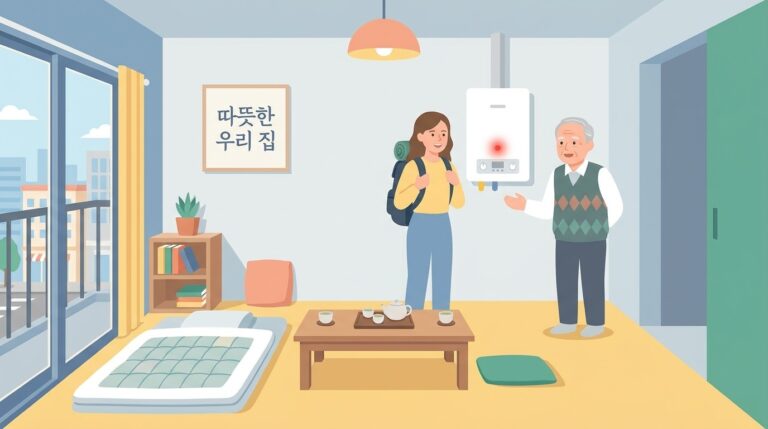
How to Ask Your Korean Landlord to Fix Things Without Being Awkward (B1 Level Guide)
안녕하세요! Welcome back to Daily Hangul. I’m your head editor and local culture navigator. If you’re living in Korea—or dreaming of renting your own cozy wonroom (원룸 – studio apartment) like the ones in your favorite K-Dramas—you already know how exciting it is to have your own space.
But let’s be honest. Your excitement can instantly turn into anxiety when the boiler stops working in the dead of winter, or when you notice water dripping from the ceiling.
In many Western cultures, renting is strictly business: you send an email to a management company, and they fix it. In Korea, however, renting often involves a unique interpersonal dynamic with your 집주인 (jip-ju-in – landlord). It requires a delicate blend of politeness, clarity, and nunchi (눈치 – situational quick-wittedness).
Today, we’ll learn how to ask for repairs like a seasoned expat, making your landlord want to help you immediately while keeping your relationship warm and harmonious.
Phase 1: The ‘Oh No!’ Moment (Our Real-life Case)
Imagine this scene from a drama: It’s January in Seoul. The temperature outside is -10°C. You just got home after a long day of eating spicy tteokbokki (떡볶이) with friends. You turn on the shower, expecting a steaming cascade of hot water. Instead, you get a freezing blast of mountain-cold water.
Our former student, Sarah from Chicago, faced exactly this. Terrified of sounding demanding, she translated “You must repair my boiler immediately” directly into Korean. Her landlord felt attacked and responded defensively.
If only Sarah knew the magic of polite negotiation! Let’s make sure you never have to take a cold shower in a freezing apartment.
Phase 2: Deep Dive into 3 Essential Expressions
1. 보일러가 고장 났어요 (Bo-il-leo-ga go-jang nat-eo-yo)
- Pronunciation: [bo-il-leo-ga go-jang-nat-eo-yo] / Sound-alike: “Boy-ler-ga go-jang-nat-uh-yo”
- Meaning: The boiler is broken / is out of order.
- K-Culture Moment: In K-Dramas, when a character’s boiler breaks, it’s often a comedy cue for them to sleep over at the main lead’s house. In real life, it’s a cold reality!
- Editor’s Insight: 고장 나다 (to break down) is the standard term. To sound softer and less confrontational, add -어서요 (expressing a soft reason) at the end: “보일러가 고장 나서요…” (The boiler is broken, so… [trailing off politely]).
- Situation Spectrum:
- Casual (Friends): ⚠️ (Too formal for friends, use “보일러 고장 났어”)
- Semi-formal (Landlord): ✅ (Perfect! Polite and direct)
- Formal (Business/Elderly): ✅
- 🤔 Think About It: In Korean, stating the problem and leaving the sentence unfinished (trailing off) invites the other person to offer help. Why do you think Korean culture values this indirect style of communication over direct demands?
2. 물이 새고 있어요 (Mul-i sae-go it-eo-yo)
- Pronunciation: [mool-ee sae-go eet-uh-yo] / Sound-alike: “Mool-ee sag-go eet-up-yo”
- Meaning: Water is leaking.
- K-Culture Moment: Leaky pipes are the ultimate villain in older residential buildings in neighborhoods like Mapo or Itaewon. Spotting a wet spot on your ceiling is the cue to make a quick call.
- Editor’s Insight: 새다 means “to leak.” When dealing with water leaks, timing is everything. Use this phrase immediately when you see damp wallpaper or dripping pipes to prevent major damage.
- Situation Spectrum:
- Casual: ✅ (“물 새!”)
- Semi-formal (Landlord): ✅
- Formal: ✅
- 🤔 Think About It: How does your home country handle water damage? In Korea, acting quickly protects both your security deposit (보증금) and the landlord’s property.
3. 언제쯤 고쳐주실 수 있나요? (Eon-je-jjeum go-chyeo-ju-sil su in-na-yo?)
- Pronunciation: [eon-je-jjeum go-chyeo-ju-shil su een-na-yo] / Sound-alike: “Un-jae-jjeum go-chyu-joo-sheel soo een-nah-yo?”
- Meaning: Around when would you be able to fix it for me?
- K-Culture Moment: Notice the helper verb -주시다 (to do something as a favor/honorific). You aren’t just asking “When will you fix it?”; you are asking “When can you perform the kind act of fixing it for me?”
- Editor’s Insight: Adding 쯤 (jjeum – around/approximately) softens the question. It shows you respect their schedule instead of demanding an exact minute.
- Situation Spectrum:
- Casual: 🚫 (Too polite)
- Semi-formal (Landlord): ✅ (Excellent standard)
- Formal: ✅
- 🤔 Think About It: How does adding honorifics like -시- and helper verbs like -주다 change your psychological posture when asking for a favor?
Phase 3: Textbook Korean vs. Real-World Korean
When we learn Korean from textbooks, the sentences are often grammatically flawless but socially stiff. Let’s look at how to sound natural.
Scenario 1: Reporting the Broken Boiler
- 📖 Textbook Korean: “보일러를 수리해 주십시오.” (Bo-il-leo-reul su-ri-hae ju-sip-si-o. / Please repair the boiler [highly formal/commanding].)
- 🗣️ Real Korean: “보일러가 잘 안 돼서 확인 좀 부탁드려요.” (Bo-il-leo-ga jal an dwae-seo hwag-in jom bu-tak-deu-ryeo-yo. / The boiler isn’t working well, so could you please check it?)
- 💡 Why is it different? Koreans rarely say “repair this” directly. Instead, they say “It’s not working well, so please check it.” This gives the landlord room to investigate without feeling commanded.
Scenario 2: Water dripping from the bathroom ceiling
- 📖 Textbook Korean: “천장에서 누수가 발생했습니다.” (Cheon-jang-es-eo nu-su-ga bal-saeng-haet-seup-ni-da. / Water leakage has occurred from the ceiling.)
- 🗣️ Real Korean: “천장에서 물이 조금씩 떨어지는데 한번 봐주실 수 있으세요?” (Cheon-jang-es-eo mul-i jo-geum-ssik tteo-reo-ji-neun-de han-beon bwa-ju-sil su is-seu-se-yo? / Water is dripping a little from the ceiling, could you take a look?)
- 💡 Why is it different? Using -는데 (background connector) softens the delivery, and 한번 봐주시다 (to take a look as a favor) sounds friendly and collaborative.
Phase 4: K-Culture Deep Dive & Non-verbal Manners
4-1. The Art of “Soft Opening” Text Messages
In Korea, you rarely call your landlord out of the blue to complain. Texting via KakaoTalk or SMS is preferred. Always start with a warm greeting before dropping the bad news:
- Greeting: “안녕하세요, 집주인 아저씨/어머님! 302호 세입자 제니입니다. 날씨가 많이 추워졌는데 건강히 잘 지내시죠?” (Hello, landlord! This is Jenny, the tenant in room 302. The weather has gotten cold, I hope you are staying healthy?)
- The Problem: “다름이 아니라…” (Actually, the reason I am writing is…)
- The Photo/Video: Always attach a clear picture or a 5-second video of the issue. This saves time and proves you aren’t exaggerating!
4-2. Who Pays? The Consumable vs. Structural Rule
In Korean rental culture:
* Consumables (소모품): Light bulbs, toilet seats, and door lock batteries are usually the tenant’s responsibility to buy and replace.
* Structural Issues (구조적 문제): Boilers, major plumbing leaks, and built-in appliances (if provided by the landlord) are legally the landlord’s responsibility.
Knowing this distinction prevents awkward arguments about who pays the bill (수리비 – repair fee).
Phase 5: Interactive Roleplay Scenario
The Setting: It’s 10:00 AM on a Tuesday. You are sitting at your desk, wrapped in a blanket because your heating is out. You decide to call your landlord, Mr. Kim (김 아저씨).
The Cast:
- You (Tenant Alex): Polite, freezing, but determined.
- Mr. Kim (Landlord): A friendly but busy senior citizen who responds well to polite manners.
The Dialogue:
- Mr. Kim: “여보세요, 네~ 302호 총각?”
(Yeo-bo-se-yo, ne~ sam-baek-i-ho chong-gak?)
(🎭 Greeting you warmly over the phone) “Hello, yes~ the young man in Room 302?” -
Alex: “안녕하세요, 아저씨! 날씨가 많이 춥죠?”
(An-nyeong-ha-se-yo, a-jeos-si! Nal-ssi-ga man-i chup-jyo?)
(🎭 Smiling while speaking, keeping a warm tone) “Hello, sir! The weather is really cold, isn’t it?” -
Mr. Kim: “그러게나 말이에요. 감기 조심해요. 근데 무슨 일 있어요?”
(Geu-reo-ge-na mal-i-e-yo. Gam-gi jo-sim-hae-yo. Geun-de mu-seun il is-seo-yo?)
(🎭 Sounding curious and friendly) “Indeed. Be careful not to catch a cold. But is everything okay?” -
Alex: “아, 다름이 아니라 어제부터 따뜻한 물이 안 나와서요… 보일러가 고장 난 것 같아요.”
(A, da-reum-i a-ni-ra eo-je-bu-teo tta-tteut-han mul-i an na-wa-seo-yo… bo-il-leo-ga go-jang nan geot gat-a-yo.)
(🎭 Speaking softly with a slightly worried tone) “Ah, actually, warm water hasn’t been coming out since yesterday… I think the boiler might be broken.” -
Mr. Kim: “어이쿠, 그래요? 추운데 고생했겠네. 보일러 조절기에 에러 코드 같은 거 떠요?”
(Eo-i-ku, geu-rae-yo? Chu-un-de go-saeng-haet-get-ne. Bo-il-leo jo-jeol-gi-e e-reo ko-deu gat-eun geo tteo-yo?)
(🎭 Expressing genuine concern) “Oh dear, really? You must have suffered in this cold. Is there an error code showing on the boiler controller?” -
Alex: “네, 조절기 화면에 ‘E03’이라고 계속 깜빡거려요.”
(Ne, jo-jeol-gi hwa-myeon-e E-gong-sam-i-ra-go gye-sok kkam-ppak-geo-ryeo-yo.)
(🎭 Explaining clearly) “Yes, ‘E03’ keeps blinking on the controller screen.” -
Mr. Kim: “아, 그래요? 내가 보일러 대리점에 전화해서 기사님 바로 보내줄게요. 오늘 집에 있어요?”
(A, geu-rae-yo? Nae-ga bo-il-leo dae-ri-jeom-e jeon-hwa-hae-seo gi-sa-nim ba-ro bo-nae-jul-ge-yo. O-neul jib-e is-seo-yo?)
(🎭 Reassuringly finding a quick solution) “Ah, is that so? I’ll call the service center and have a technician sent over right away. Are you home today?” -
Alex: “네, 오늘은 오후 내내 집에 있을 예정이에요.”
(Ne, o-neul-eun o-hu nae-nae jib-e is-seul ye-jeong-i-e-yo.)
(🎭 Sounding relieved and helpful) “Yes, I plan to be home all afternoon today.” -
Mr. Kim: “알겠어요. 기사님한테 302호 연락처 알려줄 테니까 전화 오면 받아요.”
(Al-get-seo-yo. Gi-sa-nim-han-te sam-baek-i-ho yeon-rak-cheo al-ryeo-jul te-ni-kka jeon-hwa o-myeon bad-a-yo.)
(🎭 Giving clear instructions) “Got it. I’ll give the technician your contact details, so make sure to pick up when they call.” -
Alex: “네! 바로 고쳐주셔서 정말 감사해요, 아저씨. 감기 조심하세요!”
(Ne! Ba-ro go-chyeo-ju-shyeo-seo jeong-mal gam-sa-hae-yo, a-jeos-si. Gam-gi jo-sim-ha-se-yo!)
(🎭 Expressing heartfelt gratitude with a bright voice) “Yes! Thank you so much for arranging this so quickly, sir. Stay warm!”
🔀 Decision Point: If the Landlord says, “Can you pay for the repair first?”
How do you respond? Choose your path:
- Option A: “싫어요. 제 잘못이 아니잖아요!” (I don’t want to. It’s not my fault!)
- Option B: “제가 수리비를 먼저 내고, 영수증을 보내드리면 이번 달 월세에서 제외하고 이체해도 될까요?” (Could I pay the repair fee first, and if I send you the receipt, subtract it from this month’s rent?)
- Option C: “네, 알겠습니다. 제가 다 낼게요.” (Okay, I understand. I will pay for all of it.)
💡 Best Choice Analysis:
- Option B is the Best! In Korea, it is common for tenants to pay the service technician on-site for convenience, send the receipt (영수증) to the landlord, and either get reimbursed immediately or deduct it from the next rent payment (월세). Option B communicates this professionally and smoothly.
- Option A is too aggressive and will damage your relationship. Option C makes you a pushover for costs you aren’t legally responsible for.
Phase 6: 10-Second Emotional Shadowing Drill
Let’s practice speaking with the exact pitch and emotional pauses used by native speakers. The slash / represents a short pause to breathe.
1. [🥺 Polite but Pitiful – Seeking Sympathy]
“보일러가 / 잘 안 돼서 / 너무 추워요…”
* Pronunciation: Bo-il-leo-ga / jal an dwae-seo / neo-mu chu-wo-yo…
* Delivery: Drop your pitch slightly at “추워요” to sound cold and in need of help!
2. [😊 Warmly Expressing Pure Gratitude]
“신경 써주셔서 / 정말 감사합니다!”
* Pronunciation: Sin-gyeong sseo-ju-shyeo-seo / jeong-mal gam-sa-hap-ni-da!
* Delivery: Elevate your voice on “정말” to show genuine appreciation.
Phase 7: K-Culture Mini-Dictionary
| Word (Korean/Romanization) | English Meaning | Real-world Context |
|---|---|---|
| 원룸 (Won-rum) | Studio Apartment | The most common housing type for single students and young professionals in Korea. |
| 관리비 (Gwal-li-bi) | Maintenance Fee | Paid monthly. Usually covers building cleaning, elevator maintenance, and sometimes internet/water. |
| 수리비 (Su-ri-bi) | Repair Costs | The cost of fixing broken facilities. Usually covered by the landlord for major appliances. |
| 계약서 (Gye-yak-seo) | Rental Contract | The holy grail document. Always keep it safe; you will need it when you move out to get your deposit back. |
Phase 8: Expat Survival Kit
Survival Expressions Top 3:
- “에어컨에서 찬 바람이 안 나와요.” (Ae-eo-keon-es-eo chan ba-ram-i an na-wa-yo.)
- Meaning: Cold air is not coming out of the air conditioner.
- Pro Tip: Use this in June before the scorching Korean summer heatwaves hit!
- “싱크대 배수구가 막혔어요.” (Sing-keu-dae bae-su-gu-ga mak-hyeot-seo-yo.)
- Meaning: The kitchen sink drain is clogged.
- “도어락 비밀번호가 잘 안 눌러져요.” (Do-eo-rak bi-mil-beon-ho-ga jal an nul-leo-jyeo-yo.)
- Meaning: The digital door lock buttons aren’t registering properly.
📌 Editor’s Travel Note:
If you’re looking for apartments or need emergency translation help in Seoul, use the Seoul Dasan Call Center (Dial 120) for free, multi-language support on housing and living issues. For apartment hunting, check out reliable listings on the Dabang Official Web Page rather than trusting unverified social media posts.
Phase 9: Deep Reflection — “한 발 더 깊이” (A Step Deeper)
In many Western cultures, a landlord-tenant relationship is strictly defined by legal contracts. However, in Korea, it is often treated as a “relationship of mutual care.” This is rooted in the concept of 정 (Jeong – deep attachment/affection).
When a tenant is extremely polite and respectful, a landlord often goes out of their way to help—sometimes even bringing them food, fruits, or forgiving minor delays in rent. Conversely, treating the landlord like a faceless corporation can make them stubborn and strictly stick to the bare minimum of their legal duties. Living in Korea is a beautiful lesson in how warmth and human connection can solve even the toughest practical problems.
- 💬 Your Turn: How is renting in your home country? Is it purely professional, or do you have a personal relationship with your landlord? Let us know in the comments below!
Phase 10: FAQ & Avoiding Common Mistakes
Q: What should I do if my landlord ignores my text messages?
A: Don’t panic! Sometimes older landlords are not familiar with texting or ignore messages busy with other things. A polite, follow-up phone call after 24 hours is completely acceptable. Start with: “아저씨, 어제 보낸 문자 확인해 보셨어요?” (Sir, did you get a chance to check the text I sent yesterday?)
Q: Can I change the wallpaper or paint the walls of my wonroom?
A: No. In Korea, you must return the apartment in its original condition (원상복구). Always ask the landlord’s permission before putting nails in the walls or changing anything structural.
Q: Who pays if the pipes freeze and burst in winter?
A: It depends. If you left the windows open while you went on holiday, you may be held responsible. But if it froze despite normal usage, the landlord pays. Always leave your boiler on “외출” (Away) mode when leaving your apartment during winter!
🚨 Common Mistakes Alert:
- Mistake 1: Calling your landlord at midnight for non-emergencies. Keep calls between 9 AM and 8 PM unless water is flooding your apartment.
- Mistake 2: Fixing a major issue yourself without telling the landlord and then demanding reimbursement. Always get approval first.
- Mistake 3: Using informal language (반말) because the landlord is older and speaks informally to you. Always use honorifics (존댓말) to maintain your boundaries and dignity.
Phase 11: Action Missions
- 🥉 Bronze (At-Home Challenge): Read our Phase 6 emotional shadowing drill aloud three times. Focus on your pitch when saying “너무 추워요.”
- 🥈 Silver (Social Challenge): Write down your favorite Korean polite greeting in the comments below or post it on Instagram tagging
@DailyHangul! - 🥇 Gold (Real-world Challenge): Check your own apartment’s boiler. Locate the “외출” (Away) button. Knowing this will save you thousands of won in repair bills this winter!
Phase 12: Interactive Quiz Challenge
Test your knowledge with these three quick questions!
1. Situational Judgment
Which message is the most appropriate way to initiate a repair request?
* A) “보일러 고쳐주세요. 빨리요.”
* B) “안녕하세요 아저씨! 추운 날씨에 잘 지내시죠? 다름이 아니라 보일러에 에러가 뜨네요. 확인 한번 부탁드려요.”
* C) “보일러 고장 났는데 수리비 보내주세요.”
🔍 Check Answer & Explanation
- Correct Answer: B
- Why: It starts with a warm greeting, uses polite honorifics, and asks for “checking” rather than demanding money or immediate repairs.
2. Fill in the Blank
Complete this sentence: “천장에서 물이 _________.” (Water is leaking from the ceiling.)
* A) 새고 있어요
* B) 마시고 있어요
* C) 청소하고 있어요
🔍 Check Answer & Explanation
- Correct Answer: A
- Why: “새고 있어요” means “is leaking.” (B means “drinking,” and C means “cleaning.”)
3. True or False?
T/F: If the built-in washing machine breaks down due to old age, the tenant must pay for a new one.
🔍 Check Answer & Explanation
- Correct Answer: False
- Why: Major built-in appliances provided in the lease are the landlord’s structural responsibility to maintain and replace, unless the tenant caused the damage through negligence.
Great job today! You are now fully equipped to handle any maintenance issue in Korea like a seasoned local. Keep practicing, stay warm, and we’ll see you in the next lesson of Daily Hangul! 다음에 또 만나요! 👋







