

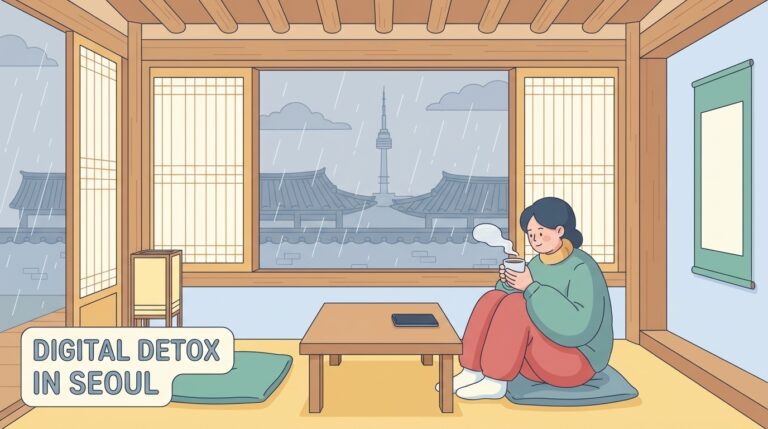
The Digital Detox Dilemma: Master Korean Slang for Social Media Fatigue
안녕하세요! 매일한글(Daily Hangul)의 수석 에디터이자, 여러분의 다정한 한국인 친구입니다.
Have you ever scrolled through your Instagram feed at 2 AM in a chic cafe in Seongsu-dong, looking at flawless photos of Hanriver picnics, perfectly styled K-beauty aesthetics, and gourmet mukbang spreads, only to feel an abrupt wave of exhaustion? If so, you have experienced SNS Fatigue.
In South Korea—one of the most hyper-connected, high-speed internet societies on Earth—digital burnout is a collective cultural phenomenon. In K-dramas like Summer Strike (아무것도 하고 싶지 않아), we see protagonists throwing their smartphones into a river just to escape the relentless pressure of social curation.
Today, we are diving deep into the sophisticated world of C2-level Korean digital slang and idioms surrounding social media fatigue, account deactivation, and reclaiming one’s peace of mind. Learning these terms won’t just elevate your vocabulary; it will allow you to connect with your Korean peers on a deeply vulnerable, highly empathetic level.
Phase 2: 3 Core Expressions Deep Dive
1. 현타 오다 (Hyeont-ta Oda)
- Pronunciation: [hyeon-ta o-da] / Sound-alike guide: “Hyun-tah” like a deep, sudden sigh + “Oh-dah”
- Meaning: Literally “Reality hit me” (derived from 현자타임, meaning “sage time”). It refers to a sudden reality check or a wave of existential clarity after indulging in mindless or vain activities (like doomscrolling).
- K-Culture Moment: Think of a scene in a K-drama where the female lead spends hours editing a photo for social media, gets hundreds of likes, but then looks around her messy, lonely room and sighs. She is experiencing hyeont-ta.
- Editor’s Insight: This isn’t just “sadness.” It is a specific blend of self-derision and sudden awakening. It is used when you realize the digital world is hollow compared to real life.
- Situation Spectrum:
- Friends & Casual (사석): ✅ (Extremely common)
- Semi-formal / Coworkers (직장 동료): ⚠️ (Use with close colleagues only)
- Formal / Bosses (직장 상사): 🚫 (Too informal)
- 🤔 Think About It: Hyeont-ta reflects how deeply South Koreans self-reflect on collective social pressures. Why do you think hyper-connected societies experience this sharp contrast between public curation and private reality?
2. 비활 타다 (Bihwal Tada)
- Pronunciation: [bi-hwal ta-da] / Sound-alike guide: “Bee-hwal” (short for 비활성화/Deactivation) + “Tah-dah” (to ride/burn)
- Meaning: To deactivate one’s social media account (usually Instagram).
- K-Culture Moment: In K-Pop fandoms, when an idol or a popular fan-site administrator suddenly “rides the deactivation train” (비활 타다), it sends shockwaves through the community, signaling a need for mental rest.
- Editor’s Insight: While the official dictionary term is “비활성화하다,” young Koreans shortened it to the sleek “비활 타다” or “비활 돌리다.” It implies a deliberate, temporary retreat to preserve mental health.
- Situation Spectrum:
- Friends & Casual (사석): ✅
- Semi-formal / Coworkers (직장 동료): ⚠️
- Formal / Bosses (직장 상사): 🚫
- 🤔 Think About It: In many Western cultures, people just “delete” or “stop posting.” Why do you think the specific intermediate state of “deactivation” (비활성화) is such a highly discussed, active lifestyle choice among Korean youth?
3. 기 빨려요 (Gi Ppallyeoyo)
- Pronunciation: [gi ppal-lyeo-yo] / Sound-alike guide: “Gee” (energy/life force) + “Pahl-lyuh-yo” (sucked out)
- Meaning: My energy/life force is being completely drained.
- K-Culture Moment: Imagine sitting in a crowded K-BBQ restaurant with 15 people tagging you in real-time Instagram stories while screaming over loud K-pop music. You smile for the camera, but inside, your gi (기/氣) is being sucked out.
- Editor’s Insight: This goes far beyond “I’m tired.” In Korean philosophy, Gi is your vital life force. When social media “sucks your Gi” (기 빨린다), it means the superficial social interactions have depleted your internal battery.
- Situation Spectrum:
- Friends & Casual (사석): ✅
- Semi-formal / Coworkers (직장 동료): ✅ (Very relatable, shows human vulnerability)
- Formal / Bosses (직장 상사): ⚠️ (Can sound slightly complain-y unless phrased politely as “요즘 기가 좀 빠지네요”)
- 🤔 Think About It: Korean culture is deeply relational and community-focused. Does this high level of social obligation explain why Koreans feel their gi (life energy) is so easily drained by digital networks?
Phase 3: Textbook Korean vs. Real Korean
To sound like a true Seoulite, you must bridge the gap between classroom grammar and the vivid shorthand used on the streets of Hongdae.
Scenario 1: Explaining why you disappeared from Instagram
- 📖 Textbook Korean: “소셜 네트워크 서비스에 피로감을 느껴서 계정을 비활성화했습니다.”
(I felt fatigue from social network services, so I deactivated my account.) - 🗣️ Real Korean: “인스타 피드만 보면 너무 기 빨려서 그냥 바로 비활 탔어요.”
(Just looking at my Instagram feed drained my energy so much, I just deactivated my account straight away.) - 💡 Why it’s different: Koreans value conversational efficiency and visceral emotional expressions. “기 빨려서” and “비활 탔어요” instantly communicate vulnerability and relief, whereas the textbook version sounds like a formal corporate press release.
Scenario 2: Asking a friend if they are just silently lurking on group chats/social media
- 📖 Textbook Korean: “당신은 소셜 미디어 게시물을 업로드하지 않고 관망만 하십니까?”
(Do you only spectate without uploading social media posts?) - 🗣️ Real Korean: “요즘 인스타 올리는 건 없고 그냥 눈팅만 해?”
(You’re not posting on Instagram these days, just lurking/silent-viewing?) - 💡 Why it’s different: “눈팅” (Nunting – eye-shopping/lurking) is a highly descriptive compound of “눈” (eye) and “팅” (chatting/surfing). It perfectly captures the silent spectator sport of modern social media.
Phase 4: K-Culture Deep Dive & Non-Verbal Manners
4-1. Digital Nunchi (눈치) & Non-Verbal Etiquette
In Korea, Nunchi (the art of reading the room) extends seamlessly into the digital sphere. When someone undergoes a digital detox, there are subtle unwritten rules:
1. The ‘Read and Ignore’ (읽씹 – Ilg-ssip) Dilemma: Reading a KakaoTalk message and not replying is considered highly discourteous in Korea’s fast-paced culture. If you are feeling digital fatigue, it is much better to “안씹” (An-ssip)—not opening the message at all—so the “1” (unread marker) remains, signaling that you are simply busy, rather than actively ignoring them.
2. The Polite Deactivation Notice: Before going off-grid (비활), close friends often post a temporary story with a simple text: “디톡스 중. 급한 건 전화나 문자로!” (Detoxing. For emergencies, call or text!). This prevents friends from worrying that they did something to offend you.
4-2. The “Account Deletion” (계폭) Culture in K-Pop & K-Dramas
In K-Pop culture, a sudden account deletion (계폭 – short for 계정 폭파, literally “account bombing”) is often a dramatic statement. While a “비활” (deactivation) suggests a quiet, temporary retreat, a “계폭” signals a permanent break or a clean slate. When main characters in dramas want to reinvent themselves, they don’t just move cities; they 계폭 their digital identity.
Phase 5: Interactive Roleplay Scenario
The Setting
A cozy, dimly lit LP bar in Euljiro, Seoul. Rain is pattering against the window. Soft indie music plays in the background. You are sitting across from Min-woo (민우), a talented graphic designer friend who has been completely absent from social media for the past month.
Cast
- You: A digital-weary expat living in Seoul.
- Min-woo (민우): An artistic, slightly sensitive local Seoulite who recently did a digital detox.
1. 민우: (Rain drops dripping from his umbrella, he sighs deeply and smiles)
   와, 진짜 오랜만이다! 비 오는 날 을지로에서 보니까 분위기 진짜 좋네.
   Wa, jinjja oraenman-ida! Bi oneun nal Euljiro-eseo bonikka bun-wigi jinjja johne.
   (Wow, it's really been a while! Meeting in Euljiro on a rainy day has such a great vibe.)

2. You: (Nodding warmly, taking a sip of warm tea)
   그러게! 너 연락도 잘 안 되고 인스타도 안 보여서 무슨 일 있는 줄 알았어.
   Geuroge! Neo yeonrak-do jal an doego Inseuta-do an boyeoseo museun il inneun jul arasseo.
   (I know! You were hard to reach, and I couldn't see your Instagram, so I thought something happened.)

3. 민우: (Scratching his head sheepishly, looking down)
   아... 걱정했어? 미안 미안. 실은 나 요즘 SNS 보는데 현타가 세게 오더라고.
   Ah... geokjeong-haesseo? Mian mian. Sireun na yojeum SNS boneunde hyeont-taga sege odeorago.
   (Ah... were you worried? Sorry, sorry. Honestly, looking at SNS lately, reality hit me really hard.)

4. You: (Leaning in, showing deep empathy)
   현타? 어떤 느낌이었는데?
   Hyeont-ta? Eotteon neukkim-ieonneunde?
   (Reality check? What did it feel like?)

5. 민우: (Gesturing with his hands, exasperated)
   다들 너무 잘살고 멋진 곳만 가는데, 나만 방구석에서 마감 치고 있으니까... 진짜 기 빨리는 기분?
   Dadeul neomu jalsalgo meotjin got-man ganeunde, naman bang-guseok-eseo magam chigo isseunikka... jinjja gi ppallineun gibun?
   (Everyone seems to live so well and go to cool places, while I'm just in my corner room hitting deadlines... It really felt like my life force was being sucked out.)

6. You: (Nodding in agreement)
   맞아, 남들의 하이라이트랑 내 비하인드 씬을 비교하게 되니까.
   Maja, nam-deul-ui hairaiteu-rang nae bihaindeu ssineul bigyo-hage doenikka.
   (Exactly, you end up comparing their highlight reels with your own behind-the-scenes.)

7. 민우: (Sighs with relief)
   내 말이! 그래서 에라 모르겠다 하고 그냥 인스타 비활 탔어. 디지털 디톡스 좀 하려고.
   Nae mari! Geuraeseo era morugetda hago geunyang Inseuta bihwal tasseo. Dijiteol ditokseu jom haryeogo.
   (Exactly my point! So I just said 'whatever' and deactivated my Instagram. To do a bit of a digital detox.)

8. You: (Smiling, teasing him gently)
   오, 과감한데? 근데 비활 타니까 살 것 같아?
   Oh, gwagam-hande? Geunde bihwal tanikka sal geot gata?
   (Oh, bold move! But now that you've deactivated it, do you feel like you can finally breathe?)

9. 민우: (Grinning, looking much brighter)
   응, 처음 3일은 손이 심심해서 죽을 것 같았거든? 근데 일주일 지나니까 진짜 머리가 맑아져. 너도 한번 해봐!
   Eung, cheoeum sam-irin son-i simsim-haeseo jugeul geot gat-atgeodeun? Geunde iljuil jinanikka jinjja meoriga malgajeo. Neo-do hanbeon haeba!
   (Yeah, for the first three days, my hands were so restless I thought I'd die. But after a week, my head is so clear. You should try it too!)
🔀 Decision Point: How will you respond to Min-woo?
- Option A: “에이, 난 인스타 없으면 심심해서 못 살아. 넌 대단하다.”
(Eh, I can’t live without Instagram because I’d be too bored. You’re amazing.) - Option B: “진짜 좋았겠다. 나도 요즘 알고리즘 지옥에 갇혀서 기 빨리는데, 같이 비활 탈까?”
(That must have been great. I’ve also been trapped in algorithm hell lately and feeling drained—should we deactivate together?) - Option C: “비활 타면 친구들이 연락 안 된다고 안 서운해해?”
(If you deactivate, aren’t your friends sad that they can’t contact you?)
🎭 Decision Analysis
- Best Choice: Option B (Deep connection and playful solidarity). Agreeing with the exhaustion (“알고리즘 지옥” – algorithm hell, “기 빨리는데”) and suggesting a shared detox demonstrates high-level linguistic humor and excellent empathy. It shows you understand modern Korean digital fatigue.
- Risk Choice: Option A (Slightly dismissive). While honest, it shuts down the empathetic momentum of the conversation by drawing a sharp line between you and his healing journey.
- So-so Choice: Option C (Pragmatic but slightly anxious). A valid cultural concern regarding social ties, but misses the opportunity to deeply bond over the shared feeling of being digitally drained.
Phase 6: 10-Second Emotion Shadowing Drill
Practice these sentences out loud to master the cadence and emotional weight of a native Korean speaker undergoing digital burnout.
Drill 1: [😤 Deeply exhausted and resolute]
- Sentence: 요즘 인스타만 보면 / 기가 진짜 / 쫙 빨려요.
- Pronunciation: Yo-jeum In-seu-ta-man bo-myeon / gi-ga jin-jja / jjwak ppal-lyeo-yo.
- Shadowing Tip: Put heavy, trailing emphasis on “쫙” (jjwak – completely/fully) to mimic the feeling of all your energy being vacuumed out.
Drill 2: [🥺 Comforting a friend who is experiencing FOMO]
- Sentence: 남들 인스타는 / 다 연출된 거잖아. / 너무 현타 오지 마.
- Pronunciation: Nam-deul In-seu-ta-neun / da yeon-chul-doen geo-jana. / Neo-mu hyeont-ta o-ji ma.
- Shadowing Tip: Soften your tone on “연출된 거잖아” (it’s all staged) and say “현타 오지 마” gently, like patting a friend’s shoulder.
Phase 7: K-Culture Mini Dictionary
| Word (Korean + Romanization) | English Translation | Cultural Nuance & Usage |
|---|---|---|
| 눈팅 (Nunting) | Lurking / Silent viewing | Checking social media or forums without interacting, commenting, or posting. Extremely common in group chats too. |
| 부계 (Bugye) | Finsta / Secondary Account | Short for 부계정 (secondary account). Used to post raw, unedited daily life to a selected close circle of friends. |
| 읽씹 (Ilg-ssip) | Read and Ignored (R-ed) | Reading a message and consciously not replying. It is a major source of digital anxiety in Korea. |
| 계폭 (Gyepok) | Account Deletion | Short for 계정 폭파 (account bombing). Completely deleting an online presence, usually after a major life transition or scandal. |
Phase 8: Traveler’s Survival Kit
Even when you are undergoing a digital detox in Korea, you still need to survive physically! Here are some lifesaver phrases and tips.
Survival Phrases
- “여기 와이파이 비밀번호 좀 알려주시겠어요?”
- Yeogi wa-i-pa-i bi-mil-beon-ho jom al-lyeo-ju-si-gess-eo-yo?
- (Could you let me know the Wi-Fi password here?)
- “휴대폰 충전기 대여 가능한가요?”
- Hyu-dae-pon chung-jeon-gi dae-yeo ga-neung-han-ga-yo?
- (Is it possible to rent/borrow a phone charger?)
- “길이 복잡해서 그런데, 종이 지도나 안내 책자가 있나요?”
- Gil-i bok-jap-hae-seo geu-reon-de, jong-i ji-do-na an-nae chaek-ja-ga in-na-yo?
- (The streets are complicated; do you have a paper map or a brochure?)
📌 Editor’s Travel Note
When you are wandering through Korea’s picturesque alleys without digital aids, navigation can get tricky. While we highly recommend checking the official Naver Map Application Download Page before embarking on your trip, if you are actively choosing a low-tech day, look out for the yellow vest-wearing Volunteer Tourist Guides in areas like Myeongdong or Bukchon Hanok Village. They carry physical maps and speak multiple languages!
Phase 9: Deep Reflection — “한 발 더 깊이” (Going Deeper)
South Korea’s rapid transformation into a global tech leader has birthed a unique sociological paradox. The cultural concept of 정 (Jeong – deep social connection/affinity) and 우리 (Uri – we/us/our collective identity) has translated into a digital space where everyone is expected to be constantly accessible, continuously validating each other’s lives.
However, this hyper-collectivism online often collides with the modern desire for individual space. The rise of the “digital detox” (디지털 디톡스) and deactivating accounts in Korea is not merely a trend; it is a quiet, necessary rebellion. It is an active effort to reclaim the boundaries of the self in a society that rarely grants them.
💬 Your Turn: How does your home culture handle social media exhaustion? Do people quietly deactivate, or is there a different way of reclaiming personal space? Let’s discuss in the comments below!
Phase 10: FAQ & Common Mistakes
Q: Can I use “비활” with older people or in a business meeting?
A: No. “비활” is highly colloquial youth slang. In formal settings, you should use the full term: “개인적인 휴식을 위해 소셜 미디어 계정을 잠시 비활성화했습니다” (I have temporarily deactivated my social media account for personal rest).
Q: What is the difference between “현타” and “멘붕” (Men-bung)?
A: Excellent question! “멘붕” (Mental Breakdown) is panic, chaos, or being overwhelmed by sudden bad news. “현타” (Reality check) is quiet, reflective, and filled with a feeling of emptiness or clarity after realizing something was vanity.
Q: If I deactivate my Instagram, does my KakaoTalk also get affected?
A: No, Instagram deactivation is separate. However, many Koreans who undergo a full digital detox will also change their KakaoTalk status message to “숨 고르기 중” (taking a breather) to let their professional and social circles know they are less active online.
🚨 Common Mistakes Alert!
- Saying “인스타 죽었어요” (My Insta died) to mean deactivation:
- Correct Action: Say “인스타 비활 탔어요” or “인스타 계정 닫았어요.”
- Confusing “기 빨린다” (energy drained) with “기분 나쁘다” (bad mood):
- Correct Action: “기 빨린다” means your stamina is gone, but you might still be in a neutral or good mood. Use “기분 나빠요” only when you are genuinely offended or upset.
Phase 11: Action Missions
- 🥉 Bronze (At-Home Challenge): Record yourself saying, “요즘 인스타 너무 기 빨려서 비활 타려고요” with a deeply sighing, exhausted tone.
- 🥈 Silver (Network Challenge): Put your KakaoTalk or WhatsApp status message to: “디지털 디톡스 중 🌿” (Undergoing digital detox) for 24 hours and observe your own feelings of hyeont-ta!
- 🥇 Gold (Real-Life Challenge): Next time you meet a Korean friend, ask them: “요즘 인스타 보면 현타 온 적 없어?” (Have you ever felt reality hit you while looking at Instagram lately?) and start a deep conversation.
Phase 12: Interactive Quiz Challenge
1. Situational Judgment
Your Korean friend has been doomscrolling for 3 hours, looking at luxury fashion hauls, and murmurs, “하… 진짜 기 빨린다…” What is the most empathetic C2-level response?
* A) “인스타 계폭해라.” (Just delete your account permanently!)
* B) “맞아, 그런 거 계속 보면 현타 세게 오더라. 폰 끄고 카페 나가자.”
* C) “와이파이 속도가 너무 빨라서 그래요.”
👉 Click to see the answer & feedback
- Correct Answer: B
- Feedback: Option B perfectly acknowledges their hyeont-ta (reality check) and suggests a healthy, physical real-world action. Option A is too aggressive/abrupt, and Option C is logically unrelated!
2. Fill in the Blanks
“나 요즘 머리가 너무 복잡해서 인스타
( _ _ _ _ ) 하려고.”
(I want to deactivate my Instagram lately because my mind is too cluttered.)
👉 Click to see the answer
- Answer: 비활성화 (or colloquially: 비활)
3. True or False?
“눈팅” (Nunting) refers to actively deleting all your photos on your social media feed.
👉 Click to see the answer
- Answer: False
- Feedback: “눈팅” means silently lurking/reading without posting or commenting. Deleting photos would be closer to “피드 밀기” (clearing the feed) or “계폭” (deleting the account).







