

The Secret Etiquette of Korean Doorstep Transactions: How to Master ‘Mungori’ Deals Like a Local
Phase 1: Empathy (The Doorstep Dilemma)
안녕하세요! (Annyeonghaseyo!) Hello there, beautiful souls! It’s your favorite Korean culture guide and chief editor of Daily Hangul.
Imagine this: You’ve lived in Seoul for six months. You are finally settling into your cozy officetel, but you desperately need a standing mirror. You open 당근마켓 (Danggeun Market)—Korea’s holy grail of hyper-local secondhand trade. Bingo! Your neighbor just listed a sleek, Scandinavian-style mirror for only 10,000 KRW. You message them excitedly. But instead of suggesting a busy subway station exit, they reply:
“혹시 문고리 거래 가능하신가요? 계좌 주시면 바로 입금할게요!”
(Hoksi mungori georae ganeunghasingayo? Gyejwa jusimyeon baro ipgeumhalgeyo!)
You freeze. Mungori (문고리) means doorknob. Georae (거래) means transaction. “Doorknob transaction?” Are you supposed to bring your own doorknob? Do you meet at their door and touch doorknobs?
Don’t panic! You have just stumbled upon 비대면 문고리 거래 (Bidaemyeon Mungori Georae)—the ultimate non-face-to-face doorstep transaction. It is a modern Korean cultural phenomenon built on an astonishingly high level of social trust, security cameras (CCTV), and the legendary efficiency of local neighborhoods.
But here’s the catch: because you never actually meet the person face-to-face, the linguistic etiquette must be absolutely flawless. One wrong word or slightly blunt phrase can make you look like an untrustworthy buyer, ruining your “Manner Temperature” (매너온도). Today, we’re going to equip you with C1-level linguistic polish to navigate these invisible social boundaries like a true Seoulite. Let’s dive in!
Phase 2: Deep Dive into 3 Core Expressions
1. 문고리 거래 (Mungori Georae)
- Pronunciation: [Mun-go-ri Geo-rae] / Sound-alike: “Moon-go-ree Guh-ray”
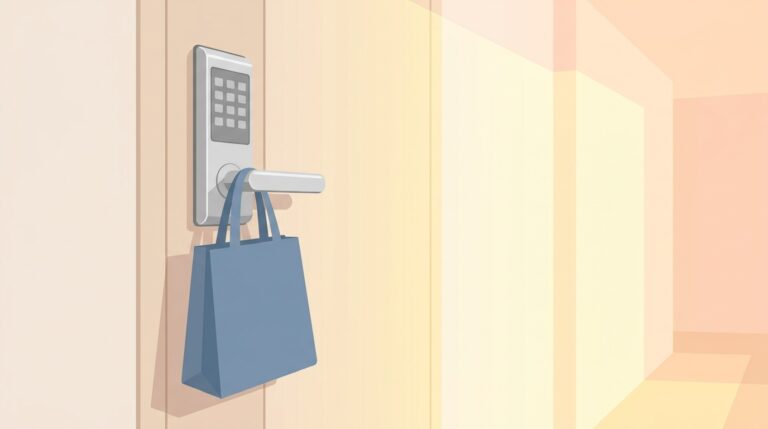
- Meaning: Literally “doorknob transaction.” In practice, it refers to the act of leaving a sold item hanging on the seller’s doorknob (or outside their door) for the buyer to pick up at their convenience after making an online bank transfer.
- K-Culture Moment: If you watch slice-of-life K-Dramas like Our Blues or Crash Course in Romance, you’ll notice how deeply integrated local neighborhoods are. While dramas often show dramatic encounters, real-world Koreans are busy and highly value their privacy, making this silent trade the absolute default in modern apartments.
- Editor’s Insight: Why doorknobs? Modern Korean apartments use digital keypads, meaning there are no physical keys. Leaving an item on the mungori is the only secure way to keep it off the dusty hallway floor. It symbolizes a contract of absolute trust.
- Situation Spectrum:
- Casual (Friends): ✅ (Very common)
- Semi-formal (Secondhand apps): ✅ (Standard practice)
- Formal (Business/Elderly): ⚠️ (Use more formal variations like ‘비대면 거래’)
- 🤔 Think About It: In many global metropolitan areas, leaving an unattended item in a communal hallway is an invitation for theft. What does the popularity of mungori georae tell us about the collective social contract in Korean apartment complexes?
2. 비대면으로 부탁드립니다 (Bidaemyeon-euro butakdeurimnida)
- Pronunciation: [Bi-dae-myeon-eu-ro Bu-tak-deu-rim-ni-da] / Sound-alike: “Bee-dae-myun-uh-ro Boo-tahk-deu-rim-nee-dah”
- Meaning: “Please do it non-face-to-face (untact).”
- K-Culture Moment: The term 비대면 (bidaemyeon) skyrocketed during the pandemic and has permanently reshaped Korean service industries, from food delivery to administrative processing. Requesting a bidaemyeon transaction shows that you respect the other person’s time and boundaries.
- Editor’s Insight: Adding “~으로 부탁드립니다” (Please do via…) elevates your request from a demanding command to a highly polite, polished petition. It strikes the perfect balance for C1 speakers: professional yet approachable.
- Situation Spectrum:
- Casual (Friends): 🚫 (Too stiff; use “우리 그냥 두고 받자”)
- Semi-formal (Secondhand apps): ✅ (Perfect and respectful)
- Formal (Business): ✅ (Highly appropriate)
- 🤔 Think About It: How does your culture negotiate privacy? Is it considered more polite to meet face-to-face and exchange pleasantries, or is minimizing contact seen as the ultimate form of respect, as it often is in fast-paced Korea?
3. 입금 확인 후 바로 출발하겠습니다 (Ipgeum hwagin hu baro chulbalhagetseumnida)
- Pronunciation: [Ip-geum Hwa-gin Hu Ba-ro Chul-bal-ha-get-seum-ni-da] / Sound-alike: “Eep-geum Hwah-geen Hoo Bah-ro Chool-bahl-hah-get-soom-nee-dah”
- Meaning: “I will head out immediately after confirming the deposit.”
- K-Culture Moment: Korea is famously a Pali-Pali (빨리빨리 – fast, fast) society. However, when money is involved, clarity and reassurance are paramount. Using this phrase tells the seller, “I am not a scammer, I respect your time, and I will move swiftly.”
- Editor’s Insight: Notice the use of the future tense helper “~겠습니다” (~get-seum-ni-da). It conveys strong intention, reliability, and professional courtesy, which instantly builds rapport with a stranger on the internet.
- Situation Spectrum:
- Casual (Friends): ⚠️ (Slightly too formal; use “입금하고 바로 갈게”)
- Semi-formal (Secondhand apps): ✅ (Highly recommended)
- Formal (Business): ✅ (Excellent standard)
- 🤔 Think About It: Why is confirming the bank transfer before picking up the item considered the standard rule of thumb for doorstep transactions? How does this protect both parties?
Phase 3: Textbook Korean vs. Real Korean
Let’s compare the stiff sentences found in academic textbooks with the natural, stylish phrasing used by native Koreans on apps like Karrot Market.
Scenario 1: Proposing a Doorstep Transaction
- 📖 Textbook Korean: “직접 만나지 않고 당신의 문 앞에 물건을 두고 가십시오.” (Do not meet directly and leave the item at your door.) -> Why it’s awkward: It sounds cold, demanding, and almost like a command from a detective novel.
- 🗣️ Real Korean: “혹시 문고리 거래 가능할까요? 비대면으로 진행하고 싶어서요!” (Would a doorstep transaction be possible? I’d like to do it non-face-to-face!) -> Why it works: It frames the request as a gentle query (“가능할까요?”) and explains the reasoning politely without making assumptions.
Scenario 2: Confirming Payment and Requesting the Address
- 📖 Textbook Korean: “돈을 보냈으니 당신의 주소를 알려주십시오.” (I sent the money, so tell me your address.) -> Why it’s awkward: It sounds like an aggressive demand, which might raise safety flags for the seller.
- 🗣️ Real Korean: “방금 선입금 드렸습니다! 상세 주소랑 동호수 남겨주시면 감사하겠습니다.” (I just sent the advance payment! I would appreciate it if you could leave the detailed address and apartment/unit number.) -> Why it works: Using “선입금” (advance payment) builds instant trust, and the conditional honorific ending “~해주시면 감사하겠습니다” politely requests sensitive information (apartment unit numbers) safely.
Phase 4: K-Culture Deep Dive & Non-Verbal Manners
4-1. The Art of “Nunchi” (눈치) on the Doorknob
Doorstep transactions may be contactless, but they are highly relational. To execute this perfectly, you need a high level of Nunchi (눈치 – situational wit/tact). Here are the unwritten non-verbal physical manners of mungori georae:
1. The Proof Photo (인증샷): When you pick up the item from the door, do not just grab it and run. Send a quick message with a photo of the empty doorknob or the item in your hand. This is the digital equivalent of a polite bow.
2. The Golden Time (골든타임): Try to pick up the item within 1 to 2 hours of the agreed time. Halways in Korean apartments are shared public spaces. Leaving an item outside for too long is considered an eyesore and a nuisance to the neighbors.
3. Silence in the Hallway: When walking to the seller’s door, step quietly. Do not play loud music or talk on the phone. Korean apartment buildings are heavily soundproofed against exterior noise, but hallway echo is notoriously sharp.
4-2. The “Manner Temperature” (매너온도) Phenomenon
In Korea, trust is gamified. On Karrot Market, everyone starts with a “Manner Temperature” of 36.5°C (human body temperature). As you do good, polite deeds, your temperature rises up to 99°C. If you are rude, late, or ghost people, it drops.
This high-trust ecosystem works beautifully because of Korea’s dense network of high-definition CCTVs and secure building entries (현관 보안). While package theft (known as “porch piracy” in the West) is a major issue elsewhere, in Korea, leaving a luxury iPad on a doorknob for three hours is generally safe. Mungori georae is a celebration of this social safety net.
Phase 5: Interactive Roleplay Scenario
Setting: It’s a chilly, rainy Tuesday evening in Mapo-gu, Seoul. You are trying to buy a vintage K-beauty skincare device from a local seller named Min-ji. You both live near Gongdeok Station, but you are both too busy to meet up in person.
Characters:
- You (The Smart Buyer): Eager, polite, trying to practice advanced Korean.
- Min-ji (The Busy Seller – NPC): Friendly, efficient, highly protective of her Manner Temperature (currently a stellar 48.2°C).
1. You: 안녕하세요! 마포구 올리브영 화장품 디바이스 아직 판매 중인가요?
       (Annyeonghaseyo! Mapo-gu Ollibuyeong hwajangpum dibaiseu ajik panmae jung-ingayo?)
       "Hello! Is the cosmetic device from Mapo-gu Olive Young still available?"

2. Min-ji: 네, 아직 판매 중이에요! 혹시 오늘 저녁에 조율 가능하신가요?
          (Ne, ajik panmae jung-ieyo! Hoksi oneul jeonyeoge joyul ganeunghasingayo?)
          "Yes, it's still available! Could we arrange a time this evening?"

3. You: (🎭 Looking at your busy schedule) 퇴근 시간이 늦어서 직접 뵙기는 힘들 것 같은데, 혹시 문고리 거래 가능할까요?
       (Toegeun sigani neujeoseo jikjeop boepgineun himdeul geot gateunde, hoksi mungori georae ganeunghasingayo?)
       "Since I'm leaving work late, I don't think I can meet in person. Would a doorstep transaction be possible?"

4. Min-ji: 아! 네, 문고리 가능합니다. 저희 집이 공덕 아파트 103동인데 괜찮으신가요?
          (Ah! Ne, mungori ganeunghamnida. Jeohui jibi Gongdeok Apateu baek-sam-dong-inde gwaenchaneusingayo?)
          "Ah! Yes, doorstep is fine. My place is Gongdeok Apartment, Building 103. Is that okay for you?"

5. You: 네, 가깝네요! 그럼 제가 계좌로 선입금 먼저 드리겠습니다. 계좌번호 알려주시겠어요?
       (Ne, gakkapneuyo! Georeom jega gyejwaro seonipgeum meonjeo deurigetseumnida. Gyejwabeonho allyeojusigesseoyo?)
       "Yes, that's close! In that case, I will send the advance deposit first. Could you give me your account number?"

6. Min-ji: (🎭 Smiling at your politeness) 네, 신한은행 110-123-456789 홍민지입니다. 2만 원 입금해 주시면 됩니다!
          (Ne, Sinhan-eunhaeng 110-123-456789 Hong Min-ji-imnida. I-man won ipgeumhae jusimyeon doemnida!)
          "Yes, it's Shinhan Bank 110-123-456789, Hong Min-ji. Please deposit 20,000 KRW!"

7. You: (🎭 Making the bank transfer on your banking app) 방금 2만 원 입금해 드렸습니다! 확인 부탁드립니다.
       (Banggeum i-man won ipgeumhae deuryeotseumnida! Hwagin butakdeurimnida.)
       "I just deposited 20,000 KRW! Please check and confirm."

8. Min-ji: 확인했습니다! 주소는 공덕 아파트 103동 1204호입니다. 공동현관 비밀번호는 #1234* 누르고 들어오시면 돼요. 퇴근길에 천천히 오세요!
          (Hwaginhaetseumnida! Jusoneun Gongdeok Apateu baek-sam-dong cheon-ibaek-sa-ho-imnida. Gongdonghyeongwan bimilbeonhoneun sap-il-i-sam-sa-byeol nureugo deureoosimeon dwaeyo. Toegeungire cheoncheonhi oseyo!)
          "Confirmed! The address is Gongdeok Apartment Building 103, Unit 1204. For the main entrance, press #1234* to enter. Take your time on your way home!"

9. You: 감사합니다! 도착해서 문고리 수령 후에 꼭 문자 남기겠습니다. 감기 조심하세요!
       (Gamsahamnida! Dochakhaeseo mungori suryeong hue kkok munja namgigetseumnida. Gamgi josimhaseyeo!)
       "Thank you! Once I arrive and pick it up from the door, I will definitely leave a message. Watch out for colds!"

10. Min-ji: 친절한 거래 감사드려요. 이따가 문 앞에 안전하게 걸어둘게요!
           (Chinjeolhan georae gamsadeuryeoyo. Ittaga mun ape anjeonhage georeodulgeyo!)
           "Thank you for the kind transaction. I will hang it safely on the door later!"
🔀 Decision Point: The Pick-up Moment
You have arrived at unit 1204. The beauty device is packaged beautifully in a clean shopping bag, hanging on the doorknob. What do you do?
- Option A: Grab the bag, run to the elevator, and go home without messaging. (You already paid anyway!)
- Option B: Take a photo of the bag on the doorknob, text Min-ji saying “I got it!”, and leave a lovely review on the app.
- Option C: Ring her doorbell vigorously to say thank you face-to-face, since you want to show your physical appreciation.
🏆 The Best Choice: Option B
Why? Doorstep transactions are designed to preserve privacy. Option C defeats the entire purpose of “untact” (비대면) and might startle the seller. Option A is acceptable but lacks 정 (Jeong)—the warm community feel of Korea. Option B is the absolute peak of Korean cultural etiquette. It provides relief to the seller that the item didn’t get lost and guarantees a boost to your Manner Temperature!
Phase 6: 10-Second Emotional Shadowing Drill
Let’s practice speaking these with the exact emotional nuance a native speaker uses. Slashes (/) indicate natural pause points.
Drill 1: The Soft Proposal
- Phrase: “혹시 / 문고리 거래 / 가능할까요?”
- Pronunciation: Hoksi / mungori georae / ganeunghasingayo?
- Emotion: [🥺 Politeness, slightly pleading, highly soft pitch at the end]
- Tips: Do not rush the “혹시.” Let it linger to show you are asking for a small favor.
Drill 2: The Reassuring Trust-Builder
- Phrase: “방금 / 입금해 드렸습니다! / 확인 부탁드려요.”
- Pronunciation: Banggeum / ipgeumhae deuryeotseumnida! / Hwagin butakdeuryeoyo.
- Emotion: [😊 Cheerful, crisp, energetic, and transparent]
- Tips: Pronounce the “입금” clearly so they know immediately that the financial part is fully resolved.
Phase 7: K-Culture Mini Dictionary
| Word (Korean + Romanization) | English Translation | Real-world Context & Usage |
|---|---|---|
| 당근하다 (Danggeun-hada) | To trade on Karrot Market | A verb derived from the app name. Used daily like “to Google” something. (e.g., “우리 이거 당근할까?” – Shall we trade this on Karrot?) |
| 매너온도 (Maeneor-ondo) | Manner Temperature | A digital index starting at 36.5°C that measures a user’s trustworthiness. A temperature above 45°C indicates an absolute saint! |
| 문고리 (Mungori) | Doorknob / Door handle | The physical handle where bags of goods are hung during contact-free local trades. |
| 쿨거래 (Kul-georae) | Cool (smooth) transaction | A transaction with no haggling, no delays, and instant polite communication. A highly coveted status. |
Phase 8: Traveler’s Survival Kit
Even if you are only in Korea for a short time, you might want to buy rare K-pop merchandise or vintage goods. Here is your quick survival kit!
Survival Expressions TOP 3
- “네고 가능한가요?” (Nego ganeunghangayo?)
- Meaning: “Is negotiation (discount) possible?”
- Pro Tip: Only use this before you agree on a meeting. Asking for a discount at the doorstep is considered extremely rude.
- “택배 거래도 되나요?” (Taekbae georae-do doenayo?)
- Meaning: “Can we trade via parcel post?”
- Pro Tip: Excellent option if the seller lives too far from your Airbnb.
- “제가 한국 계좌가 없어서 현금으로 드려도 될까요?” (Jega hanguk gyejwaga eopseoseo hyeongeumeuro deuryeodo doelkkayo?)
- Meaning: “Since I don’t have a Korean bank account, could I pay in cash?”
- Pro Tip: Crucial for travelers! Some sellers will agree to leave a “cash envelope” in their mailbox or do a quick face-to-face trade instead.
📌 Editor’s Travel Note
To fully enjoy secondhand shopping in Korea, make sure you download the Naver Map App for flawless local navigation to those complex apartment buildings. Note that global tourists without a verified Korean phone number may face restrictions registering on Karrot Market; in this case, try using alternative tourist-friendly expat forums or ask a local hostel/hotel staff member to assist you with the app connection.
Phase 9: Deep Thinking — “One Step Further”
In many Western cultures, contracts are transactional and legalistic. In Korea, however, transactions are deeply relational and contextual. The rapid rise of mungori georae reflects a unique cultural phenomenon: a high-trust collective society combined with extreme urbanization.
When you buy a used item in Korea, you aren’t just interacting with an individual; you are entering their private residential sanctuary—their apartment building hallway. By using polite grammar honorifics like “~해주시면 감사하겠습니다,” you are signaling that you respect this shared space and their personal boundary. The linguistic politeness is the buffer that keeps this highly dense, fast-paced society harmonious.
💬 Your Turn: How would a concept like “doorstep transaction” work in your home country? Would people trust leaving valuable items unattended? Let us know in the comments below!
Phase 10: FAQ & Common Mistakes (FAQ Schema)
Q: Is it safe to do doorstep transactions as a foreigner?
A: Absolutely. Korea is one of the safest countries in the world for physical property. However, to protect yourself, always request photos of the item before sending money, and ensure you make the payment only through secure bank transfers where names can be verified.
Q: What should I do if the item is missing from the doorknob when I arrive?
A: This is extremely rare, but if it happens, do not knock on the door or cause a scene. Immediately message the seller through the app with a photo of the empty doorknob. Check if you got the right apartment building or floor—many foreigners get confused by Korean apartment numbering systems!
Q: Can I cancel the purchase after picking up the item from the door?
A: In Korean secondhand culture, unless there is a major undisclosed defect, mungori transactions are generally considered “no return, no refund” (노리턴/노클레임). Ensure you ask all questions beforehand.
🚨 Common Mistakes Warning Board
- Mistake: Forgetting to send a confirmation transfer screenshot.
- Correct Action: Send the bank receipt screenshot immediately after transferring. It prevents unnecessary anxiety for the seller.
- Mistake: Bringing the wrong cash amount because you couldn’t do a bank transfer.
- Correct Action: If you must pay in cash, always prepare the exact amount in a clean envelope. Do not expect change on a doorstep!
- Mistake: Arriving way past the agreed-upon time without notice.
- Correct Action: If you are running late, send a quick update like “퇴근이 늦어져 30분 정도 늦을 것 같습니다. 죄송합니다!” (My work finished late, so I think I will be about 30 minutes late. I apologize!)
Phase 11: Action Missions
- 🥉 Bronze (At-Home Challenge): Practice saying the shadowing drills out loud in front of a mirror. Pay attention to your facial expressions—keep them soft and polite!
- 🥈 Silver (Network Challenge): Open your social media or language learning app and share one new word you learned today (e.g., 쿨거래 or 매너온도) and explain what it means to your friends.
- 🥇 Gold (Real-World Challenge): The next time you order delivery or buy something in Korea, use a polite non-face-to-face request in your shipping notes: “문 앞에 두고 벨 눌러주세요!” (Please leave it at the door and ring the bell!)
- 🎮 K-Culture Mission: Watch a popular modern drama slice of life (like Our Blues). Keep your eyes peeled for any scenes showing local community transactions or deliveries. Spot the non-verbal manners used!
Phase 12: Interactive Quiz Challenge
1. Situational Judgment
- Question: You are the buyer. You want to request a contact-free doorstep transaction. Which sentence is the most natural and polite?
- 문 앞에 그냥 두고 가요. (Just leave it at the door and go.)
- 혹시 문고리 거래 가능할까요? 비대면이 편해서요! (Would doorstep transaction be possible? I prefer contact-free!)
- 직접 만나서 물건을 주세요. (Give me the item in person.)
View Answer & Explanation
Correct Answer: 2
Explanation: Option 2 uses the polite query form (“~가능할까요?”) and explains your preference softly, whereas Option 1 sounds like a blunt command and Option 3 is too demanding.
2. Fill in the Blanks
- Question: Complete the sentence used to reassure the seller that payment has been made:
- “방금 _________ 드렸습니다. 확인 부탁드립니다!” (I just sent the advance deposit. Please check!)
View Answer & Explanation
Correct Answer: 선입금 (seon-ip-geum)
Explanation: “선입금” means advance payment/deposit, which is the golden standard of trust in doorstep transactions.
3. True or False K-Culture Trivia
- Question: In Korea, it is considered perfectly fine to leave a doorstep transaction item hanging in the apartment hallway for three days before picking it up. (T / F)
View Answer & Explanation
Correct Answer: False
Explanation: Hallways are shared spaces. Leaving items for too long is seen as a nuisance to neighbors and lowers your “Manner Temperature” (매너온도).







