

Beyond Cabbage: Master the Art of Korean Banchan and Kimchi Like a True Seoulite
안녕하세요! (Annyeonghaseyo!) Welcome back to Daily Hangul. I’m your resident chief editor, culinary navigator, and your Korean elder sister (언니/누나) all rolled into one.
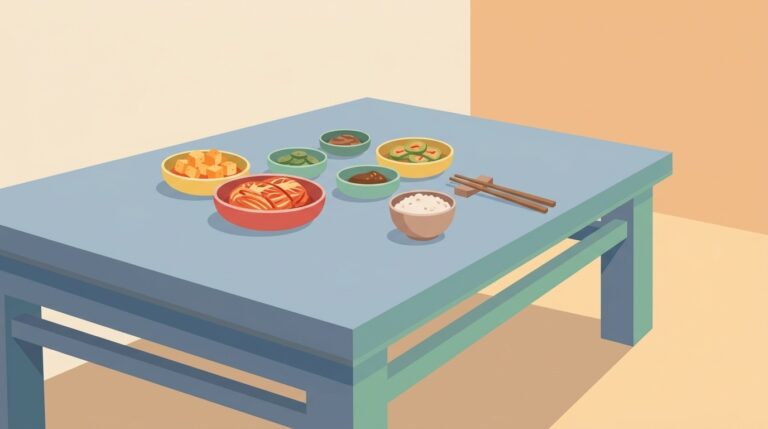
If you have ever stepped into a Korean restaurant, you have probably experienced that magical moment when a fleet of small, colorful dishes mysteriously lands on your table before your main meal even arrives. This is 반찬 (Banchan)—the beating heart of Korean food culture.
But let’s be honest: Have you ever stared at those little dishes, wondering, “Is everything here Kimchi?” or “Can I ask for more of this sweet potato without sounding rude?”
Today, we are moving past the basic textbook definitions. We are diving deep into the crunch, the spice, and the beautiful unspoken rules of Korean Kimchi and Banchan so that the next time you sit down at a restaurant in Seoul, you can order, eat, and chat with absolute confidence!
Phase 2: Master the 3 Golden Banchan Expressions
To navigate a Korean dining table, you don’t need a massive vocabulary. You just need these three powerhouse expressions. Let’s break them down with natural nuances.
1. 김치 좀 더 주실 수 있나요? (Kimchi jom deo jusil su innayo?)
- Pronunciation: Kim-chee jom duh joo-shil soo een-nah-yo?
- Meaning: “Could you please give me a little more Kimchi?”
- K-Culture Moment: This is the ultimate phrase you hear in K-dramas when characters are eating steaming hot bowls of Ramyun or Gukbap (soup with rice). Asking for a refill is a sign of a hearty appetite!
- Editor’s Insight: The word 좀 (jom) literally means “a little,” but Koreans use it as a politeness cushion. It softens the request, making you sound extremely natural and courteous.
- Situation Spectrum:
- Friends/Casual: ✅ (Though with close friends, you might just say “김치 더 줘!”)
- Semi-formal/Restaurants: ✅ (Perfect for talking to restaurant staff)
- Formal/Business dining: ✅
- 🤔 Think About It: Why do you think Korean restaurants offer free refills on side dishes? How does this contrast with the dining culture in your home country where side dishes are often charged separately?
2. 이거 배추김치예요, 깍두기예요? (Igeo baechu-gimchi-yeyo, kkakdugi-yeyo?)
- Pronunciation: Ee-guh bae-choo-gim-chee-yeh-yo, kkak-doo-ghee-yeh-yo?
- Meaning: “Is this cabbage Kimchi or radish Kimchi?”
- K-Culture Moment: Picture a foreign traveler dining in a traditional marketplace like Mangwon Market. Pointing at the rich, red varieties and asking this shows you actually know your Kimchi classifications!
- Editor’s Insight: 배추 (Baechu) is napa cabbage (the classic Kimchi you know), while 깍두기 (Kkakdugi) refers to those incredibly crunchy, cubed radishes. Knowing the difference instantly elevates you from a tourist to an explorer.
- Situation Spectrum:
- Friends/Casual: ✅
- Semi-formal/Restaurants: ✅
- Formal/Business dining: ✅
- 🤔 Think About It: The word “Kkakdugi” is also used in Korean childhood games to describe the kid who gets to play on both teams so no one is left out. Can you see how the humble radish Kimchi represents inclusivity?
3. 반찬은 셀프인가요? (Banchan-eun selpeuingayo?)
- Pronunciation: Ban-chan-eun sel-peu-een-gah-yo?
- Meaning: “Are side dishes self-service?”
- K-Culture Moment: In casual, high-speed diners (분식집 – Bunsikjib) or local K-BBQ joints, you’ll often see a corner with large steel bowls of Banchan and a sign that says “반찬은 셀프” (Banchan is Self-Service).
- Editor’s Insight: In Korea, “self” (셀프) has been adopted as an adjective meaning “self-service.” If you ask this, the staff will appreciate that you respect their workflow!
- Situation Spectrum:
- Friends/Casual: ✅
- Semi-formal/Restaurants: ✅
- Formal: ⚠️ (High-end restaurants will always serve you; asking this in a fine dining spot might feel slightly out of place.)
- 🤔 Think About It: How does the concept of “Self-Service” in Korean casual dining reflect the fast-paced, efficient nature of modern Korean society?
Phase 3: Textbook Korean vs. Real-World Korean
Let’s look at how textbooks teach restaurant interactions versus how real locals actually speak.
Situation 1: Asking for a Banchan Refill
- 📖 Textbook Korean: “반찬을 더 많이 주십시오.” (Please give me much more side dishes.) – Too robotic and demanding!
- 🗣️ Real Korean: “여기 반찬 좀 더 주세요!” (Over here, could we get some more side dishes, please?)
- 💡 Why the difference? Starting with 여기 (yeogi – here) is the standard, polite way to get a server’s attention in a bustling Korean restaurant. It functions like “Excuse me!”
Situation 2: Reacting to Spicy Kimchi
- 📖 Textbook Korean: “이 김치는 너무 맵습니다.” (This kimchi is too spicy.) – Sounds like a complaint from a manual.
- 🗣️ Real Korean: “씁, 이거 제법 매콤하네요!” (Whew! This has quite a kick!)
- 💡 Why the difference? 매콤하다 (maekomhada) is a lovely word that means “pleasantly spicy/zesty,” whereas 맵다 (maepda) is just flatly “hot.” Using “제법 매콤하다” shows you appreciate the flavor profile despite the heat!
Phase 4: K-Culture Deep Dive & Non-Verbal Manners
4-1. Table Manners and “Nunchi” (눈치)
Sharing is caring, but in Korea, sharing comes with boundaries. Because Banchan dishes are placed in the center of the table for everyone to share, keep these physical etiquette tips in mind:
* Don’t Dig Around: Avoid picking through a Banchan dish to find the “best” piece. Grab the piece closest to you.
* The Chopstick Rule: Keep your chopsticks clean. Don’t use your chopsticks to tear apart a large piece of Kimchi in the shared bowl while others are waiting.
* Finish What You Take: If you ask for a refill (리필), make sure you eat most of it. Leaving a mountain of refilled banchan is considered wasteful and slightly disrespectful to the kitchen.
4-2. The Soul of Kimjang (김장)
Did you know that making Kimchi is recognized by UNESCO as an Intangible Cultural Heritage? This communal process is called 김장 (Kimjang). Every autumn, families and entire neighborhoods gather to prepare hundreds of heads of Kimchi to survive the harsh winter.
In K-dramas like Reply 1988 or Crash Landing on You, you see characters storing their fresh Kimchi in large clay pots (옹기 – Onggi) or modern Kimchi refrigerators. It’s not just food prep; it is a social ritual of sharing warmth and love through spice.
Phase 5: The Interactive Seolleongtang Night
Let’s step into a game! It is 9:00 PM on a rainy, chilly evening in Seoul. You walk into a cozy, steam-filled Seolleongtang (ox bone soup) restaurant in Insadong. The aroma of rich, simmering broth fills the air. An elderly lady with a warm smile, the restaurant’s Imo-nim (이모님 – auntie), greets you.
- Imo-nim: 🎭 (Wiping down your wooden table with a clean cloth) 어서 오세요! 비도 오는데 얼른 앉으세요. 뜨끈한 설렁탕 드릴까요?
- Welcome! It’s raining, sit down quickly. Shall I bring you a piping hot Seolleongtang?
- You: 🎭 (Nodding happily, shaking off your umbrella) 네, 이모님! 설렁탕 하나 주세요.
- Yes, Imo-nim! One Seolleongtang, please.
- Imo-nim: 🎭 (Setting down a small plate of fresh green chili peppers, ssamjang sauce, and two empty small plates) 여기요. 김치랑 깍두기는 저기 항아리에서 먹을 만큼만 썰어 드세요!
- Here you go. Slice as much cabbage Kimchi and Kkakdugi as you want from those clay jars over there!
- You: 🎭 (Opening the small ceramic jars on the table and smelling the fermenting goodness) 우와, 진짜 맛있겠다!
- Wow, this looks absolutely delicious!
- Imo-nim: 🎭 (Placing a steaming bowl of milky-white ox bone soup in front of you) 파 많이 넣고, 소금으로 간 맞춰서 드세요.
- Put plenty of green onions in, and season it with salt to your taste.
- You: 🎭 (Taking your first bite of soup with a slice of crunchy, sour Kkakdugi) 씁, 진짜 시원해요! 깍두기가 정말 아삭하네요.
- Mmm, this is so refreshing! The Kkakdugi is incredibly crunchy.
- Imo-nim: 🎭 (Beaming with pride, hands on her hips) 그치? 우리 집 깍두기가 서울에서 제일 맛있어! 더 필요하면 말해요.
- Right? Our house Kkakdugi is the best in Seoul! Let me know if you need more.
- You: 🎭 (Finishing your first batch of radish cubes and wanting to ask for a specific refill politely)
🔀 Decision Point: What do you say next?
- Choice A: “이모, 무 더 줘!” (Imo, give me more radish!)
- Choice B: “이모님, 여기 깍두기 좀 더 주실 수 있나요?” (Imo-nim, could you please give me a little more Kkakdugi here?)
- Choice C: “깍두기는 셀프인가요?” (Is Kkakdugi self-service?)
🔍 Click to see the Best Choice Analysis!
- Best Choice: Choice B! It is incredibly polite, uses the affectionate yet respectful title 이모님 (Imo-nim), cushions the request with 좀 (jom), and correctly identifies the radish cubes as 깍두기 (Kkakdugi). Imo-nim will likely give you a double serving with a huge smile!
- Risk Analysis (Choice A): Saying “무 더 줘!” is highly informal (반말 – Banmal) and sounds like a blunt command. Unless you are her actual nephew, this will cause an awkward silence.
- Cultural Note (Choice C): While polite, since she already pointed out the jars on your table or offered to bring more, asking if it is “self-service” might sound like you weren’t listening to her initial instructions!
Phase 6: 10-Second Emotion Shadowing Drill
Let’s practice speaking with real Korean emotion. Pay attention to the pauses marked by / and mimic the emotional cues!
1. [😊 Delight & Craving]
“여기 / 배추김치 / 진짜 / 맛있어요!”
(Yeogi / baechu-gimchi / jin-jja / mas-it-eoyo!)
Emotion: Expressing genuine, joyous amazement at how good the cabbage Kimchi tastes.
2. [🥺 Polite & Sweet Pleading]
“이모님, / 깍두기 / 조금만 / 더 주세요~”
(Imo-nim, / kkakdugi / jogeum-man / deo juseoyo~)
Emotion: Drag out the end of “요~” slightly to sound sweet and appreciative as you ask for a tiny bit more radish.
Phase 7: K-Culture Mini Dictionary
| Word (Hangeul/Romanized) | Meaning | Real-world Context |
|---|---|---|
| 겉절이 (Geotjeori) | Fresh, unfermented Kimchi | Unlike aged Kimchi, this is made fresh daily with sesame oil. It’s sweet, crispy, and commonly served with noodle dishes like Kalguksu. |
| 김장 (Kimjang) | Winter Kimchi-making | The annual cultural event where families make massive batches of Kimchi together. |
| 아삭하다 (Asakhada) | Crunchy (texture) | Used specifically to describe the satisfying, crisp bite of fresh cucumber, apples, or radish Kimchi. |
| 시원하다 (Siwonhada) | Refreshing / Clean | Literally means “cool,” but Koreans say this while eating piping hot, savory soup or well-fermented Kimchi that clears their throat and chest. |
Phase 8: Traveler’s Survival Kit
Survival Expressions TOP 3
- “맵지 않은 반찬도 있나요?” (Maepji aneun banchan-do innayo?)
- Pro Tip: If your spice tolerance is low, ask this. It means, “Are there any non-spicy side dishes as well?” They might bring you sweet black soy beans (콩자반) or rolled omelets (계란말이).
- “물은 셀프인가요?” (Mul-eun selpeuingayo?)
- Pro Tip: Often, water is self-service in casual Korean diners. Look for a water purifier machine with small steel cups nearby.
- “이거 더 먹고 싶어요!” (Igeo deo meokgo sipeoyo!)
- Pro Tip: Simply point to your empty plate and say this: “I want to eat more of this!” It’s incredibly direct, cute, and clear.
📌 Editor’s Travel Note:
When searching for local restaurants in Seoul, Google Maps often lacks updated reviews. Download the Naver Map App or Kakao Map. Search for terms like “설렁탕 맛집” (delicious Seolleongtang restaurants) or “백반집” (traditional home-style dining restaurants) to experience the ultimate authentic Banchan spreads!
Phase 9: Deep Reflection — “Sharing from the Same Bowl”
In many Western cultures, dining is highly individualized. You order your plate, and you eat your food. However, the Korean 반찬 (Banchan) culture is deeply rooted in communal living and the concept of 정 (Jeong)—the feeling of warm attachment, connection, and shared destiny.
By placing food in the center and sharing it from the same plates, Korean society reinforces the idea of community. Eating together means sharing the same air, the same flavors, and the same moments.
💬 Your Turn: Does your culture have a tradition of sharing food from a single, communal dish, or do you prefer individual portions? How do you feel about sharing side dishes with acquaintances? Let us know in the comments below!
Phase 10: FAQ & Avoiding Common Mistakes
Q: Do I have to pay for Banchan refills in South Korea?
A: No, in almost all standard Korean restaurants, refills of basic Banchan (including Kimchi) are completely free and unlimited. However, some premium side dishes like raw marinated crab (양념게장) or boiled pork slice plates may charge a small fee for an extra plate. If in doubt, just ask!
Q: Can I eat Banchan before the main dish arrives?
A: Yes, absolutely! It is very common for hungry diners to start nibbling on sweet potatoes, fish cakes, or kimchi while waiting for the main dish. Just don’t fill up so much that you can’t eat your main course!
Q: Is all Kimchi spicy?
A: No! While the most famous varieties are bright red, there are wonderful non-spicy options like 백김치 (Baek-gimchi / White Kimchi) which is fermented in a clear, fruity brine, or 동치미 (Dongchimi), a cold, refreshing radish water Kimchi.
🚨 Common Mistakes Alert:
- The Double Dip: Do not dip a piece of banchan into a shared sauce, bite it, and dip it again. Use your spoon to drizzle sauce onto your food instead.
- Using Hands: Never pick up Banchan with your bare fingers. Always use your chopsticks or spoon.
- Sticking Chopsticks Upright: Never stick your chopsticks vertically into your bowl of rice. This resembles incense sticks burned at Korean funerals and is considered extremely bad luck.
Phase 11: Your Weekly Action Mission!
Let’s put your new knowledge into action with these three challenge levels:
- 🥉 Bronze (At Home): Open your fridge, grab any side dish or snack, and practice saying out loud: “여기 반찬 좀 더 주세요!” with perfect [Polite & Sweet] intonation.
- 🥈 Silver (Online): Go to a K-pop or K-drama community on social media, find a scene where characters are eating, and write a post using our vocabulary: “I see them eating Kkakdugi! It looks so 아삭해 (crunchy)!”
- 🥇 Gold (In Real Life): Visit a local Korean grocery store or restaurant. Order your meal, and when the server brings the Banchan, point to the cabbage kimchi and ask: “이거 배추김치예요?”
Phase 12: Interactive Quiz Challenge
Test your knowledge below!
1. Match the Kimchi with its correct main ingredient:
- A. 배추김치 (Baechu-kimchi)
- B. 깍두기 (Kkakdugi)
- C. 오이소박이 (Oisobagi)
(Ingredients: 1. Radish, 2. Cucumber, 3. Napa Cabbage)
👉 See Answer
- A – 3 (Baechu-kimchi is Cabbage Kimchi)
- B – 1 (Kkakdugi is Cubed Radish Kimchi)
- C – 2 (Oisobagi is Stuffed Cucumber Kimchi)
2. True or False?
- Statement: It is considered extremely impolite to ask a Korean restaurant server for a third refill of Kimchi.
👉 See Answer
- False! As long as you eat what you ask for without wasting it, Korean restaurant owners love seeing their customers enjoy the food. Refilling three or four times is perfectly fine!
3. Complete the conversation:
- A: “여기 김치 좀 더 주실 수 있나요?”
- B: “네, 기분 좋게 _________________!”
- Fill in the blank with: “드릴게요” (I will give you) / “먹을게요” (I will eat)
👉 See Answer
- 드릴게요 (deurilgeyo). The full sentence means: “Yes, I will gladly bring you some!”







