

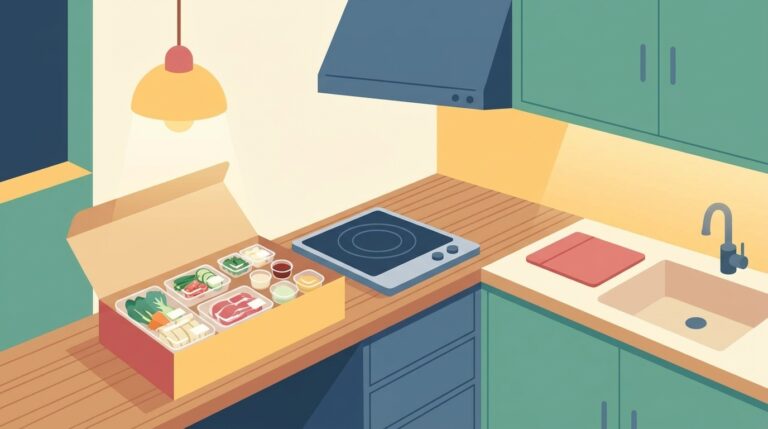
Cooking Solo in Korea: Your Ultimate Guide to Small-Packaged Ingredients and Meal Kits
Phase 1: Empathy (Your Korean Kitchen Savior is Here!)
안녕하세요! (An-nyeong-ha-se-yo!) Hello there! It’s your favorite Chief Editor and Korean culture buddy from Daily Hangul.
Imagine this: You’ve just finished watching a cozy slice-of-life K-Drama like Because This Is My First Life or Let’s Eat. The main character is happily slurping down a steaming bowl of Doenjang-jjigae (된장찌개 – Soybean Paste Stew). Inspired, you head to a local Korean supermarket, determined to recreate that magic in your own kitchen.
But as you walk down the aisles, panic sets in. The green onions are sold in giant bundles that could feed a small army. The garlic comes in a tub the size of your head. You realize that cooking a single meal will leave you with a mountain of rotting vegetables and a very sad wallet.
If you have ever felt defeated by the sheer size of supermarket ingredients while living alone in Korea, you are not alone! In a country historically famous for its giant, communal family meals, a massive cultural shift has occurred. Over 34% of Korean households are now single-person households (1인 가구 – Ir-in ga-gu). This shift has triggered a revolution in Korean supermarkets: the rise of 소포장 (Sopo-jang – small-scale packaging) and highly sophisticated 밀키트 (Mil-ki-teu – meal kits).
Today, we will master the essential Korean vocabulary and cultural nuances you need to navigate this solo culinary wonderland. By the end of this guide, you’ll be shopping, cooking, and chatting like a true Seoulite who knows exactly how to live the “small but certain happiness” (Sohwakhaeng) lifestyle!
Phase 2: Core Expressions Deep Dive
Let’s unpack the three most critical expressions you need when navigating Korea’s single-household food scene.
1. 소포장 (Sopo-jang)
- Pronunciation: [Sopo-jang] / Sound-alike guide: “So-po-jahng”
- Meaning: Small-scale packaging / portioned packaging
- K-Culture Moment: You walk into a modern E-Mart Everyday or Lotte Super and find a section dedicated to single carrots, half-cut cabbages, and single-serve bags of mixed onions. This is the holy grail of Sopo-jang.
- Editor’s Insight: Historically, buying in bulk was seen as a sign of affection (Jeong – 정) and hospitality. Today, Sopo-jang is a survival necessity for busy young professionals in Seoul who hate wasting food. Asking for this shows you understand modern Korean practicality.
- Situation Spectrum:
- Casual (Friends): ✅
- Semi-formal (Mart staff): ✅
- Formal (Polite inquiry): ✅
- 🤔 Think About It: In your home country, is buying small portions seen as practical, or is it considered more expensive? Why do you think Korea adapted so quickly to this packaging style?
2. 밀키트 (Mil-ki-teu)
- Pronunciation: [Mil-ki-teu] / Sound-alike guide: “Meal-key-teu”
- Meaning: Meal Kit (Ready-to-cook ingredient set)
- K-Culture Moment: In K-Dramas, when a character pretends they cooked a gourmet meal from scratch for their partner, they usually secretly bought a Mil-ki-teu from the local convenience store, threw away the packaging, and boiled it in a fancy pot!
- Editor’s Insight: Mil-ki-teu is a Konglish (Korean-English) word that everyone uses. They are incredibly high-quality in Korea, often designed in collaboration with famous chefs or legendary restaurants. It’s not “lazy food”; it’s considered “smart cooking.”
- Situation Spectrum:
- Casual: ✅
- Semi-formal: ✅
- Formal: ✅
- 🤔 Think About It: How does the rise of high-quality meal kits change the traditional gender roles of cooking in Korean society?
3. 남은 건 냉동해 두세요 (Nameun geon naengdonghae duseyo)
- Pronunciation: [Na-meun geon naeng-dong-hae doo-se-yo]
- Meaning: “Please freeze the leftovers.”
- K-Culture Moment: An older Korean neighbor or landlord sees you struggling with a massive bag of spring onions you bought on sale and kindly gives you this golden tip to keep them fresh.
- Editor’s Insight: The word Naengdong (냉동) means freezing. In Korean culture, keeping a highly organized freezer filled with pre-chopped, portioned ingredients is the ultimate sign of a skilled independent living expert (Jachisaeng – 자취생).
- Situation Spectrum:
- Casual (To a friend): 남은 건 냉동해 둬 (Nameun geon naengdonghae dwo) ✅
- Semi-formal (To a neighbor): 남은 건 냉동해 두세요 ✅
- Formal (Polite advice): 남은 것은 냉동 보관해 주세요 (Nameun geoseun naengdong bogwanhae juseyo) ✅
- 🤔 Think About It: Why is freezing food considered an essential life skill in Korea compared to just buying canned food?
Phase 3: Textbook Korean vs. Real Korean
When you study with a standard textbook, the language can sound like it was written in 1995. Let’s look at how Koreans actually talk in the grocery store today!
Situation 1: Asking if a product is suitable for a single person
- 📖 Textbook Korean: 이 상품은 1인용입니까? (I sangpumeun irinyong-imnikka? – “Is this product for one person?”)
- 🗣️ Real Korean: 이거 혼자 먹기 적당해요? (Igeo honja meokgi jeokdanghaeyo? – “Is this good/enough for one person to eat?”)
- 💡 Why the difference?: While “1인용” (for one person) is grammatically correct, it sounds highly transactional, like a catalog description. Using “혼자 먹기” (eating alone) sounds much more natural and conversational.
Situation 2: Inquiring about meal kit preparation time
- 📖 Textbook Korean: 조리 시간이 얼마나 걸립니까? (Jori sigani eolmana geollimnikka? – “How long does the cooking time take?”)
- 🗣️ Real Korean: 이거 만드는 데 오래 걸려요? (Igeo mandeuneun de orae geollyeoyo? – “Does this take long to make?”)
- 💡 Why the difference?: “조리” (cooking/preparation) is a formal culinary term. In daily life, Koreans prefer the simple verb “만들다” (to make) or “요리하다” (to cook) for a warmer, friendlier vibe.
Phase 4: K-Culture Deep Dive & Non-Verbal Manners
4-1. Grocery Store Etiquette & “Nunchi”
When shopping at small local neighborhood supermarkets (usually called Deong-ne Mart – 동네 마트), space can be tight. Here are some non-verbal tips to show respect:
* The Basket Dance: Do not leave your cart or basket blocking the narrow aisles while comparing meal kits. Keep your basket close to your body.
* Handling Produce: In Korea, it is completely acceptable to gently inspect Sopo-jang veggies to ensure freshness, but avoid squeezing or bruising them.
* Eye Contact with Cashiers: When paying, hand over your card or phone with both hands. It’s a subtle but powerful sign of respect that cashiers highly appreciate from foreign customers.
4-2. The Rise of the “Honbap” Generation
In traditional Korea, eating alone was taboo—it implied you lacked friends or family. Today, the Honbap (혼밥 – solo dining) and Hon-sul (혼술 – solo drinking) movement is celebrated.
K-Dramas like Let’s Eat show that eating alone doesn’t mean eating poorly. Meal kits have allowed young Koreans to enjoy complex dishes like Budae-jjigae (Army Base Stew) or Dak-galbi (Spicy Stir-fried Chicken) without having to order giant restaurant portions.
Phase 5: Interactive Roleplay Scenario
The Setting: You are at a trendy local mart in Mapo-gu, Seoul, on a rainy Thursday evening. The soft hum of a K-Indie song plays in the background. You are looking at the meal kit section, trying to find a perfect dinner.
The Cast:
* You (The Solo Gourmet): Hungry, looking to practice your intermediate Korean.
* Mart Staff (아주머니 – Ah-ju-meo-ni): A warm, helpful lady who loves chatty customers.
The Dialogue
- You:
저기요, 혹시 이거 밀키트 인기 많아요?
(Jeogiyo, hoksi igeo mil-ki-teu ingi manhayo?)
“Excuse me, by any chance, is this meal kit popular?” -
Mart Staff:
(Smiling proudly, pointing at a Budae-jjigae kit)
그럼요! 그거 우리 마트에서 제일 잘 나가요. 어제도 완판 됐어요!
(Geureomyo! Geugeo uri mateueseo jeil jal nagayo. Eojedo wanpan dwaesseoyo!)
“Of course! That one sells the best in our mart. It was completely sold out yesterday!” -
You:
아, 진짜요? 제가 매운 걸 아주 잘 먹지는 못하는데, 많이 매워요?
(Ah, jinjayo? Jega maeun geol aju jal meokjijeon motahande, manhi maewoyo?)
“Ah, really? I can’t eat spicy food very well, is it very spicy?” -
Mart Staff:
(Waving her hands reassurely)
아니에요, 양념 소스를 조절해서 넣으면 돼요. 반만 넣으면 딱 좋아!
(Anieyo, yangnyeom soseureul jojeolhaeseo neoeumyeon dwaeyo. Banman neoeumyeon ttak joah!)
“No, no! You can adjust the seasoning sauce. If you only put half in, it’s perfect!” -
You:
다행이네요. 참, 야채는 따로 안 사도 여기에 다 들어있나요?
(Dahaengineyo. Cham, yachaeneun ttaro an sado yeogicda deureoitnayo?)
“That’s a relief. By the way, are all the vegetables included here, or do I need to buy them separately?” -
Mart Staff:
(Tapping the package)
다~ 들어있어요. 파, 버섯, 양파 다 소포장으로 들어있어서 엄청 편해요.
(Da~ deureoitseoyo. Pa, beoseot, yangpa da sopojangeuro deureoitseoseo eomcheong pyeonhaeyo.)
“Everything is inside. Green onions, mushrooms, onions—they’re all in small-packaged portions, so it’s super convenient.” -
You:
혼자 먹기에는 양이 좀 많아 보이는데, 남으면 어떻게 해요?
(Honja meokgieneun yang-i jom manha boineunde, nameumyeon eotteoke haeyo?)
“The portion looks a bit big for one person. What should I do if there are leftovers?” -
Mart Staff:
(Leaning in with a secret tip)
먹기 전에 미리 딱 반만 덜어두고, 남은 건 바로 냉동해 두세요. 그래야 신선해요!
(Meokgi jeone miri ttak banman deoreodugo, nameun geon baro naengdonghae duseyo. Geuraeya sinseonhaeyo!)
“Before you eat, set aside exactly half, and freeze the leftovers right away. That keeps it fresh!” -
You:
와, 진짜 꿀팁이네요! 감사합니다. 이걸로 할게요.
(Wa, jinjja kkultibineyo! Gamsahabnida. Igeollo halgeyo.)
“Wow, that’s a really great tip! Thank you. I’ll take this one.” -
Mart Staff:
(Beaming)
맛있게 먹어요! 다음에도 또 놀러 오구!
(Masitge meogeoyo! Daeumedo tto nolleo ogu!)
“Enjoy your meal! Come visit again!”
🔀 Decision Point: What do you say to the cashier at checkout?
- Option A: 봉투 필요 없어요, 그냥 갈게요. (Bongtu piryo eopseoyo, geunyang galgeyo.) – “I don’t need a bag, I’ll just go.”
- Option B: 이거 환불해 주세요. (Igeo hwanbulhae juseyo.) – “Please refund this.”
- Option C: 카드 여기 있습니다. (Kadeu yeogi itseubnida.) – “Here is my card.”
Best Choice Analysis:
- Option A is excellent if you brought your own eco-bag! It shows you are environmentally conscious (highly valued in Korea, where plastic bag fees apply).
- Option C is the perfect polite standard. Remember to offer the card with two hands!
- Option B is a terrible mistake if you actually want to eat your dinner tonight! Use this only if you accidentally grabbed the wrong kit.
Phase 6: 10-Second Emotion Shadowing Drill
Practice saying these lines with the exact emotional intonation of a native speaker. Treat the slashes (/) as brief pause points.
1. [🥺 Ah, what a relief!]
- Korean: 다행이다! / 야채가 / 다 들어있네!
- Romanization: Da-haeng-i-da! / Ya-chae-ga / da deu-reo-it-ne!
- Tip: Start with a big sigh of relief on Dahaengida, then raise your tone slightly with excitement on da deureoitne!
2. [😊 Bragging to your friend about your cooking life]
- Korean: 요즘 / 밀키트가 / 진짜 잘 나와요!
- Romanization: Yo-jeum / mil-ki-teu-ga / jin-jja jal na-wa-yo!
- Tip: Put a strong, happy emphasis on jinjja (really) to sound passionate about your meal kit lifestyle.
Phase 7: K-Culture Mini-Dictionary
| Word (Korean + Romanization) | English Meaning | Cultural Insight & Usage |
|---|---|---|
| 1인 가구 (Ir-in Ga-gu) | Single-person household | Used in news and daily life to describe the soaring demographic of young Koreans living solo. |
| 혼밥 (Hon-bap) | Eating alone | A portmanteau of 혼자 (alone) and 밥 (meal). It is now a proud social lifestyle, not a lonely one. |
| 소확행 (So-hwak-haeng) | Small but certain happiness | A popular trendy phrase. A perfect example of Sohwakhaeng is eating a delicious meal kit in a clean, quiet apartment. |
| 자취생 (Ja-chwi-saeng) | A student/young adult living away from home | Usually implies a college student or young worker who cooks simple meals and tries to save money. |
Phase 8: Traveler’s Survival Kit
If you are visiting or living in Korea, keep these three survival phrases ready in your pocket!
Survival Cards
- 이거 1인분 맞아요? (Igeo irinbun majayo?)
- Meaning: Is this portion for one person?
- Pro Tip: Perfect for checking if a restaurant dish or a market meal kit is too big for you.
- 봉투에 넣어 주세요. (Bongtue neoeo juseyo.)
- Meaning: Please put it in a bag.
- Pro Tip: Grocery bags cost 50 to 100 KRW in Korea. Saying this lets them know you are happy to pay for the bag.
- 영수증은 버려주세요. (Yeongsujeungeun beoryeojuseyo.)
- Meaning: Please throw away the receipt.
- Pro Tip: Supermarkets always ask if you need a receipt. Save paper by using this phrase!
📌 Editor’s Travel Note:
To level up your solo living in Korea, download the Market Kurly App (마켓컬리) or use Coupang Rocket Fresh for overnight delivery of high-quality, single-serving meal kits right to your door. Note: App interface and availability may vary based on local phone number and registration requirements.
Phase 9: Deep Thinking — “A Step Further”
For decades, Korean food culture was defined by the word 공동체 (Gong-dong-che – community). Families sat around a single large table, sharing stew from the same pot and side dishes from communal plates. It was an intimate way of expressing Jeong (affection).
With the rapid rise of 1인 가구 (single households), some worry that the beauty of sharing meals is fading away. However, we see a beautiful evolution rather than a loss. Young Koreans now share their solo cooking journeys on Instagram with hashtags like #혼밥스타그램 (Honbap-stagram), finding virtual community. The intimacy isn’t lost; it has simply moved online and become more personalized.
💬 Your Turn: How has solo living changed food culture in your home country? Do you prefer sharing a big communal meal, or do you love the cozy independence of a meal kit? Let us know your thoughts in the comments below!
Phase 10: FAQ & Common Mistakes
Q: Do all Korean meal kits require a stove or extra pots?
A: Depends. Most premium meal kits require you to have a basic stove or portable burner. However, many convenience store meal kits come in heat-resistant foil containers that can be placed directly on an induction stove, or are completely microwave-friendly. Check the back of the packaging for the microwave symbol (전자레인지 사용 가능).
Q: Are small-packaged ingredients (소포장) much more expensive than buying in bulk?
A: Slightly, but it saves money in the long run. While the price per gram is higher for Sopo-jang, it prevents the costly waste of throwing away rotten, unused ingredients. For a single household, it is almost always more economical.
Q: Can I buy meal kits at any time of day?
A: Yes! Korea has 24-hour unmanned meal kit stores (무인 밀키트 전문점) where you can walk in, select a kit from a fridge, scan the barcode, and pay via kiosk at 3:00 AM if you want!
🚨 Common Mistakes Warning Board
- Mistake #1: Not checking the expiration date (유통기한). Because meal kits contain fresh, non-preservative ingredients, their shelf life is very short (usually 2-3 days). Always check the date!
- Mistake #2: Forgetting to adjust the spicy sauce packet. Almost all spicy meal kits pack the sauce in a separate pouch. Do not pour the whole thing in unless you are a spicy food warrior!
- Mistake #3: Assuming the kit contains rice. Most meal kits assume you have rice at home. Make sure to buy a microwaveable Haetban (햇반 – instant rice) alongside your kit!
Phase 11: Action Missions
- 🥉 Bronze (The Mirror Challenge): Stand in front of a mirror and practice ordering a plastic bag politely with two hands: “봉투에 넣어 주세요” five times.
- 🥈 Silver (The Social Media Challenge): Snap a picture of your dinner (even if it’s simple!) and post it on your Instagram story with the caption: “오늘 저녁은 혼밥!” (Tonight’s dinner is solo dining!) and tag us @DailyHangul.
- 🥇 Gold (The Real-World Quest): Walk into a local Korean supermarket, locate the Sopo-jang section, pick one vegetable, and successfully ask the staff: “이거 혼자 먹기에 양이 적당해요?”
- 🎮 K-Culture Mission: Watch an episode of the K-Drama Let’s Eat and count how many times they highlight the joy of solo eating. Try to spot a meal kit being prepared!
Phase 12: Interactive Quiz Challenge
Let’s test your knowledge! Click on the toggle boxes below to reveal the answers.
1. Situational Judgment
You want to buy ingredients for a small stew, but you only see a giant pack of onions. You want to ask the clerk if they sell smaller portions. Which phrase do you use?
* A) 이거 대용량인가요? (Is this bulk size?)
* B) 소포장된 양파는 없나요? (Are there no small-packaged onions?)
* C) 양파 다 버려주세요. (Please throw away all the onions.)
Reveal the Answer & Explanation
Correct Answer: B
* Why: “소포장된” (small-packaged) is the perfect industry term to ask if they have portioned veggies. Option A is just asking if it’s big, and Option C is asking them to throw them away, which would make the clerk very confused!
2. Fill in the Blanks
Complete this natural conversation:
* A: 남은 채소는 어떻게 보관해요?
* B: 남은 건 ____________ 두세요.
Reveal the Answer
Answer: 냉동해 (naeng-dong-hae – freeze)
* Full translation: “How do I store the leftover vegetables?” / “Please freeze the leftovers.”
3. True or False?
In modern Korea, eating alone (혼밥) is still considered socially embarrassing, so you should always try to find a partner before dining out.
Reveal the Answer
Answer: False
* Explanation: While it was taboo in the past, Honbap is now a highly respected, trendy, and incredibly common lifestyle choice in modern Korea!







