

Beat the K-Summer Heat: The Ultimate Guide to Korean Valley Splashing (계곡 물놀이)
안녕하세요! Welcome back to Daily Hangul. I’m your chief editor and local guide.
If you have ever watched a K-Drama set in the summer, you have probably seen this classic scene: characters escaping the blazing concrete jungle of Seoul to sit under green trees, dip their feet in a crystal-clear mountain stream, and share a steaming pot of whole chicken soup.
In Korea, when the humidity climbs to dizzying heights, we don’t just head to the beach. We go 계곡으로 물놀이 가기 (gyegok-eureo mulnori gagi)—going to a mountain valley for water play.
If you want to understand how Koreans survive the summer with a smile, you need to understand the culture of the gyegok (valley). Let’s dive in and learn the real-world Korean you need to blend in like a true local!
Phase 2: 3 Essential Valley Expressions Deep Dive
To sound like a local when planning your summer getaway, master these three key expressions.
1. 발 담그다 (Bal damgeuda)
- Pronunciation: [bal dam-geu-da] / Sound-alike: “bahl dahm-gheu-dah”
- Meaning: To dip one’s feet (literally: “to immerse feet”).
- K-Culture Moment: Think of a healing scene in a slice-of-life K-Drama like Our Beloved Summer. The characters sit on a flat rock, kick off their shoes, and plunge their tired feet into the freezing cold mountain water with a sigh of relief.
- Editor’s Insight: This isn’t just a physical action. In Korean, “발을 담그다” can also metaphorically mean getting involved in an activity or project. But in summer, it’s the ultimate act of relaxation.
- Situation Spectrum:
- Casual (Friends): ✅
- Semi-formal (Co-workers): ✅
- Formal (Bosses/Seniors): ✅ (Adjusted to “발 담글까요?” – Shall we dip our feet?)
- 🤔 Think About It: Why does dipping just your feet feel so deeply satisfying to Koreans compared to swimming? It reflects a traditional lifestyle of enjoying nature without leaving a heavy footprint.
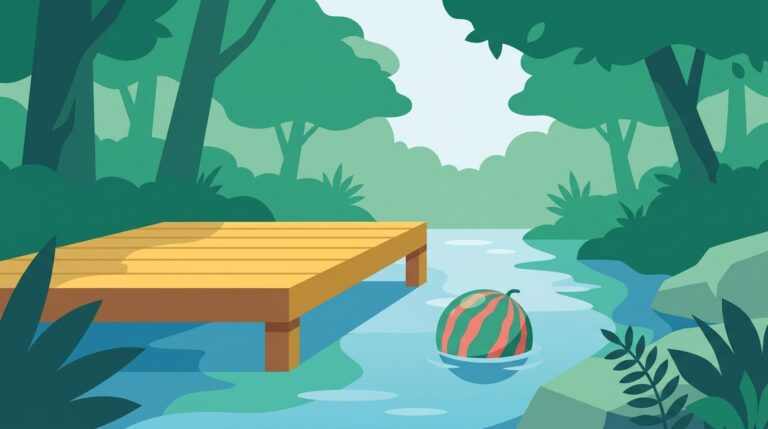
2. 계곡 수박 (Gyegok subak)
- Pronunciation: [gye-gok su-bak] / Sound-alike: “gyeh-gohk soo-bahk”
- Meaning: Valley watermelon.
- K-Culture Moment: If you watch Korean reality shows like Three Meals a Day, you’ll see cast members putting a whole, heavy watermelon into the freezing stream currents to keep it chilled before slicing it open with a satisfying crack.
- Editor’s Insight: Watermelon is the undisputed king of Korean summer fruits. Keeping it in the valley stream is nature’s refrigerator. Bringing a watermelon to the valley is a symbol of friendship and sharing.
- Situation Spectrum:
- Casual (Friends): ✅
- Semi-formal (Co-workers): ✅
- Formal (Bosses/Seniors): ⚠️ (Slightly informal concept, but loved by all ages)
- 🤔 Think About It: How does your culture chill summer food when outdoors? Is there a fruit that immediately triggers summer memories for you like watermelon does for Koreans?
3. 몸보신하다 (Mombosin-hada)
- Pronunciation: [mom-bo-sin-ha-da] / Sound-alike: “mohm-boh-sheen-hah-dah”
- Meaning: To restore or nourish one’s physical strength (usually through highly nutritious, hot food).
- K-Culture Moment: Eating hot, steaming chicken soup (Baeksuk) right next to a cold stream to fight the summer fatigue.
- Editor’s Insight: When the summer heat drains your energy, Koreans say your “stamina” is depleted. Mombosin is the active process of eating healthy foods to recharge your battery.
- Situation Spectrum:
- Casual (Friends): ✅
- Semi-formal (Co-workers): ✅
- Formal (Bosses/Seniors): ✅
- 🤔 Think About It: Why eat hot food on a hot day? In Korea, this is linked to the concept of Iyeolchiyeol (fighting heat with heat) to balance your body’s internal temperature.
Phase 3: Textbook Korean vs. Real-World Korean
Let’s compare what textbooks teach you versus how real Koreans actually talk when heading to the valley.
Scenario 1: Suggesting to go to the valley
- 📖 Textbook Korean: “여름이니까 우리 계곡에 갈까요?” (Since it is summer, shall we go to the valley?)
- 🗣️ Real-World Korean: “우리 더위 식히러 계곡 갈래?” (Shall we head to the valley to cool off?)
- 💡 Why is it different? While the textbook is correct, real Koreans use the phrase 더위를 식히다 (deowireul sikhida – to cool down/chase away the heat) because it sounds much more active and refreshing.
Scenario 2: Suggesting what to eat
- 📖 Textbook Korean: “계곡 옆에서 닭고기 수프를 먹읍시다.” (Let’s eat chicken soup next to the valley.)
- 🗣️ Real-World Korean: “계곡 평상에서 백숙 한 그릇 해야지!” (We’ve got to have some boiled chicken on the valley platform!)
- 💡 Why is it different? Locals specifically refer to 평상 (pyeongsang – a low wooden deck) and 백숙 (baeksuk – whole boiled chicken with ginseng), using the friendly verb form ~해야지 (we must do this!) to show excitement.
Phase 4: K-Culture Deep Dive & Valley Etiquette
4-1. Nunchi (눈치) & Non-verbal Manners at the Valley
When you visit a Korean valley, you will often see wooden platforms (pyeongsang) set up right over or next to the water.
* The Nunchi Rule: Many of these platforms are owned by nearby local restaurants. You cannot just sit on them for free! If you sit there, you are expected to order food (usually Baeksuk).
* Shared Nature Etiquette: If you bring your own picnic mat (돗자리 – dotjari), look around to see where others have set up. Placing your mat too close to another group without making eye contact and offering a polite nod (인사 – insa) is considered bad manners.
4-2. The Magic of Baeksuk (백숙)
Eating boiled chicken soup (Baeksuk) in a freezing mountain stream is a major cultural phenomenon. It perfectly highlights the Korean concept of 공동체 식사 (gongdongche siksa – communal eating). The dish is served in a giant pot meant to be shared by 3 to 4 people, symbolizing warmth, connection, and surviving the harsh climate together.
Phase 5: Interactive Valley Roleplay
Setting: It is a burning hot Saturday morning. You and your Korean friend, Minjun (민준), are driving up to the cool Bukhansan Mountain valley just outside Seoul. The air smells like wet stones and green leaves.
- Minjun (민준): 🎭 (Wiping sweat from his forehead) 와, 오늘 진짜 더워요! 에어컨을 틀어도 땀이 나네. (Wow, it is really hot today! Even with the AC on, I’m sweating.)
- You: 🎭 (Looking out the window at the green trees) 그러니까요. 서울을 탈출하길 잘했어요. (I know. I’m glad we escaped Seoul.)
- Minjun (민준): 🎭 (Excitedly pointing) 저기 계곡 물 소리 들려요? 우리 빨리 가요! (Can you hear the water over there? Let’s go fast!)
- You: 🗣️ 와! 소리만 들어도 시원해요. (Wow! Just hearing the sound makes me feel cool.)
- Minjun (민준): 🎭 (Walking down to the stream) 물 진짜 깨끗하다! 우리 우선 발부터 담글까요? (The water is so clean! Shall we dip our feet first?)
- You: 🗣️ 네! 신발 벗고 물에 들어갈게요. (Yes! I’ll take off my shoes and get in the water.)
- Minjun (민준): 🎭 (Shivering playfully) 앗 차가워! 물이 완전 얼음장이에요! (Ah, cold! The water is like ice!)
- You: 🗣️ 정말요? 와, 온몸이 시원해지는 기분이에요. (Really? Wow, I feel like my whole body is cooling down.)
- Minjun (민준): 🎭 (Stomach rumbles, laughs sheepishly) 이제 슬슬 배고픈데… 저기 평상에서 백숙 먹을래요? (I’m getting hungry now… Shall we eat boiled chicken on that wooden platform over there?)
🔀 Decision Point: What do you say next?
- Choice A: “너무 더우니까 그냥 에어컨 나오는 식당으로 가요.” (It’s too hot, let’s just go to a restaurant with AC.)
- Choice B: “좋아요! 역시 계곡에서는 백숙을 먹어야죠!” (Sounds great! As expected, we must eat boiled chicken at the valley!)
- Choice C: “저는 치킨 먹고 싶어요. 배달시킬까요?” (I want to eat fried chicken. Shall we order delivery?)
Playback Analysis:
- Best Choice – B: Perfect! You understood the local gyegok culture. Your Korean friend will be thrilled by your cultural immersion.
- Risk Choice – A: While understandable, this ruins the outdoor vibe. The whole point of coming to the valley is to enjoy the natural breeze!
- Risk Choice – C: Valleys are usually deep in the mountains where delivery drivers cannot reach. Stick to the local Baeksuk!
Phase 6: 10-Second Emotion Shadowing Drill
Let’s add some emotional color to your Korean speech! Pay attention to the pauses (/) and try to express the exact emotion listed.
- [😊 Overwhelmed with refreshing joy]
- “와 / 진짜 / 천국이 따로 없네!”
- wa / jin-jja / cheon-gug-i tta-ro eob-ne!
- (Wow, this is literally heaven!)
- [😆 Playfully shocked by cold water]
- “발이 / 꽁꽁 / 얼어버릴 것 같아!”
- ba-ri / kkong-kkong / eo-reo-beo-ril geot ga-ta!
- (I feel like my feet are going to freeze solid!)
Phase 7: K-Culture Mini Dictionary
- 피서 (Piseo): Summering / escaping the summer heat. (Traditionally, Koreans went to mountains and streams to do piseo before modern AC existed).
- 평상 (Pyeongsang): A flat wooden platform used for outdoor sitting and dining.
- 이열치열 (Iyeolchiyeol): Healing/fighting heat with hot food. (The philosophy behind eating hot ginseng chicken soup in August).
- 돗자리 (Dotjari): A picnic mat. An absolute travel essential for any Korean outdoor activity.
Phase 8: Traveler’s Survival Kit
If you find yourself at a Korean valley, keep these three phrases handy:
- “여기에 돗자리 깔아도 돼요?”
- yeo-gi-e dot-ja-ri kkal-a-do dwae-yo?
- (Can I lay my picnic mat here?)
- “여분 수건 혹시 빌릴 수 있나요?”
- yeo-bun su-geon hok-si bil-ril su in-na-yo?
- (Could I borrow an extra towel by any chance?)
- “백숙 나오는 데 얼마나 걸려요?”
- baek-suk na-o-neun de ol-ma-na geol-ryeo-yo?
- (How long does it take for the boiled chicken to be served?)
📌 Editor’s Travel Note
To find the best local valleys near Seoul (like Ui-dong Valley or Gwanaksan Valley), do not use Google Maps as it lacks local updates. Instead, download the Naver Map App Store Page or the KakaoMap Google Play Store Page to search for “계곡 맛집” (valley restaurants) and book your platform spot in advance!
Phase 9: One Step Deeper — The Spirit of Sharing
In many Western cultures, seeking nature is often an individualistic journey—hiking alone or quietly meditating by a lake. In Korea, nature is a social space. Going to a valley is a collective healing ritual. Eating out of the same pot of Baeksuk and sitting shoulder-to-shoulder on a pyeongsang showcases “Jeong” (정)—the unique Korean feeling of deep affection and community.
💬 Your Turn:
How does your hometown beat the summer heat? Do you have a special food you eat to stay strong? Let us know in the comments below!
Phase 10: FAQ & Common Mistakes
Q: Can I swim in any valley stream in Korea?
A: No. Some valleys are protected water sources or located inside National Parks where swimming is strictly forbidden to protect nature. Look for signs that say “물놀이 금지” (No swimming/water play).
Q: Do I have to pay to enter the valleys?
A: No, public valleys are free. However, if you want to use the convenient dining platforms (pyeongsang), you must buy food from the restaurant operating them.
Q: What should I wear?
A: Quick-dry shorts and aqua shoes are highly recommended. The rocks in Korean valleys can be extremely slippery and sharp.
🚨 Common Mistakes to Avoid:
- Going barefoot: Slipping on wet valley stones is the #1 cause of summer injuries.
- Leaving trash: Korea has a very strict recycling culture. Pack your trash back out!
- Expecting sandy shores: Valley streams are rocky. Bring a thick cushion if you plan to sit directly on the ground.
Phase 11: Action Missions
- 🥉 Bronze: Record your voice saying: “와! 진짜 시원하다!” (Wow! It’s so cool!) with maximum energy.
- 🥈 Silver: Find a photo of a Korean valley on Instagram and comment: “나도 계곡에서 발 담그고 싶어!” (I also want to dip my feet in a valley!)
- 🥇 Gold: Use a mapping app to find one valley near Seoul (e.g., Anyang Art Park Valley) and save it to your travel bucket list!
- 🎮 K-Culture Mission: Watch Episode 11 of Hospital Playlist (Season 2) where the doctors go on a trip to a valley and eat delicious food together!
Phase 12: Interactive Quiz Challenge
Test your valley smarts!
1. Which food is traditionally eaten on a pyeongsang at a valley?
- A) Fried chicken
- B) Baeksuk (Boiled chicken soup)
- C) Samgyeopsal (Pork belly)
Click here for the Answer!
Answer: B) Baeksuk. While pork belly is delicious, hot whole chicken soup (Baeksuk) is the ultimate king of mombosin (nourishing the body) in the valley.
2. True or False: You can set up your tent on any wooden platform (pyeongsang) you see.
Click here for the Answer!
Answer: False. Most pyeongsang belong to private local restaurants. Always ask before sitting down or prepare to order some tasty food!







