

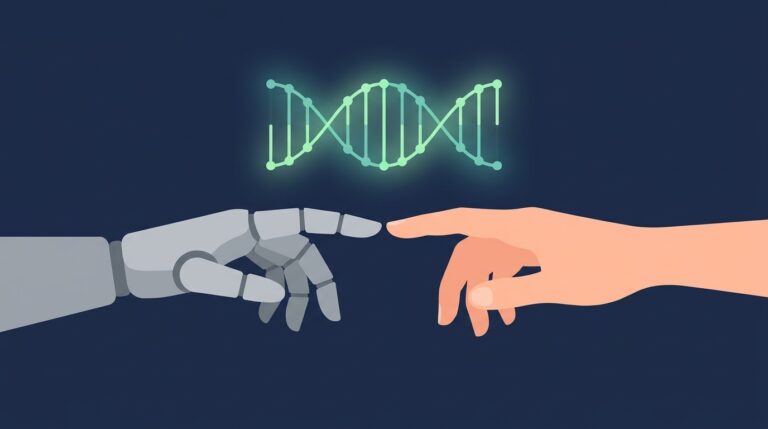
Beyond Cyberpunk: How to Debate Bioethics in Korean Like a Seoulite
안녕하세요! Welcome back to another premium edition of Daily Hangul, your ultimate guide to mastering not just the Korean language, but the deep, vibrant cultural soul behind it. I’m your senior editor and resident K-culture navigator.
Imagine this: You are sitting in a cozy, modern cafe in Hongdae with your Korean friends. The conversation shifts from the latest Netflix sci-fi thriller like Jung_E or The Silent Sea to a real-world debate—genetic engineering, artificial intelligence, and the ethical boundaries of science. You want to jump in. You want to express your deep thoughts, but suddenly, your tongue feels tied. You know the words “science” and “bad,” but how do you articulate complex concepts like “bioethics” or “human dignity” in Korean without sounding like a robotic translation tool?
If you have ever felt this frustration, you are in the right place. Today, we are diving deep into the realm of Philosophy & Ethics (철학과 윤리), focusing specifically on Scientific Development and Bioethics (과학 기술 발달과 생명 윤리). By the end of this guide, you will be equipped with the exact terms, nuances, and cultural context needed to hold your own in high-level intellectual discussions. Let’s level up your C1 Korean!
Phase 2: Deep Dive into 3 Key Expressions
To debate like a local, you need to master the linguistic heavyweights of Korean ethical discourse. Here are the three most crucial terms you must know.
1. 생명 윤리 (Saeng-myeong Yun-ri)
- Pronunciation: [saeng-myeong yun-ri] / Sound-alike guide: “Seng-myung Yoon-ree”
- Meaning: Bioethics (literally, “Life Ethics”)
- K-Culture Moment: Think of those intense medical K-dramas (like Dr. Brain or Doctor John) where researchers argue in front of an ethics committee about experimental human trials.
- Editor’s Insight: This word combines 생명 (life) and 윤리 (ethics). In Korean culture, which is heavily influenced by Confucian respect for life and nature, “생명 윤리” is not just a legal term; it carries a deep moral weight. Using this word immediately signals that you are looking at the human cost of scientific progress.
- Situation Spectrum:
- Friends & Casual (사석): ⚠️ Too heavy for trivial gossip, but perfect for serious late-night talks.
- Semi-formal (직장 동료/비즈니스): ✅
- Formal (직장 상사/학술 토론): ✅
- 🤔 Think About It: Unlike the Western focus on individual rights, Korean “생명 윤리” often emphasizes collective responsibility and the natural order. How does this compare to how bioethics is discussed in your home country?
2. 무분별한 개발 (Mu-bun-byeol-han Gae-bal)
- Pronunciation: [mu-bun-byeol-han gae-bal] / Sound-alike guide: “Moo-boon-byul-han Geh-bal”
- Meaning: Indiscriminate development / Reckless exploitation
- K-Culture Moment: The classic environmental warning scenes in sci-fi movies where greedy corporations destroy natural ecosystems to harvest a new bio-resource.
- Editor’s Insight: 무분별하다 means “to lack discernment” or “to be thoughtless.” When paired with 개발 (development), it creates a powerful critique of progress that proceeds without moral or environmental safeguards.
- Situation Spectrum:
- Friends & Casual (사석): ✅
- Semi-formal (직장 동료): ✅
- Formal (학술/토론): ✅
- 🤔 Think About It: Koreans highly value harmony (조화). “무분별한 개발” represents a disruption of this harmony. Can you think of a recent technological advancement that fits this description?
3. 인간 존엄성 (In-gan Jon-eom-seong)
- Pronunciation: [in-gan jon-eom-seong] / Sound-alike guide: “Een-gan Jon-um-sung”
- Meaning: Human dignity
- K-Culture Moment: The emotional climax of a drama where an artificial intelligence character asks, “Am I not alive? Do I not deserve respect?”
- Editor’s Insight: This is your absolute trump card in any ethical debate. 존엄성 (dignity) is sacred in Korean law and philosophy. Asserting that something threatens “인간 존엄성” instantly elevates your argument to a high moral plane.
- Situation Spectrum:
- Friends & Casual (사석): ⚠️ Use when the conversation turns genuinely philosophical.
- Semi-formal (직장 동료): ✅
- Formal (토론/면접): ✅
- 🤔 Think About It: As AI advances, do you think the concept of “존엄성” will eventually expand beyond humans to include sentient machines?
Phase 3: Textbook Korean vs. Real Korean
When you study from standard textbooks, the sentences can feel incredibly stiff. Let’s look at how you can transform academic Korean into natural, impactful spoken sentences.
Situation 1: Expressing that technology is advancing too quickly for ethics to keep up.
- 📖 Textbook Korean: 과학 기술의 발전 속도는 윤리적 논의의 속도를 초과합니다.
(The speed of scientific development exceeds the speed of ethical discussion.) - 🗣️ Real Korean: 기술 발전 속도를 윤리가 못 따라가고 있어요.
(Ethics just can’t keep up with the pace of technological development.) - 💡 Why is it different? Textbooks love passive, heavy Sino-Korean verbs like 초과하다 (to exceed). Real Koreans prefer active, idiomatic expressions like 못 따라가다 (cannot keep up), which makes your speech sound dynamic and natural.
Situation 2: Warning against the moral dangers of gene editing.
- 📖 Textbook Korean: 유전자 조작은 생명 윤리 규범을 위반할 소지가 있습니다.
(Genetic modification has the potential to violate bioethical norms.) - 🗣️ Real Korean: 유전자 조작은 아무래도 선을 넘는 느낌이 들어요.
(Honestly, genetic modification feels like crossing the line.) - 💡 Why is it different? While “위반하다” (to violate) is grammatically correct, using the idiomatic phrase 선을 넘다 (to cross the line) adds a subtle, modern, and relatable touch that instantly connects with your listener.
Phase 4: K-Culture Deep Dive & Non-Verbal Manners
4-1. Nunchi (눈치) and Debate Etiquette
In Korea, a debate is not a battle to destroy your opponent; it is a collaborative search for harmony. When discussing heavy topics like bioethics:
* The Soft Start: Never start your counterargument with a flat “No” (아니요). Always acknowledge the other person’s point first: “그 말씀도 맞지만…” (What you said is also true, but…) or “무슨 뜻인지 이해해요. 하지만…” (I understand what you mean. However…).
* Nodding & Eye Contact: Maintain soft eye contact, but occasionally nod deeply to show you are processing their philosophical stance. This shows high intellectual empathy.
4-2. The “Korean Cyberpunk” Paradox
South Korea transitioned from an agricultural society to a hyper-tech global powerhouse in mere decades—a phenomenon called the “Miracle on the Han River.” This rapid shift created a fascinating paradox: Korea has some of the world’s fastest internet and advanced biotech, yet retains a deeply traditional Confucian social structure. This tension is why K-dramas are obsessed with themes of cloning, AI, and corporate greed. Understanding this cultural anxiety helps you appreciate why Koreans take bioethics so seriously.
Phase 5: Playable Roleplay Scenario
The Setting: You are at a cozy, rainy-day Makgeolli (rice wine) bar in Sinchon after a university seminar. The table is filled with green bottles, warm potato pancakes, and glowing smartphone screens. Ji-woo, a passionate graduate student, turns to you with a serious look.
Ji-woo (지우):
(🎭 Adjusting his glasses, speaking with a slight sigh)
요즘 AI 기술 발전하는 거 보면 정말 신기하면서도 무서워요.
[Yo-jeum AI gi-sul bal-jeon-ha-neun geo bo-myeon jeong-mal sin-gi-hae-seo-do mu-seo-wo-yo.]
(Looking at the rapid development of AI these days, it’s amazing but also scary.)

You:
(🎭 Nodding slowly, taking a sip of Makgeolli)
맞아요. 기술이 너무 빨라서 윤리가 못 따라가고 있는 느낌이에요.
[Ma-ja-yo. Gi-sul-i neo-mu ppal-la-seo yun-ri-ga mot tta-ra-ga-go in-neun neuk-kkim-i-e-yo.]
(True. It feels like technology is too fast, and ethics can't keep up.)

Ji-woo (지우):
(🎭 Pointing to a news article about humanoid robots on his phone)
바로 그거예요! 만약 로봇이 인간과 똑같이 생각하고 느끼게 된다면,
그 로봇에게도 '인간 존엄성' 같은 권리를 줘야 할까요?
[Ba-ro geu-geo-ye-yo! Man-yak ro-bot-i in-gan-gwa ttok-ga-ti saeng-gak-ha-go neu-kki-ge doen-da-myeon, geu ro-bot-e-ge-do 'in-gan jon-eom-seong' gat-eun gwon-ri-reul jwo-ya hal-kka-yo?]
(Exactly! If robots eventually think and feel just like humans, should we give them rights like 'human dignity'?)
🔀 Your Decision Point!
How do you respond? Choose your path:
- Option A (The Conservative Humanist):
“아무리 로봇이 똑똑해도 인간 존엄성은 오직 인간만의 것이라고 생각해요.”
(No matter how smart robots are, I believe human dignity belongs only to humans.) - Option B (The Tech Futurist – BEST CHOICE):
“의식과 감정이 있다면, 생명 윤리의 범위를 넓혀서 존중해 줘야 하지 않을까요?”
(If they have consciousness and emotions, shouldn’t we expand the scope of bioethics and respect them?) - Option C (The Pragmatist):
“그건 너무 복잡한 문제라 머리가 아프네요. 막걸리나 마셔요!”
(That’s too complex of a problem, it gives me a headache. Let’s just drink Makgeolli!)
💡 Feedback on Your Choice:
- Choosing Option A: Solid and philosophically grounded. Ji-woo will nod respectfully and offer a counterpoint about the definition of “human.”
- Choosing Option B (Best): Fantastic! You used 생명 윤리 (bioethics) in a highly advanced, metaphorical way. This will spark an incredibly deep, satisfying conversation.
- Choosing Option C: Funny and light-hearted, but you missed a golden opportunity to practice your C1 Korean! Save this for when you are genuinely exhausted.
Phase 6: 10-Second Emotion Shadowing Drill
To sound natural, you must master the cadence of philosophical contemplation. Practice these with the indicated emotions!
- [😤 Firm and Convicted]
아무리 / 과학이 발전해도 / 인간 존엄성은 / 지켜야죠.
[A-mu-ri / gwa-hak-i bal-jeon-hae-do / in-gan jon-eom-seong-eun / ji-kyeo-ya-jo.]
(No matter how much science develops, we must protect human dignity.) -
[🥺 Worried and Cautious]
유전자 편집 기술은 / 솔직히 / 선을 넘는 느낌이 들어요.
[Yu-jeon-ja pyeon-jip gi-sul-eun / sol-jik-hi / seon-eul neom-neun neuk-kkim-i deul-eo-yo.]
(To be honest, gene-editing technology feels like crossing the line.)
Phase 7: K-Culture Mini Dictionary
| Word (Korean + Romanization) | English Translation | Real-world Contextual Usage |
|---|---|---|
| 생명경시 (Saeng-myeong-gyeong-si) | Disregard for human life | Used to criticize laws, systems, or scientific advancements that prioritize profit over human safety. |
| 유전자 조작 (Yu-jeon-ja Jo-jak) | Genetic modification | A hot topic in Korea’s agricultural and medical sectors. Frequently debated on TV talk shows. |
| 가치관 (Ga-chi-gwan) | Values / Worldview | Essential for debates. E.g., “세대마다 가치관이 달라요” (Values differ from generation to generation). |
| 윤리적 딜레마 (Yun-ri-jeok Dil-re-ma) | Ethical dilemma | Used when facing tough moral choices, such as autonomous vehicles deciding who to save in an accident. |
Phase 8: Traveler’s Survival Kit
Even in a hyper-tech society, you might need help navigating the ethical smart-cities of Korea. Here are three quick survival phrases:
- 무인 매장은 어떻게 이용해요?
[Mu-in mae-jang-eun eo-tteoh-ge i-yong-hae-yo?]
(How do I use this unmanned/automated store?)
Pro Tip: Korea is full of unmanned convenience stores and cafes. Look for the credit card scanner at the entrance! -
로봇 배달 서비스 신기하네요!
[Ro-bot bae-dal seo-bi-seu sin-gi-ha-ne-yo!]
(This robot delivery service is amazing!)
Pro Tip: In areas like Songdo, you might see small delivery robots rolling down the sidewalk.
📌 Editor’s Travel Note: When navigating smart cities like Seoul or Songdo, Google Maps can be highly inaccurate. For the best transit routes and up-to-date locations of tech-cafes, download the Naver Map App for flawless local navigation.
Phase 9: Deep Thoughts — “한 발 더 깊이” (One Step Deeper)
Korea’s transition into a digital-first society is one of the fastest in human history. While this brings incredible convenience, it also leaves many elderly Koreans or marginalized groups feeling left behind. This digital divide is itself a major bioethical and social issue. When we discuss technological development, we must ask ourselves: Are we developing technology for humanity, or is humanity adapting itself to serve technology?
💬 Your Turn: How does your culture balance rapid technological progress with ethical boundaries? Let us know in the comments below!
Phase 10: FAQ & Common Mistakes
Q: What is the difference between 도덕 (Do-deok) and 윤리 (Yun-ri)?
A: Excellent question. 도덕 (Morality) is more personal, internal, and subjective (e.g., being polite, helping others). 윤리 (Ethics) refers to systematic, professional, or social guidelines (e.g., bioethics, business ethics). When discussing science, always use 윤리.
Q: Can I use “선을 넘다” in a formal presentation?
A: It depends. In a highly formal academic defense, stick to “윤리적 규범을 위반하다” (to violate ethical norms). However, in a panel discussion or a debate with colleagues, “선을 넘다” is perfectly acceptable and highly persuasive.
🚨 Common Mistakes Alert!
- Saying “생명 도덕” instead of “생명 윤리”: Remember, bioethics is always 생명 윤리.
- Using “발전” for moral progress: “발전” (development) is for technology or economy. For moral or cultural progress, use “성숙” (maturity) or “향상” (improvement).
- Interrupting with “아니요” (No): As mentioned in Phase 4, always validate the other person’s perspective before disagreeing.
Phase 11: Action Missions
- 🥉 Bronze (The Mirror Challenge): Record yourself saying the shadow sentences from Phase 6. Focus on the emotional delivery.
- 🥈 Silver (The Social Challenge): Post a short review of a Korean sci-fi movie (like Space Sweepers or Jung_E) on your social media using the phrase “인간 존엄성” or “생명 윤리”.
- 🥇 Gold (The Real-world Debate): The next time you chat with a Korean language partner, ask them: “AI도 윤리적인 기준을 지켜야 할까요?” (Should AI also follow ethical standards?) and try to sustain a 3-minute conversation.
Phase 12: Interactive Quiz Challenge
Test your understanding of today’s lesson!
1. Which word means “human dignity”?
- A) 생명 윤리
- B) 인간 존엄성
- C) 무분별한 개발
Click to see the answer
Answer: B) 인간 존엄성
Excellent! “인간 존엄성” is the ultimate phrase for discussing the preservation of human value in the age of technology.
2. Fill in the blank: 기술이 너무 빨라서 윤리가 _________.
- A) 선을 넘었어요
- B) 못 따라가고 있어요
- C) 무분별해요
Click to see the answer
Answer: B) 못 따라가고 있어요
This means “Ethics can’t keep up with technology,” a highly natural spoken expression.
3. True or False: In Korean culture, starting a counterargument in a debate with a direct “아니요” (No) is considered highly polite because it is direct.
Click to see the answer
Answer: False
It is much more polite to soften your disagreement by saying “그 말씀도 맞지만…” (What you said is also true, but…) before stating your own opinion.
See you in the next lesson! 다음에 또 만나요! 👋







