

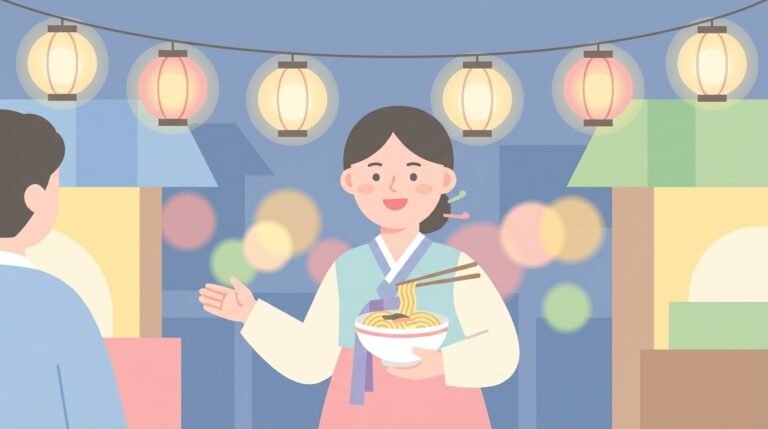
Don’t Get Fooled by Korean Idioms! 3 Mind-Bending Expressions Every Intermediate Learner Must Know
안녕하세요! (Annyeonghaseyo!) It’s your favorite senior editor and friendly local navigator from Daily Hangul. Have you ever been in a situation where you understood every single Korean word someone said, but the actual meaning left you completely blank?
You are not alone. Let me tell you about Sarah, a brilliant B2-level student of mine. Last month, she called me in a mild panic. Her Korean coworker had smiled and asked: “Sarah, when are you going to feed me noodles?” (언제 국수 먹여 줄 거야?). Sarah, confused and slightly offended, replied, “Uh… I don’t really know how to cook Korean noodles, why do you ask?” The office erupted into laughter.
Sarah had stumbled into one of Korea’s most famous “linguistic traps”—misleading idioms! Mastering these phrases is the ultimate golden ticket to unlocking natural conversations, understanding K-Dramas without subtitles, and earning the coveted title of an “insider” (인싸, in-ssa) among your Korean friends. Today, we’re going to dive deep into three mind-bending idioms that will transform you from a textbook student into a culturally savvy speaker.
Phase 2: Deep Dive into 3 Core Expressions
1. 국수를 먹다 / 국수를 먹여 주다 (To eat noodles / To feed someone noodles)
- Pronunciation: [guk-su-reul meok-da] / [guk-su-reul meok-yeo ju-da] (gook-soo-reul meok-dah)
- Meaning:
- Literal: To eat noodles / To feed someone noodles
- Real-world Nuance: To get married / To invite someone to one’s wedding
- K-Culture Moment: You’ll constantly hear this in family-centric K-Dramas. Picture a nosy aunt cornering the 30-something protagonist during Chuseok (Thanksgiving), sighing, “We want to eat noodles soon!” (우리 언제 국수 먹어?)
- Editor’s Insight: This idiom is rooted deeply in Korean history. Historically, weddings were major community events, and guests were served Janchi-guksu (잔치국수, banquet noodles). The long, continuous noodle strands symbolized longevity and a long-lasting, happy marriage. So, asking to eat noodles is a warm (if slightly pestering) way of asking when the wedding bells will ring!
- Situation Spectrum (상황 스펙트럼):
- Casual (Friends): ✅
- Semi-formal (Coworkers): ✅
- Formal (Bosses/Elders): ⚠️ (Only if you are on very close, friendly terms)
- 🤔 Think About It: In many Western cultures, people ask, “When will we hear wedding bells?” representing a sound. In Korea, it’s represented by a communal dish. How does food serve as a milestone marker in your own culture?
2. 바가지를 쓰다 / 씌우다 (To wear a gourd cup / To put a gourd cup on someone)
- Pronunciation: [ba-ga-ji-reul sseu-da] / [ba-ga-ji-reul ssi-u-da] (bah-gah-jee-reul sseu-dah / shee-oo-dah)
- Meaning:
- Literal: To wear a gourd cup / To place a gourd cup on someone’s head
- Real-world Nuance: To get ripped off / To overcharge someone
- K-Culture Moment: This is a survival-critical idiom for anyone visiting tourist hotspots. In K-Dramas, you might see characters complaining about overpriced street food or taxi rides saying, “완전 바가지 썼네!” (We totally got ripped off!)
- Editor’s Insight: Why a gourd cup (bagaji)? During the late Joseon Dynasty, a popular gambling game involved betting on numbers hidden under 10 gourd cups. Dishonest game hosts would manipulate the cups to scam players. Today, “wearing a gourd” means you fell victim to a scam or an overpriced transaction.
- Situation Spectrum (상황 스펙트럼):
- Casual (Friends): ✅
- Semi-formal (Coworkers): ✅
- Formal (Elders/Business meetings): 🚫 (Too informal and blunt)
- 🤔 Think About It: Why do you think modern digital societies still rely heavily on metaphors from ancient games to describe commercial transactions?
3. 발이 넓다 (To have wide feet)
- Pronunciation: [ba-ri neolp-da] (bah-ree neolp-dah)
- Meaning:
- Literal: To have wide feet (as in broad shoe sizes)
- Real-world Nuance: To be well-connected / To have a huge social circle
- K-Culture Moment: Think of that one energetic K-Pop idol who seems to be best friends with everyone in the entire music industry. Koreans will say of them: “그 아이돌은 진짜 발이 넓어.” (That idol is incredibly well-connected.)
- Editor’s Insight: Do not look down at their shoes! “Wide feet” refers to someone who walks far and wide, stepping into many different social circles. It describes a social butterfly who is active, outgoing, and knows people in various industries.
- Situation Spectrum (상황 스펙트럼):
- Casual (Friends): ✅
- Semi-formal (Coworkers): ✅
- Formal (Bosses/Elders): ✅ (Highly positive compliment)
- 🤔 Think About It: In Korea’s collectivist, networking-heavy culture, having “wide feet” (Inmaek, 인맥) is seen as a major superpower. Is a similar concept in your culture described using a physical body part?
Phase 3: Textbook Korean vs. Real Korean
Let’s compare the stiff sentences you find in academic grammar books with what Koreans actually say on the streets of Seoul.
Situation 1: Asking a friend when they plan to tie the knot
- 📖 Textbook Korean: 언제 결혼할 예정입니까? (Eonje gyeolhonhal yejeongimnikka? – “When do you plan to marry?”)
- 🗣️ Real Korean: 우리 언제 국수 먹는 거야? (Uri eonje guksu meokneun geoya? – “When are we eating noodles?”)
- 💡 Why is it different? The textbook sentence sounds like a cold, official survey. The real expression adds a warm, playful, and culturally rich flavor to the conversation.
Situation 2: Warning a friend about a tourist trap
- 📖 Textbook Korean: 그 상점은 물건값을 너무 비싸게 받습니다. (Geu sangjeomeun mulgeongapseul neomu bissage batseumnida. – “That shop charges too much for items.”)
- 🗣️ Real Korean: 거기 완전 바가지니까 조심해! (Geogi wan-jeon ba-ga-ji-ni-kka jo-sim-hae! – “That place is a total rip-off, watch out!”)
- 💡 Why is it different? Korean conversational flow values visual, high-impact nouns like bagaji over dry descriptive verbs.
Phase 4: K-Culture Deep Dive & Non-verbal Manners
4-1. Nunchi (눈치) and Body Language
When someone teases you with “국수 언제 먹여 줄 거야?”, direct eye contact with a blank stare might make you look defensive. Instead, employ the classic “flustered smile”—gently rub the back of your neck and look slightly away. This non-verbal cue signals that you understand the tease and are playing along politely.
When negotiating prices, avoid pointing fingers. If you suspect a bagaji, politely wave your hand horizontally with your palm facing down and sigh softly, saying “아이고, 사장님~ 조금 비싼데요?” (Oh, boss~ isn’t it a bit expensive?).
4-2. The Power of “Inmaek” (인맥)
In Korea, being described as 발이 넓은 사람 (a person with wide feet) is highly prestigious. It reflects the deep cultural value of community and mutual trust. If a Korean friend introduces you to their wide network, they are sharing their social capital with you—a profound sign of friendship!
Phase 5: Interactive Euljiro Street Market Roleplay
The Setting: You are strolling through the vibrant, retro alleyways of Euljiro, Seoul, with your energetic Korean colleague, Min-jun. The smell of grilled garlic and spicy rice cakes fills the air under warm hanging bulbs.
Cast:
* You: A curious expat working in Seoul.
* Min-jun (민준): Your warm, well-connected coworker who knows every alleyway.
Dialogue:
- Min-jun: (🎭 Gesturing widely to a crowded street tent) 와! 오늘 여기 사람 진짜 많네요. 역시 을지로야!
(Wa! Oneul yeogi saram jinjja manneyo. Yeoksi Euljiro-ya! / “Wow! So many people here today. As expected of Euljiro!”) - You: (🎭 Smiling, looking around) 그러게요. 분위기 진짜 좋다! 근데 민준 씨, 아까 지나간 사람도 민준 씨한테 인사하던데요?
(Geureogeyo. Bunwigi jinjja jota! Geunde Min-jun ssi, akka jinagan saramdo Min-jun ssi-hante insahadeondeyo? / “I know! The vibe is great. By the way, even that person who walked past earlier greeted you!”) - Min-jun: (🎭 Laughing sheepishly and waving a hand) 아, 고등학교 동창이에요. 제가 원래 좀 사람들을 좋아해서요.
(Ah, godeunghakgyo dongchang-ieyo. Jega wonlae jom saramdeureul joahaeseoyo. / “Ah, he’s a high school classmate. I just happen to really like people.”) - You: (🎭 Nodding in admiration) 와, 민준 씨는 진짜 발이 넓네요!
(Wa, Min-jun ssi-neun jinjja bari neolp-neyo! / “Wow, Min-jun, your feet are truly wide!”) - Min-jun: (🎭 Grinning proudly) 하하, 고마워요! 참, 배고프죠? 저기서 닭꼬치 먹을래요?
(Haha, gomawoyo! Cham, baegopeujyo? Jeogiseo dakkkochi meogullaeyo? / “Haha, thanks! Oh, you must be hungry. Shall we get chicken skewers over there?”) - You: (🎭 Looking at the menu board) 좋죠! 근데… 어? 꼬치 하나에 만 원이요? 원래 이렇게 비싸요?
(Jotjyo! Geunde… eo? Kkochi hana-e man won-iyo? Wonlae ireoke bissayo? / “Sounds great! But… huh? 10,000 won for one skewer? Are they normally this expensive?”) - Min-jun: (🎭 Squinting at the sign, whispering fiercely) 어머, 여기 완전 바가지 씌우네! 절대 안 돼요, 다른 곳으로 가요.
(Eomeo, yeogi wan-jeon ba-ga-ji ssi-u-ne! Jeoldae an dwaeyo, dareun goseuro gayo. / “Oh my, they are totally putting a gourd cup on us! Absolutely not, let’s go somewhere else.”) - You: (🎭 Relieved) 네, 다른 가게로 가요. 돈 아까울 뻔했네요!
(Ne, dareun gagero gayo. Don akkaul ppeonhaetneyo! / “Yes, let’s go to another shop. Almost wasted my money!”) - Min-jun: (🎭 Checking his phone) 아! 제 친구 기훈이가 근처에서 삼겹살 집을 하는데, 거기 서비스 달라고 할게요. 제 친구니까!
(Ah! Je chin-gu Gihun-i-ga geuncheo-eseo samgyeopsal jibeul haneunde, geogi seobiseu dallago halgeyo. Je chin-gu-nikka! / “Ah! My friend Gihun runs a pork belly place nearby. I’ll ask him for some free side dishes, since he’s my friend!”) - You: (🎭 Laughing) 우와, 역시 발이 넓으니까 덕을 보네요!
(Uwa, yeoksi bari neolp-eunikka deogeul boneyo! / “Wow, as expected, we benefit because you have wide feet!”)
🔀 Decision Point
Imagine the vendor overhead your conversation and says: “Hey, I can give you a discount!”
What is your best response to keep the atmosphere polite yet firm?
- Option A: “아니요, 너무 바가지예요! 안 사요!” (Aniyo, neomu bagaji-yeyo! An sayo! – “No, it’s too much of a rip-off! I won’t buy!”)
- Option B: “아, 괜찮습니다. 저희 다른 것 먹으러 가요. 감사합니다!” (Ah, gwenchansumnida. Jeohui dareun geot meogeureo gayo. Gamsahamnida! – “Ah, no thank you. We are going to eat something else. Thank you!”)
- Option C: “사장님, 만 원은 진짜 바가지 씌우는 거예요. 깎아 주세요.” (Sajangnim, man woneun jinjja bagaji ssi-u-neun geoyeo. Kkak-ah ju-se-yo. – “Boss, 10,000 won is really placing a gourd. Cut the price.”)
💡 Best Choice Analysis
- Best Choice: Option B. It maintains your dignity and avoids direct confrontation, which is highly valued in Korean public spaces. Even though you know they are trying to overcharge you (바가지), calling them out directly using that word to their face can lead to an awkward scene. Option B lets you exit gracefully.
- Bad/Risk Choices: Option A & C. Using the slang “바가지” directly to the business owner is highly confrontational and can be perceived as offensive, ruining your pleasant evening out.
Phase 6: 10-Second Emotion Shadowing Drill
Let’s inject some Korean soul into your pronunciation. Practice pausing at / and mimicking the emotional tone!
- [🥺 Teasing & Playful]
민준 씨~ / 대체 / 언제 / 국수 먹여 줄 거야?
(Min-jun ssi~ / dae-che / eon-je / guk-su meok-yeo jul geo-ya?) -
[😤 Alert & Resolute]
거기 / 완전 / 바가지니까 / 절대 / 가지 마!
(Geogi / wan-jeon / ba-ga-ji-ni-kka / jeol-dae / ga-ji ma!) -
[😊 Amazed & Admiring]
우와, / 수진 씨는 / 진짜 / 발이 넓으시네요!
(Uwa, / Su-jin ssi-neun / jinjja / ba-ri neolp-eu-si-ne-yo!)
Phase 7: K-Culture Mini Dictionary
| Word (한글/Romanization) | Meaning | Real-world Context |
|---|---|---|
| 오지라퍼 (O-ji-ra-peor) | Busybody / Nosy person | Combining the Korean word ojirap (front hem of a coat) with the English suffix “-er”. Describes someone who gets too involved in other people’s wedding timelines! |
| 인맥 (In-maek) | Personal connection network | The invisible web of human relationships that Koreans build through school, hometowns, and workplaces. |
| 바가지요금 (Ba-ga-ji-yo-geum) | Overcharged / Scam price | The literal noun phrase for inflated prices targeting tourists or unsuspecting buyers. |
| 인싸 (In-ssa) | Insider / Social butterfly | Slang for someone who is extremely popular, trendy, and possesses “wide feet” (발이 넓은 사람). |
Phase 8: Traveler’s Survival Kit
Even if these idioms aren’t strictly travel phrases, here are the absolute essentials you should keep in your pocket when exploring Korea!
Survival Cards
- 카드 1: 조금만 깎아 주세요. (Jo-geum-man kkak-ah ju-se-yo)
- Pro Tip: Smile warmly when saying this at traditional markets. It softens the request!
- 카드 2: 이거 진짜 가격 맞아요? (I-geo jin-jja ga-gyeok ma-ja-yo?)
- Pro Tip: Use this polite inquiry if you suspect a menu does not show the standard price.
- 카드 3: 추천해 주세요. (Chu-cheon-hae ju-se-yo)
- Pro Tip: Ask locals for their favorite menu items to completely bypass tourist traps.
📌 Editor’s Travel Note
To completely avoid getting overcharged (바가지), always look up standard prices on local apps. I highly recommend using the Naver Map app download page to find highly rated local restaurants with transparent digital menus before heading out!
Phase 9: Deepening Your Thoughts — “One Step Further”
Korean idioms often emphasize interpersonal relations, food, and community. Expressions like “When are you feeding us noodles?” show how milestones are viewed not just as individual achievements, but as community celebrations. This reflects Jeong (정)—the unique Korean sentiment of deep affection, attachment, and shared destiny. While it can sometimes feel slightly intrusive to Western minds valued on privacy, it stems from a place of deep interest and care.
💬 Your Turn: How does your native language express the concept of being well-connected? Do you have food-related metaphors for marriage or social situations? Let us know in the comments below!
Phase 10: FAQ & Avoiding Misunderstandings
Q: Can I use “국수를 먹다” to ask about any noodle meal?
A: Yes, absolutely! If you are physically at a restaurant ordering Kalguksu or Naengmyeon, it literally just means “to eat noodles.” The idiomatic meaning of marriage only triggers when someone asks about your relationship status or future wedding plans out of context.
Q: Is “바가지” rude to say to a store owner?
A: Yes, very. You should never say “바가지 씌우지 마세요” (Don’t rip me off) directly to a merchant. It is highly insulting. Instead, use softer phrases like “생각보다 조금 비싸네요” (It is a bit more expensive than I thought).
Q: Can I tell my boss they have “wide feet”?
A: Yes! “발이 정말 넓으십니다” (Your feet are truly wide) is a great compliment to an elder or boss, praising their excellent leadership, networking skills, and social influence.
🚨 Common Mistakes Warning Board
- Saying “발이 커요” (Your feet are big) instead of “발이 넓어요” (Your feet are wide): This will make Koreans look down at your actual shoes in confusion!
- Using “국수 먹여 줄게” as a literal invitation to dinner: If you are dating someone and say this to their parents, they might think you are proposing! Use “파스타 대접할게요” (I will treat you to pasta) instead.
- Demanding a discount aggressively: Politeness always yields better results than accusing someone of 바가지.
Phase 11: Action Missions
- 🥉 Bronze (Room Challenge): Record yourself saying “우리 언제 국수 먹어?” using the playfully teasing voice from the Shadowing Drill.
- 🥈 Silver (Network Challenge): Text a Korean friend: “오늘 맛있는 것 먹었어요? 바가지 조심해요!” (Did you eat something delicious today? Watch out for overcharging!).
- 🥇 Gold (Real-World Challenge): The next time a Korean friend introduces you to a new acquaintance, compliment them with: “역시 발이 넓으시네요!” and watch their face light up!
- 🎮 K-Culture Mission: Watch your favorite ongoing K-Drama this week and spot if any character complains about a price or asks about eating noodles! Write down the scene timestamp.
Phase 12: Interactive Quiz Challenge
Test your intermediate-level Korean cultural instincts!
1. Which situation is appropriate for using “바가지 썼다”?
- A) You bought a designer bag on sale.
- B) A taxi driver charged you triple the normal fare because you are a foreigner.
- C) You ate a delicious bowl of traditional noodles.
Click for Answer & Explanation
Correct Answer: B!
Getting overcharged dramatically is the textbook definition of “wearing a gourd cup” (바가지 썼다).
2. Fill in the blank:
“민준 씨는 아는 사람이 정말 많네요. 진짜
____이/가 넓어요!”
Click for Answer & Explanation
Correct Answer: 발 (feet)
“발이 넓다” means to be well-connected.
3. True or False: Asking “언제 국수 먹여 줄 거야?” means you want them to cook dinner for you tonight.
Click for Answer & Explanation
Correct Answer: False!
It is a playful idiomatic expression asking when they plan to get married.
Keep practicing every day, and soon you’ll be speaking Korean like a true local. 다음에 또 만나요! (See you next time!)







