

Master C1 Korean: Discussing IoT Security, Hacking, and Privacy Like a Tech Insider
Phase 1: Empathy (스토리 몰입형 오프닝)
안녕하세요! Welcome back to another edition of Daily Hangul, your premium Korean learning space. I’m Editor Min-ji, your trusted language tutor and local culture navigator.
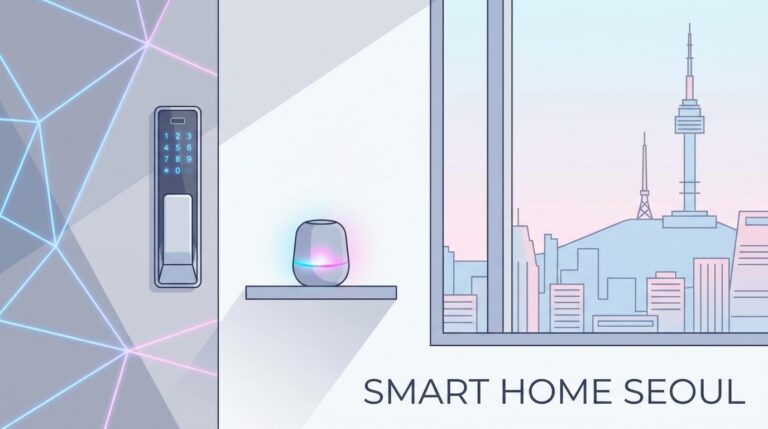
Imagine this: You are watching a suspenseful Korean thriller drama. The protagonist’s ultra-modern Seoul smart home suddenly goes dark. The automated door lock (도어락 [doe-o-rak]) clicks open by itself, and a chilling voice speaks through the smart speaker. You lean forward, completely hooked, but as the characters begin discussing firewalls, network breaches, and device exploits, the fast-paced dialogue leaves you completely lost.
As a C1-level learner, you aren’t just looking to order food or ask for directions anymore. You want to engage in high-level discussions about contemporary issues. And in South Korea—the most hyper-connected, IoT-integrated society on earth—IoT security vulnerabilities and hacking (사물 인터넷 보안 취약점과 해킹) are topics that frequently dominate both prime-time dramas and daily water-cooler conversations.
Today, we are moving past textbook basics. We will dive deep into the sophisticated vocabulary and cultural nuances required to discuss cybersecurity, smart home vulnerabilities, and digital privacy in Korean. Let’s upgrade your Korean to the next level!
Phase 2: 핵심 표현 3선 심층 분석 (Deep Dive into Core Tech Expressions)
Let’s analyze three essential terms that will immediately elevate your technical and conversational fluency.
1. 보안 취약점 (bo-an chwi-yak-jeom)
- Pronunciation: [bo-an chwi-yak-jeom] / Sounds like “bo-ahn chwee-yahk-jum”
- Meaning: Security vulnerability / Exploit
- K-Culture Moment: In the famous techno-thriller K-Drama Circle or the cyber-crime thriller Ghost (유령), you constantly hear white-hat hackers and corporate security teams frantically screaming about finding a “security loophole” in their smart grid systems.
- Editor’s Insight: “취약점” (vulnerability) comes from “취약하다” (weak/fragile). In Korea’s tech ecosystem, this isn’t just a technical term; it is also used metaphorically in business and politics to describe any systemic weak spot.
- Situation Spectrum:
- Casual (친구·사석): ✅
- Semi-formal (직장 동료): ✅
- Formal (직장 상사·어른): ✅
- 🤔 Think About It: In Korean IT culture, speed is highly prioritized (the famous Ppalli-ppalli culture). Why do you think this cultural drive for rapid deployment might lead to more 보안 취약점 in newly launched IoT devices?
2. 해킹을 당하다 (hae-king-eul dang-ha-da)
- Pronunciation: [hae-king-eul dang-ha-da] / Sounds like “hae-king-eul dahng-hah-dah”
- Meaning: To get hacked (passive construction)
- K-Culture Moment: From a K-Pop idol’s private Instagram account being compromised to smart home IP cameras (홈캠) being leaked online, “해킹을 당했다” is the go-to phrase on Korean news and community forums when privacy is breached.
- Editor’s Insight: Notice the verb 당하다 (to suffer/undergo a negative event). In English, we say “I was hacked,” but in Korean, using the passive auxiliary structure “당하다” emphasizes that you are the victim of an aggressive, unwanted action.
- Situation Spectrum:
- Casual (친구·사석): ✅
- Semi-formal (직장 동료): ✅
- Formal (직장 상사·어른): ✅
- 🤔 Think About It: How does your native language structure passive actions of cybercrime? Does it carry the same victim-centric weight as the Korean “당하다”?
3. 개인정보가 유출되다 (gae-in-jeong-bo-ga yu-chul-doe-da)
- Pronunciation: [gae-in-jeong-bo-ga yu-chul-doe-da] / Sounds like “gae-een-jung-bo-gah yoo-chool-doe-dah”
- Meaning: Personal information leaked / Data breach
- K-Culture Moment: South Korea has incredibly strict data protection laws (like PIPA). Whenever a massive telecom or smart-app database gets breached, you will see a public apology on TV stating, “개인정보가 유출되어 깊이 사과드립니다” (We deeply apologize for the leakage of personal information).
- Editor’s Insight: “유출” (leakage/outflow) and “되다” (to become). When combined, it implies an involuntary and unfortunate spill of sensitive data, such as your phone number, resident registration number, or smart lock credentials.
- Situation Spectrum:
- Casual (친구·사석): ✅ (Often shortened to “개인정보 털렸다”)
- Semi-formal (직장 동료): ✅
- Formal (직장 상사·어른): ✅
- 🤔 Think About It: Why is data security so sensitive in Korea? Almost all digital services are tied directly to your real-name phone number (본인인증), meaning a leak affects your entire offline identity.
Phase 3: 교과서 한국어 vs 진짜 한국어 (Real Korean Showcase)
To sound like a true native, you need to transition from sterile, academic sentences to natural, living Korean.
Situation 1: Warning a friend about their weak smart lock password
- 📖 Textbook Korean: “도어락 비밀번호를 안전하게 설정하지 않으면 외부 침입의 위험이 있습니다.”
(If you do not set your door lock password securely, there is a risk of external intrusion.) - 🗣️ Real Korean: “도어락 비번 대충 해놓으면 금방 털려. 빨리 복잡하게 바꿔.”
(If you set your door lock PIN lazily, it will get hacked in no time. Change it to something complex quickly.) - 💡 Why is it different? Natives shorten “비밀번호” to “비번” [bi-beon] and use the vivid slang “털리다” [teol-li-da] (literally “to be shaken down” or “robbed”) to mean being hacked or compromised.
Situation 2: Expressing suspicion that a home device is compromised
- 📖 Textbook Korean: “제가 소유한 스마트 기기가 인가되지 않은 외부 컴퓨터에 의해 제어되는 것 같습니다.”
(It seems that the smart device owned by me is being controlled by an unauthorized external computer.) - 🗣️ Real Korean: “어, 이거 홈캠 해킹당한 거 아니야? 자꾸 혼자 움직이는데?”
(Uh, isn’t this home cam hacked? It keeps moving on its own!) - 💡 Why is it different? Real-world conversation values immediate sensory reactions (“자꾸 혼자 움직이는데?”) and uses direct rhetorical questions (“~아니야?”) to express worry instead of long, passive descriptions.
Phase 4: K-Culture 딥다이브 & 비언어적 매너 (K-Culture Deep Dive & Non-verbal Manners)
4-1. Physical Privacy & Smart Lock Etiquette
In Korea, traditional keys are practically ancient history. Almost 99% of apartments use digital smart door locks (도어락). Because of this, unique social manners have emerged around typing in passcodes:
* The Shielding Hand: When entering your apartment with a friend, coworker, or delivery person standing nearby, it is polite to cover the keypad with one hand while typing with the other.
* The Polite Turn: If you are the guest, it is standard etiquette to actively turn your head and body away from the keypad to show you are absolutely not trying to see the passcode. Standing too close while someone enters their PIN is considered a massive breach of “눈치” (nunchi/tact).
4-2. The “Home Cam” Controversy in Korean Society
In recent years, “홈캠” (pet cams/baby monitors) have become incredibly popular in busy, dual-income Korean households. However, a major wave of cybersecurity leaks showed that cheap IoT cameras with default passwords were being hacked and live-streamed online. This sparked a huge national debate about IoT 보안 취약점. Today, young Koreans are highly vigilant about disabling their home cams when they are in the house, a cultural nuance you can easily mention when talking to Korean friends about home safety.
Phase 5: 실전 롤플레이 시나리오 (Interactive Roleplay Scenario)
The Setting: You are hanging out at the smart officetel of your tech-savvy Korean coworker, 민수 (Minsu), in Gangnam. Suddenly, the AI smart speaker starts blinking red, and the automated smart-blinds begin opening and closing on their own.
Cast:
- 민수 (Minsu): A sharp, slightly paranoid IT security engineer.
- You: A smart C1-level peer who knows how to spot security threats.
민수: (🎭 당황한 기색으로 스마트폰을 쳐다보며) 야, 이거 좀 이상하지 않냐? 블라인드가 왜 혼자 작동하지?

You: (🎭 블라인드를 가리키며) 설마 스마트 홈 시스템 해킹당한 거 아니야? 기기들이 다 연결되어 있잖아.

민수: 설마... 이거 대기업 홈 IoT 허브야. 보안 취약점 패치도 다 끝났다고 했는데.

You: (🎭 테이블 위 스마트 스피커를 보며) 저 빨간 불빛 좀 봐. 트래픽이 엄청 몰리는 것 같아. 혹시 기본 비번 그대로 썼어?

민수: (🎭 아차 싶어서 이마를 탁 치며) 아... 그러고 보니 작년에 설치하고 비번을 한 번도 안 바꿨네.

You: 거 봐! 요즘 사물 인터넷 보안 취약점 노린 해킹 기사 못 봤어? 홈캠이나 스마트 스피커가 제일 위험하대.

민수: (🎭 다급하게 노트북을 열며) 대박... IP 주소 확인해 보니까 외부 세션이 하나 접속해 있어. 이거 당장 끊어야 돼.

You: (🎭 차분하게 대처법을 권유하며) 일단 공유기 전원부터 내리고, 포트 포워딩 설정이랑 비밀번호 다 새로 세팅하자.

민수: (🎭 한숨을 내쉬며) 휴, 너 아니었으면 진짜 개인정보 다 유출될 뻔했다. 고마워!

You: (🎭 싱긋 웃으며) 십년감수했네. 맛있는 거 사주면 비밀번호 새로 설정하는 거 도와줄게!
🔀 Decision Point: What would you do if Minsu was too panicked to act?
- Choice A: “당장 경찰에 신고하자! 지금 범인이 우리 보고 있을지도 몰라!”
- Feedback: Too dramatic! While reporting is good, immediate local containment (unplugging the router) is more practical for IoT hacking.
- Choice B: “일단 공유기 허브 전원 뽑아 버려! 네트워크부터 차단하는 게 우선이야.” (Best Choice)
- Feedback: Perfect! This shows high-level practical problem-solving in natural, native-level Korean command form.
- Choice C: “비밀번호가 뭐였는데? 내가 대신 로그인해 볼게.”
- Feedback: Risk! Asking for someone’s active password—even in an emergency—can feel slightly intrusive in Korean privacy culture.
Phase 6: 10초 감정 섀도잉 드릴 (Interactive Shadowing Drill)
Speak with real Korean soul! Pay attention to the pauses (/) and emotional tone.
- [😤 단호하고 경고하듯이 – Firm and warning]
“도어락 비번을 / 그렇게 쉽게 해두면 / 진짜 쉽게 털려! / 당장 바꿔!”
(If you make your door lock password that simple, it’ll get hacked so easily! Change it right now!) -
[🥺 십년감수하고 가슴을 쓸어내리며 – Relieved after a major scare]
“와… / 개인정보 다 유출될 뻔했네. / 진짜 십년감수했다.”
(Wow… our personal information was almost completely leaked. I feel like I just lost ten years of my life from stress.)
Phase 7: K-Culture 미니 사전 (4 Key Terms)
| Word (Korean + Romanization) | Meaning | Cultural Context |
|---|---|---|
| 도어락 (Doeo-rak) | Digital Door Lock | The ultimate staple of Korean housing. Almost no one carries physical keys in modern Korea. |
| 홈캠 (Hom-kaem) | Home IP Camera | Highly popular for pet owners to watch their dogs/cats, but frequently discussed in security debates. |
| 비번 (Bi-beon) | Password / PIN | Slang abbreviation of 비밀번호. Absolutely everyone uses this in casual daily life. |
| 털리다 (Teol-li-da) | To get hacked/robbed | A very common colloquialism. Used when your social media account, game items, or personal data are stolen. |
| 십년감수 (Sip-nyeon-gam-su) | A narrow escape | A classic idiomatic expression meaning “to have ten years shaved off one’s life” due to a massive scare. |
Phase 8: Traveler’s Survival Kit (여행자를 위한 생존 키트)
Even if you’re just visiting Korea, cybersecurity is crucial. Free public Wi-Fi is everywhere, which means hackers are always on the lookout.
Survival Phrases
- “여기 와이파이 보안 연결인가요?” [Yeo-gi wa-i-pa-i bo-an yeon-gyeol-in-ga-yo?]
- Pro Tip: Use this in local cafes to ask if the Wi-Fi is securely encrypted or open.
- “공공 와이파이 쓸 때 개인정보 안 유출되게 조심해야 돼.” [Gong-gong wa-i-pa-i sseul ttae gae-in-jeong-bo an yu-chul-doe-ge jo-sim-hae-ya dwae.]
- Pro Tip: Say this to your travel partner when connecting to free city-wide Wi-Fi networks in tourist spots like Myeongdong.
📌 Editor’s Travel Note: When traveling in Korea, download the Official Naver Map App instead of relying on unverified map tools that require excessive device permissions. Always avoid logging into bank accounts while connected to “Seoul Free Wi-Fi” without a secure VPN.
Phase 9: 깊이 있는 생각 질문 — “한 발 더 깊이” (Deep Thoughts)
South Korea’s rapid transformation into an IoT paradise is a double-edged sword. On one hand, you can order groceries with a single tap, and your refrigerator tells you when the milk is expired. On the other hand, our physical and digital lives have become completely transparent. If someone hacks a central home network, they don’t just steal data—they control the physical locks of your sanctuary.
💬 Your Turn: How does your home country balance the convenience of smart homes with the threat of digital surveillance? What is the most critical IoT security concern in your society today? Let us know your thoughts in the comments below!
Phase 10: FAQ & 오해 방지 (FAQ Schema Optimized)
Q: Is using “털리다” too rude to use with older people or at work?
A: Yes. “털리다” is a casual slang term. If you are talking to a supervisor or presenting in a business meeting, always use the professional term “해킹을 당하다” (to get hacked) or “보안이 침해되다” (security compromised).
Q: What is the difference between “개인정보 유출” and “해킹”?
A: “해킹” (hacking) is the active malicious process, while “개인정보 유출” (personal data leak) is the damaging consequence. You can have a data leak without hacking (e.g., due to system errors or employee mistakes).
Q: How do you say “two-factor authentication” in Korean?
A: It is called “2차 인증” [i-cha in-jeung]. Setting this up is highly recommended for all your Korean apps (KakaoTalk, Naver, etc.)!
🚨 Common Mistakes Warning Board
- Using “해킹하다” instead of “해킹당하다”
- Mistake: “나 지난주에 페이스북 해킹했어!”
- Correct: “나 지난주에 페이스북 해킹당했어!” (Unless you suddenly became a cybercriminal, use the passive form!).
- Mispronouncing 도어락 as “Door Lock” with English accent
- Mistake: “도어 락 [door lock]”
- Correct: Pronounce it flatly with Korean phonetics as [도어락] to ensure locals understand instantly.
Phase 11: Action Mission (액션 미션)
- 🥉 Bronze (방구석 챌린지): Record yourself saying “도어락 비번 당장 바꿔!” with real protective anger. Focus on the emotional pacing.
- 🥈 Silver (네트워크 챌린지): Write a mock security warning post on your social media using the keywords 보안 취약점 and 개인정보 유출.
- 🥇 Gold (현실 챌린지): The next time you enter a Korean building with friends, practice the polite gesture of covering the door keypad and using your “눈치” by looking away when they enter their passcode.
Phase 12: 인터랙티브 퀴즈 챌린지 (Interactive Quiz)
Test your knowledge of high-level Korean tech and culture terms!
1. Fill in the blank:
“이 홈캠은 _________이/가 너무 많아서 쉽게 해킹당할 수 있어.”
* A) 개인정보
* B) 보안 취약점
* C) 비밀번호
2. True or False:
In Korea, standing very close to someone while they type their digital lock passcode is considered a normal, friendly social gesture.
* True / False
👉 Click here for the Answers & Explanations!
- Answer: B) 보안 취약점
- Explanation: “This home cam has too many security vulnerabilities (보안 취약점), so it can be easily hacked.”
- Answer: False
- Explanation: As explained in Phase 4, you should always politely turn your head away or shield the keypad to respect their physical privacy!
- Explanation: As explained in Phase 4, you should always politely turn your head away or shield the keypad to respect their physical privacy!







