

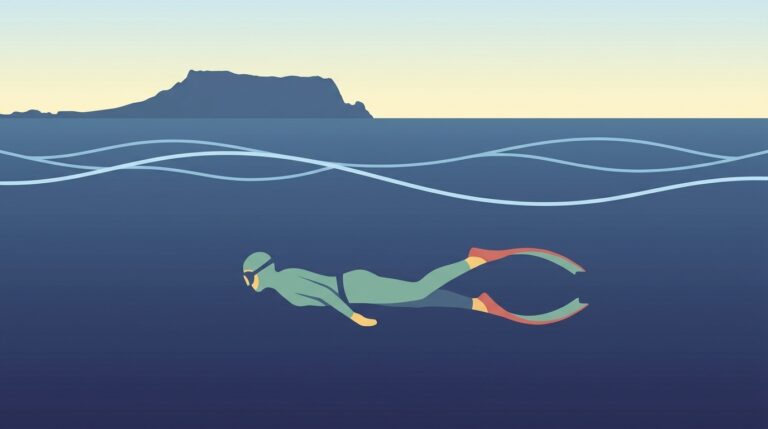
Deep Breaths in the Blue: Master Korean Freediving and the Art of Letting Go
안녕하세요! Welcome back to Daily Hangul, your premium Korean tutoring space. I’m your senior editor and local culture navigator.
Have you ever watched a healing K-Drama like Our Blues (우리들의 블루스) or Welcome to Samdal-ri (웰컴투 삼달리)? In those beautiful coastal settings, characters plunge into the deep, dark ocean with nothing but a single breath. In Korea, diving is not just a recreational sport; it is an ancient lineage preserved by the legendary Haenyeo (해녀 – female divers of Jeju Island), and more recently, a booming subculture of urbanites escaping the concrete jungle to seek peace in deep pools like Gapyeong’s K-26.
Freediving requires absolute tranquility. To achieve this, you need to master your breath. But in Korean, the way we talk about breathing, holding your breath, and letting go of tension carries profound philosophical weight. If you dive in Korea or chat with local divers, using textbook Korean will make you sound like a clinical manual.
Today, we are diving deep into the C1-level nuances of Freediving and Breathing Techniques (프리 다이빙과 호흡법). By the end of this post, you’ll understand not just the words, but the deep-sea soul of Korean diving culture.
Phase 2: In-Depth Expression Analysis
1. 숨을 고르다
- Pronunciation: [Sumeul goreuda] / Soom-eul go-reu-da
- Meaning: To regulate, even out, or pacify one’s breath (Literal: ‘To prune/neatly arrange one’s breath’)
- K-Culture Moment: Before a diver descends, they spend minutes floating on the surface doing ‘breath-ups’. In Korean, we call this crucial preparation ‘숨을 고르다’. It’s also used in K-Dramas when a protagonist stops running to catch their breath before making a dramatic confession.
- Editor’s Insight: The verb ‘고르다’ means to smooth out uneven ground or arrange things neatly. When applied to breathing, it implies a conscious, elegant effort to transition from chaotic gasping to a state of absolute, rhythmic calm. It is the ultimate prerequisite for static apnea.
- Situation Spectrum:
- Friends (Casual): ✅
- Colleagues (Semi-formal): ✅
- Seniors/Instructors (Formal): ✅
- 🤔 Think About It: Why does Korean use the verb ‘to arrange/neatly prune’ (고르다) for breathing, rather than just ‘to calm down’? What does this say about the Korean view of mind-body integration?
2. 물숨 (을 쉬다)
- Pronunciation: [Mul-sum] / Mool-soom
- Meaning: ‘Water-breath’ (Literal: To breathe in water due to greed/overexertion)
- K-Culture Moment: This is a sacred term coined by the Jeju Haenyeo. When a diver stays underwater too long because they are greedy for one more harvest, they run out of oxygen, lose consciousness, and reflexively inhale water. This fatal mistake is called ‘물숨을 쉬다’.
- Editor’s Insight: This is a hauntingly beautiful metaphor. In modern Korea, ‘물숨’ is widely used outside the water to warn someone against excessive greed or pushing themselves past their natural breaking point in their career or relationships.
- Situation Spectrum:
- Friends (Casual): ✅
- Colleagues (Semi-formal): ✅
- Seniors/Instructors (Formal): ⚠️ (Use with respect to the cultural depth of the term)
- 🤔 Think About It: How does your native language describe the point where ambition becomes self-destructive? Is there a word as poetic as ‘water-breath’?
3. 몸에 힘을 빼다
- Pronunciation: [Mome himeul ppaeda] / Mom-eh him-eul ppae-da
- Meaning: To relax the body; to let go of physical tension (Literal: ‘To drain force from the body’)
- K-Culture Moment: In freediving, any muscle tension wastes precious oxygen. Your instructor will constantly tell you, ‘몸에 힘을 빼세요.’ In daily life, Koreans use this when someone is trying too hard, overthinking, or acting unnaturally.
- Editor’s Insight: The word ‘힘’ (force/strength) is usually positive in Korean (e.g., ‘힘내세요!’ – Cheer up!). But here, ‘힘’ is an obstacle. True mastery in Korean physical arts—whether freediving, calligraphy, or golf—always starts with ‘힘 빼기’ (the act of draining tension).
- Situation Spectrum:
- Friends (Casual): ✅
- Colleagues (Semi-formal): ✅
- Seniors/Instructors (Formal): 🚫 (Can sound slightly patronizing if directed at a senior, unless you are their coach!)
- 🤔 Think About It: Why is ‘letting go of strength’ considered the hardest step in acquiring a high-level skill in East Asian philosophies?
Phase 3: Textbook vs. Real Korean
- Situation 1: Instructing someone to take deep breaths before a dive
- 📖 Textbook Korean: “심호흡을 하십시오.” (Please perform deep breathing.)
- 🗣️ Real Korean: “숨 크게 들이마시고, 내쉬고… 편하게 숨 고르세요.” (Inhale deeply, exhale… just comfortably smooth out your breath.)
- 💡 Why the difference?: The textbook version sounds like a doctor ordering a medical test. The real phrasing uses softer, sensory verbs that actually induce relaxation.
- Situation 2: Warning a buddy they are pushing their breathhold too hard
- 📖 Textbook Korean: “무리하게 숨을 참지 마십시오.” (Do not hold your breath excessively.)
- 🗣️ Real Korean: “욕심부리지 마세요. 물숨 쉬기 전에 올라오셔야 해요.” (Don’t be greedy. You need to come up before you breathe in water.)
- 💡 Why the difference?: Real divers leverage the cultural warning of ‘물숨’ (water-breath) and ‘욕심’ (greed) to highlight the psychological nature of hypoxia.
Phase 4: Cultural Context — K-Culture Deep Dive
4-1. Non-verbal Underwater Nunchi (눈치)
When you are deep underwater, you cannot speak. This is where Nunchi (눈치 – the art of reading the room/situational cues) becomes a survival skill. Korean divers emphasize intense, stable eye contact (눈맞춤) with their safety buddy. A slight contraction of the neck muscles or a subtle change in the rhythm of chest movement is caught instantly by a high-nunchi buddy. When your buddy asks if you are okay with the underwater ‘OK’ hand signal, you don’t just mimic the sign; you look directly into their eyes to convey ‘평정심’ (equanimity).
4-2. K-Drama & Ecological Healing Connection
In modern Korean culture, freediving has undergone a massive rebranding. It was once seen as an extreme, risky sport. Now, thanks to K-Dramas showing characters finding solace in the silent deep (away from Korea’s high-pressure ‘Ppalli-Ppalli’ fast-paced society), it is seen as a form of active meditation. It’s a space where you are forced to listen only to your heartbeat.
Phase 5: Practical Roleplay Scenarios
Scenario A: Breathing up at K-26 Pool
- Setting: The edge of the 26-meter-deep pool in Gapyeong. You are preparing for a constant weight dive with your Korean safety buddy, Minho (민호, 29, experienced and calm).
- Characters:
- YOU: An advanced foreign diver working on your CO2 tolerance.
- MINHO (민호): Your reliable diving partner.
Dialogue:
- 민호: 오늘 컨디션 어때요? 물이 꽤 맑네요.
(Oneul keondisyeon eottaeyo? Muri kkwae mangneyo.)
“How’s your condition today? The water is quite clear.”
(🎭 Stage Direction: Minho adjusts his dive watch and smiles reassuringly) -
YOU: 네, 아주 좋아요. 근데 깊이 내려갈 생각을 하니까 살짝 긴장되네요.
(Ne, aju joayo. Geunde gipi naeryeogal saenggageul hanikka saljjak ginjangdoenayeo.)
“Yeah, great. But thinking about going deep makes me slightly nervous.” -
민호: 하하, 당연해요. 하강 라인 잡고 우선 숨부터 고르세요.
(Haha, dangyeonhaeyo. Hagang rain japgo useon sumbuteo goreuseyo.)
“Haha, that’s natural. Hold the descent line and smooth out your breath first.” -
YOU: 흡… 흐… 몸에 힘을 빼는 게 제일 어려워요.
(Heup… heu… mome himeul ppaeneun ge jeil eoryeowoyo.)
“Inhale, exhale… Draining the tension from my body is the hardest part.” -
민호: 어깨랑 목 뒤쪽 힘을 빼야 폐가 편안해져요. 욕심내지 말고 가볍게 다녀오세요.
(Eokkaerang mok dwijjok himeul ppaeya pyega pyeonanhaejyeoyo. Yoksimnaeji malgo gabyeopge danyeooseyo.)
“You need to relax your shoulders and the back of your neck so your lungs feel comfortable. Don’t be greedy, just make a light trip down.” -
🔀 Your Turn! How will you respond to Minho?
- Option A: “알겠습니다. 무조건 끝까지 내려갈게요!” (I get it. I will get to the bottom no matter what!)
- Option B: “맞아요, 욕심부리면 물숨 쉬니까요. 제 페이스대로 갈게요.” (Right, because if I get greedy, I’ll take a ‘water-breath’. I’ll go at my own pace.)
- Option C: “네, 힘 빼고 가볼게요. 버디만 믿습니다!” (Yeah, I’ll let go of tension and go. I trust only my buddy!)
- Best Choice: B or C.
- Why? Option B beautifully uses the ‘물숨’ metaphor, showing deep cultural awareness. Option C builds amazing trust with your buddy (‘버디만 믿습니다’ – ‘I trust you, buddy’, which is a great localized phrase of reliance).
- Avoid Option A: Declaring you will go ‘no matter what’ contradicts the entire philosophy of letting go of tension and ego.
- 민호 (If you chose B/C): 역시! 우리 버디, 마인드 컨트롤이 완벽하네요. 준비되면 들어가요.
(Yeoksi! Uri beodi, maindeu konteorori wanbyeokhameyo. Junbidaemyeon deureogayo.)
“As expected! My buddy’s mind control is perfect. Go when you’re ready.” -
YOU: 네, 마지막 호흡합니다. 물속에서 봐요!
(Ne, majimak hoheupamnida. Mulsogeseo bwayo!)
“Yes, taking my final breath. See you in the water!”
Phase 6: 10-Second Shadowing Drill
Practice saying this phrase in one breath, mimicking the calm, rhythmic flow of a wave. Focus on releasing tension as you speak.
😤 단호하고 평온하게 (With calm determination)
“욕심부리지 말고 / 몸에 힘을 빼고 / 천천히 숨을 고르세요.”
(Yoksim-buriji malgo / mome himeul ppaego / cheoncheonhi sum-eul goreuseyo.)
“Don’t be greedy, release your physical tension, and slowly regulate your breath.”
Phase 7: K-Culture Mini Dictionary
- 해녀 (Haenyeo)
- Romanization: haenyeo
- Meaning: Female free-divers of Jeju Island who harvest sea life without oxygen gear.
- 물숨 (Mulsum)
- Romanization: mulsum
- Meaning: The dangerous reflex inhalation of water caused by overstaying underwater due to greed.
- 숨참기 (Sumchamgi)
- Romanization: sumchamgi
- Meaning: Breath-holding (Apnea).
- 이퀄라이징 (Ikwollaizing)
- Romanization: ikwollaizing
- Meaning: Equalization (The Frenzel or Valsalva technique used by divers to balance ear pressure).
Phase 8: Traveler’s Survival Kit
If you are visiting a diving center in Jeju Island, Gangwon-do, or Gapyeong, keep these phrases handy:
🆘 Survival Expression #1
– 🇰🇷 “귀가 잘 안 뚫려요.” (Gwi-ga jal an ttul-lyeo-yo.)
– 🗣️ Meaning: “My ears aren’t equalizing well.”
– 📍 Use case: Informing your instructor before or during a dive session.🆘 Survival Expression #2
– 🇰🇷 “마스크에 물이 들어와요.” (Maseukeue muri deureowayo.)
– 🗣️ Meaning: “Water is leaking into my mask.”
– 📍 Use case: Adjusting equipment on the surface buoy.📌 Editor’s Travel Note:
– Useful App: Use KakaoMap or Naver Map instead of Google Maps when finding remote coastal dive shops in Jeju or Yangyang. Google Maps often misses local ocean-side dirt paths!
– Tipping: Do not tip your freediving instructor. Tipping is non-existent in Korea and can make them feel awkward. Instead, buy them a canned iced coffee after the session!
Phase 9: Critical Thinking Corner — “Going Deeper”
Language, Ambition, and the Jeju Sea
In South Korea’s highly competitive society, the concept of ‘욕심’ (yoksim – greed/ambition) is double-edged. In school and career, Koreans are often pushed to have ‘yoksim’ to succeed. Yet, in the sea, ‘yoksim’ is a death sentence. The term ‘물숨’ (water-breath) serves as an ecological and linguistic boundary marker. By examining this, we see that the Korean language holds a deep, self-correcting wisdom: while society demands you to push forward, the ancient traditions of the sea remind you that to survive, you must know when to let go and breathe.
💬 Your Turn: How does your culture view the balance between ambition and knowing your physical limits? Is there a specific phrase for this? Share in the comments below!
Phase 10: FAQ & Common Mistakes
- Q: Can I use “몸에 힘 빼세요” to my boss at work?
- A: Maybe, but be very careful. If your boss is extremely stressed, saying “힘 좀 빼세요” (Relax a bit) can sound like you are telling them they are too uptight. Use it only if you have a very close, casual working relationship, or during sports.
- ❌ Common Mistake: Confusing “숨 쉬다” and “숨 고르다”
- Many advanced learners say “숨 쉬세요” when they want to tell their buddy to relax. “숨 쉬다” just means the physiological act of breathing (inhaling and exhaling). If you want them to consciously calm down and prepare, you must use “숨을 고르다”.
Phase 11: Summary & Action Items
One-Liner Summary
True mastery in Korean freediving is not about holding your breath the longest; it’s about the art of ‘숨을 고르고 몸에 힘을 빼는 것’ (regulating your breath and letting go of bodily tension).
Action Mission
- 🥉 Bronze: Say “몸에 힘을 빼고 숨을 고르세요” out loud in front of a mirror three times.
- 🥈 Silver: Imagine a stressful situation today. Instead of sighing, tell yourself mentally: “숨 고르자” (Let me smooth out my breath).
- 🥇 Gold: Next time you do a workout, yoga, or go swimming with a Korean friend, tell them: “오늘 힘 빼고 가볍게 해요!” (Let’s do it light and relaxed today!).
Phase 12: Interactive Challenge Quiz
- Which term describes the dangerous inhalation of water due to over-ambition?
- A) 불숨 (Bulsum)
- B) 물숨 (Mulsum)
- C) 숨고르기 (Sumgoreugi)
- Fill in the blank: Before you dive deep, you must smooth out your breath. This is called “숨을 _________.”
- Hint: The base verb means ‘to prune/make even’.
-
True or False: In Korea, it is polite to tip your diving safety buddy or instructor cash after a successful deep dive. (T/F)
🔑 Quiz Answers & Explanations
- B) 물숨. ‘물숨’ is the literal ‘water-breath’ warning against over-ambition.
- 고르다 (or 고르세요/고릅니다). To arrange or smooth out.
- False. Korea does not have a tipping culture. A cold canned coffee is the ultimate token of appreciation!
Frequently Asked Questions (FAQ)
Q: What does "숨을 고르다" mean in Korean and how do you pronounce it?
A: In Korean, "숨을 고르다" is pronounced [Sumeul goreuda] and means: To regulate, even out, or pacify one's breath (Literal: 'To prune/neatly arrange one's breath')
Q: What does "물숨 (을 쉬다)" mean in Korean and how do you pronounce it?
A: In Korean, "물숨 (을 쉬다)" is pronounced [Mul-sum] and means: 'Water-breath' (Literal: To breathe in water due to greed/overexertion)
Q: What does "몸에 힘을 빼다" mean in Korean and how do you pronounce it?
A: In Korean, "몸에 힘을 빼다" is pronounced [Mome himeul ppaeda] and means: To relax the body; to let go of physical tension (Literal: 'To drain force from the body')






