

Phase 1: Empathy & K-Culture Cold Open
Hello! I’m your Daily Hangul Editor.
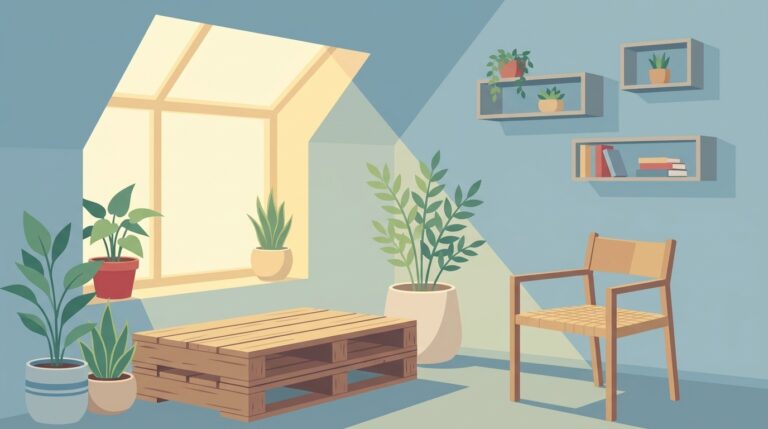
Picture this: You are walking through the backstreets of Seongsu-dong, the “Brooklyn of Seoul.” You step into a stunning, minimalist café. The aesthetic is raw yet incredibly warm—exposed concrete walls balanced by beautifully weathered wooden tables and lush green plants. You compliment the owner on the expensive-looking vintage furniture, expecting the name of a high-end European brand.
Instead, the owner chuckles and says, “아, 이거 다 당근에서 발품 팔아서 구한 거예요.” (Ah, I put a lot of legwork into finding these on Karrot.)
Wait, Karrot? Legwork?
If you’re studying Korean at an advanced (C2) level, you already know words like 환경 (environment) and 재활용 (recycling). But in modern Seoul, sustainable living and eco-friendly interior design have evolved past textbook vocabulary. Being “eco-friendly” (친환경) isn’t just about sorting your trash; it’s a massive cultural trend tied to upcycling, minimalism, and hyper-local secondhand markets.
If you want to discuss your zero-waste lifestyle or compliment a Korean friend’s stunning “Planterior” without sounding like a news anchor, you need the real, lived-in expressions. This guide is built exactly for that—based on the real conversations happening right now in the trendy cafes and homes of Korea. Let’s dive in!
Phase 2: Deep Dive into Key Expressions
1. 당근에서 발품 팔아 구했어요.
- Pronunciation: [dang-geun-eseo bal-pum pa-ra gu-hae-sseo-yo]
(‘eu’ sounds like the disgusted sound you make when stepping in gum. ‘bal’ sounds like ‘ball’ but shorter!)- Meaning:
- Literal: I bought it by selling my footwork on a carrot.
- Real Nuance: I put a lot of time and effort into finding this secondhand gem on the Karrot app.
- K-Culture Moment: “Karrot” (당근마켓) is Korea’s biggest neighborhood-based secondhand trading app. It has literally become a verb (당근하다 – to do Karrot). When someone says they “sold footwork” (발품 팔다), it means they actively hunted for it, physically or virtually, showing their dedication to finding the perfect upcycled piece instead of buying new.
- Editor’s Insight: This expression is a massive flex. It shows you have an eye for design, you care about circular economy, AND you are deeply integrated into local Korean life.
- Situation Spectrum:
- Casual with friends: ✅
- Semi-formal (Co-workers): ✅
- Formal (Boss/Elders): ⚠️ (Older generations might find the slang “당근하다” a bit too colloquial, though they know the app).
- 🤔 Think About It: Why do Koreans use the word “footwork” (발품) for online shopping? It reflects Korea’s historically fast-paced, high-effort merchant culture transitioning into the digital age. Does your language have a term for “putting in the effort to find a good deal”?
2. 요즘은 플랜테리어와 제로 웨이스트가 대세잖아요.
- Pronunciation: [yo-jeu-meun peul-laen-te-ri-eo-wa je-ro we-i-seu-teu-ga dae-se-ja-na-yo]
- Meaning:
- Literal: These days, planterior and zero-waste are the mainstream, as you know.
- Real Nuance: Using plants for interior design and living a zero-waste lifestyle are the hottest trends right now.
- K-Culture Moment: If you watch Korean house-tour vlogs (온라인 집들이), you’ll constantly hear the word Planterior (Plant + Interior). Since most Koreans live in apartments (아파트) with no gardens, bringing nature inside via upcycled pots is a huge part of eco-friendly interior design.
- Editor’s Insight: The word 대세 (mainstream trend) is crucial here. Koreans are highly sensitive to trends. By calling zero-waste a “대세,” you aren’t just saying it’s good; you are saying it’s the cultural standard.
- Situation Spectrum:
- Casual with friends: ✅
- Semi-formal (Co-workers): ✅
- Formal (Boss/Elders): ✅
- 🤔 Think About It: Notice how “Planterior” and “Zero-waste” are English loanwords (Konglish). Why do you think modern Korean lifestyle trends so frequently adopt English terms rather than traditional Korean words?
3. 공간의 본질만 남기는 미니멀리즘을 추구하고 있어요.
- Pronunciation: [gong-ga-nui bon-jil-man nam-gi-neun mi-ni-meol-li-jeu-meul chu-gu-ha-go i-sseo-yo]
- Meaning:
- Literal: I am pursuing a minimalism that leaves only the essence of the space.
- Real Nuance: I’m keeping my space purely functional and stripped back to reduce waste and clutter.
- K-Culture Moment: This is the kind of sophisticated sentence you would hear in an interview with an indie interior designer in a high-end lifestyle magazine like Kinfolk Korea.
- Editor’s Insight: At the C2 level, using verbs like 추구하다 (to pursue/seek) and nouns like 본질 (essence/core) elevates your Korean from “foreigner who speaks well” to “intellectual conversationalist.”
- Situation Spectrum:
- Casual with friends: ⚠️ (Might sound a bit pretentious or like you’re giving a TED talk, unless you say it jokingly!)
- Semi-formal (Co-workers): ✅
- Formal (Boss/Elders/Interviews): ✅
- 🤔 Think About It: Minimalism is inherently anti-consumerist, yet it has become a highly consumed aesthetic. How do you balance the “aesthetic” of zero-waste with the actual practice of it?
Phase 3: Textbook vs. Real Korean
Let’s upgrade your vocabulary from the language institute level to the Seoulite level.
[Explaining your sustainable furniture choice]
* 📖 Textbook Korean: 저는 환경 보호를 위해 중고 가구를 샀습니다. (I bought used furniture to protect the environment.)
* 🗣️ Real Korean: 새 거 사기엔 좀 그래서, 그냥 당근했어요. (It felt a bit much to buy new, so I just ‘carroted’ it.)
* 💡 Why the difference?: Koreans often use indirect, softer phrasing like “~하기엔 좀 그래서” (It felt a bit [too much/wasteful] to…) rather than making grand declarations about “protecting the earth,” which can sound overly self-righteous in casual chats.
[Describing a natural, eco-friendly room]
* 📖 Textbook Korean: 방이 아주 자연 친화적입니다. (The room is very nature-friendly.)
* 🗣️ Real Korean: 와, 우드톤 감성 너무 좋네요. 공간이 편안해 보여요. (Wow, this wood-tone aesthetic is so nice. The space looks relaxing.)
* 💡 Why the difference?: Young Koreans use the word 감성 (aesthetic/vibe) for almost everything design-related. Focusing on the feeling of the materials (우드톤 – wood tone) sounds much more natural.
Bottom Note for C2 Learners: Avoid sounding like a dictionary. To sound advanced, blend high-level conceptual words (본질, 추구하다) with culturally relevant slang (발품 팔다, 당근하다).
Phase 4: Cultural Context — K-Culture Deep Dive
4-1. Non-verbal Element: The “Nunchi” of Housewarming (집들이)
When you visit someone’s newly designed eco-friendly home, don’t immediately touch the upcycled objects. In Korea, homes are highly private sanctuaries. The proper Nunchi (social tact) is to stand near the entryway, scan the room, and offer a broad compliment about the atmosphere (분위기) or the “vibe” (감성) before asking specific questions about where they sourced their zero-waste items.
4-2. K-Trend Connection: The “Seongsu Vibe” (성수동 감성)
If you watch K-Dramas featuring young entrepreneurs or artists, their offices always have a specific look: exposed ceilings, upcycled pallets used as coffee tables, and giant Monstera plants. This “Industrial-turned-Eco” look is heavily inspired by Seongsu-dong, a former shoe-factory district in Seoul that transformed into the hottest cultural hub.
When a Korean says “어, 여기 성수동 감성 나네요” (Oh, this gives off a Seongsu-dong vibe), they are giving you the ultimate compliment: your space is raw, upcycled, trendy, and deeply cool.
Phase 5: Interactive Roleplay Scenario
Setting: Saturday afternoon. You finally moved into your new studio apartment in Mangwon-dong (a neighborhood famous for zero-waste shops like Almang Market). You’ve invited your Korean friend Ji-yeon, an interior designer, for a casual housewarming (집들이). Sunlight is hitting your beautiful, rustic dining table.
Characters:
– YOU: A foreigner working in Seoul, deeply passionate about sustainability.
– Ji-yeon (30): Your trendy, design-obsessed Korean friend.
Dialogue:
Ji-yeon: 와, 집 분위기 진짜 미쳤다! 엄청 아늑해. 🌿
(Wa, jip bunwigi jinjja micheotda! Eomcheong aneukhae.)
[Wow, the vibe of your house is crazy! It’s so cozy.]
YOU: 고마워. 이번엔 플라스틱 안 쓰고 최대한 제로 웨이스트로 꾸며봤어.
(Gomawo. Ibeon-en peullaseutik an sseugo choedaehan jero weiseuteu-ro kkumyeobwasseo.)
[Thanks. This time I tried to decorate with zero waste as much as possible, without using plastic.]
Ji-yeon: (Touching your dining table) 이 테이블도? 우드톤 텍스처가 장난 아닌데? 이거 꽤 비싼 브랜드 아니야?
(I teibeul-do? Udeu-ton tekseucheo-ga jangnan aninde? Igeo kkwae bissan beuraendeu aniya?)
[This table too? The wood-tone texture is no joke. Isn’t this quite an expensive brand?]
🔀 Your Turn! How do you respond?
– A) “아니야, 완전 싸게 샀어!” (No, I bought it super cheap!)
– B) “이거 동네에서 당근으로 발품 팔아서 구한 업사이클링 가구야.”
– C) “내가 디자인의 본질을 추구하잖아.”✅ Best Choice: B — It flawlessly incorporates high-level cultural slang (당근, 발품 팔다) with the exact theme of the conversation (upcycling).
⚠️ Choice A Analysis: A bit too blunt.
⚠️ Choice C Analysis: Hilariously pretentious in a casual setting. Ji-yeon might burst out laughing.
Ji-yeon: 대박. 당근에서 이런 걸 건졌다고? 너 진짜 감각 있다!
(Daebak. Danggeun-eseo ireon geol geonjeotdago? Neo jinjja gamgak itda!)
[Jackpot. You scored something like this on Karrot? You really have a great sense of style!]
YOU: 버려질 뻔한 가구에 새 생명을 준 거지. 요즘 대세잖아!
(Beoryeojil ppeonhan gagu-e sae saengmyeong-eul jun geoji. Yojeum daese-jana!)
[I just gave new life to furniture that was about to be thrown away. It’s the mainstream trend these days!]
Phase 6: 10-Second Shadowing Drill
Read this out loud to master the natural rhythm and intonation of a Seoulite bragging about their eco-friendly find:
😊 이거 / 당근에서 / 엄청 발품 팔아서 구한 / 빈티지 가구예요! (i-geo / dang-geun-eseo / eom-cheong bal-pum pa-ra-seo gu-han / bin-ti-ji ga-gu-ye-yo!)
Tip: Raise your pitch slightly on “엄청” (a lot) to emphasize how hard you worked to find it!
Phase 7: K-Culture Mini Dictionary
1. 당근하다
* Romanization: danggeunhada
* English: To buy/sell on Karrot (secondhand app)
* Context: The app ‘Karrot’ (당근마켓) revolutionized Korea’s circular economy. Buying used is no longer seen as “cheap”; it’s seen as smart, eco-friendly, and trendy.
2. 온라인 집들이
* Romanization: onlain jipdeuri
* English: Online housewarming
* Context: Showing off your interior design on Instagram or YouTube. A massive trend where people share links to their eco-friendly or aesthetic home goods.
3. 플랜테리어
* Romanization: peullaenterieo
* English: Planterior (Plant + Interior)
* Context: Since nature is hard to come by in dense Seoul apartments, Koreans bring nature indoors. It’s a staple of the zero-waste/eco-friendly aesthetic.
4. 발품 팔다
* Romanization: balpum palda
* English: To sell one’s footwork (To put effort into searching)
* Context: Used when you visit multiple offline vintage stores or scroll endlessly through secondhand apps to find the perfect unique, sustainable item.
Phase 8: Traveler’s Survival Kit
If you are visiting Seoul and want to explore its booming Zero-Waste scene (like Refill Stations where you buy soap/detergent by weight), you must know these phrases!
🆘 Survival Phrases for Zero-Waste Shops
– 🇰🇷 “개인 용기 가져왔는데, 여기에 담아주실 수 있나요?” (gae-in yong-gi ga-jyeo-wat-neun-de, yeo-gi-e da-ma-ju-sil su in-na-yo?)
– 🗣️ I brought my personal container, could you fill it in here?
– 📍 Where to use: Refill stations, Zero-waste cafes.
- 🇰🇷 “영수증은 버려주세요 / 안 주셔도 돼요.” (yeong-su-jeung-eun beo-ryeo-ju-se-yo / an ju-syeo-do dwae-yo.)
- 🗣️ Please throw away the receipt / You don’t need to give me the receipt. (Save paper!)
- 📍 Where to use: Literally any convenience store or cafe.
📌 Editor’s Travel Note
– Recycling rules (분리수거): If you stay in an Airbnb in Korea, recycling is NOT optional. It is strictly enforced by law. You must separate plastics, vinyl, paper, cans, and food waste (음식물 쓰레기) into specific bags. Failure to do so can result in hefty fines for your host!
Phase 9: Critical Thinking Corner — “A Step Deeper”
🧠 Think Deeper: Global Era Korean (Language & Power)
Take a look at the vocabulary we used today: Zero-waste (제로 웨이스트), Upcycling (업사이클링), Planterior (플랜테리어), Eco-friendly (에코 프렌들리).
Notice anything? They are all English loanwords. In Korea, adopting English terminology for modern lifestyle movements is incredibly common. From a sociological standpoint, English loanwords often carry a “premium” or “trendy” nuance in Korean society. While purists argue we should use pure Korean words like ‘새활용’ instead of ‘업사이클링’, the reality is that the younger generation uses the English terms to signal that they are tuned into global lifestyle trends.
💬 Your Turn: Does your native language heavily import foreign words when discussing new environmental or lifestyle trends? Or do you invent native words for them? Let us know in the comments!
Phase 10: FAQ & Avoiding Misunderstandings
- Q: Can I tell my boss “저 당근했어요” (I did Karrot)?
- A: Maybe. If your boss is relatively young or your company culture is casual, yes. But in a highly formal environment, it’s safer to say “중고 거래 플랫폼에서 샀습니다” (I bought it on a secondhand trading platform).
- Q: Is it rude to buy a secondhand upcycled gift for a Korean friend’s housewarming?
- A: Yes, usually. Unless you know the friend is a hardcore zero-waste advocate, bringing used items as a gift (even upcycled ones) goes against traditional Korean etiquette, which favors gifting new things like toilet paper or detergent (symbolizing prosperity).
❌ Common Mistake #1: Saying “쓰레기 버렸어요” (I threw away the trash) when you actually sorted recycling.
✅ Do This Instead: Say “분리수거 했어요” (I did the recycling). In Korea, “trash” (쓰레기) implies general waste that goes to the incinerator. Recycling is a point of civic pride and duty!
Phase 11: Summary & Action Items
- One-Liner Summary: To talk about sustainable interior design like a true Seoulite, master the art of “selling footwork” on secondhand apps and pursuing the “Planterior” aesthetic.
-
Action Mission 3 Steps:
- 🥉 Bronze (Solo): Look around your room right now. Say out loud in Korean: “이거 당근에서 발품 팔아 구했어요!” pointing to your favorite item.
- 🥈 Silver (Online): Search “온라인 집들이 플랜테리어” on YouTube and leave a comment: “우드톤 감성 너무 편안하네요!”
- 🥇 Gold (Real Life): Visit a cafe with great interior design and compliment the staff: “공간 감성이 성수동 같네요!” (The space’s vibe is like Seongsu-dong!)
- K-Culture Mission: Download the Karrot (당근마켓) app if you are in Korea (or look up its interface online). Search for “업사이클링” (Upcycling) and see what local treasures pop up!
Phase 12: Quiz — Interactive Challenge
1. Situational Judgment: You visit your Korean colleague’s newly decorated apartment. You notice an old wooden door transformed into a beautiful coffee table. What is the most natural C2-level compliment?
* A) “재활용을 참 잘하셨네요!” (You are very good at recycling!)
* B) “진짜 힙하네요. 발품 많이 파셨겠어요!” (It’s really hip. You must have put a lot of legwork into finding it!)
* C) “쓰레기를 주워 오셨군요!” (You picked up trash!)
(Answer: B. A is too textbook and sounds like a teacher grading a student. C is highly offensive! B acknowledges their effort and aesthetic sense.)
2. True or False – K-Culture Edition:
* “In Korea, food waste and regular trash can be put in the same plastic bag as long as it’s tied securely.”
(Answer: FALSE! Food waste (음식물 쓰레기) must be rigorously separated and disposed of in highly specific, government-mandated bags or electronic bins. Mixing them can result in massive fines!)
Frequently Asked Questions (FAQ)
Q: What does "당근에서 발품 팔아 구했어요." mean in Korean and how do you pronounce it?
A: In Korean, "당근에서 발품 팔아 구했어요." is pronounced [dang-geun-eseo bal-pum pa-ra gu-hae-sseo-yo] and means: Literal: I bought it by selling my footwork on a carrot.
Q: What does "요즘은 플랜테리어와 제로 웨이스트가 대세잖아요." mean in Korean and how do you pronounce it?
A: In Korean, "요즘은 플랜테리어와 제로 웨이스트가 대세잖아요." is pronounced [yo-jeu-meun peul-laen-te-ri-eo-wa je-ro we-i-seu-teu-ga dae-se-ja-na-yo] and means: Literal: These days, planterior and zero-waste are the mainstream, as you know.
Q: What does "공간의 본질만 남기는 미니멀리즘을 추구하고 있어요." mean in Korean and how do you pronounce it?
A: In Korean, "공간의 본질만 남기는 미니멀리즘을 추구하고 있어요." is pronounced [gong-ga-nui bon-jil-man nam-gi-neun mi-ni-meol-li-jeu-meul chu-gu-ha-go i-sseo-yo] and means: Literal: I am pursuing a minimalism that leaves only the essence of the space.







