

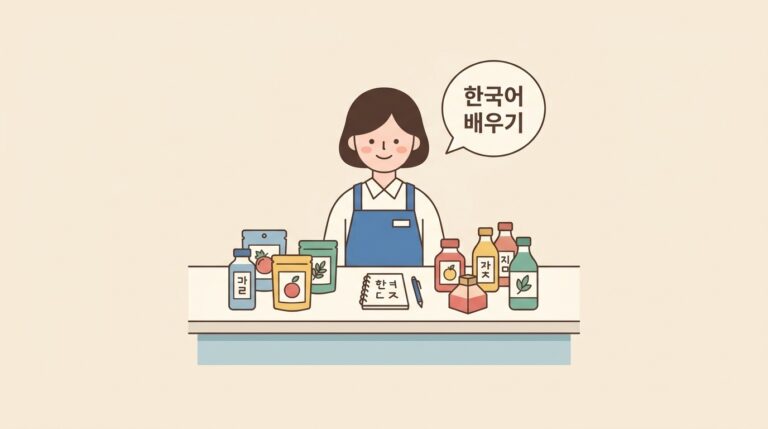
Phase 1: Empathy (The K-Culture Cold Open)
Hello! I’m your Lead Editor at Daily Hangul.
Picture this: You are at a bustling Korean BBQ restaurant in Gangnam. It’s Friday night, the pork belly is sizzling, and an intimidating line of green Soju bottles is marching down the table. Just as you start to sweat about tomorrow’s morning meeting, a Korean coworker slides a tiny, mysterious glass bottle—or a packet of jelly—across the table to you with a knowing nod.
Is it medicine? Is it candy?
No, my friend. Welcome to the magical world of 숙취 해소제 (Sukchwi Haesoje)—the Korean hangover remedy.
In Korean drinking culture, especially during a 회식 (Hoesik, company dinner), pacing yourself is an art form. But what if you could prevent the hangover before it even starts? Sharing these little remedies is more than just health care; it’s a profound gesture of Jeong (affection and care). If you don’t know what it is, you might awkwardly decline it. If you do know, you instantly become the ultimate K-Culture insider!
This guide is based on real panic moments from my beginner students who thought they were being handed children’s medicine at a bar. Let’s dive in!
Phase 2: Deep Dive into Core Expressions
1. 숙취 해소제 있어요?
- Pronunciation: [suk-chwi hae-so-je i-sseo-yo?] (Sounds like: sook-chee heh-so-jeh ee-suh-yo?)
- Meaning:
- Literal: Do you have a hangover remedy?
- Real Nuance: “Help, I need the magic potion to survive tomorrow!”
- K-Culture Moment: You’ll use this in a convenience store (CU, GS25, 7-Eleven) at 11 PM. You walk in, make eye contact with the part-timer, and say this. They will immediately point you to the glowing shelf of anti-hangover drinks.
- Editor’s Insight: 숙취 means hangover, and 해소제 means reliever/remedy. It’s a bit of a mouthful, but say it confidently! The “chwi” sounds like a sneeze, and “hae” is like saying “hey!”
- Situation Spectrum:
- Casual (To a friend): ⚠️ (You’d just say “약 사자” – Let’s buy medicine)
- Convenience Store Staff: ✅
- Boss/Elders: 🚫
- 🤔 Think About It: Why is the hangover remedy market so huge in Korea? How does it reflect the intense “work hard, play hard” culture?
2. 이거 먼저 드세요.
- Pronunciation: [i-geo meon-jeo deu-se-yo.] (Sounds like: ee-guh mun-juh deu-seh-yo.)
- Meaning:
- Literal: Please eat/drink this first.
- Real Nuance: “Take this remedy before we start drinking so you don’t die tomorrow.”
- K-Culture Moment: This is the classic K-Drama scene! The handsome lead hands a small jelly packet to the female lead right before the boss forces everyone to do a Soju shot.
- Editor’s Insight: 드세요 is the polite form of “eat” or “drink”. It’s warm, caring, and shows great nunchi (social awareness). Giving this to your coworkers makes you the MVP of the night.
- Situation Spectrum:
- Casual (Friends): ⚠️ (Say “이거 먹어” instead)
- Coworkers (Semi-formal): ✅
- Boss/Elders (Formal): ✅ (Very polite and considerate!)
- 🤔 Think About It: Why do Koreans prioritize taking care of others’ health even in situations where they are drinking alcohol?
3. 속이 안 좋아요.
- Pronunciation: [so-gi an jo-a-yo.] (Sounds like: so-gee ahn jo-ah-yo.)
- Meaning:
- Literal: My inside is not good.
- Real Nuance: “My stomach is upset / I feel sick / I am extremely hungover.”
- K-Culture Moment: The next morning at the office. You are sipping iced Americano holding your head. When a coworker asks how you are, you use this phrase.
- Editor’s Insight: Koreans rarely say “I have a hangover” directly at work because it sounds unprofessional. Instead, they use this polite, indirect phrase. It’s the perfect cover-up!
- Situation Spectrum:
- Casual (Friends): ✅ (Say “속 안 좋아”)
- Coworkers (Semi-formal): ✅
- Boss/Elders (Formal): ✅
- 🤔 Think About It: Does your language have a polite “cover-up” phrase for being hungover at work?
Phase 3: Textbook vs. Real Korean
[Situation 1: Offering a Hangover Drink to a Colleague]
* 📖 Textbook Korean: 이것은 숙취 해소제입니다. (This is a hangover remedy.)
* 🗣️ Real Korean: 약 먹고 합시다! (Let’s take medicine and start!)
* 💡 Why the difference?: Koreans jokingly call hangover drinks “약” (medicine). It creates a fun, “we are in this battle together” camaraderie!
[Situation 2: Expressing your Hangover the Next Day]
* 📖 Textbook Korean: 저는 숙취가 아주 심합니다. (I have a very severe hangover.)
* 🗣️ Real Korean: 아… 해장해야 돼요. (Ah… I need hangover food.)
* 💡 Why the difference?: In Korea, the cure to a hangover is always spicy, hot soup. Mentioning Haejang (hangover cure) implies you drank heavily without directly saying it.
Bottom Note: At an A2 level, you don’t need to memorize extreme slang. Using “해장해야 돼요” is safe, culturally accurate, and makes you sound super natural!
Phase 4: Cultural Context — K-Culture Deep Dive
4-1. Non-verbal Communication & Nunchi
When giving a sukchwi haesoje to a senior or a boss, remember your Nunchi. Always use two hands to pass the bottle. Make sure the cap is sealed (don’t open it for them unless asked). The best timing to give it is after you sit down, but before the first glasses are clinked.
4-2. The K-Drama Connection
You’ve definitely seen this in K-Dramas like Itaewon Class or Business Proposal. The act of giving a hangover remedy is a massive character-building trope.
* The Trope: The tough, cold manager secretly buys hangover jellies and leaves them on the rookie’s desk the next morning.
* The Reality: While extremely common in real life, not everyone gets a secret crush leaving jelly on their desk. However, coworkers genuinely do pool money to buy 10 bottles of remedies from the convenience store before a big team dinner. It’s considered basic workplace etiquette for the youngest employee (Maknae) to run and buy them!
Phase 5: Real-Life Roleplay Scenario
Setting: Friday, 7 PM. A crowded BBQ restaurant in Gangnam. The air is thick with the smell of roasting garlic and pork. You are sitting at a round metal table with your Korean coworkers.
Characters:
* YOU: A foreign employee in your second month. You want to make a good impression.
* Minsu: (32) Your friendly coworker who acts as your unofficial Korean mentor.
Dialogue:
Minsu: 자, 오늘 고기는 제가 쏩니다! 🥩
(Ja, oneul gogineun jega ssomnida!)
[Okay, I’m treating us to meat today!]
(🎭 Stage Direction: Minsu grabs the tongs and starts grilling passionately)
YOU: 우와, 감사합니다! 맛있겠어요.
(Uwa, gamsahamnida! Masitgesseoyo.)
[Wow, thank you! It looks delicious.]
Minsu: 그런데, 우리 술 마시기 전에… 이거 받아요.
(Geureonde, uri sul masigi jeone… igeo badayo.)
[By the way, before we drink alcohol… take this.]
(🎭 Stage Direction: Minsu slides a small glass bottle of ‘Condition’ drink to you)
YOU: 어? 이게 뭐예요?
(Eo? Ige mwoyeyo?)
[Oh? What is this?]
Minsu: 숙취 해소제예요. 오늘 많이 마실 거니까 먼저 드세요!
(Sukchwi haesojeyeyo. Oneul mani masil geonikka meonjeo deuseyo!)
[It’s a hangover remedy. We’re going to drink a lot today, so drink it first!]
🔀 Your Turn! How do you respond?
– A) “아니요, 저는 괜찮아요.” (No, I’m okay.)
– B) “오, 센스 대박! 잘 마실게요!” (Oh, great sense! I’ll drink it well!)
– C) “저 내일 일 안 해요?” (Am I not working tomorrow?)✅ Best Choice: B — Recognizing someone’s “sense” (센스) is a huge compliment in Korea. Accepting it enthusiastically builds a great bond.
⚠️ Choice A Analysis: Refusing it might make Minsu feel slightly awkward since he bought it to show he cares.
YOU (Choosing B): 오, 센스 대박! 감사합니다. 잘 마실게요!
(O, senseu daebak! Gamsahamnida. Jal masilgeyo!)
[Oh, great sense! Thank you. I’ll drink it well!]
Minsu: 하하, 그럼 건배할까요?
(Haha, geureom geonbae-halkkayo?)
[Haha, shall we toast then?]
YOU: 네! 건배!
(Ne! Geonbae!)
[Yes! Cheers!]
Phase 6: 10-Second Shadowing Drill
Follow the rhythm! Pay attention to the slashes for pausing.
- 🥺 애교 섞어서 (Cute & appreciative)
아유~ / 센스 대박! / 이거 / 먼저 드세요!
(A-yu~ / senseu daebak! / i-geo / meon-jeo deu-se-yo!) - 😢 아프게 (Looking sick the next day)
저 오늘 / 속이 / 너무 안 좋아요...
(Jeo o-neul / so-gi / neo-mu an jo-a-yo…) - 😤 당당하게 (Asking confidently at the store)
여기 / 숙취 해소제 / 있어요?
(Yeo-gi / suk-chwi hae-so-je / i-sseo-yo?)
Phase 7: K-Culture Mini Dictionary
1. 눈치
* Romanization: Nunchi
* Meaning: Social awareness / reading the room
* Context: Handing someone a hangover drink when they look nervous about drinking shows excellent nunchi.
2. 회식
* Romanization: Hoesik
* Meaning: Company dinner / team gathering
* Context: The cornerstone of Korean corporate bonding. This is where 90% of hangover remedies are consumed.
3. 건배
* Romanization: Geonbae
* Meaning: Cheers (Lit. “Dry glass”)
* Context: Used when clinking glasses. Always wait for the most senior person to initiate the geonbae.
4. 해장
* Romanization: Haejang
* Meaning: Relieving a hangover (usually through food)
* Context: The day after drinking, Koreans eat Haejang-guk (Hangover soup)—a spicy, boiling hot broth to sweat out the alcohol.
Phase 8: Traveler’s Survival Kit
If you travel to Korea, convenience stores are your best friends for hangover survival!
🆘 Survival Phrases at the Convenience Store
– 🇰🇷 Phrase 1: “투플러스원(2+1)이에요?” (Tu-peul-leo-seu-won ieyo?)
– Meaning: Is this Buy 2 Get 1 Free?
– 💡 Pro Tip: Hangover drinks almost ALWAYS have a 2+1 promotion. Look for the little tags on the shelf!
– 🇰🇷 Phrase 2: “제일 잘 나가는 게 뭐예요?” (Je-il jal na-ga-neun ge mwo-ye-yo?)
– Meaning: What is the best-seller?
– 💡 Pro Tip: Since there are 50 different kinds, asking the cashier for the most popular one is the safest bet.📌 Editor’s Travel Note
– Types of Remedies: You will find liquids (drinks), pills (hwah), and jellies. Jellies like Ready Q (레디큐) taste like mango and are super popular among foreigners and younger Koreans!
– Timing: Drink it 30 minutes BEFORE you start drinking alcohol for the best effect.
Phase 9: Critical Thinking — “A Step Deeper”
🧠 Think Deeper: Food, Medicine, and Identity (Jeong)
Why do Koreans share hangover remedies instead of just taking their own in secret? It all comes down to the concept of 정 (Jeong)—collective care and social bonding. In a fast-paced, highly competitive society, taking care of someone’s health in a social setting is a non-verbal way of saying, “I value our relationship, and I want to protect you.” By handing over a small bottle of sukchwi haesoje, a Korean person is temporarily pausing the formal hierarchy to show genuine human care.
💬 Your Turn: Does your culture have a specific tradition or remedy you share before or after drinking? Share it in the comments!
Phase 10: FAQ & Avoiding Misunderstandings
Q: Can I give a hangover drink to my boss?
Yes! In fact, buying a premium hangover drink (like Condition or Dawn 808) for your boss before a big dinner is considered top-tier etiquette and shows you are a thoughtful employee.
Q: Do I have to drink the whole bottle right then?
Usually, yes. It’s polite to open it and drink it together with everyone at the table right before the first alcohol shot is poured.
❌ Common Mistake #1: Confusing hangover drinks with Energy Drinks.
✅ How to fix it: Hangover drinks are usually on a separate, dedicated shelf (often right by the cash register). Energy drinks like Bacchus (박카스) are in the refrigerated beverage section. If unsure, always ask: “숙취 해소제예요?”❌ Common Mistake #2: Declining the drink out of politeness.
✅ How to fix it: In Korea, declining a small gift of food/medicine can disrupt the warm vibe. Just say “감사합니다” (Thank you) and drink it!
Phase 11: Summary & Action Items
One-Liner Summary: Survive K-BBQ nights by asking for 숙취 해소제 at the store and sharing it with a warm “이거 먼저 드세요!”
Action Mission 3 Steps:
– 🥉 Bronze (Solo): Look in the mirror and practice saying “속이 안 좋아요” with your best “I am sick” face.
– 🥈 Silver (Online): Find a Korean convenience store vlog on YouTube and try to spot the hangover drinks section!
– 🥇 Gold (Real Life): Next time you go to a K-BBQ restaurant with friends, buy hangover jellies beforehand and pass them out saying “이거 먼저 드세요!”
K-Culture Mission:
Go to a local Asian market or H-Mart (if you are overseas), or a Korean convenience store (if in Korea), find the Condition (컨디션) or Morning Care (모닝케어) bottles, and take a picture!
Engagement: Have you ever experienced a Korean hangover? What was your secret cure? Let me know below!
Phase 12: Quiz — Interactive Challenge
1. Situational Judgment:
You are at a convenience store to buy a hangover drink for yourself and two friends. You see a “2+1” tag on your favorite drink. What do you say to the cashier to confirm?
A) 이거 두 개 주세요. (Give me two of these.)
B) 이거 투플러스원이에요? (Is this 2+1?)
C) 속이 안 좋아요. (My stomach is upset.)
2. Fill in the Blank:
Before the first shot of Soju is poured, you hand a jelly packet to your coworker and say: “이거 ______ 드세요.” (Take this first.)
A) 안 (Not)
B) 먼저 (First)
C) 많이 (A lot)
3. True or False – K-Culture Edition:
Giving a hangover remedy to your Korean boss is considered rude because you are implying they can’t handle their alcohol. (True / False)
(Scroll down for answers!)
Click to see Answers!
- Answer: B. Always confirm the 2+1 deal! A means you just want two, and C is oversharing your stomach issues with the cashier.
- Answer: B. 먼저 (Meonjeo – First). “이거 먼저 드세요” is the golden phrase.
- Answer: False. It is actually highly encouraged and seen as incredibly thoughtful and respectful!
Frequently Asked Questions (FAQ)
Q: What does "숙취 해소제 있어요?" mean in Korean and how do you pronounce it?
A: In Korean, "숙취 해소제 있어요?" is pronounced [suk-chwi hae-so-je i-sseo-yo?] and means: Literal: Do you have a hangover remedy?
Q: What does "이거 먼저 드세요." mean in Korean and how do you pronounce it?
A: In Korean, "이거 먼저 드세요." is pronounced [i-geo meon-jeo deu-se-yo.] and means: Literal: Please eat/drink this first.
Q: What does "속이 안 좋아요." mean in Korean and how do you pronounce it?
A: In Korean, "속이 안 좋아요." is pronounced [so-gi an jo-a-yo.] and means: Literal: My inside is not good.







