

Phase 1: Empathy & K-Culture Cold Open
Hello, language learners! It’s your Daily Hangul Editor.
Picture this: You are sitting in a vibrant, bustling Hoetjip (raw fish restaurant) overlooking the night sea in Busan, or perhaps navigating the energetic alleys of Seoul’s Noryangjin Fish Market. Your Korean colleagues have ordered a massive, gorgeous platter of fresh sashimi. But as you watch the news playing on the TV in the corner, a familiar, heavy topic comes up: deep-sea currents, ocean water safety, and radiation concerns. You notice a slight hesitation at the table.
Then, the restaurant owner walks over, points to a sticker with a QR code on the tank, and confidently declares something that instantly relaxes the entire table. Glasses of soju are raised, and the feast begins.
What just happened?
At a C2 (Advanced) level, mastering Korean isn’t just about ordering food—it’s about understanding societal anxieties, consumer trust, and the sophisticated vocabulary used to navigate complex socio-economic issues. Today, we are diving deep into the Ocean & Deep Sea module, specifically tackling the highly relevant topic of the Seafood Traceability System (수산물 이력제) and how Koreans linguistically navigate food safety concerns.
This guide is based on real interactions at high-end dining and corporate dinners in Korea, where knowing these nuances elevates you from a ‘good speaker’ to a ‘true cultural insider.’ Let’s dive in!
Phase 2: Core Expressions Deep Dive
1. 수산물 이력제 (Seafood Traceability System)
- Pronunciation: [susanmul iryeokje] -> [soo-san-mool ee-ryuhk-jeh]
- Meaning: Literal: Marine products history system / Real nuance: Seafood traceability system (tracking the provenance from catch to table)
- K-Culture Moment: You will see this specific term on stickers at fish markets, on premium supermarket packaging (like in Shinsegae or Hyundai Department Store), and constantly on the news. When a corporate team is treating VIP clients to an omakase, the chef might proudly mention that all their ingredients fall under this system.
- Editor’s Insight: This isn’t just a bureaucratic term; it’s a ‘trust badge.’ Koreans are incredibly detail-oriented about food safety. Using this term shows you understand the socio-political climate surrounding seafood.
- Situation Spectrum:
- Casual friends: ⚠️ (A bit too formal, they’d just say “Is it safe?”)
- Colleagues/Dining with clients: ✅
- Speaking to restaurant owners/vendors: ✅
- 🤔 Think About It: Why does Korea have such robust, digitized tracking systems for food? How does this reflect the societal demand for institutional transparency?
2. 방사능 우려를 불식시키다 (To dispel concerns about radiation)
- Pronunciation: [bangsaneung uryeoreul bulsiksikida] -> [bang-sa-neung oo-ryuh-reul bool-shik-shee-kee-da]
- Meaning: Literal: To wipe out radiation worries / Real nuance: To put consumers’ fears about radioactive contamination to rest.
- K-Culture Moment: This is a high-level phrase straight out of news anchors’ mouths or press releases from the Ministry of Oceans and Fisheries. However, educated professionals use it during discussions about market trends or when praising a restaurant’s transparent sourcing.
- Editor’s Insight: The word ‘불식(不息)’ is an advanced Hanja (Sino-Korean) word meaning to sweep away or eradicate (doubts/fears). Using this in a business or formal social setting will make Korean native speakers’ jaws drop at your fluency.
- Situation Spectrum:
- Casual friends: 🚫 (Too academic)
- Corporate meetings / Serious debates: ✅
- Formal written Korean: ✅
- 🤔 Think About It: Notice how formal Korean heavily relies on Sino-Korean vocabulary for abstract, serious concepts? What is the equivalent mechanism in your native language?
3. 국내산인지 확인해 봤어? (Did you check if it’s domestic?)
- Pronunciation: [gungnaesan-inji hwaginhae bwasseo?] -> [goong-nae-san-een-jee hwa-geen-hae bwa-sso?]
- Meaning: Literal/Real nuance: Have you verified if the origin is domestic (Korean)?
- K-Culture Moment: At a family gathering, the mother or grandmother will inevitably ask this before buying fish for the Chuseok holidays. ‘국내산’ (domestic) is synonymous with premium quality and safety in the Korean mindset.
- Editor’s Insight: While the previous terms were highly formal, this is the everyday, practical application of food safety. Koreans instinctively check the origin label (원산지 표기) for almost everything they consume.
- Situation Spectrum:
- Casual friends: ✅
- Colleagues (Semi-formal): ✅ (Change to: 국내산인지 확인해 보셨어요?)
- Formal/Elders: ✅ (Change to: 국내산인지 확인해 보셨습니까?)
- 🤔 Think About It: In many cultures, ‘imported’ implies luxury. In Korea, especially for agricultural and marine products, ‘domestic’ is the luxury. Why do you think that is?
Phase 3: Textbook vs. Real Korean
[Situation 1: Asking a vendor if the seafood is safe]
* 📖 Textbook Korean: 이 생선은 안전합니까? (Is this fish safe?)
* 🗣️ Real Korean: 사장님, 이거 이력제 확인 되는 거죠? 방사능 검사 다 마친 거고요? (Boss, we can verify the traceability for this, right? And it’s finished all radiation testing?)
* 💡 Why the difference?: Koreans don’t just ask for a vague promise of “safety”; they ask for systemic proof (Traceability, Inspection results).
[Situation 2: Expressing relief after checking the origin]
* 📖 Textbook Korean: 걱정이 없어졌습니다. (My worry has disappeared.)
* 🗣️ Real Korean: 아휴, 이제야 좀 안심하고 먹겠네. (Phew, finally I can eat with peace of mind.)
* 💡 Why the difference?: ‘안심하다’ (to feel relieved/safe) is the core emotional state Koreans seek when navigating food safety anxieties.
Phase 4: Cultural Context — K-Culture Deep Dive
4-1. Non-Verbal Cues: The Art of “Checking”
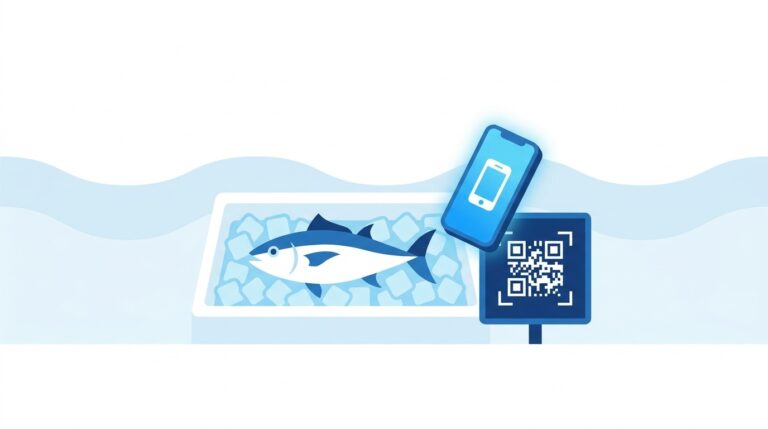
When discussing seafood safety, words aren’t enough. You’ll often see Koreans holding up their smartphones to scan QR codes on restaurant menus or market tanks. If you are hosting Korean guests, doing this proactively—scanning the code and showing them the origin—is a massive display of Nunchi (social intelligence). You are anticipating their unspoken anxiety and resolving it without making them awkwardly ask.
4-2. K-Food Connection: The Social Fabric of Sharing Food
In Korea, eating raw fish (Hoe) is rarely a solo activity. You order a large platter meant for sharing. This communal dining means that if one person is worried about ocean contamination, the whole table feels the tension. Therefore, confirming the Seafood Traceability System (수산물 이력제) isn’t just about your personal health; it’s an act of care for your community. Restaurants understand this deeply, which is why premium sushi spots or Hoetjips now proudly display daily radiation test results (방사능 수치 검사결과) at their entrances. It’s a fascinating intersection of modern technology, geopolitical anxiety, and traditional communal dining.
Phase 5: Real-Life Roleplay Scenario
Setting: Friday evening, 7:00 PM. A high-end Hoetjip (raw fish restaurant) in Haeundae, Busan. You are hosting a celebratory dinner for your Korean business partners. The ocean breeze is nice, but there was a recent news report about ocean safety that morning.
Characters:
– YOU: An expat executive, fluent in Korean, hosting the dinner.
– Director Park (50s): Your key Korean business partner. Slightly conservative, values food safety highly.
– Restaurant Owner (60s): Proud of his business and eager to prove his seafood’s quality.
Dialogue:
Director Park: 경치가 참 좋네요. 그런데 오늘 아침 뉴스를 보니까 해산물 먹기가 조금 꺼림칙하긴 합니다. 🌊
(gyeongchiga cham jonneyo. geureonde oneul achim nyuseureul bonikka haesanmul meokgiga jogeum kkeorimchikagin hamnida.)
[The view is great. But looking at the news this morning, I feel a bit hesitant about eating seafood.]
YOU: 저도 그 뉴스 봤습니다. 그래서 오늘 특별히 신경 써서 식당을 예약했습니다.
(jeodo geu nyuseu bwatseumnida. geuraeseo oneul teukbyeolhi singyeong sseoseo sikdangeul yeyakhaetseumnida.)
[I saw that news too. That’s why I paid special attention when booking the restaurant today.]
Restaurant Owner: (Approaching with the menu) 어서 오십시오! 오늘 참돔이 아주 좋습니다.
(eoseo osipsio! oneul chamdomi aju jotseumnida.)
[Welcome! The red sea bream is excellent today.]
YOU: 사장님, 저희가 조금 걱정이 돼서 그러는데요…
(sajangnim, jeohuiga jogeum geokjeongi dwaeseo geureoneundeyo…)
[Boss, we are a bit worried so I’m asking…]
🔀 Your Turn! How should you ask the owner to reassure your guest?
– A) “방사능 없죠? 안전합니까?” (Is there no radiation? Is it safe?)
– B) “여기 수산물 이력제 적용되는 횟감인가요? 국내산 확실하죠?”
– C) “일본산 아니죠? 인터넷에서 보니까 위험하다던데.”✅ Best Choice: B — Reason: It is professional, uses the exact institutional terminology (수산물 이력제), and asks for objective verification (국내산) without being aggressive or accusatory towards the owner. It proves to Director Park that you know exactly how the Korean food safety system works.
⚠️ Choice A & C Analysis: Choice A is too simplistic for a C2 speaker in a business setting. Choice C is too blunt, potentially political, and might offend the owner by implying he might be tricking you.
Restaurant Owner: 아유, 당연하죠! 저희는 100% 수산물 이력제 인증받은 국내산만 취급합니다. 입구에 매일 업데이트되는 방사능 검사 증명서도 붙여뒀습니다.
(ayu, dangyeonhajyo! jeohuineun baek-peosenteu susanmul iryeokje injeungbadeun gungnaesanman chwigeuphamnida. ipgue maeil eopdeiteudoeneun bangsaneung geomsa jeungmyeongseodo buchyeodwotseumnida.)
[Oh, of course! We only handle 100% domestic seafood certified by the traceability system. We even post daily updated radiation inspection certificates at the entrance.]
Director Park: (Smiling) 아, 이력제가 철저하군요. 덕분에 우려가 싹 불식됐습니다. 안심하고 먹읍시다!
(a, iryeokjega cheoljeohagunyo. deokbune uryeoga ssak bulsikdwaetseumnida. ansimhago meogeupsida!)
[Ah, the traceability is thorough. Thanks to that, my concerns are completely dispelled. Let’s eat with peace of mind!]
YOU: 네, 맛있게 드시죠! 제가 한 잔 올리겠습니다.
(ne, masitge deusijyo! jaega han jan olligetseumnida.)
[Yes, please enjoy! Let me pour you a drink.]
Phase 6: 10-Second Shadowing Drill
Practice this advanced sentence to sound like a true Korean professional. Pay attention to the pauses and the confident, yet polite intonation.
😤 사장님, / 이거 / 수산물 이력제 / 적용된 횟감이죠? / 믿고 먹겠습니다!
(sa-jang-nim, / i-geo / su-san-mul i-ryeok-je / jeok-yong-doen hoet-gam-i-jyo? / mit-go meok-get-seum-ni-da!)
Sound-alike: [Sah-jang-neem / ee-guh / soo-san-mool ee-ryuhk-jeh / juhk-yong-dwen hwet-gam-ee-jyo? / meet-go muhk-get-seum-nee-da!]
Emotion tag: 😤 (Confident & Reassured)
Phase 7: K-Culture Mini Dictionary
1. 수산물 이력제
* Romanization: susanmul iryeokje
* English: Seafood Traceability System
* Context: A national system allowing consumers to track the history of marine products from production to distribution, heavily utilized to restore trust in the market.
2. 방사능 수치
* Romanization: bangsaneung suchi
* English: Radiation level
* Context: A term you will frequently hear on Korean news and see on electronic boards at large fish markets to guarantee safety.
3. 원산지 표시제
* Romanization: wonsanji pyosije
* English: Country of Origin Labeling System
* Context: By law, all Korean restaurants must display where their ingredients (meat, seafood, rice, kimchi) come from. It’s usually on a large board on the wall.
4. 불식시키다
* Romanization: bulsiksikida
* English: To dispel / to eradicate (fears or doubts)
* Context: A C2-level formal verb often collocated with words like ‘우려’ (concern) or ‘의혹’ (suspicion). Highly useful for business Korean.
Phase 8: Traveler’s Survival Kit
If you are visiting a Korean fish market (like Noryangjin in Seoul or Jagalchi in Busan), you need these survival phrases to navigate the complex world of seafood buying.
🆘 Survival Phrases for the Fish Market
– 🇰🇷 “이거 국내산 맞나요?” (igeo gungnaesan mannayo?)
– 🗣️ English: Is this domestic?
– 📍 Where to use: Noryangjin Market, any seafood stall.
- 🇰🇷 “오늘 시세가 어떻게 돼요?” (oneul sisega eotteoke dwaeyo?)
- 🗣️ English: What is today’s market price?
- 📍 Where to use: Before buying crab or premium fish, as prices fluctuate daily.
🇰🇷 “포장해 갈 건데, 얼음 좀 넉넉히 넣어주세요.” (pojanghae gal geonde, eoreum jom neongneokhi neoeojuseyo.)
- 🗣️ English: I’m getting this to-go, please put in plenty of ice.
📌 Editor’s Travel Note
– QR Code Hunting: At modern fish markets, look for blue stickers with QR codes on the glass tanks. You can literally scan them with your phone’s camera to see the fisherman’s name and catch location!
– Bargaining vs. Trust: While light bargaining used to be common, modern Korean markets focus more on transparent pricing and safety. Ask about ‘원산지’ (origin) rather than just pushing for a cheaper price; it shows you are a savvy buyer.
Phase 9: Critical Thinking — “One Step Deeper”
Language & Trust: The Vocabulary of National Anxiety
🧠 Think Deeper:
In Korea, food safety isn’t just a personal health choice; it is heavily tied to national sentiment and political trust. The widespread use of institutional terms like 수산물 이력제 (Seafood Traceability) and 우려 불식 (Dispelling concerns) in everyday dining conversations reveals a society that demands absolute transparency and data-driven reassurance from its authorities. Unlike cultures where a chef’s verbal promise might suffice, the Korean linguistic landscape around food safety relies on systemic proof—QR codes, government certifications, and visible data. This reflects a highly digitized, hyper-connected society where information is the ultimate currency of trust.💬 Your Turn: How does your culture handle public anxiety regarding food safety? Do everyday consumers use bureaucratic or scientific terms when shopping for groceries? Share your thoughts in the comments!
Phase 10: FAQ & Avoiding Misunderstandings
Q: Can I bluntly ask a restaurant owner “Is your food radioactive?”
No. Direct questions like “방사능 있어요?” (Does it have radiation?) can sound accusatory and offensive to the hardworking vendors. Instead, ask for institutional guarantees politely: “국내산이죠?” (It’s domestic, right?) or “이력제 확인되는 거죠?” (Traceability is confirmed, right?).
Q: Is it okay to check the origin label on the wall in front of the chef?
Yes! It is completely normal and expected. The ‘원산지 표기판’ (Origin Board) is legally required and displayed publicly specifically so customers can check it.
❌ Common Mistake #1: Trying to use overly casual language (Banmal) with market vendors to sound ‘friendly’.
✅ Do this instead: Always use polite forms (존댓말), e.g., “사장님, 이거 얼마예요?” (Boss, how much is this?). Market vendors are professionals and elders.
Phase 11: Summary & Action Items
- One-Liner Summary: Elevate your Korean to C2 by mastering systemic food safety vocabulary like 수산물 이력제 to navigate complex social dining situations with ease.
-
Action Mission 3 Steps:
- 🥉 Bronze (Solo): Practice saying “방사능 우려를 불식시키다” out loud 3 times without stumbling over the syllables.
- 🥈 Silver (Online): Go to a Korean news portal (like Naver News), search the keyword “수산물 이력제”, and read the headline of one article.
- 🥇 Gold (Real World): Visit a Korean supermarket (like H-Mart) and find the ‘원산지’ (Origin) label on a seafood product.
- K-Culture Mission: Watch a Korean news clip or a corporate K-Drama scene involving a restaurant/food crisis, and listen for the words 안심 (relief) or 확인 (verification).
Let me know in the comments if you’ve ever successfully checked a Korean origin label!
Phase 12: Quiz — Interactive Challenge
1. Situational Judgment: You are treating a VIP client to sushi, and they seem worried about the news regarding ocean water. What is the most C2-appropriate, culturally tactful thing to say?
– A) 생선 먹지 마세요. 위험해요. (Don’t eat fish. It’s dangerous.)
– B) 여기는 수산물 이력제가 철저해서 우려를 불식시킬 수 있습니다.
– C) 주방장님한테 방사능 검사해달라고 할까요?
Answer: B. It uses advanced, reassuring vocabulary without causing a scene.
2. True or False — K-Culture Edition:
“In Korean restaurants, it is considered rude to ask where the ingredients come from.”
– Answer: False! It is legally mandated to display the origin (원산지), and consumers are encouraged to be highly aware of where their food comes from.
3. Fill in the Blank:
“사장님, 이 생선 ___________ 적용된 확실한 국내산 맞죠?”
(Boss, this fish is definitely domestic, covered by the ___________, right?)
– Answer: 수산물 이력제 (Seafood Traceability System)
Frequently Asked Questions (FAQ)
Q: What does "수산물 이력제 (Seafood Traceability System)" mean in Korean and how do you pronounce it?
A: In Korean, "수산물 이력제 (Seafood Traceability System)" is pronounced [susanmul iryeokje] and means: Literal: Marine products history system / Real nuance: Seafood traceability system (tracking the provenance from catch to table)
Q: What does "방사능 우려를 불식시키다 (To dispel concerns about radiation)" mean in Korean and how do you pronounce it?
A: In Korean, "방사능 우려를 불식시키다 (To dispel concerns about radiation)" is pronounced [bangsaneung uryeoreul bulsiksikida] and means: Literal: To wipe out radiation worries / Real nuance: To put consumers' fears about radioactive contamination to rest.
Q: What does "국내산인지 확인해 봤어? (Did you check if it's domestic?)" mean in Korean and how do you pronounce it?
A: In Korean, "국내산인지 확인해 봤어? (Did you check if it's domestic?)" is pronounced [gungnaesan-inji hwaginhae bwasseo?] and means: Literal/Real nuance: Have you verified if the origin is domestic (Korean)?







