

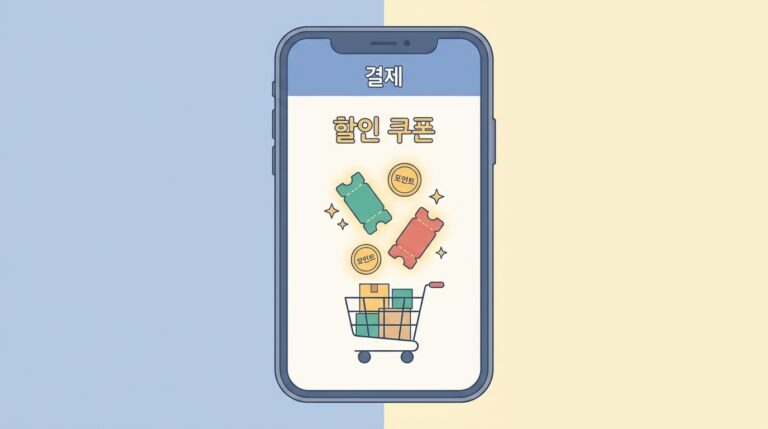
Phase 1: Empathy (Immersive Open)
Hello! Daily Hangul Editor here.
Picture this: It’s 11:30 PM on a Friday. You’re curled up in bed, rewatching your favorite K-Drama. You spot the lead actor wearing the perfect oversized hoodie. You pause, take a screenshot, and track it down on Musinsa (Korea’s go-to fashion app). You add it to your cart, navigate to the checkout page, and… BAM. You hit a massive wall of Korean text. Checkboxes, dropdowns, and numbers everywhere.
“적립금? 쿠폰 적용? 결제수단?”
Overwhelmed, you just scroll down and hit the big blue 결제하기 (Pay) button.
Congratulations, you just bought it. But wait—the next day, your Korean friend looks at your receipt and gasps. “You didn’t use the first-time buyer coupon? Or your points? You just paid 20% more than you had to!”
Ouch.
Navigating Korean e-commerce can feel like deciphering a secret code. Korea is a hyper-competitive market where apps practically throw points and coupons at you to keep you loyal. If you don’t know how to use them, you’re leaving money on the table. Today, I’m going to teach you the exact vocabulary you need to navigate Korean checkout pages like a true local Smart Consumer (스마트 컨슈머).
(This guide is entirely based on the literal tears of my expat students who paid full price on delivery apps for months before learning these words!)
Phase 2: Core Expressions Deep Dive
Let’s break down the most crucial buttons and terms you will see on your screen.
1. 적립금 전액 사용 (Use All Points)
- Pronunciation: jeongnipgeum jeonaek sayong [jeong-nip-geum jeon-ek sa-yong]
- Meaning:
- Literal: Accumulated money, full amount use.
- Real Nuance: Use all my available points/mileage.
- K-Culture Moment: You’re ordering late-night fried chicken on Baemin (배달의민족). You see you have 3,450 points saved up from previous orders. You check the box next to “전액 사용” and watch the total price magically drop. It’s the most satisfying feeling in the world.
- Editor’s Insight: ‘적립’ means to accumulate or save up. When shopping online, this refers to points (often called 마일리지 or 포인트 interchangeably). ‘전액’ means the full amount. Hitting this button is the ultimate power move for regular shoppers.
- Situation Spectrum:
- App UI / Shopping: ✅ (Standard terminology)
- Speaking to Customer Service: ✅
- Speaking to a friend: ⚠️ (A bit too formal. Friends just say “포인트 다 썼어”)
- 🤔 Think About It: Why do Korean shopping platforms use terms like ‘적립금’ instead of just saying ‘discount’? How does the illusion of “saving money while spending” reflect modern consumer psychology?
2. 쿠폰을 먹이다 (To Apply a Coupon – Slang)
- Pronunciation: kuponeul meogida [ku-pon-eul meo-gi-da]
- Meaning:
- Literal: To feed a coupon.
- Real Nuance: To successfully apply a coupon to an order.
- K-Culture Moment: You’re sitting in a cafe with a friend, buying concert tickets or booking a hotel. Your friend leans over and says, “야, 쿠폰 먹였어?” (Hey, did you apply the coupon?).
- Editor’s Insight: Officially, the button on the screen will say 쿠폰 적용(하다) (Apply coupon). But in casual, everyday speech, Koreans love using the verb 먹이다 (to feed) for software functions. You “feed” the code to the app.
- Situation Spectrum:
- Casual with friends (Casual): ✅
- Coworkers (Semi-formal): ⚠️ (Only if you are close)
- Customer Service / Formal: 🚫 (Never use this with staff. Use ‘적용하다’ instead!)
- 🤔 Think About It: Koreans also use “먹히다” (to be eaten/to work) when a strategy or a joke is successful. Why do you think “eating” is such a versatile metaphor in the Korean language?
3. 무배 (Free Shipping – Abbreviation)
- Pronunciation: mubae [mu-bae]
- Meaning:
- Literal: Short for 무료배송 (Free shipping).
- Real Nuance: The holy grail of online shopping.
- K-Culture Moment: You want a 15,000 won phone case, but the shipping is 3,000 won. However, the store offers ‘무배’ for orders over 30,000 won. So, what do you do? You naturally buy another phone case to hit the free shipping limit.
- Editor’s Insight: Koreans hate paying for shipping. The “빨리빨리” (hurry up) delivery culture is phenomenal, but paying extra for it hurts. ‘무배’ is heavily used in online communities and text messages.
- Situation Spectrum:
- Texting friends / Online forums: ✅
- App UI badges / Banners: ✅
- Speaking formally: 🚫 (Say “무료 배송” instead)
- 🤔 Think About It: Your home country probably has free shipping thresholds too. Does the shipping fee ever stop you from checking out?
Phase 3: Textbook vs Real Korean
Let’s see how textbook phrases morph into what Koreans actually type and say.
[Situation 1: Bragging about a cheap purchase]
* 📖 Textbook Korean: 저는 할인 쿠폰을 적용해서 물건을 싸게 샀습니다. (I bought the item cheaply by applying a discount coupon.)
* 🗣️ Real Korean: 나 영끌해서 쿠폰 먹였잖아! 완전 싸게 득템함. (I scraped up everything to apply the coupon! Got a total steal.)
* 💡 Why the difference?: “영끌” (영혼까지 끌어모으다 – to scrape up one’s soul) is a very common modern slang used when you combine every possible point, coupon, and discount to get the lowest price. It shows the intensity and gamification of Korean shopping.
[Situation 2: Asking if shipping is free]
* 📖 Textbook Korean: 이 상품은 배송비가 무료입니까? (Is the shipping fee free for this product?)
* 🗣️ Real Korean: 이거 무배야? (Is this free shipping?)
* 💡 Why the difference?: Efficiency! Korean internet culture loves reducing 4-syllable phrases into 2 syllables (줄임말).
Bottom Note: For B2 level learners, using “쿠폰 적용했어요?” (Did you apply the coupon?) is your safest, most natural bet in everyday adult conversation. Save “쿠폰 먹였어” for your close friends.
Phase 4: Cultural Context — K-Culture Deep Dive
4-1. The UI “Nunchi” (눈치)
When you’re on a Korean checkout page, the app will often subtly test your Nunchi. The “Checkout at Full Price” button is usually massive and brightly colored. The “Apply Coupons” (쿠폰 적용) or “Use Points” (적립금 사용) options are often smaller, requiring you to actively open a dropdown menu. You have to be perceptive to catch the “최대 할인 적용” (Apply Maximum Discount) checkbox.
4-2. The “Dawn Delivery” (새벽배송) Phenomenon
If you’ve watched K-Dramas like Hospital Playlist or Start-Up, you might notice characters casually mentioning they ordered groceries or items at night and found them at their door the next morning. This is the magic of platforms like Coupang (Rocket Delivery) and Market Kurly.
When shopping online, you won’t just look at coupons; you’ll look at the delivery type. Words like 로켓배송 (Rocket Delivery) or 오늘출발 (Ships Today) are the true deciding factors for Koreans. We don’t just want it cheap; we want it tomorrow morning before we go to work.
Phase 5: Real-world Roleplay Scenario
Setting: Saturday afternoon at a trendy cafe in Yeonnam-dong. You are browsing the Olive Young app for some K-Beauty skincare. Your Korean friend Ji-eun is sitting across from you, sipping an iced Americano.
Characters:
– YOU: An expat who loves K-Beauty but is tired of paying retail prices.
– Ji-eun (28): Your Korean friend. She is a platinum-tier member on every shopping app and knows how to game the system.
Dialogue:
YOU: 지은아, 나 이 수분크림 살 건데 어때?
(Jieun-a, na i subun keurim sal geonde eottae?)
[Ji-eun, I’m going to buy this moisture cream, what do you think?]
Ji-eun: 오, 그거 완전 좋지! 근데 너 그냥 결제하려고? 🛑
(O, geugeo wanjeon jochi! Geunde neo geunyang gyeoljeharyeogo?)
[Oh, that one is super good! But are you just going to pay right now?]
(🎭 Stage Direction: Ji-eun grabs your wrist dramatically before you can press the pay button.)
YOU: 응. 왜? 배송비도 무료던데?
(Eung. Wae? Baesongbido muryodeonde?)
[Yeah. Why? The shipping is free too.]
Ji-eun: 야, 앱 처음 깔았으면 ‘첫 구매 쿠폰’ 무조건 주잖아. 다운받았어?
(Ya, aep cheoeum kkarasseumyeon ‘cheot gumae kupon’ mujogeon jujana. Daunbadasseo?)
[Hey, if you just installed the app, they always give a ‘first purchase coupon’. Did you download it?]
YOU: 앗… 그런 게 있어? 어디서 봐?
(At… geureon ge isseo? Eodiseo bwa?)
[Ah… there’s something like that? Where do I see it?]
Ji-eun: 여기 마이페이지 들어가 봐. 쿠폰함 보이지?
(Yeogi maipeiji deureoga bwa. Kuponham boiji?)
[Go to My Page here. You see the coupon box?]
🔀 Your Turn! How do you respond to Ji-eun?
– A) “아, 귀찮아. 그냥 살래.” (Ah, it’s annoying. I’ll just buy it.)
– B) “진짜네! 이거 어떻게 적용해?” (Oh wow, you’re right! How do I apply this?)
– C) “지은아, 네가 먹여줘!”✅ Best Choice: B — It shows active interest and asks for help politely. “이거 어떻게 적용해?” (How do I apply this?) is the perfect phrase for this situation.
⚠️ Choice A Analysis: This will physically hurt Ji-eun’s soul. In Korea, skipping a 10,000 won discount out of laziness is a cultural crime.
⚠️ Choice C Analysis: A bit grammatically awkward and overly literal slang. “네가 대신 해줘” (Do it for me) is more natural.
Ji-eun: (Takes your phone) 자, 여기서 ‘최대 할인 적용’ 누르면… 짠! 만 원 할인됐지?
(Ja, yeogiseo ‘choedae harin jeogyong’ nureumyeon… jjan! Man won harindaetji?)
[Here, if you press ‘apply max discount’… Tada! 10,000 won off, right?]
YOU: 대박… 너 완전 스마트 컨슈머다!
(Daebak… neo wanjeon seumateu keonsyumyeoda!)
[Jackpot… you’re a total smart consumer!]
Phase 6: 10-Second Shadowing Drill
Practice reading this out loud. Pay attention to the pauses and intonation!
😤 아, 짜증 나! / 나 어제 / 깜빡하고 / 쿠폰 안 먹였어!
(A, jjajeung na! / na eoje / kkamppakago / kupon an meogyeosseo!)
[Ugh, so annoying! I completely forgot to apply the coupon yesterday!]
Tip: Put a lot of emphasis on ‘깜빡하고’ (forgot) to sound genuinely regretful.
Phase 7: K-Culture Mini Dictionary
1. 장바구니
* Romanization: jangbaguni
* English: Shopping cart (online and offline)
* Context: Literally means “market basket.” When shopping online, this is the cart icon you click to review your items before checkout.
2. 득템
* Romanization: deuktem
* English: To get a great deal / Snag a good item
* Context: A compound slang of 득(得 – to obtain) and 템 (item). Used when you buy something great at a low price thanks to coupons or sales.
3. 영끌
* Romanization: yeongkkeul
* English: Scraping the barrel / Going all-in
* Context: Short for “영혼까지 끌어모으다” (Scraping up one’s soul). Used when gathering every single point, 10-won coin, and coupon to lower a price, or when taking out massive loans to buy real estate.
4. 품절
* Romanization: pumjeol
* English: Sold out
* Context: The word that breaks every shopper’s heart. If you take too long figuring out how to apply a coupon, your item might become 품절!
Phase 8: Traveler Survival Kit
Even if you aren’t living in Korea, you will likely download delivery apps (like Baemin/Yogiyo) to your hotel, or buy KTX tickets online. And offline, physical stores use similar terminology!
🆘 Survival Phrases for Offline Shopping & Cafes
– 🇰🇷 “포인트 적립하시겠어요?” (Pointeu jeongnipasigesseoyo?)
– 🗣️ Meaning: Would you like to earn points for this?
– 📍 Where you hear it: Olive Young, Convenience stores, Cafes.
– 💡 Pro Tip: If you don’t have a Korean phone number or account, just politely wave your hand and say “아니요, 괜찮아요” (No, it’s okay).
- 🇰🇷 “이 쿠폰 지금 쓸 수 있어요?” (I kupon jigeum sseul su isseoyo?)
- 🗣️ Meaning: Can I use this coupon right now?
- 📍 Where to use it: Showing a KakaoTalk gift icon (기프티콘) or a tourist discount pass to a cashier.
📌 Editor’s Travel Note
– Foreign Cards: Many Korean websites still struggle with foreign credit cards. If you get stuck at the ‘결제수단’ (Payment Method), look for “해외카드” (Overseas Card) or use services like PayPal if available. For tourists, apps like ‘Creatrip’ or ‘Shuttle Delivery’ are highly foreign-card friendly.
Phase 9: Critical Thinking Corner — “One Step Deeper”
Language & Consumer Identity: The “Smart Consumer” Culture
🧠 Think Deeper:
Have you noticed how aggressive Korean shopping events are? Concepts like “Time Deals” (타임특가), “1+1” (One plus one), and “First Purchase 990 Won” are everywhere. This hyper-competitive e-commerce environment has trained Korean consumers to be incredibly analytical.
The language reflects this. We don’t just ‘buy’ things; we ‘defend our wallets’ (지갑 방어) and we ‘feed’ (먹이다) coupons to the system. It’s almost treated like a strategic video game. Paying full price without checking for “적립금” (points) isn’t just seen as wealthy; it’s often jokingly seen as foolish. The societal pressure isn’t just to buy nice things, but to buy them smartly.💬 Your Turn: Does your culture have a stigma against paying retail price, or a strong couponing culture? Share in the comments below!
Phase 10: FAQ & Avoiding Misunderstandings
Q: Can I tell the customer service agent “쿠폰 좀 먹여주세요”?
NO. That is way too casual and almost comical. To a staff member, always use the formal term: “쿠폰 적용해 주세요” (Please apply the coupon).
Q: I see ‘마일리지’ and ‘포인트’ and ‘적립금’. What’s the difference?
Functionally, nothing. They all mean the same thing: store credit you’ve earned from previous purchases. Different websites just prefer different terms.
❌ Common Mistake #1: Confusing 적립하다 (To accumulate) with 사용하다 (To use).
✅ Do this instead: When the cashier asks “포인트 적립해 드릴까요?” (Shall I accumulate points for you?), do not say “네” thinking it means using your points to get a discount. If you want to use them to pay, you must clearly say “포인트 사용할게요” (I will use my points).
Phase 11: Summary & Action Items
One-Liner Summary: Don’t hit checkout until you’ve hit 쿠폰 적용 (Apply Coupon) and 적립금 사용 (Use Points)!
Action Mission 3 Steps:
– 🥉 Bronze (Solo): Look at your phone and say “쿠폰 적용” three times.
– 🥈 Silver (Online): Change the language of a global shopping app (like Amazon or Zara) to Korean and try to locate the ‘장바구니’ (Cart) and ‘결제하기’ (Checkout) buttons.
– 🥇 Gold (Real World): Next time you are at a cafe or Olive Young in Korea, when they ask “적립하시겠어요?”, confidently reply with either “네, 번호 찍을게요” (Yes, I’ll punch in my number) or “아니요, 괜찮아요” (No, it’s okay).
K-Culture Mission:
Go to the Olive Young Global App (or Korean site) right now. Add a random item to your cart and navigate to the checkout page. Try to spot the words 적립금 and 쿠폰 before you exit the app!
Phase 12: Quiz — Interactive Challenge
1. Situational Judgment:
You are checking out on a fashion app. You want to use the 5,000 points you’ve saved up over the last year. Which button should you click next to ‘적립금’?
A) 결제하기 (Pay)
B) 전액 사용 (Use full amount)
C) 쿠폰 적용 (Apply coupon)
2. Fill in the Blank:
Your friend complains that the shoes they want are too expensive. You want to ask if they used a coupon.
“너 결제할 때 쿠폰 ( ______ )어?”
(Hint: Think of the casual slang we learned!)
3. True or False – K-Culture Edition:
When a cashier in Korea asks “포인트 적립하시겠어요?”, they are asking if you want to pay with your points to get a discount. (T / F)
👀 Click here for answers!
1. Answer: B (전액 사용 means use the full amount of points. A is to pay, C is for coupons, not points).
2. Answer: 먹였 (먹였어?) – “Did you feed the coupon?”
3. Answer: False. ‘적립하다’ means to accumulate/save points for later. To use them, you must say ‘사용하다’.
Frequently Asked Questions (FAQ)
Q: What does "적립금 전액 사용 (Use All Points)" mean in Korean and how do you pronounce it?
A: In Korean, "적립금 전액 사용 (Use All Points)" is pronounced [jeongnipgeum jeonaek sayong [jeong-nip-geum jeon-ek sa-yong] and means: Literal: Accumulated money, full amount use.
Q: What does "쿠폰을 먹이다 (To Apply a Coupon - Slang)" mean in Korean and how do you pronounce it?
A: In Korean, "쿠폰을 먹이다 (To Apply a Coupon - Slang)" is pronounced [kuponeul meogida [ku-pon-eul meo-gi-da] and means: Literal: To feed a coupon.
Q: What does "무배 (Free Shipping - Abbreviation)" mean in Korean and how do you pronounce it?
A: In Korean, "무배 (Free Shipping - Abbreviation)" is pronounced [mubae [mu-bae] and means: Literal: Short for 무료배송 (Free shipping).







